

Ministry by Walking Around and the Network of Seven Churches of Revelation
Ministry by Walking Around and the Network of Seven Churches of Revelation
Although the Book of Revelation has been vastly studied and interpreted throughout church history, usually the focus is on one major issue within the text, namely, the role and future of the church. The main reason for this has been the in-depth prophetic and pastoral messages to the Seven Churches.
The value of the messages to the Seven Churches of Revelation is constituted by the fact that they are the last recorded Biblical messages to the Christian Church.[1] The letters to the Seven Churches obviously do not contain all of the usual elements used in the New Testament epistolary form. It is generally accepted that they were written as an application of the Revelation context and not as individual messages to the churches.
This contextual connection between the seven letters suggests a network of inter-church communication which was established between the seven churches. Several common elements are obvious from the text, the most obvious is their common geographical location as shown in Figure 1.
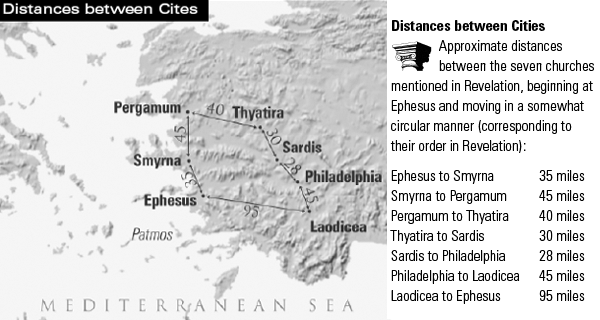
Figure 1: Distances between the Seven Cities of Revelation
The addressed churches are located clockwise, almost like they are forming a strategic circle of ministry.[2] Most churches are located thirty to forty miles from one another, which perhaps was the possible daily limit for traveling during that time. The shape of the circle of ministry, based on the order in which the churches were addressed, suggests a method of managing known today as Management by Walking Around (MBWA). The example in Revelation not only presupposes such methodology, but purposefully gives its clockwise direction in relation to the location of origin of the letters from the Island of Pathmos.
The purposeful positioning of the churches provided a common network (circle of ministry). It is also obvious from the text that at the time of writing, simplicity and democracy in organization were characteristics of the New Testament church government.[3] In the context of networking, each church maintained its own individuality because it is addressed separately in the text.[4]
Furthermore, the seven churches shared a common context of ministry in the area of Asia Minor which consisted of a great mixture of languages, customs and religions. All of the seven churches were located in cities which were under Roman rule and combined the customs of Roman, Greek, Assyrian, Persian, Babylonian, Egyptian and Jewish cultures as well as the various languages and dialects within them. The commonality in the context of ministry continued with the presence of numerous religious groups, cults, sects and gilds which were closely interwoven with civil affairs. Universal citizenship, universal religion, and a universal church were all ideas for which the Roman Empire was beginning to prepare. In such context, the seven churches shared a common goal of ministry, namely, spreading the Christian message.[5]
The seven letters were inspired by one occasion and one purpose as a tool for inter-church networking.[6] The message was not sporadic or spontaneous but thoughtfully planned and designed for each of the churches, based on an in-depth knowledge of the individual problems, members and solutions for future development.[7] The text demonstrates a common structure within the church illustrated by the common structure shared by each message. The letters reveal that the congregations shared similar practices of worship, ministry and teaching which were accompanied by problems and persecution.
A significant part of the common structure was the leadership because each church had a divinely-appointed messenger,[8] addressed by a common “divinely-charged”[9] network elder, who received a transmitted divine message. Such process shows that the networking was done by means of communication, of which the epistolary form is also proof.[10] The written text was only a formal documentary or a contract of the holistic communication accomplished through various multimedia means including those that relied on audio, visual and other senses. It constructed a mystical, divinely-inspired, supernatural and non-virtual reality which transformed the recipient of the message in the same way it did the messenger. Through this means, the network communication was not a miscommunication, but rather an authentic translation from the divine source to the very members of the congregations.
This form of communication was absolutely necessary for the common context of ministry in which the seven churches operated. This common context was the earth, not heaven,[11] and their common goal was to conquer.[12] Yet, at the same time the text is undisputable in that each church contained people prepared to conquer. This fact makes the victory of the church inevitable. Thus, while the churches are dealing with various problems and persecutions, they are already conquerors.
This observation brings the reader to the final commonality which the seven churches share; namely, that besides the earthly network of ministry there is another greater, divine, heavenly network which is in control. Such a conclusion is obvious from the fact that all of the churches without exception are known to the sender of the messages.[13] Their problems are relevant, criticism and encouragement which are prophetically delivered solutions are divinely provided and conquest of the church over the problems is definite and inevitable. This is undisputable proof that a God-centered New Testament networking of churches is the dependable and enduring model for both ministry networking and church government. Precisely this heavenly network is the supernatural source of the unique approach through which problems of the churches are to be solved. Thus, in addition to a common present reality, the churches share a future earthly applicability of the paradigm of ministry which makes their message relevant today.[14]
[1] Wade H. Horton, Lectures on the Seven Churches (Cleveland: Pentecostal Resource Center, n/a), 6.
[2] Henry M. Morris, The Revelation Recorded (Wheaton: Tyndale House Publishers, 1987), 66. Merril Tenney, Interpreting Revelation (Grand Rapids: Wm. B. Eerdmans Pubslihing Co., 1957), 50. For an in-depth discussion on the geographical location of the Seven Churches, its significance for the circulation of the letters and the leadership organization see William M. Ramsey, The Letters to the Seven Churches (Grand Rapids: Baker book House, 1979), 186.
[3] McDowell, 38.
[4] McDowell, 37.
[5] Ramsey, 120-21.
[6] Ramsey, 40.
[7] Ramsey, 39-40.
[8] Bruce M. Metzger, Breaking the Code (Nashville: Abingdon Press, 1993), 30. Ramsey, 69, 74ff.
[9] Ramsey, 80.
[10] McDowell, 37.
[11] Metzger, 29.
[12] Metzger, 30.
[13] Wade Horton, Seven Golden Candlesticks (Cleveland: Pathway Press, 1974), 72.
[14] Edward A. McDowell, The Meaning and Message of the Book of Revelation (Nashville: Broadman Press, 1951), 35. Clovis G. Chappell, Sermons from Revelation (New York: Abingdon-Cokesbury Press, n/a), 59.
Life and Ministry of Ivan Voronaev (First Edition)
January 10, 2018 by Cup&Cross
Filed under Books, Featured, News, Publication
![51Sa1IcA8OL._SY344_PJlook-inside-v2,TopRight,1,0_SH20_BO1,204,203,200_[1]](https://cupandcross.com/wp-content/uploads/2014/03/51Sa1IcA8OL._SY344_PJlook-inside-v2TopRight10_SH20_BO1204203200_1.jpg) Since we began the research on the Life and Ministry of Ivan Voronaev over a decade ago, several new valuable sources have become available. Among them are never published family correspondence and travelling journals.
Since we began the research on the Life and Ministry of Ivan Voronaev over a decade ago, several new valuable sources have become available. Among them are never published family correspondence and travelling journals.
From Bulgaria, after remaining hidden for over half of a decade during the Communist Regime, the earliest Book of Minutes of the Executive Committee of the Bulgarian Pentecostal Union (1929-1933) has resurfaced. It contains detail information on the 18 Pentecostal congregations started in Bulgarian in 1921-1922 and the establishment of the Pentecostal Union.
In Russia, Zaplishney’s autobiography and a FSB confirmation of the original order for Voroanev’s execution has been discovered. Along with them, several volumes of Sevlag prison papers have shed light on the exile years of the first Pentecostal leaders there.
Now that this new information has been made available to us, a new expanded edition for the 90th Anniversary of the Bulgarian Pentecostal Union in 2018 is in order. With this in mind, we have felt compelled to release the remaining first print Voronaev monograph for a fraction of its value while supplies last.
Bibliata.com celebrates 20 years in ministry by reading through the whole New Testament in one day
After a week of revival services in Rousse, on Saturday we held a public reading of the New Testament in about nine hours with the whole congregation. We recorded and published the video of the reading as an encouragement for the rest of the churches.
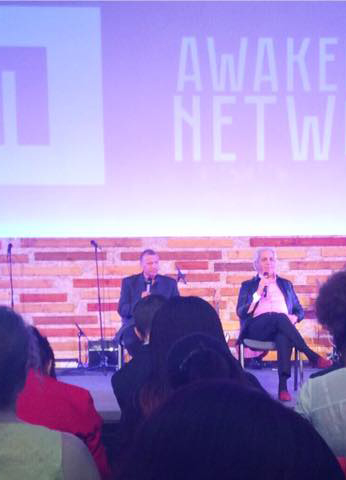
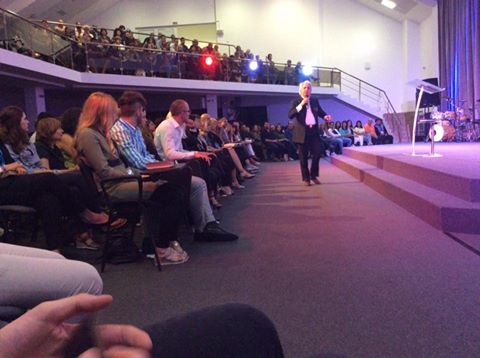
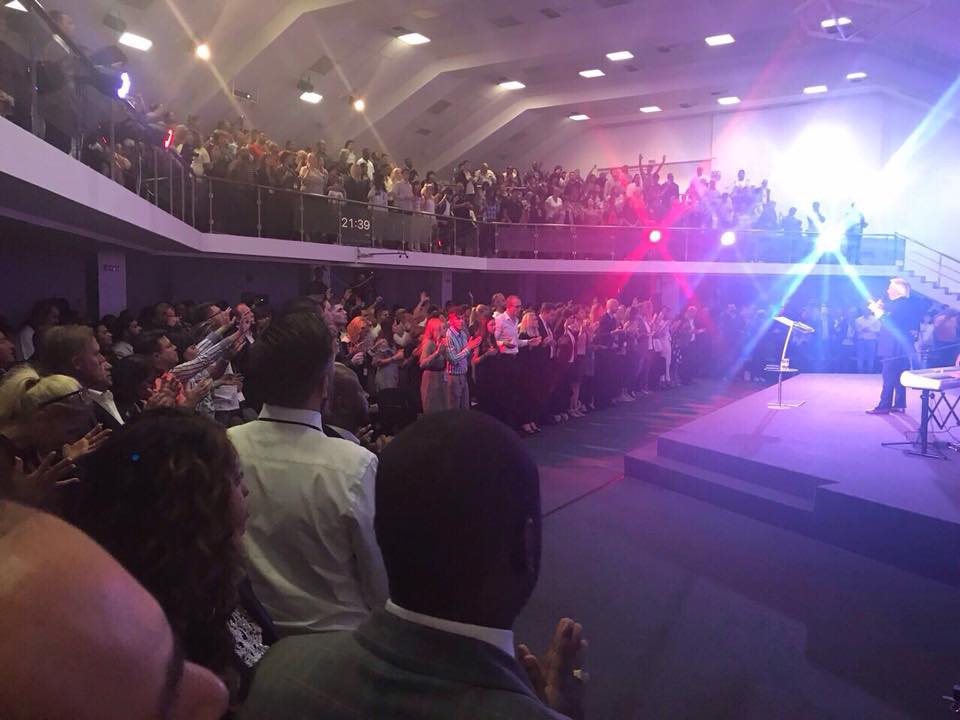
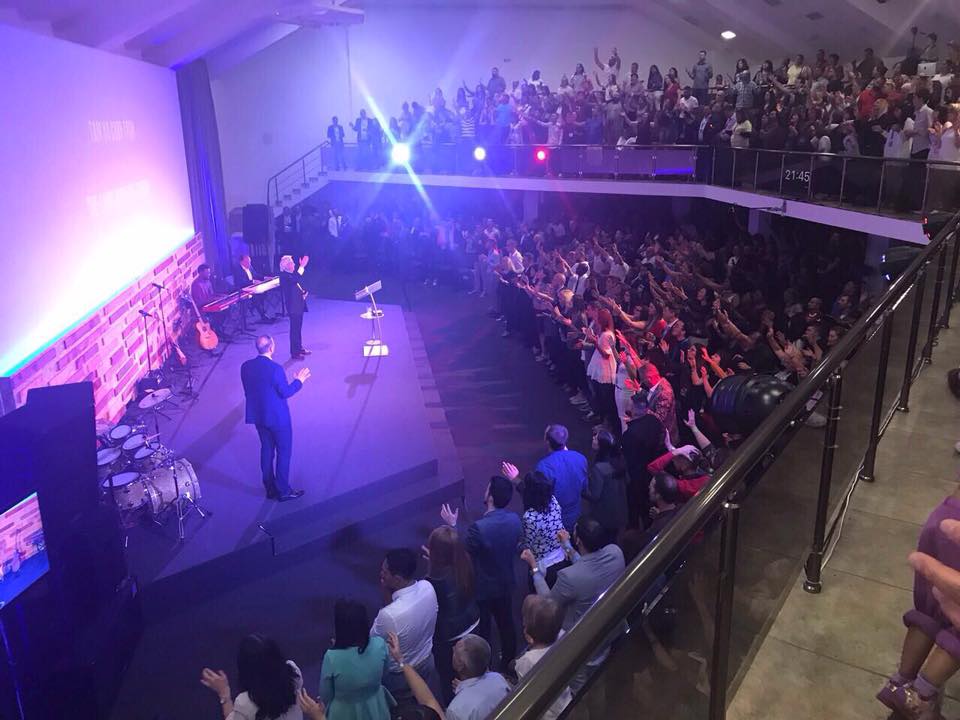
Benny Hinn in the Church of God Ministry Center in Bulgaria
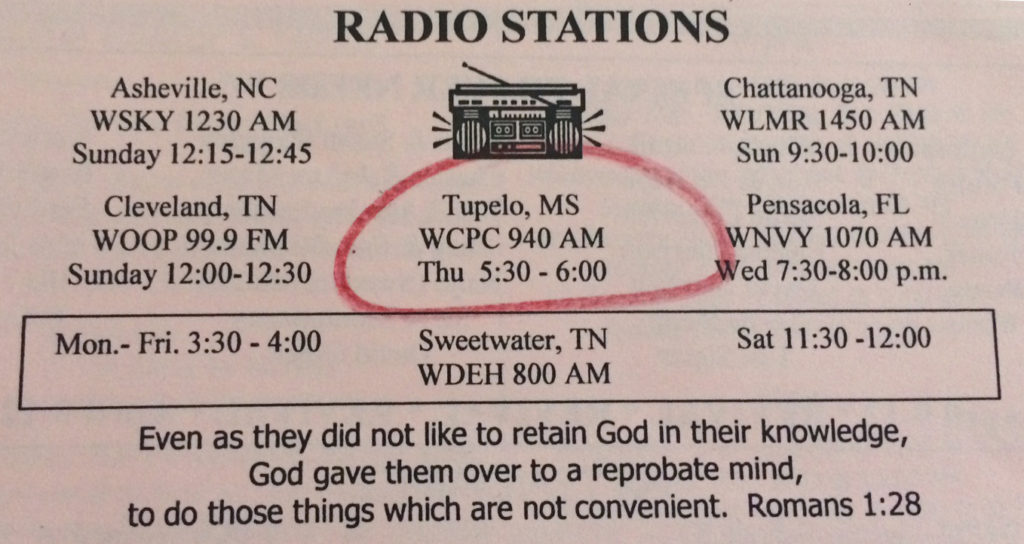
Current Radio Channels for our Ministry Live Broadcasts
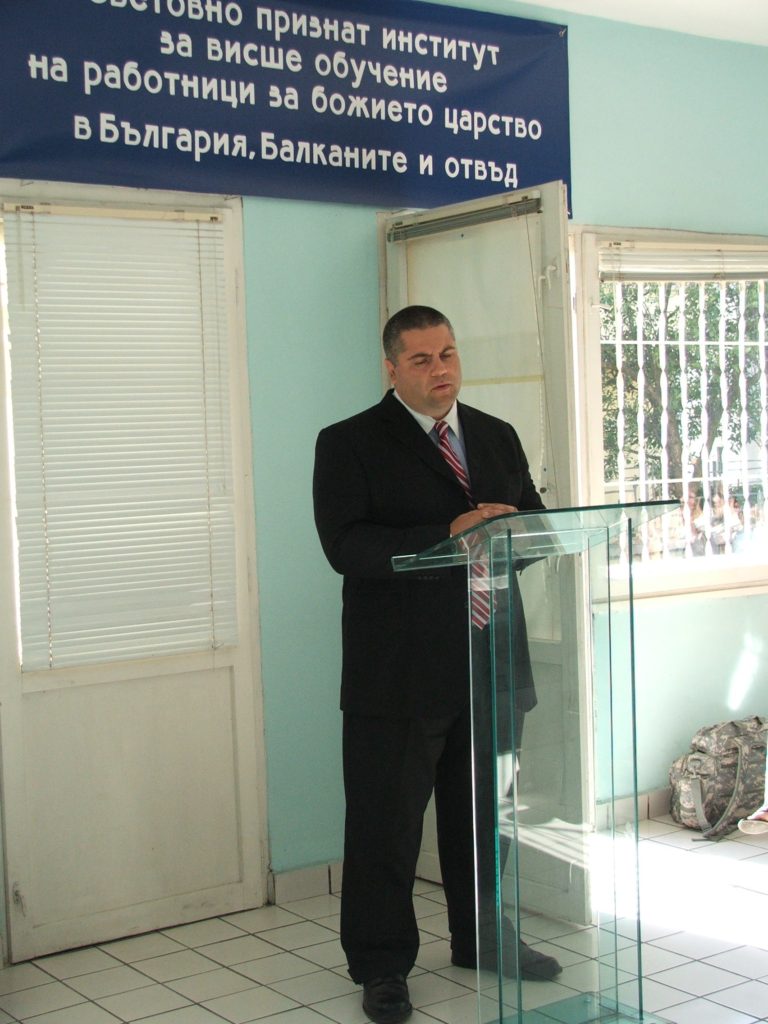
Addressing the Masters of Chaplaincy Ministry Program Graduating Class in Bulgaria
WEBSITES for MINISTRY: The Creative Process
 Before moving into social media, it is helpful to establish a personal and/or church website where most resources are located conveniently for visitors to find. Recommended, this would be a WordPress based blog-like website, which is designed for easy content management i.e. text, pictures, audio and video:
- First thing to do is get a .com domain name for the website(s). Other choices may also prove suitable
- Second, hosting for the website needs to be purchased. This is the virtual web space where the files and database of the website will be stored. For a WordPress hosted website, a basic hosting plan from GoDaddy would be around $5/mo (https://www.godaddy.com/hosting/wordpress-hosting)
- Finally, the design for the website is determined by a web template – a set of files that makes your website look the way it will be seen by the visitors.
- GoDaddy hosting installs WordPress automatically so you don’t have to worry about the technical stuff. The whole process in detail is described here: https://cupandcross.com/webministry-for-churches-step-by-step-guide-wordpress-installation/
- If the above seems too complicated, an alternative free and simple blog could be setup in minutes with free hosting on WordPress.com. It is not as good as a owned and personalized website, but it will get most of the job done (with some minor limitations).
Once the website(s) is established, the blogging process begins as described here: https://cupandcross.com/webministry-for-churches-step-by-step-guide5-things-to-learn-about-webministry/
When enough content is built up, you can proceed with:
- Social networking (promoting the content to the targeted group of people)
- and Social events (meetings with the targeted group of people in person)
Top 10 Ministry Projects Completed in 2016
- Nehemiah Inductive Bible Study Series
- 25 Years of Miracles Series, online e-book publication
- 30 Days of Prayer in September Event
- Published Second Edition of Complete Greek-Bulgarian Interlinear of the New Testament
- Bulgarian Bible website, Bibliata.com celebrates 20 years in online ministry with the Great Read through the whole Bible
- Published expanded edition of Cooking Traditions of Bulgaria
- 10 Year Anniversary of the Bulgarian Chaplaincy Association
- Launched BulgarianCooking.com to feature authentic Bulgarian recipes
- Partnered with new Bulgarian Church in Atlanta area
- Comprehensive report on the state of Bulgarian Chaplaincy update for NATO’s Manfred Wörner Foundation
Bibliata.com celebrates 20 years in ministry online
 One of our first ministry websites, Bibliata.com just celebrated 20 years of ministry online. It began in the fall of 1996 with the sole purpose to reach Bulgarians online with the Bible. We began the Bibliata.com anniversary celebration with an out loud reading through the whole Bulgarian Bible on September 16-18, 2016 involving many churches and Christian communities in Bulgaria and abroad.
After 20 years with several million annual views and visitors, it has become the standard for the Bulgarian Bible online. Through the years, virtually all Bulgarian Bible versions as well as many others in foreign and original tongues were published. Audio Bible, Video Bible, extensive Bible commentary, a national sermon archive, multiple device apps and Bible study platforms are only a few of the projects completed. Additionally, a new Bulgarian translation in the works since 2007 is close to its publication date for the 500th anniversary of the Protestant Reformation. But this is not all…
The story of the Bulgarian Bible online is centered not only in products and projects, but in the very people we work with to create a community of believers, who pray, talk, grow and live together in the footsteps of the Savior. And this is worth much more than just 20 years of work and perseverance…
An Urgent Call for Chaplain Ministry on the Balkans
 Our ministry has been working in the country of Bulgaria for over 25 years now. During this time we have ministered in over 300 local congregations across the country. While we do a lot of ministry in the capital Sofia, we are even more often on the road evangelizing in remote locations. When we minister in Bulgaria we do 3-5 services on any given Sunday. Additionally, we travel to teach and minister to various local churches during the week.
With this vision in mind, over a decade ago we organized and established the Bulgarian Chaplaincy Association as a Christian ministry outside of the church walls. Today, our first responder chaplains trained by our Masters of Chaplaincy Ministry Program face extreme conditions on the Balkans and in Europe as follows:
7/2016 – Christians pay price as extreme Islam surges after attempted coup in Turkey
6/2016 – 30+ people were killed in an attack at Ataturk International Airport by three suicide bombers
3/2016 – 31 people are killed and 150 injured in three explosions at the Brussels airport
11/2015 – 130 people killed in a series of attacks by gunmen and suicide bombers at Paris stadium
1/2015 – 11 killed after attack on Paris offices of satirical newspaper Charlie Hebdo
5/2014 – 4 killed at the Jewish Museum in Brussels
Also important [click to read]:
- U.S. Department of State recognizes our chaplaincy efforts in Bulgaria
- Bulgarian Chaplaincy Association: Integration Proposal with Local NATO Programs
- Bulgarian Chaplaincy Association: Vision and Resolution
- Chronology of our role and involvement in developing Church of God chaplaincy in Bulgaria since 2001
- Master’s of Chaplaincy Ministry Program in Bulgaria Reflections
- The Past Decade of Chaplaincy in Bulgaria (2006-2016)
- Related Publications and Presentations by Cup & Cross Ministries International


