

Christmas Book Sale: Psychological Exploration of Communist and Post Communist Bulgaria
In the past five years since 2011, we have authored over two dozen books related to our ministry and mission work in Eastern Europe. As several of the prints are now almost exhausted and second/third editions and several new titles are under way, we are releasing all currently available editions in a Christmas sale through the month of December. All titles are available at up to 30% off and Amazon offers free shipping and extra savings for bundle purchases.
Our book available on sale today is:
Psychological Exploration of Communist and Post Communist Bulgaria
Silence in the face of evil is itself evil: God will not hold us guiltless.
Not to speak is to speak. Not to act is to act.
~Dietrich Bonhoeffer
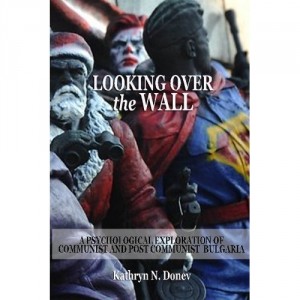 Surrounded with insecurity and uncertainty, the Bulgarian Evangelical believer finds great hope and comfort in the fact that God holds the future in His hands. Christianity is a reality that is certain. While having lived in a culture of oppression and persecution, the Bulgarian Evangelical believer now can trade a downtrodden spirit for one of triumph. The once atmosphere of turmoil is being transformed to one of liberation in the Spirit where chains of slavery are traded for a crown of joyous freedom. Living in the 21st century in a context of post communist and postmodern transformations, Bulgarian Evangelical believers must remain true to their historical heritage and preserve their identity in order to keep their faith alive. This unique testimony must be passed on to future Bulgarian generations by telling the story of the true Pentecostal experience.
Obama, Marxism and Pentecostal Identity
Time and time again in the past several years, while ministering in churches across the United States, friends and partners ask us about our opinion on the political situation at home and around the world. Many of them ask the direct question of America becoming more and more socialist-like. Our response is that while people have the right to own a business, there cannot be communism, but this barely scratches the surface.
“Looking over the Wall” answers this and many other important questions about the current global reality from a very distinct Pentecostal and the same time post communist point of view. Yet, the text does it in a way, which can actually relate to popular American culture and current economic reality. The book provides Christian answers as of what defines our identity and makes us human – a right communism strips from the persona, the family and the church without much regard of the consequences that follow.
But this drastic dehumanization has an almost irreversible effect on the human psyche – a slavery mentality that penetrates the very heart of men and women and leaves forever its mark of fear, depression and insecurity. The book traces how Pentecostalism as faith and ideology has the power to deliver post communist communities from the grasp of oppressive governments and transform them into a socially relevant culture changing force. At the same time, it remains a warning to theologians who dare to flirt with Marxist idealism being fulfilled in the context of the New Testament ecclesia. And rightfully so!
The book is a must read for any and all who are ministering or planning to minister in a post communist culture or among post communist groups regardless of their geographical locale. For the principles it shows are valid for post community mentality everywhere. Preview and purchase your copy directly at Amazon.com
New socialist president-elect throws Bulgaria in a new political crisis
 As we have previously proposed, this puts Bulgaria back on the “Red Light of 25 Years of Communism…” as in 2013 and 2014.
A socialist general from the Bulgarian Air Forces took by surprise the recent presidential elections winning +60% of the vote. He has already declared his pro-Russian preference asserting Bulgaria may pull out from NATO and the European Union.
As soon as loosing the elections, the ruling political party resigned the government early Monday morning. Bulgaria’s constitution now demands that the president gives mandate to the opposing Socialist Party, who will reject it due to insufficient presence in Bulgaria’s Parliament. The president then returns a second mandate to the ruling party, which they claim will turn down promptly.
A temporary government is then to be formed by the President and current Parliament, as it was the case in 2013 and 2014. In term, the democrats will hope to win with majority the new parliamentarian elections in 2017, which will be the 11th consecutive government elections in Bulgaria for the past 11 years since 2005:
2005 Parliamentary Elections
2006 Presidential Elections
2007 Municipal Elections
2009 Parliamentary Elections
2009 European Parliament elections
2011 Presidential Elections
2011 Local Elections
2013 Early parliamentary elections
2014 Early Parliamentary Elections
2015 Municipal Elections
2016 Presidential Elections
What does all this mean for the Church in Bulgaria?
Unstable political situation in Bulgaria with pro-Russian policies proposes a problem for the ministry of virtually all Protestants in the country. With a great probability to be voted in through a pro-Socialist government, a newly proposed legal measure bans any and all foreign organizations, companies and citizens from providing funding or donating to Bulgarian religious denominations. This would ban not only foreign physical and legal entities from funding Bulgarian religious institutions, but also companies with foreign ownership that are legally registered in Bulgaria. Using state funding for “illegal activities” by religious denominations will be sanctioned with prison terms of 3-6 years.
With these sanctions in mind, the new legal measure embodies the following rationale:
- Churches and ministers must declare all foreign currency money flow and foreign bank accounts
- Participation of foreign persons in the administration of any denomination is strictly forbidden
- Foreign parsons shall not be allowed to speak at religious meetings in any way shape or form especially religious sermons
- Anonymous donations and donorship to religious organization is not permitted
- Bulgarian flag shall be present in every temple of worship
- The new measure will block all foreign interference in the faith confessions and denominations in Bulgaria
Ministering at the Vineyard
110 Years ago, the Azusa Street Revival Began with a Fast
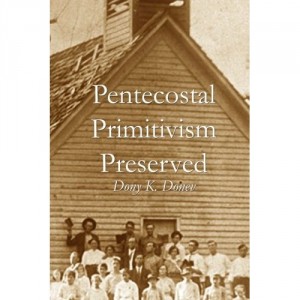
On April 6, 1906 William J. Seymour and the faithful few gathered with him at the Asberry house, decided to engage in a ten-day fast while waiting on the baptism in the Spirit. The first baptism with the Holy Spirit would occur just three days later. Seymour himself would be baptized on the sixth day of the fast and on the seventh, which was Good Friday, Seymour and his followers leased an abandoned church property at 312 Azusa Street and begin cleaning it up. Easter was on April 15, 1906 when they held their very first Pentecostal service at Azusa Street. The rest is history…
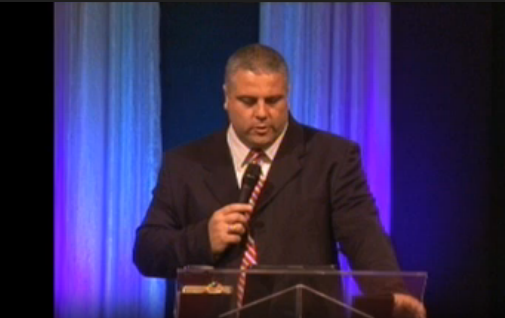
Ministering at Regional Church of God in Delbarton, WV
New Socialist Attack on Religious Freedom in Bulgaria
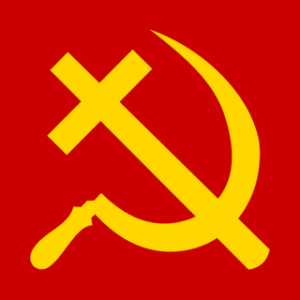 Over 26 years after the fall of the communist regime, the socialists left are reintroducing a new war against Christianity and religious freedom in Bulgaria. Two weeks after the introduction of draconian bill by George Kadiev, imposing full state control over believers and churches, the socialist parliamentary group filed in the registry of the National Assembly on March 14th a broader bill to restrict religious liberty in Bulgaria via government regulations according to which unregistered religions (faith confessions) have no right to:
- Hold religious meetings;
- Create and maintain charitable or humanitarian institutions;
- Write, issue and disseminate religious publications;
- Have educational establishments;
- Collect and receive unsanctioned donations;
- Associate or confide with people and communities at home or abroad on subjects of religion and religious issues.
In practice, the new bill introduces a new form of compulsory registration of believers by the state. The left socialist legislators seek to repeal fundamental human rights enshrined in Bulgaria’s Constitution and the European Convention for the Protection of Human Rights and Fundamental Freedoms (ECHR), as follows:
- The right to freedom of thought (Art. 9 ECHR and Art. 37 CRB)
- The right of forming beliefs and the non-obligation to give information about one’s convictions (Art. 38 CRB, Art. 9 ECHR)
- The right to freedom of conscience and religion (Art. 9 ECHR Art. 37 CRB)
- Freedom of speech, press and media (Art. 40 CRB)
- Right of expression (art. 10 ECHR, Art. 39 CRB)
- Freedom to collect and disseminate information (Art. 41 of the CRB; Art. 10 ECHR)
- Freedom of assembly indoors without permission from the authorities (Art. 43 of the CRB, Art. 11 ECHR)
- The right to freedom and confidentiality of correspondence (Art. 34 CRB; cf. Art. 8 ECHR)
- Revocation of the right to freedom of association (art. 11 ECHR Art. 44 CRB).
In the unfortunate event that this bill passes under the law, it will impose, the already prohibited by the Constitution, obligatory state ideology. It will also violate separation between church and state, according to which the state cannot interfere in the internal life of churches and religious communities. Furthermore, in attempt to limit the freedom of the people, it will impose expressed governance and control of faith, beliefs and personal conviction; thus, endangering fundamental human rights and freedoms inherent to democracy.
Empire State Church
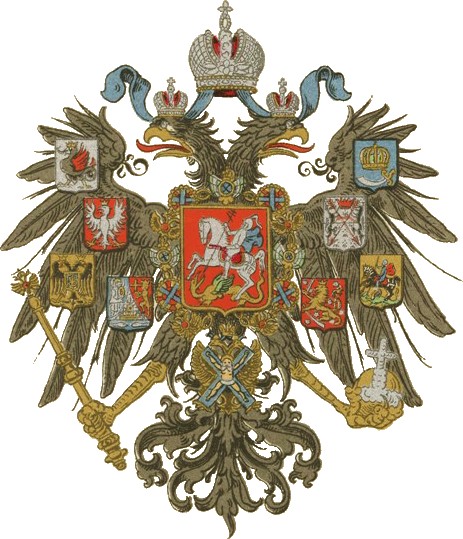 First Things First magazine recently published a religion and public life article on the Russian church. The focus was on orthodoxy and its historic symbioses with the political state. Several remarks from various social observations are in order.
First off, the article seems to have been written by a person who never lived under socialist Soviet Russia and therefore presents a one-sided interpretation of the period. In order words, the information presented is true, but it’s limited to a single political, social and most importantly spiritual view interpretation. The used terminology of “de-Sovietization” is good example for the interpretive limitation. Other post-communist countries properly use the terminology “de-socialization” or even “de-communization,” though no country has ever reached a truly communist state.
Furthermore, the article’s purposefully excludes millions of Russian Catholics, evangelicals and Armenian Christian believers in Russia who were also severely persecuted under the Regime and were not allowed as much freedom of worship as the state Orthodox Church. They cannot be placed outside the perimeter of the revival movements after the Fall of the Berlin Wall, because many of those revivals happened first within their congregations and then influenced the Orthodox Church
The orthodoxy of the described state church is also under question since there’s never been a true Russian orthodox church. Eastern Christianity in Russia is rooted in the Greek Orthodox Church and heavily influenced by the 9th century Bulgarian Christianization of the Slavs prior to reaching Russia. Built after the early byzantine ecclesial model, the Russian church never experienced a true separation of church and state. One of the foundations of Orthodoxy since Constantine the Great has been a co-existential paradigm in the form of symbioses between the Orthodox Church and the political state. Thus, a true Orthodox church has always been an Empire church.
The article further omits historic communist influence of state police (KGB) over the church. During the Regime, KGB agents not only infiltrated Orthodox dioceses, but dictated the course of the church via specifically trained secret agents posing as priests within the church. Many of these agents were placed in key leadership positions as bishops and even the top patriarch of the Russian church. No one could obtain such position or any hierarchy promotion without signing up to cooperate with the state police. Until this influence, which continues in the church today, is exposed and the church is purified from all communist influence through “lustration,” there can never be an independent Russian church – it will always be an Empire church – with a capital “E,” and small “c.”
Presenting the Scrolls from the Second Varna Declaration
https://www.youtube.com/watch?v=-kHytj8yK8E
We,
The believers from different churches in Bulgaria
declare on this day of October 5th 2014 in the city of Varna,
- That we, according to The Holy Scriptures, will do our best to “fulfill the vows to the Lord” (Psalm 116:14), which were written and signed by 5,000 believers in the two scrolls produced on April 9th 1989 in the same city of Varna
- In which we presented our requests, prayers and intersession for those in authority, that we may live peaceful and quiet lives in all godliness and holiness (1 Timothy 2:2)
- Reminding now our authorities in these two second scrolls about the urgent New Testament warning, that “God did not spare angles, when they sinned and He did not spare the ancient world, when He brought the flood on its ungodly people, and that He did not spare Sodom and Gomorrah but burned them to ashes and made them an example of what is going to happen to the ungodly” (2 Peter 4-6).
These two second scrolls are again signed by Christians in Bulgaria both on October 5, 2014 and further on by Christians all over the country, to whom theses second scrolls are being brought and presented.
On behalf of the Bulgarian Christians
Read Also:
- Prophetic Revival in Bulgaria: The Search for Holiness Continues
- 25 Year Revival Cycles in Bulgaria’s Protestant History
Ministering at the Good Shepherd Church in Florida
The FORGOTTEN ROOTS OF THE AZUSA STREET REVIVAL
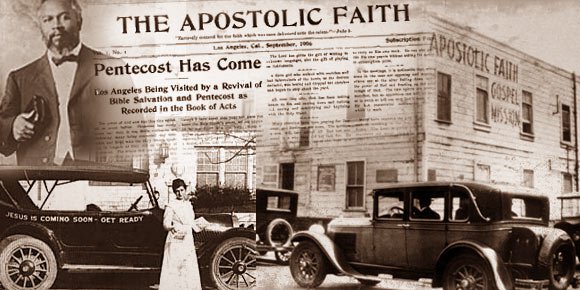 by HAROLD HUNTER, PH.D.
Writing during the glow of the Azusa Street revival, V.P. Simmons claimed to have 42 years of personal exposure to those who spoke in tongues. Published in 1907 by Bridegroom’s Messenger and circulated as a tract, Simmons chronicled the history of Spirit baptism from Irenaeus (2nd century) up to and including a group from New England whom he personally observed manifesting tongues-speech as they continually partook of a spiritual baptism.1 Identified as Gift People or Gift Adventists, they were widely known for their involvement with spectacular charisms.Early Pentecostal periodicals reported that tongues-speech was known among these groups since the latter part of the 19th century. Some groups were said to number in the thousands.
William H. Doughty, who, by 1855, had spoken in tongues while in Maine, was counted among that number. Elder Doughty moved to Providence, Rhode Island, in 1873 and assumed leadership among those exercising the gifts of the Spirit.3 Doughty’s mantle was passed on to Elder R.B. Swan who, reacting to the Azusa Street revival, wrote a letter explaining that the Gift People in Rhode Island had experienced speaking in tongues as early as 1874–75. (See “The Work of the Spirit in Rhode Island.”) B.F. Lawrence followed Swan’s letter describing an independent account of a woman who spoke in tongues in New York, perhaps prior to 1874, a result of her contact with the Gift People.4 (See “A Wonderful Healing Among The Gift People.”)
Stanley H. Frodsham quotes Pastor Swan’s claim to having spoken in tongues in 1875. Swan speaks of great crowds drawn from five states and specifically mentions his wife — along with Amanda Doughty and an invalid hunchback who was instantly healed — among those who spoke in tongues during this time.
Simmons said that Swan’s group adopted the name “The Latter Rain” after the advent of the Pentecostal movement. Their activities extended throughout New England states, especially Rhode Island, New Hampshire, Massachusetts, Vermont, and Connecticut, with the 1910 Latter Rain Convention held October 14–16 in Quakertown, Connecticut. Frank Bartleman frequently referred to joint speaking engagements with Swan, specifically recounting a 1907 tour that included a convention in Providence, Rhode Island, where he spoke 18 times.
Previously overlooked in related investigations is whether the Doughty family counted among the Gift People overlap with the Doughty who traveled with Frank Sandford. Lawrence attests that Swan’s circle included William H. Doughty’s daughter-in-law, Amanda Doughty, and her unnamed husband, an elder in the Providence congregation.8 Simmons says that William H. Doughty had two sons, the oldest, Frank, who was ordained. Could the unnamed brother of Frank be Edward Doughty, who at the end of the 19th century was part of Sandford’s entourage? So it seems.
Most of the groups named here have similar stories. For example, among the Fire-Baptized Holiness ranks was Daniel Awrey who had spoken in tongues in 1890 in Ohio. His residence was in Beniah, Tennessee, where an outbreak of speaking in tongues was reported in 1899. F.M. Britton wrote about people speaking in tongues in his Fire-Baptized revivals that predated the Azusa Street revival. Also, a revival in Cherokee County, North Carolina, in 1896, that gave the Church of God (Cleveland, Tennessee) many of its early leaders reported an outburst of speaking in tongues among several of the adherents. Given the above accounts, there is some debate as to whether Parham first heard speaking in tongues while at Sandford’s Shiloh in Maine or while he was among Fire-Baptized enthusiasts.
THE FOLLOWING ARE THE CATHOLIC LEADERSHIP OR GROUPS RECORDED TO HAVE SPOKEN IN TONGUES:
• ST. HILDEGARD (1098-1179)
• ANTHONY OF PADUA (1195-1231)
• FRANCISCANS (1200S)
• ANGE CLARENUS (1300)
• VINCENT FERRER (1350-1419)
• STEPHEN, MISSIONARY TO GEORGIA (1400S)
• ST. COLETTE (1447)
• LOUIS BERTRAND (1526-1581)
• THE JANSENISTS (1600)
• JEANNE OF THE CROSS (1450S)
• FRANCIS XAVIER (1506-1552)
SHERRILL’S BOOK ALSO LISTS SOME INDIVIDUALS FROM THE 19TH CENTURY WHO REPORT TONGUES-SPEAKING OCCURRING:
- 1855 V.P. SIMMONS
- ROBERT BOYD (DURING MOODY’S MEETINGS)
- 1875 R.B. SWAN
- 1979 W. JETHRO WALTHALL
- MARIA GERBER
MORE BOOKS to STUDY:
- “THEY SPEAK WITH OTHER TONGUES” BY JOHN L. SHERRILL
- “GLOSSOLALIA: TONGUE SPEAKING IN BIBLICAL, HISTORICAL, AND “PSYCHOLOGICAL PERSPECTIVE” BY FRANK E. STAGG
- “SPEAKING IN TONGUES: A GUIDE” BY MILLS
- “SPEAKING WITH TONGUES: HISTORICALLY AND PSYCHOLOGICALLY CONSIDERED” BY GEORGE CUTTEN.


