

Bulgarian parliamentary election are in a month
Parliamentary elections are scheduled to be held in Bulgaria on 19 April 2026 following the resignation of the Zhelyazkov government on 11 December 2025 caused by a series of protests. This will be the country’s seventh snap election since 2021 as a result of the political crisis affecting the country.
October 2024 Bulgarian Parliamentary Election
October 20, 2024 by Cup&Cross
Filed under Events, Featured, News, Publication
Snap parliamentary elections were held in Bulgaria on 27 October 2024,[1][2] after all three attempts to form a government following the latest June 2024 elections failed. This was the country’s sixth snap election since 2021. This series of snap elections is the result of a political crisis affecting the country.
June elections
The June 2024 elections, held at the same time as the European Parliament elections, had the lowest turnout (33%) since the end of communist rule in 1989.[3] It resulted in GERB–SDS winning most of the votes and 68 seats, with no party or alliance obtaining enough seats to form a majority in the National Assembly.[15] The new elected 50th Parliament replaced the 49th Parliament,[16] when all elected members were sworn in on 19 June.[17] Government formation attempts were given to GERB, PP–DB and There is Such a People (ITN), with the final attempt failing on 5 August.[18][19][20]
On 9 August the Bulgarian President as a consequence instead appointed the Vice President of the Bulgarian National Audit Office, Goritsa Grancharova-Kozhareva, as the next caretaker prime minister.[21] Grancharova-Kozhareva was granted ten days to form a proposal for the next caretaker government to be appointed on 20 August, and the upcoming next parliamentary elections were scheduled for 20 October 2024.[22] Grancharova-Kozhareva made the controversial decision to propose that the incumbent minister of the interior, Kalin Stoyanov, should remain in his role, but this was opposed by president Rumen Radev. Radev rejected the government proposal, delaying the upcoming election.[23]
Following the rejection of Grancharova-Kozhareva, Radev re-appointed Dimitar Glavchev as the caretaker prime minister,[24] and his government proposal was sworn in on 27 August, and the elections were set for the 27 October.[25][26]
GERB Leads Election with 68 Parliamentary Seats
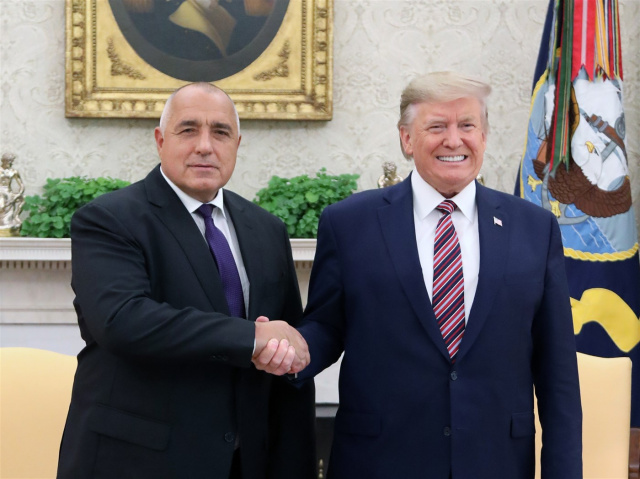
Bulgaria: GERB Leads with 68 Deputies as Election Commission Confirms Parliamentary Seats
The Central Election Commission (CEC) has announced the mandates for the parliamentary parties in the 50th National Assembly of Bulgaria. GERB will have the most deputies, with a total of 68. The second-largest parliamentary group will be the DPS with 47 deputies, followed by “We Continue the Change – Democratic Bulgaria” (WCC-DB) with 39. “Revival” will have 38 deputies, while the Bulgarian Socialist Party (BSP) will have 19.
The “Greatness” (Velichie) party will have the smallest parliamentary group, with 13 deputies. “There is Such a People” (TISP) will have 16 representatives, though their leader, Slavi Trifonov, will not be among them, as he was removed from the candidate lists by the CEC after submitting an application.
The CEC also reviewed and approved the analysis of inconsistencies after re-entering and comparing data from the sectional election commissions with the district commissions. Four elected members of the European Parliament have opted to remain as MEPs instead of joining the National Assembly: Hristo Petrov from WCC-DB, Ivaylo Valchev from TISP, Kristian Vigenin from BSP, and Stanislav Stoyanov from “Revival.” The CEC has fulfilled their requests and removed them from the parliamentary lists.
2024 European Parliament election in Bulgaria
5 seats, 24.26% — The 2024 European Parliament election in Bulgaria will be held on June 9, 2024 as part of the 2024 European Parliament election. This will be the fifth parliamentary election since Bulgaria’s EU accession in 2007, and the first to take place after Brexit. Bulgaria will simultaneously hold a separate parliamentary election on the same day.
Since the pandemic in 2020, it has become customary that elections are held in Bulgaria twice a year regardless of the high cost for the country. It is expected that as in the previous 4-5 years, the second round of Parliamentarian elections will be held in October.
Government Elections in Bulgaria (2005-2022):
2005 Parliamentary Elections
2006 Presidential Elections
2007 Municipal Elections
2009 Parliamentary Elections
2009 European Parliament elections
2011 Presidential Elections
2011 Local Elections
2013 Early parliamentary elections
2014 Early Parliamentary Elections
2015 Municipal Elections
2016 Presidential election
2017 Parliamentary elections
2019 European Parliament election (23-26 May)
2019 Bulgarian local elections
2019 Municipal Elections
2021 April National Parliament election
2021 Second National Parliament election
2021 Third National Parliament and Presidential elections
2022 October elections for 48th National Assembly after the fall of a four-party coalition in June 2022.
2023 Bulgarian parliamentary election
Bulgaria Set for Yet Another Election in the Spring of 2022
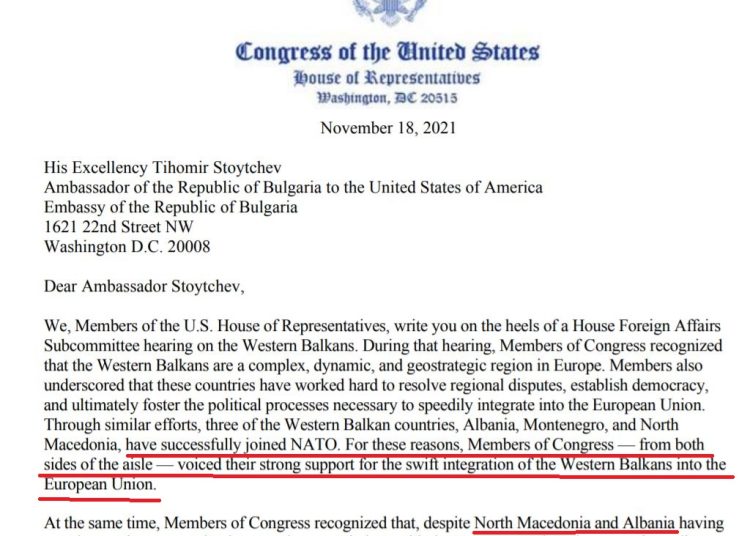
Current Socialist Bulgarian President won a second term with the overwhelming support of President Biden. However, during the election debates, President Radev slipped and claimed the Ukrainian Crimea belonged to Russia. By the time the election results were finalized on Monday, both the European Union and the U.S. Embassy in Bulgaria issued notes of warning stating that, Crimea is part of the Ukraine and is currently under Russian occupation. Also on Monday, U.S. Congress forwarded a letter to the Bulgarian government for an immediate decision on the acceptance of Macedonia in the European Union.
These escalations occur in the midst of Bulgaria unable to form a government after three consecutive elections in 2021. As it is highly improbable the current election winner with only 26% will be able to form a government without a political majority, another election may be on the horizon of 2022.
Apart from the Crimean and Macedonian questions, the next Bulgarian government has committed to President Biden’s tri-sea initiative leading to most drastic political restructuring as follows:
1. Accepting the cross-gender Istanbul Convention
2. Pushing Bulgaria toward military involvement in the Crimean Crises
3. Opening Bulgaria as a regional big-pharma hub for modern vaccine testing
Changes in the Bulgarian Constitution may push the country from Parliamentarian to a Presidential republic alike the Russian model set by Putin’s “democracy.” But before all this happens, an actual government will have to be formed in the midst of a very cold winter with rising gas prices and electricity prices already increased by some 30%. Drained by the 2020 pandemic and with no government help or any tax break, the evangelical churches in Bulgaria are not prepared for any of these new challenges.
Bulgarian Election Results Bring More Uncertainty for 2022
New centrist party poised to win Bulgarian election, will not end the long months of deadlock as Routers projects. With the lowest activity ever recorded in Bulgaria, the new election winner cannot form a majority parliament with only 25.34% of the vote. In an even more complicated scenario, to possibly form a coalition with the 2nd highest vote party will add only 22.4% percent, which will still be insufficient for a 51% parliamentarian majority. It certainly looks like a new (fourth) round of parliamentarian elections in the Spring of 2022.
Even more uncertain are the results of the parallel Presidential vote where current socialist president won with 49.4% – just a notch short from the 51% needed to remain in power. It is also disturbing that the current Bulgarian president who represents the Socialist Party in the country was mentioned by name (sic [b]Radev) as an ally and partner (in the video below) by U.S. President Joe Biden. The hope is that in the ballot this coming weekend, the second candidate in the election may overturn the vote in his favor so Bulgaria can receive at least a bit more democracy-oriented new President. For all this, your prayers are still coveted.
New centrist party poised to win Bulgarian election, could end months of deadlock
https://www.reuters.com/world/europe/new-centrist-party-poised-win-bulgarias-election-partial-results-show-2021-11-15/
• Bulgaria holds third parliamentary election this year
• New party set up by two entrepreneurs tops the poll
• Parliament still fragmented, tough coalition talks loom
• Incumbent Radev is frontrunner for presidential run-off
SOFIA, Nov 15 (Reuters) – A new centrist political party emerged as the likely winner of Bulgaria’s national election on Monday, partial data showed, boosting hopes for an end to months of political deadlock in the European Union’s poorest member state. The anti-graft We Continue The Change party (PP), launched by two former interim ministers only two months ago, was in the lead with 25.4% of the vote, based on 61% of ballots counted from Sunday’s election,the third in Bulgaria this year. After two previous elections in April and July produced an inconclusive outcome, Bulgarian voters are keen to see a new government formed quickly to tackle a dire COVID-19 situation, surging energy prices and widespread graft.
“I voted for what we are fighting for and hoping to happen – a more serious change in everything, so that we can have a better life here, at least for our children,” Kostadin Manov, a 39-year-old father of two, said after casting his vote in the capital Sofia.
“This corruption and all this theft should stop.”
But the partial results show the next parliament will be even more fragmented than in April and July, with seven parties represented.
TOUGH COALITION TALKS
Voter turnout in Sunday’s vote is estimated at about 40% – a historic low amid public disillusionment and apathy and also coronavirus infections that have left hospitals overwhelmed. The centre-right GERB party of long-serving premier Boyko Borissov was seen coming in second place with 22.2% of the vote. His decade-long rule ended with the April election amid public anger over his failure to crack down on corruption.
President Rumen Radev, a harsh critic of Borissov, won 49.2% of votes in a presidential election that also took place on Sunday and is tipped to win a second five-year term in the largely ceremonial post in a runoff set for Nov. 21.
Analysts said the new PP party – set up by two Harvard-educated entrepreneurs – looked better positioned to seal a coalition with the support of the Socialists, who won 10.3% of the vote, the anti-graft alliance Democratic Bulgaria with 6% and the ITN party of TV talk show host Slavi Trifonov.
Trifonov’s party had topped the July vote with 24% but the partial results show it now getting just 9.8% after his failure to forge a government.
However, tough coalition negotiations lie ahead before a workable government can be formed.
“Forming a government… will be more complicated because at least four parties will be needed for a majority,” said Dobromir Zhivkov, political analyst with Market Links pollster.
PP leader Kiril Petkov promised on Sunday to be open to dialogue and compromise in coalition talks but said his party would not renege on pledges to overhaul the judiciary and clamp down on corruption. read more
“Bulgaria is headed onto a new path,” said Petkov, who hopes to become prime minister and to have his PP co-founder, Assen Vassilev, as finance minister.
Bulgaria set for third election this year in November
Protest party ITN edged out the conservative GERB in the latest vote, but was not able to form a government. Bulgarian President Rumen Radev will also be running for reelection. Bulgaria will hold its third parliamentary election since April on November 14, President Rumen Radev announced Saturday. Following months of deadlock, Bulgarians are set to once again choose a new parliament after neither of the three largest parties was able to secure a majority government after an election in July. On Saturday, Radev announced that presidential elections will be held on the same day to save money. He is hoping to secure his second term in November.
President Biden delivers remarks at Bulgaria’s Three Sea’s initiative, which aims to reinforce ties between countries along the borders of the Baltic, Adriatic, and Black Seas.
Who is predicted to win?
Protest party ITN, that emerged from mass demonstrations against corruption in 2020, won the July election but was not able to secure a majority in parliament.
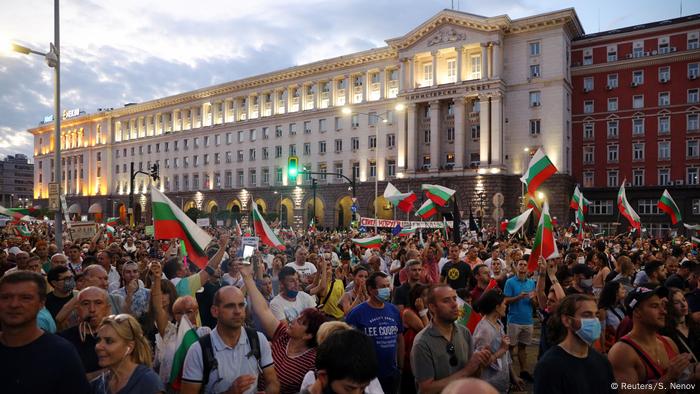 Anti-corruption protests in the summer of 2020 led to the creation of a protest led by an entertainer
The latest polls indicate a similarly inconclusive race ahead of the November election.
The pro-EU, centre-right party Citizens for European Development of Bulgaria (GERB) is now leading in a Politico poll by 23% with ITN on 20% support.
In contrast, the leftwing alliance, led by the Socialist Party, is trailing the top two with 16% of the popular support, according to the poll. It achieved 13.2% of the vote at last July’s parliamentary elections.
The split sets the scene for more political instability amid the COVID-19 economic crisis and Bulgaria’s desire to enter the eurozone in 2024.
What of the presidential elections?
President Radev is an independent who is widely considered one of the most popular politicians in Bulgaria. He is tipped to win a second term in office.
While the Bulgarian president’s powers are largely ceremonial, he can also propose legislation and force new votes in parliament by vetoing policy.
“I will count on the support of all respectable Bulgarians on the big issues – the fight against poverty and injustice,” said Radev.
Government Elections in Bulgaria (2005-2019):
2005 Parliamentary Elections
2006 Presidential Elections
2007 Municipal Elections
2009 Parliamentary Elections
2009 European Parliament elections
2011 Presidential Elections
2011 Local Elections
2013 Early parliamentary elections
2014 Early Parliamentary Elections
2015 Municipal Elections
2016 Presidential election
2017 Parliamentary elections
2019 European Parliament election (23-26 May)
2019 Bulgarian local elections
2019 Municipal Elections
BULGARIAN ELECTION: Bulgaria: Prime Minister and Cabinet Step Down
Government Elections in Bulgaria (2005-2021):
2005 Parliamentary Elections
2006 Presidential Elections
2007 Municipal Elections
2009 Parliamentary Elections
2009 European Parliament elections
2011 Presidential Elections
2011 Local Elections
2013 Early parliamentary elections
2014 Early Parliamentary Elections
2015 Municipal Elections
2016 Presidential election
2017 Parliamentary elections
2019 European Parliament election (23-26 May)
2019 Bulgarian local elections
2019 Municipal Elections
2021 Parliamentary elections
AS WE HAVE PREVIOUSLY PROPOSED, THIS PUTS BULGARIA BACK ON THE “RED LIGHT OF 30 YEARS OF COMMUNISM…” AS IN 2013, 2014, 2015, 2016, 2017, 2018, 2019 AND 2020…
According to Article 111(2) of the Constitution of the Republic of Bulgaria, Prime Minister Boyko Borisov submitted to the newly elected 45th National Assembly the resignation of the Council of Ministers he headed. Prime Minister Borisov’s letter tendering the resignation of the Cabinet was deposited today with the President of the National Assembly via the registries of the two institutions. In accordance with Art. 111, para. 3 of the Constitution, the government led by Prime Minister Borisov will continue to perform its functions until the election of a new Council of Ministers and will ensure continuity in government.
BULGARIA: 2017 Election Results
As we have previously proposed, this puts Bulgaria back on the “Red Light of 25 Years of Communism…” as in 2013, 2014, 2015 and 2016…
Government Elections in Bulgaria (2005-2015):
 2005 Parliamentary Elections
2006 Presidential Elections
2007 Municipal Elections
2009 Parliamentary Elections
2009 European Parliament elections
2011 Presidential Elections
2011 Local Elections
2013 Early parliamentary elections
2014 Early Parliamentary Elections
2015 Municipal Elections
Washington Post/Associated Press
SOFIA, Bulgaria — The center-right GERB party of former Prime Minister Boiko Borisov took the lead in Bulgaria’s parliamentary election on Sunday, a pair of exit polls showed, a result that if confirmed by official returns indicates support for the country keeping its European identity.
The Alpha Research exit poll said GERB won 32.2 percent of the vote, with the Socialist Party coming in second with 28 percent, while a separate exit poll by Gallup International Balkan had GERB with 32.8 percent and the Socialists with 28.4 percent.
The leader of the Socialists Party later conceded defeat and said the party would not take part in a coalition government with GERB.
Official results are expected Monday. If they confirm the exit polls, Borisov, a political maverick who combines man-in-the-street rhetoric with a pro-European Union disposition, will be handed a mandate to form his third cabinet.
GERB did not win enough votes to govern alone, and will likely form a coalition government with the United Patriots, an alliance of three nationalist parties that the exit polls showed placing third.
Borisov, 57, resigned as prime minister after his party lost the November 2016 presidential election. Parliament was dissolved in January, and the president appointed a caretaker government that will stay until a new government is formed.
Bulgaria set for snap election as president appoints interim government
Bulgaria’s new president called an early national election for 26 March and appointed a former parliamentary speaker as caretaker prime minister until then.
Ognyan Gerdzhikov, 70, currently a professor of law and head of an arbitration court, served as speaker of parliament in a centrist government from 2001 to 2005 and is now the country’s interim prime minister until the March elections. Kiril Ananiev, 61, currently a deputy finance minister in charge of budgets, will take over as finance minister, two sources familiar with the matter told Reuters. Ananiev is seen as a safe pair of hands, having served as deputy finance minister in five different governments. The appointments show that President Rumen Radev, who took office this month after winning an election with the backing of the opposition Socialists, is seeking continuity and balance, analysts said.


