

RAMADAN: How to reach Muslims with the Gospel?
Over 1 billion Muslims around the world are now observing Ramadan, a month of fasting and reflection. While most adherents to Islam are spending their holiday on personal discipline and dedication, more extreme factions are using the time of year to call for violence against Christians.
Ruth Kramer of Mission Network News reports:
“During Ramadan, the jihadists are calling for holy war. They’re calling it kind of an obligatory act of worship. What you typically see during Ramadan is a real spike in the violence. On the day that Ramadan began, jihadists attacked a bus that was filled with Coptic Christians in Egypt and killed 29 of them; about half of those were children as young as two years old.”
In the face of such violence, as we’re bombarded by stories of increasing barbarism, how should the body of Christ respond?
“One of the biggest tools we have in our tool chest is prayer, and we just don’t know how to pray for Muslims, how to love Muslims, to come alongside them and say there is another way.”
“If we knew how to pray for Muslims, and we joined together in prayer, imagine what God could do through that.”
To help us learn to pray for our Muslim neighbors, Prayercast, a branch of OneWay Ministries, is hosting the Ramadan Prayer Challenge.
The campaign sends daily prayer notes directly to your smartphone, focusing on specific regions and concerns of Muslim people. They’re inviting Christians across the world to unite in prayer for the next month, to ask “with one voice that God would shatter the deception of Islam with the presence and truth of Jesus Christ.”
How to Evangelize a Muslim
- The testimony of the Gospels provides the most reliable witness to Christ. Preach the Gospel as it is! Do not soft-pedal around biblical terminology to please Muslim hearers. Be clear about what you believe and why you believe it. Know the Scriptures well, and know the confessions and what exactly you believe (catechisms). The more you know about your faith, the easier it is to talk with Muslims.
- There is no gospel in Islam. The Qur’an clearly contradicts the essence of biblical Christianity and rejects the triune nature of God, disfigures the biblical doctrines of the person of Christ and denies justification through faith on account of the work of Christ on the cross. While claiming to be the perpetual religion of nature and history, following in the footsteps of Christianity, it attempts to justify its claims by asserting that the Word of God, revealed in the New and Old Testament, is corrupted. Our apologetic discussion with Muslims should be to defend the Scriptures and prove that the Scriptures aren’t corrupt as Muslims claim. Our goal is to open up their minds a bit so that they can start reading the Gospels for an eyewitness or a companion of an eyewitness to the real Jesus.
- Always ask them the classic evangelistic questions. ‘What about your salvation?’ ‘Can you be certain of this?’ ‘If you were to die, can you be certain you’d enter heaven at some point?’ Their response is always, “No, I couldn’t be certain, nor do I care.”
- Most western missionaries are result oriented; instead you should be concerned about preaching the Gospel correctly (as it is). The essence of Muslim evangelism is accurate communication about sin and grace: simply and clearly. Talk about the law and the gospel, not about infralapsarianism and divine simplicity! Don’t compare the Bible with the Quran. That comes later!
- Always remember that you are talking to Muslims. Avoid the use of Christian jargon. Speak about real sin, real guilt, real shed blood! Do not be ashamed to use Jesus’ direct and indirect titles clearly such as ‘Son of God’ ‘Lamb of God’ ‘New Adam’ ‘I AM – YAHWEH’ ‘Savior’ ‘Almighty God’.
- Use tact and be charitable! Don’t talk about reprobation with a Muslim or a new convert who has just lost an unbelieving family member. Be kind and courteous! Many Muslims act and speak out of ignorance, not malice.
- Be sensitive to their past – if they’ve had a bad experience with Christians, missionaries or churches, struggled with a particular sin etc., be understanding and compassionate! Muslims hate self-righteousness, and rightly so! Do not soft-pedal the law and the guilt of sin, but make sure they understand that you are a justified sinner, not a self-righteous “know it all” who is here to correct them!
- Muslims will ask you many questions about your faith. Don’t feel like you have to answer all of their questions in one day. However, make sure they hear your answers to one or two questions clearly. Stick with the subject – don’t get sidetracked. When the conversation wanders, pull it back to center stage – the law and the gospel.
- Muslims will ask you to comment on their faith. Don’t go there; they will not benefit from your criticism (or feigned approval) of other religions. Your job isn’t to debunk Islam but to give a clear witness to the truth of the Gospel. Instead of letting them drag you into the topic, turn the tables and ask them questions. Let them articulate their own understandings of the religious themes you are discussing; let what you communicate be the plain truth of Christian doctrines without enumerating how Islam is wrong.
- The message of the Gospel offends Muslims. It is okay! Don’t worry! God will take care of the hearer. It is His message. Muslims will not convert to Christ if they are not offended by the message of the Gospel. Offend them by being very clear about the teachings of Christ!
- Do not use any ‘Muslim friendly’ bible translations. ‘Muslims friendly’ bible translations are very deceptive! They are not true to the original Scriptures. Muslims see it as a form of deception by missionaries!
- Muslim evangelism is not about winning an argument, but leading Muslims to Christ with the Gospel. Discussions may get heated and intense at times – that’s okay. But the purpose of Muslim evangelism is not to show why you are right and Islam is wrong. It is to communicate the truth of the gospel! The message is to be the offence! Not you!
- When Muslims are apathetic about sin – use the law. When Muslims have doubts or are skeptical – use basic apologetic arguments. When Muslims express guilt for sin – present the Gospel.
- Evangelism is about leading Muslims to Christ. Convincing non-Christians or Evangelicals that Reformed theology is true, falls under the heading of polemics. Don’t confuse the two.
- When talking to Muslims stick with what all Christians hold in common wherever possible. Leave the internecine fighting among Christians aside when talking to Muslims. A Muslim will not care so much about differences between the Catholics and the Protestants or Lutherans and Baptists. Issues such as the exact meaning of the Lord’s Supper or methods of baptism should be addressed later, during discipleship!
- Wherever possible, when talking to Muslims speak about Christianity as factually true – “Jesus did this,” “Jesus said this,” “people heard and saw him,” etc. Keep away from the subjective line of approach– “it works for me,” “this is how I feel about it,” this is my testimony.”
- Before meeting with your Muslim friends pray for wisdom.
- Muslims will respect the text you quote, but not your personal opinion. Trust in the power of God the Holy Spirit working through the word! Cite texts directly from the Scriptures with attribution. Jesus says, Paul says…. It will not help Muslims to hear your personal opinion on biblical issues. So, don’t say “I think,” or “it seems to me” or “I feel like…” Muslims interpret your thoughts, your take on things or your feelings as part of the corruption of the Bible.
- Don’t rush things with Muslims. Just because a Muslim is not ready to trust in Christ after one encounter does not mean that effective evangelism has not taken place. Pre-evangelism is equally vital. You may plant, but someone else may have to water! Always remember that it is not us who convert the Muslims to Christ but God Himself (in His time)!
- Remember that evangelism isn’t complete after you first present the Gospel message to a Muslim. Evangelism has to continue even after they repent and give their lives to Christ. They have to sit under the ministry of the Word. Evangelism of a Muslim is complete only after they are baptized, brought to the Lord’s Supper and sat under the preaching of the Word at church. In other words, evangelism never ends. Discipleship is evangelism.
- Treat Muslims as objects of concern, not notches in your belt! Establish relationships and friendships with Muslims whenever and wherever possible.
- Don’t forget that a prophet is without honor in his own home. The chances of Muslim converts leading their own unbelieving family members (or someone close to them) to Christ by themselves is remote. Encourage them as they give witness to what they have learned, but also pray for God to bring other people into the picture to help evangelize their families.
- Don’t force things. If your Muslim friends balk, ridicule and otherwise are not interested, back off. Find another time and place. If after repeated attempts to communicate the gospel, and someone still shows an unwillingness to hear what you have to say, “shake the dust off your feet and move on to a new town!”
- Be willing to get your Muslim friends the resources they need: be willing to provide them with a Bible (not just a New Testament), the right book to read, and certainly an invitation to your home and later an invitation to attend your church or to a Bible study, etc. Never ever use a Muslim friendly bible translation. These translations are a product of some western mission agencies without any support from the national churches who know their context best.
- Pray for opportunities to evangelize Muslims. Make sure to let your Muslim friends know that you regularly attend a church. Do not disconnect your evangelism effort from the church. Pray for your church – that God would bless the preaching of his word, that he would bring Muslims into our midst, and that he would bless the church with growth.
- You don’t have to become a practical Arminian to be a faithful evangelist! A Christian approach to Muslim evangelism simply means telling Muslims the truth in love without changing it. Trust that God the Holy Spirit will penetrate hearts and minds of Muslims with “the Gospel”
- Muslims love to sing Islamic hymns that tell the stories of the Quran. Islamic hymn singing is singing the words of the Quran. Show your Muslim friends some samples of Christian biblical songs with verses directly taken from Scriptures. In other words, sing the Bible to them! The role of music in human culture is to join people together. Biblically we are commanded to sing the praises of Christ. There are 694 references to singing or music making in Holy Scriptures. Participatory singing is a very significant matter biblically. There will be no singing in Hell, but the saints in Heaven will sing everlastingly. That is really amazing and remarkable! Let us show Muslims what we will be doing in Heaven.
- “Fear God and give Him Glory, because the hour of His judgment has come, and Worship Him who made heaven and earth, the sea and the springs of water.” (Rev. 14:7)
The Sinking of Cross-cultural Bridges and the Collapse of the “Western Theological Corpus”

Bridges to people and culture do not work any longer because they never touch the water of troubled cross-cultural issues. For the same reason, contextual theology does not work any more – once faced with the deep cross-cultural crises of faith and conviction, it sinks with no hope.
We have long observed the collapse of the “Western Theological Corpus,” as Andrew Walls calls the structural problem in missions today. Main reason for its collapse is the failure to give answers to the theological questions emerging from the Global South. As a result, the colonial approach of doing missions, resonating in imperialistic cross-cultural ministry and ethnic conquest for assimilation of cultures, all have failed both the indigenous people and the mission sending agencies. Prayer has hence turned into a protest and prophecy for a new reality, where the encounter of missions is no less than the very cross-roads where we encounter God and others together.
Doing Missions in the Spirit in 2018
Looking Over the Wall (now on Kindle)
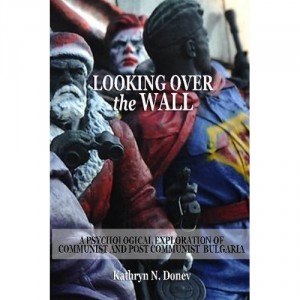 Looking Over the Wall: A Psychological Exploration of Communist and Post Communist Bulgaria
This book is the result of over a decade of research and personal experiences of living in Bulgaria for the past seven years. It embodies documents, articles, personal interviews and essays dealing with psychological explorations of communist and post communist Bulgaria. Along with a historical overview of Bulgaria, the author presents the development of psychotherapy throughout the country and addresses future concerns for the state of counseling within a post communist context. Furthermore, the author examines the Pentecostal experience of the Bulgarian evangelical believer drawing on a paper presented at the 36th annual Society of Pentecostal Studies Conference. As well included is original research which develops a theoretical account of the sequences of internal motivation in addition to student survey results regarding counseling practices from the first Master’s in Chaplaincy Ministry Program in Europe at the Bulgarian Evangelical Theological Institute.
Get your Kindle copy today at: Amazon Kindle Store
Prophetic Revival in Bulgaria: The Search for Holiness Continues
 The Fall of the Berlin Wall in 1989 did not take believers in the Eastern Block by surprise. They had been fervently praying for God to intervene and He did. Perhaps the greatest miracle of the 20th century was Communism falling on its own. If suffering with the Regime had been an eschatological expectation, the fall of the Regime was an eschatological celebration. And through all these times, the search for deep, biblical holiness after the heart of God never stopped. For the people of God, that search was always miraculous and prophetic.
I n the spring of 1989, a Danish journalist by the name of Johny Noer came to Bulgaria with a prophetic message. For years he had lived and travelled in many countries with his family and coworkers in a convoy of several trailers. They met the start of 1989 with a seven-day fast on the island of Pathmos where God told them to travel to Eastern Europe and proclaim the fall of the Regime. The Convoy did so through many difficulties paying a high price to minster in Bulgaria for the next three months.
The last service they conducted before being extradited by the authorities was on Easter morning at the Black Sea port city of Varna. Thousands of believers arrived from all over the country. The use of an auditorium was not allowed so they gathered outside the small Pentecostal church at the cities outskirts. They were surrounded by a dense police cordon of several hundred K9 patrols. Under these circumstances, the sermon could only be short and simple. In fact, it contained the exact words the Communist Police forbade Pastor Noer to say: “Let My People Go!” A prophecy was given that Communism will soon fall. It was fulfilled exactly seven months later on November 10, 1989.
 But there was something else that happened at that memorable Easter morning. Two large scrolls were brought into the church. There, over 5,000 men and women signed their names as a testimony of their dedication to God and preaching the Gospel until revival breaks through in Bulgaria. Beside a petition to the government for religious freedom, this national declaration affirmed the search for holiness, which even Communism had not been able to stop in Bulgaria.
In the fall of 2014 our ministry invited Pastor Johny Noer to Bulgaria again. His second visit marked exactly 25 years since the Fall of the Berlin Wall. After a week long crusade in a dozen of Bulgarian cities, several thousand Christians gathered again in Varna and signed two new scrolls containing the Second Varna Declaration. The event was just like a quarter of a century ago and made clear that revival cycles take place on increments of 25 years – a period where two generations overlap. It also proved that the search for holiness has not stopped in Bulgaria.
Read Also:
As Pentecostals historically…
![51DUWeyraBL._SY344_PJlook-inside-v2,TopRight,1,0_SH20_BO1,204,203,200_[1]](https://cupandcross.com/wp-content/uploads/2014/04/51DUWeyraBL._SY344_PJlook-inside-v2TopRight10_SH20_BO1204203200_1.jpg)
As Pentecostals historically (and as a movement)
We have been looking for power when we should have been seeking after His presence
We have been looking for gifts and signs and wonders, when we should have been looking for fruits of the Spirit and of character
We have been looking for preachers and prophets to follow, when we should have been looking for God’s presence to abide in
We have been looking for prophetic words and utterance, when we should have been taking more time in personal prayer
We have been growing, when we should have been going
And going when we should have been learning in the Spirit
We have been looking for more ways to build, when we should have been looking for more ways to move and go
We have been looking for ways to influence the world, instead of looking to be uninfluenced by God
And in our desire to be leaders and influencers, we have forgotten how to be led by God
And for a long time as a movement, we have existed at the borderline, at the verge and at the danger of gaining our rightful place in human history, but loosing our royal position in the GLORY of GOD
BUT ONE THING WE DID GET RIGHT: The Baptism with the Holy Ghost (watch the full message)
Read also: Last Days Great REVIVAL
20 recent Pentecostal articles in light of the upcoming Pentecostal Sunday celebration:
- The Forgotten Azusa Street Mission: The Place where the First Pentecostals Met
- Diamonds in the Rough-N-Ready Pentecostal Series (Complete)
- 95th anniversary of the Pentecostal movement in Bulgaria
- Toward a Pentecostal Solution to the Refugee Crises in the European Union
- Historical and Doctrinal Formation of Holiness Teachings and Praxis among Bulgarian Pentecostals
- Pacifism as a Social Stand for Holiness among Early Bulgarian Pentecostals
- The Practice of Corporate Holiness within the Communion Service of Bulgarian Pentecostals
- Sanctification and Personal Holiness among Early Bulgarian Pentecostals
- First Pentecostal Missionaries to Bulgaria (1920)
- Historical and Doctrinal Formation of Holiness Teachings and Praxis among Bulgarian Pentecostals
- The Everlasting Gospel: The Significance of Eschatology in the Development of Pentecostal Thought
- Online Pentecostal Academic Journals
- What made us Pentecostal?
- Pentecostalism and Post-Modern Social Transformation
- Obama, Marxism and Pentecostal Identity
- Why I Decided to Publish Pentecostal Primitivism?
- Historic Pentecostal Revival Tour in Bulgaria Continues
- The Land of Pentecostals
- Pentecostal Theological Seminary Address
- A Truly Pentecostal Water Baptism
10 Things to Considering When Attempting to Express Cultural Sensitivity
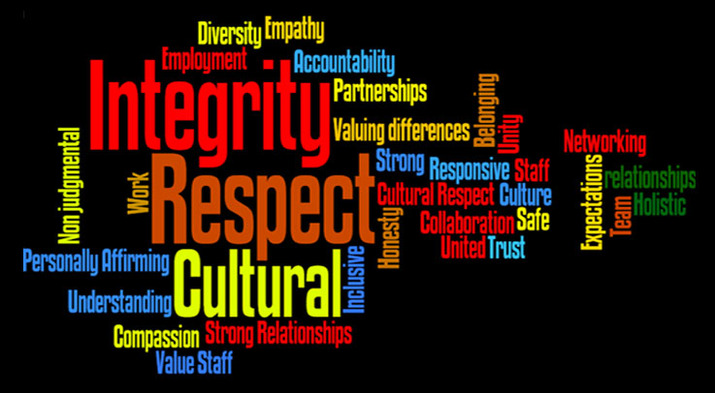
- Be informed about the cultural differences of the people you are trying to reach because your good intentions may be misunderstood and even offend.
- Keep in mind you are not going on a site-seeing tour nor are you going to see a tourist attraction.
- Just because something makes sense in your language doesn’t mean it will make sense interpreted into a foreign language. Clichés are to be avoided.
- “One man’s meat is another man’s poison”
- “There are two ways to skin a cat”
- Consider that the people you are ministering to are not objects to be put on display in a savvy PowerPoint when returning home from your trip.
- Respect their right to privacy
- Ask permission to take pictures
- Just because you going or have been to a foreign country doesn’t make you a missionary. Don’t let one trip abroad make you forget who you are or make you arrogant.
- It is when you put yourself in the shoes of the people you are helping that you learn some do not even have shoes to wear. But this does not mean you are better than others.
- Aid is not the answer to all problems. Sometimes the people you are going to assist have real problems and spiritual needs. Socks don’t save souls.
- Aid should be given freely without any strings attached
- Don’t make them feel less by giving scraps
- Don’t make them feel like beggars
- It is not the power of earthly money that saves souls, but the power of a Heavenly Father.
- No amount of money will buy a soul
- Raised funds will not make you a missionary
- Being the missionary of the one-way ticket is a true test of your commitment towards the Kingdom
- There is a major difference between being “mission-minded” and being an international worker.
- The people you are ministering to are real human beings with dignity.
- Treat all with respect
- Don’t assume they know less than you or have less than you
Integration of Learning and Faith
 The believers within our Pentecostal tradition, despite some historical presupposition against education, have generally strived to receive and impart knowledge much higher than what secular science can offer. Our paradigm of integration of faith and learning has come from a personal experience of knowing God rather than scientific method, and in a way it has become our own scientific method of testing truth beyond our religious context into daily life.
Similarly, being formed in the Spirit impacts our lives holistically, even the areas of our deepest doubts, our most serious suspicions and our greatest fears. It is there that true discoveries occur and where we realize that we know not the cosmos, the earth, our land, our families and even ourselves unless we first know God. Faith and learning become a personal spiritual quest, which reaches beyond just a Christian worldview or interpretation of faith and reason, to our very beings and change us.
In my case, faith and learning developed from my personal experience as a fifth generation Pentecostal believer and Spirit-filled minister. I can truly say that it has been a journey of reaching and a quest of finding, one that has changed me forever. Education did not make me a minister of the Gospel, nor did it have the power to do so, but it most certainly made me a better minister and a servant of the Kingdom.
Along the way, God used teachers who did much more than just deliver content in classrooms, but established the faith into our hearts and minds. In my journey, they have become road markers who knew God and made Him known to others. The passion to become personally such a milestone in the spiritual journey of others has been the greatest challenge for integration of faith and learning within both our ministry and personal Pentecostal experience. For our journey with God should not be without a destination or an end. It should be about actually getting there, at the place and reality where Scripture declares with most definite certainty that “we shall know.”
Christmas Book Sale: Psychological Exploration of Communist and Post Communist Bulgaria
In the past five years since 2011, we have authored over two dozen books related to our ministry and mission work in Eastern Europe. As several of the prints are now almost exhausted and second/third editions and several new titles are under way, we are releasing all currently available editions in a Christmas sale through the month of December. All titles are available at up to 30% off and Amazon offers free shipping and extra savings for bundle purchases.
Our book available on sale today is:
Psychological Exploration of Communist and Post Communist Bulgaria
Silence in the face of evil is itself evil: God will not hold us guiltless.
Not to speak is to speak. Not to act is to act.
~Dietrich Bonhoeffer
Surrounded with insecurity and uncertainty, the Bulgarian Evangelical believer finds great hope and comfort in the fact that God holds the future in His hands. Christianity is a reality that is certain. While having lived in a culture of oppression and persecution, the Bulgarian Evangelical believer now can trade a downtrodden spirit for one of triumph. The once atmosphere of turmoil is being transformed to one of liberation in the Spirit where chains of slavery are traded for a crown of joyous freedom. Living in the 21st century in a context of post communist and postmodern transformations, Bulgarian Evangelical believers must remain true to their historical heritage and preserve their identity in order to keep their faith alive. This unique testimony must be passed on to future Bulgarian generations by telling the story of the true Pentecostal experience.
Obama, Marxism and Pentecostal Identity
Time and time again in the past several years, while ministering in churches across the United States, friends and partners ask us about our opinion on the political situation at home and around the world. Many of them ask the direct question of America becoming more and more socialist-like. Our response is that while people have the right to own a business, there cannot be communism, but this barely scratches the surface.
“Looking over the Wall” answers this and many other important questions about the current global reality from a very distinct Pentecostal and the same time post communist point of view. Yet, the text does it in a way, which can actually relate to popular American culture and current economic reality. The book provides Christian answers as of what defines our identity and makes us human – a right communism strips from the persona, the family and the church without much regard of the consequences that follow.
But this drastic dehumanization has an almost irreversible effect on the human psyche – a slavery mentality that penetrates the very heart of men and women and leaves forever its mark of fear, depression and insecurity. The book traces how Pentecostalism as faith and ideology has the power to deliver post communist communities from the grasp of oppressive governments and transform them into a socially relevant culture changing force. At the same time, it remains a warning to theologians who dare to flirt with Marxist idealism being fulfilled in the context of the New Testament ecclesia. And rightfully so!
The book is a must read for any and all who are ministering or planning to minister in a post communist culture or among post communist groups regardless of their geographical locale. For the principles it shows are valid for post community mentality everywhere. Preview and purchase your copy directly at Amazon.com
Empire State Church
 First Things First magazine recently published a religion and public life article on the Russian church. The focus was on orthodoxy and its historic symbioses with the political state. Several remarks from various social observations are in order.
First off, the article seems to have been written by a person who never lived under socialist Soviet Russia and therefore presents a one-sided interpretation of the period. In order words, the information presented is true, but it’s limited to a single political, social and most importantly spiritual view interpretation. The used terminology of “de-Sovietization” is good example for the interpretive limitation. Other post-communist countries properly use the terminology “de-socialization” or even “de-communization,” though no country has ever reached a truly communist state.
Furthermore, the article’s purposefully excludes millions of Russian Catholics, evangelicals and Armenian Christian believers in Russia who were also severely persecuted under the Regime and were not allowed as much freedom of worship as the state Orthodox Church. They cannot be placed outside the perimeter of the revival movements after the Fall of the Berlin Wall, because many of those revivals happened first within their congregations and then influenced the Orthodox Church
The orthodoxy of the described state church is also under question since there’s never been a true Russian orthodox church. Eastern Christianity in Russia is rooted in the Greek Orthodox Church and heavily influenced by the 9th century Bulgarian Christianization of the Slavs prior to reaching Russia. Built after the early byzantine ecclesial model, the Russian church never experienced a true separation of church and state. One of the foundations of Orthodoxy since Constantine the Great has been a co-existential paradigm in the form of symbioses between the Orthodox Church and the political state. Thus, a true Orthodox church has always been an Empire church.
The article further omits historic communist influence of state police (KGB) over the church. During the Regime, KGB agents not only infiltrated Orthodox dioceses, but dictated the course of the church via specifically trained secret agents posing as priests within the church. Many of these agents were placed in key leadership positions as bishops and even the top patriarch of the Russian church. No one could obtain such position or any hierarchy promotion without signing up to cooperate with the state police. Until this influence, which continues in the church today, is exposed and the church is purified from all communist influence through “lustration,” there can never be an independent Russian church – it will always be an Empire church – with a capital “E,” and small “c.”
Baptism in the Fire of Persecutions as the Final Stand for Holiness
 Historical and Doctrinal Formation of Holiness Teachings and Praxis among Bulgarian Pentecostals (Research presentation prepared for the Society of Pentecostal Studies, Seattle, 2013 – Lakeland, 2015, thesis in partial fulfillment of the degree of D. Phil., Trinity College)
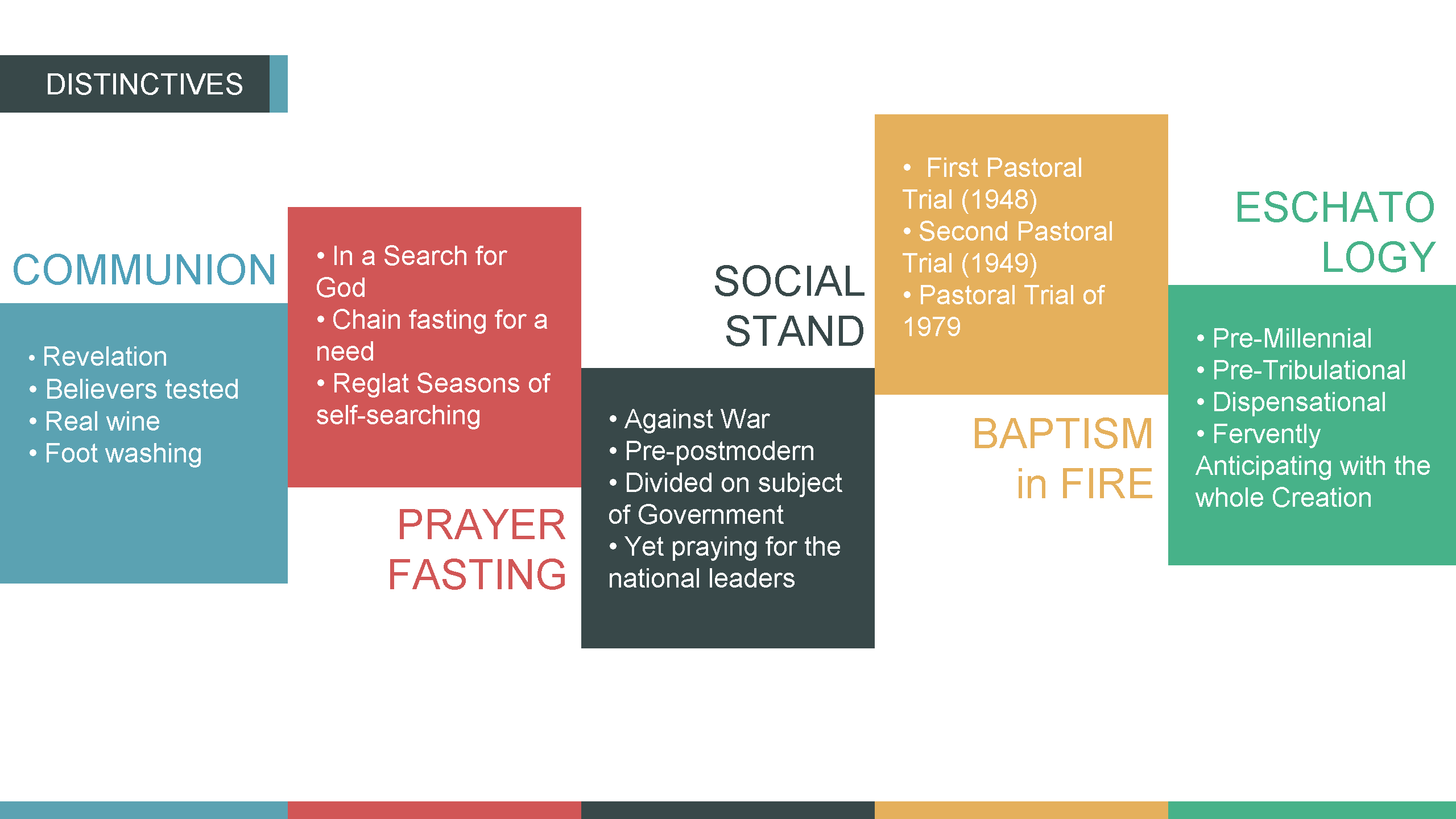
The eschatology of the first Pentecostals in Bulgaria was definitely Premillennial, built around the suffering of the church and the coming final deliverance. “Christ shall return in person,” not just in spirit or presence, read the Pentecostal Union’s first Declaration of Faith. But first they were to be tested in a baptism of fire…
After the 1923 unrest in Bulgaria, Pentecostal missionary Dionesy Zaplishny was abducted, severely beaten and held in a well for a week. His health was never the same and he passed away at an early age in 1935. But this was only the beginning of the persecution upcoming with the Communist Regime.
Bulgaria’s Pentecostal movement entered the oppression period split and divided. The westernized denominational structure, which Nikoloff proposed in 1928, never fit the existing Pentecostal churches and was unable to unite them as a whole. When the communists took over in 1944 they used the existing church defragmentation to infiltrate and manipulate the congregations. Thus, the eschatological suffering of the church experienced its prime under Communist dictatorship.
In 1948-49 two consecutive trials targeted evangelical pastors effectively sentenced fifteen of them and virtually beheading the evangelical movement in Bulgaria from its leadership. When a new generation of leaders became involved some 30 years later, another similar trial imprisoned six of them in 1979. The evangelical churches were left without any leaders, except the ones placed under the control of the communist state. The congregations that refused to accept them were outlawed and marginalized with no contact with the outside world. But through all these trials and tribulations, the believers learned how to survive the persecution and overcame…


