

PRAYER for the NATIONS in London
First Bulgarian Church in Chicago Opened in 1907
In May 1907, sponsored by the Chicago Tract Society, Petko Vasilev opened the Bulgarian Christian House in Chicago. The facilities had beds and a kitchen and served as a hotel and a shelter for new immigrants. In 1908, the name was changed to Bulgarian Christian Society and later was relocated several times.
A second similar work was started at the same time by Daniel Protoff called the Russian Christian Mission. Located in Chicago, it supported church services and a Bible school. In 1909, the City Missionary Society called Basil Keusseff to lead the mission. Keusseff was a Bulgarian born minister who was converted in Romania and was a graduate of the school in Samokov and Cliff College in Sheffield, England. In the 1890s, Keusseff pastored the Baptist church in Lom and then moved to Pittsburgh where he worked with Robert Bamber, pastor of the Turtle Creek Christian Church. The mission ministered to Russian, Bulgarian, Serbian, Croatian, Macedonian and Turkish minorities.
Around 1910, the ministry of the Bulgarian Christian Society was aided by Reverend Paul Mishkoff, a student at Moody Bible Institute. Coming from a poor but strong Protestant family, Mishkoff was called to preach at a very early age. He studied in the school at Samokov and was often sent to preach in the nearby villages. After finishing the school, Mishkoff decided to come and study at the Moody Bible Institute. He was helped by a Methodist missionary who gave him four dollars – the price of a third-class ticket from Sofia to New York where he was put on the immigrant’s train to Chicago. He was denied admission to Moody with the explanation that there was neither room nor funds for him. With no job and no money, the young preacher had to find food at the saloons where it was offered free for ones who drank. During his struggles, Mishkoff had lost all his possessions except a pocket size New Testament. In his personal story, he recalled, “But I had the copy of the Bulgarian Testament in my pocket not only to keep it, but to read it when I was sitting on the benches of the Union Station and other public places night after night. My soul was wakened anew. An ambition was roused in me: I must prepare myself for a preacher any way.” Through a financial miracle, Mishkoff was eventually able to graduate from the Moody Bible Institute. During the course of his studies, he was supported by Chicago Tract Society and he was able to minister to the 5,000 Bulgarians living in Chicago.
Around 1910, the Bulgarian Christian Society established a library which served the Bulgarian community for over twenty years. The congregation of the mission numbered about fifty. The ministry included English classes and immigration law seminars.
Several changes in the leadership of the mission began in 1921. In 1924, the mission was headed by Zaprian Vidoloff and the mission was renamed the Bulgarian Christian Mission. Vidoloff was a graduate of the Samokov School in 1910, a student of philosophy at the University of Sofia and a graduate of Union Theological College in Chicago. He entered pastoral ministry in 1915 and later served as the secretary of the Baptist Union. At the same time, he was secretary of the Bulgarian legation in Washington, D.C. from 1921 to 1923.
All Bulgarian religious organizations initiated by evangelicals before 1930 existed as missions. In February 1932, the First Bulgarian Church pastored by Joseph Hristov was started in Chicago.
 July 10, 2015 marked the 20th anniversary of the first service of the first Bulgarian Church of God in Chicago in 1995.
We have told the Story of the first Bulgarian Church of God in the Untied States (read it here) on numerous occasions and it was a substantial part of our 2005 dissertation (published in 2012, see it here).
From my personal memories, the exact beginning was after Brave Heart opened in the summer of 1995 and the Narragansett Church of God closed the street for a 4th of July block party with BBQ, Chicago PD horsemen, a moonwalk and much more.
The first service in the Bulgarian vernacular was held Sunday afternoon, July 10th 1995 being the true anniversary of the Bulgarian Church in Chicago. Only about a dozen were present and the sermon I preached was from Hebrews 13:5. Unfortunately, to this day 20 years later, we cannot locate the pictures taken that day to identify those present. And some have already passed away.
Using a ministry model that later became a paradigm for starting Bulgarian churches in North America (see it in detail) the church grew to over 65 members in just a few weeks by the end of July. This was around the time the movie Judge Dread had opened and the first edition of Windows 95 was scheduled for release in Chicago. I saw them both at the mall on upper Harlem Boulevard.
The Bulgarian Church of God in Chicago followed a rich century-long tradition, which began with the establishing of Bulgarian churches and missions in 1907. (read the history) Consecutively, our 1995 Church Starting Paradigm was successfully used in various studies and models in 2003. The program was continuously improved in the following decade, proposing an effective model for leading and managing growing Bulgarian churches.
Based on the Gateway cities in North America and their relations to the Bulgarian communities across the continent, it proposed a prognosis toward establishing Bulgarian churches (see it here) and outlined the perimeters of their processes and dynamics in the near future (read in detail).
After a personal xlibris, the said prognosis were revisited in 2009 in relation to preliminary groundbreaking church work on the West Coast and then evaluated against the state of Bulgarian Churches in America at the 2014 Annual Conference in Minneapolis.
We’re yet to observe the factors and dynamics determining if Bulgarian churches across North America will follow their early 20th century predecessors to become absorbed in the local context or alike many other ethnic groups survive to form their own subculture in North America. We will know the answer for sure in another 20 years…
110 Years Ago the First Bulgarian Mission in Chicago was Started
 In May 1907, sponsored by the Chicago Tract Society, Petko Vasilev opened the Bulgarian Christian House in Chicago. The facilities had beds and a kitchen and served as a hotel and a shelter for new immigrants. In 1908, the name was changed to Bulgarian Christian Society and later was relocated several times.
A second similar work was started at the same time by Daniel Protoff called the Russian Christian Mission. Located in Chicago, it supported church services and a Bible school. In 1909, the City Missionary Society called Basil Keusseff to lead the mission. Keusseff was a Bulgarian born minister who was converted in Romania and was a graduate of the school in Samokov and Cliff College in Sheffield, England. In the 1890s, Keusseff pastored the Baptist church in Lom and then moved to Pittsburgh where he worked with Robert Bamber, pastor of the Turtle Creek Christian Church. The mission ministered to Russian, Bulgarian, Serbian, Croatian, Macedonian and Turkish minorities.
Around 1910, the ministry of the Bulgarian Christian Society was aided by Reverend Paul Mishkoff, a student at Moody Bible Institute. Coming from a poor but strong Protestant family, Mishkoff was called to preach at a very early age. He studied in the school at Samokov and was often sent to preach in the nearby villages. After finishing the school, Mishkoff decided to come and study at the Moody Bible Institute. He was helped by a Methodist missionary who gave him four dollars – the price of a third-class ticket from Sofia to New York where he was put on the immigrant’s train to Chicago. He was denied admission to Moody with the explanation that there was neither room nor funds for him. With no job and no money, the young preacher had to find food at the saloons where it was offered free for ones who drank. During his struggles, Mishkoff had lost all his possessions except a pocket size New Testament. In his personal story, he recalled, “But I had the copy of the Bulgarian Testament in my pocket not only to keep it, but to read it when I was sitting on the benches of the Union Station and other public places night after night. My soul was wakened anew. An ambition was roused in me: I must prepare myself for a preacher any way.” Through a financial miracle, Mishkoff was eventually able to graduate from the Moody Bible Institute. During the course of his studies, he was supported by Chicago Tract Society and he was able to minister to the 5,000 Bulgarians living in Chicago.
Also in 1910, the Bulgarian Christian Society established a library which served the Bulgarian community for over twenty years. The congregation of the mission numbered about fifty. The ministry included English classes and immigration law seminars. Several changes in the leadership of the mission began in 1921. In 1924, the mission was headed by Zaprian Vidoloff and the mission was renamed the Bulgarian Christian Mission. Vidoloff was a graduate of the Samokov School in 1910, a student of philosophy at the University of Sofia and a graduate of Union Theological College in Chicago. He entered pastoral ministry in 1915 and later served as the secretary of the Baptist Union. At the same time, he was secretary of the Bulgarian legation in Washington, D.C. from 1921 to 1923.
All Bulgarian religious organizations initiated by evangelicals before 1930 existed as missions. In February 1932, the First Bulgarian Church pastored by Joseph Hristov was started in Chicago.
How to Start a Bulgarian Church in America from A-to-Z

10 Things to Considering When Attempting to Express Cultural Sensitivity

- Be informed about the cultural differences of the people you are trying to reach because your good intentions may be misunderstood and even offend.
- Keep in mind you are not going on a site-seeing tour nor are you going to see a tourist attraction.
- Just because something makes sense in your language doesn’t mean it will make sense interpreted into a foreign language. Clichés are to be avoided.
- “One man’s meat is another man’s poison”
- “There are two ways to skin a cat”
- Consider that the people you are ministering to are not objects to be put on display in a savvy PowerPoint when returning home from your trip.
- Respect their right to privacy
- Ask permission to take pictures
- Just because you going or have been to a foreign country doesn’t make you a missionary. Don’t let one trip abroad make you forget who you are or make you arrogant.
- It is when you put yourself in the shoes of the people you are helping that you learn some do not even have shoes to wear. But this does not mean you are better than others.
- Aid is not the answer to all problems. Sometimes the people you are going to assist have real problems and spiritual needs. Socks don’t save souls.
- Aid should be given freely without any strings attached
- Don’t make them feel less by giving scraps
- Don’t make them feel like beggars
- It is not the power of earthly money that saves souls, but the power of a Heavenly Father.
- No amount of money will buy a soul
- Raised funds will not make you a missionary
- Being the missionary of the one-way ticket is a true test of your commitment towards the Kingdom
- There is a major difference between being “mission-minded” and being an international worker.
- The people you are ministering to are real human beings with dignity.
- Treat all with respect
- Don’t assume they know less than you or have less than you
Sanctuary Gateway Cities for Eastern European Slavic and Bulgarian Immigrant Churches in North America
Since 1994 Cup & Cross Ministries International has assisted churches across the United States and has strategically planned and developed a process which incorporates Bulgarian Evangelical Churches in North America. The first success of this endeavor was the establishment of the Bulgarian Evangelical Church of God in Chicago in 1995.
The Bulgarian Church of God in Chicago followed a rich century-long tradition, which began with the establishing of Bulgarian churches and missions in 1907. (read the history) Consecutively, our 1995 Church Starting Paradigm was successfully used in various studies and models in 2003. The program was continuously improved in the following decade, proposing an effective model for leading and managing growing Bulgarian churches.
Based on the Gateway cities in North America and their relations to the Bulgarian communities across the continent, it proposed a prognosis toward establishing Bulgarian churches (see it here) and outlined the perimeters of their processes and dynamics in the near future (read in detail). Since 1995 twelve more Bulgarian churches have been started in strategic immigration gateways across the United States and Canada. For the past four years our team have been involved in the process of establishing Bulgarian congregations in Atlanta, Phoenix and San Francisco. Read complete paper (PDF)
Toward Context of Ministry Applications
In the beginning of the 21st century the Protestant Church in Bulgaria is entering a new constitutional era in the history of the country. Since the fall of the Berlin Wall, the political and economic challenges in Eastern Europe have strongly affected the Evangelical Churches. More than ever before, they are in need of reformation in doctrines and praxes in order to adjust to a style of worship liberated from the dictatorship of the communist regime. In order to guarantee the religious freedom for our young, democratic society, the Protestant Movement in Bulgaria needs a more dynamic representation. Such can be provided only by people who will create a balance between the old atheistic structures and the new contemporary, nontraditional style of ministry.
Similar is the case among Bulgarian Evangelical Churches in North America which also share analogue dynamics with congregations of Latin American immigrants. Several facts are obvious from such comparison. It is apparent that Bulgarian immigrants come to North America in ways similar as other immigrant groups. Large cities which are gateways for immigrants are probable to become a settlement for Bulgarian immigrants due to the availability of jobs, affordable lodging and other immigrants from the same ethnic group.
The emerging Bulgarian immigrant communities share religious similarities and belongingness which are factors helping to form the communities. As a result of this formation process, the Bulgarian Evangelical Churches in North America emerge. It also seems natural to suggest that as this process continues, Bulgarian Evangelical Churches will be formed in other gateway cities and other large cities which meet the requirements to become a gateway city. Such has been the case with Latin American churches. If this is true, it should be proposed that the Bulgarian Churches in North America follow a strategy for church planting and growth which targets these types of cities.
It is encouraging, at the same time, to observer that one of the positive estimates provided by our doctoral project is also coming to reality. In 2002-2004, based on analyses provided by the New Religious Immigrants Project, our research suggested that the next Bulgarian Evangelical Church will be established in the last of the Seven American Gateway Cities which was still without a Bulgarian Church, namely the city of San Francisco. Our resent visit in the area of the Bay Area showed that this prediction is already progressing into a reality as the Bulgarian Diaspora there is already producing a Bible study group out of uniting Bulgarian college students from Barkley and young computer professionals in the area.
Geographical Location of Bulgarian American Churches and Gateway Cities.
Currently, Bulgarian Evangelical Churches are located in cities which have a high concentration of foreign-born immigrants. Such cities are called gateway cities, a large immigrant point-of-entry city to the United States. Immigrants typically enter the United States through one of these cities and settle there. Such cities contain over half of the foreign-born population in the United States. There are Bulgarian Evangelical Churches active in six of the seven gateway cities as follows:
Bulgarian Evangelical Churches in Gateway Cities
| Gateway City | Foreign Born | Percent of Foreign Born | Bulgarian Church |
| 1. New York, NY | 3,657,269 | 18.7% | Yes |
| 2. Los Angeles, CA | 3,944,828 | 27.1% | Yes |
| 3. Houston, TX | 460,380 | 12.3% | Yes |
| 4. Washington, DC | 578,786 | 8.6% | No |
| 5. Miami, FL | 1,072,843 | 33.6% | Yes |
| 6. Chicago, IL | 914,58 | 11.1% | Yes |
| 7. San Francisco, CA | 1,250,693 | 20.0% | No |
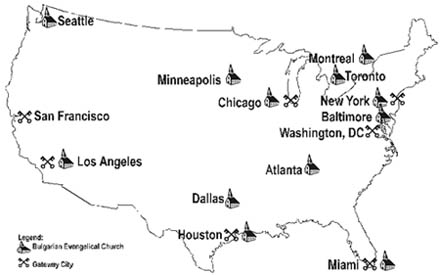
Several facts are obvious from the above comparison. It is apparent that Bulgarian immigrants come to North America in ways similar to other immigrant groups, channeled through the listed gateway cities. Large cities which are gateways are more probable to become a settlement for Bulgarian immigrants due to the availability of jobs, lodging and other immigrants from the same ethnic group. The emerging Bulgarian immigrant communities share religious similarities and belongingness which are factors helping to form the communities. As a result of this process of formation of Bulgarian immigrant communities, the Bulgarian Evangelical Churches in North America emerge. It also seems natural to suggest that as this process continues, Bulgarian Evangelical Churches will be formed in the remaining two gateway cities (Washington, D.C. and San Francisco) and other large cities which meet the requirements to become a gateway city (for example, the city Atlanta). If this is true, it should be proposed that the Bulgarian Churches in North America follow a strategy for church planting and growth which targets this type of cities. With all this in mind, the Unrealized Spiritual Harvest of Bulgarian Churches in North America remains unforgiving in history…
Resources for Further Study:
- Seven Churches of Revelation
- How to Start a Bulgarian Church in America from A-to-Z
- Bulgarian Churches in North America: Contextual Assessment
- Bulgarian Churches in North America: Statement of Problem
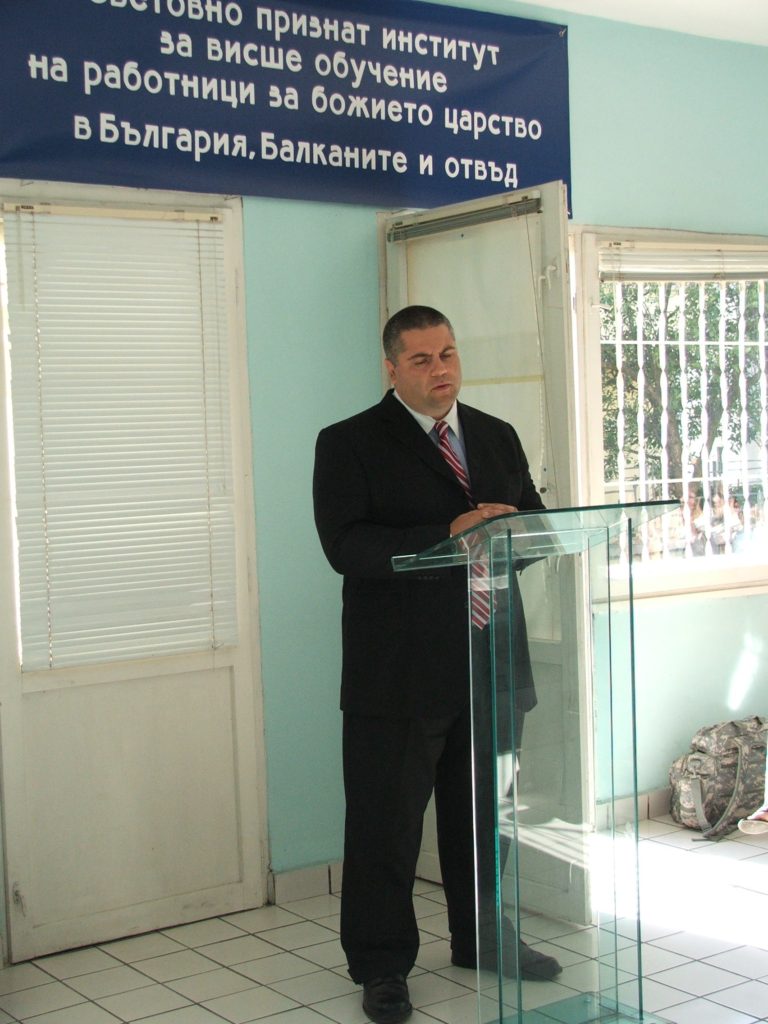
Addressing the Masters of Chaplaincy Ministry Program Graduating Class in Bulgaria
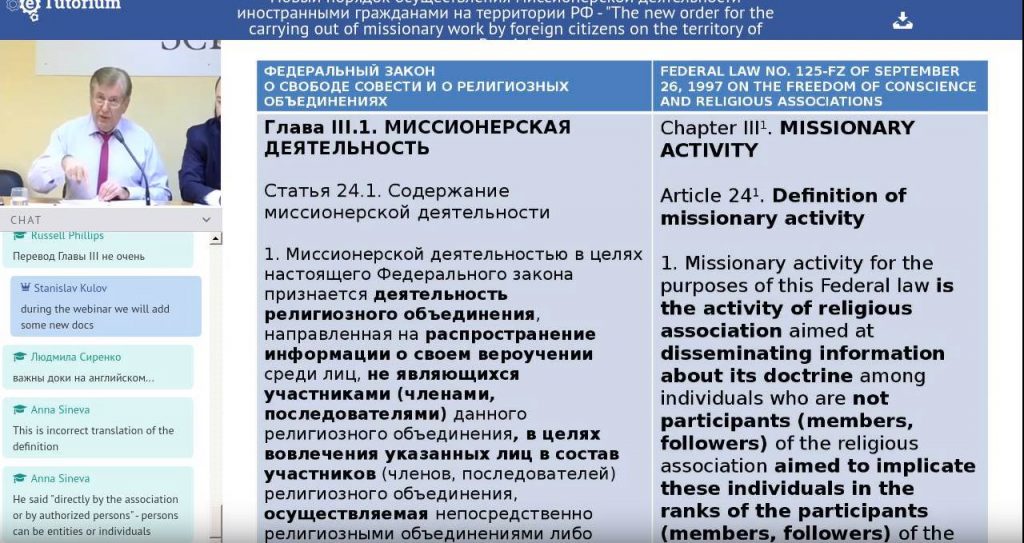
New Russia Law on Religious Missions Explained
The Road Ahead for the Master’s of Chaplaincy Ministry Program (2016-2020)
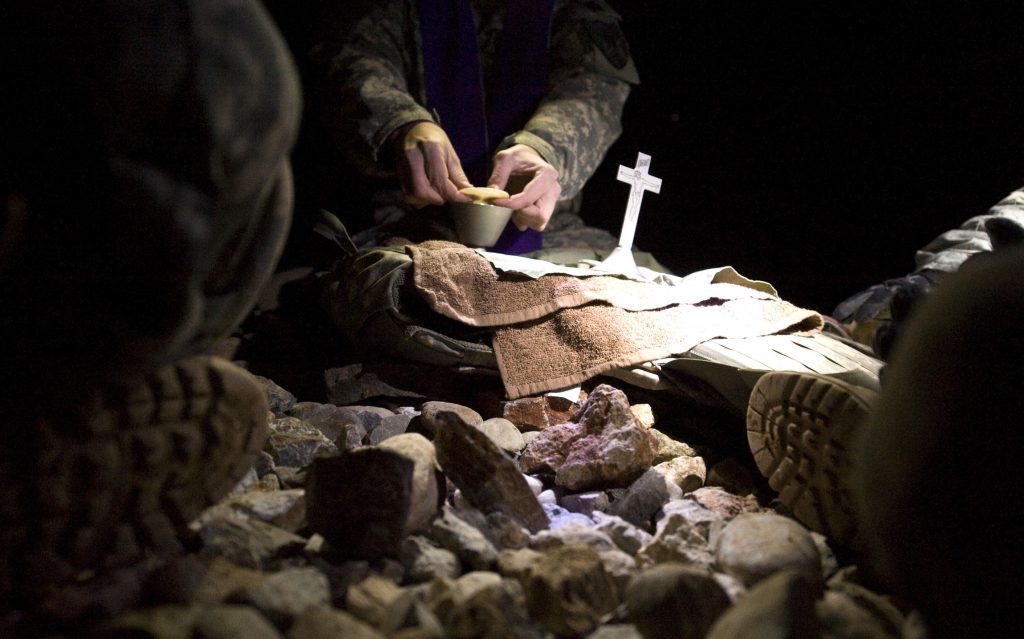
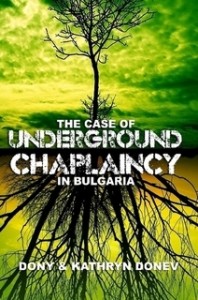 We are proud to announce that the Master’s of Chaplaincy Ministry Program, we designed and launched in Bulgaria in 2006, has been selected to be part of the Social Service Program of New Bulgarian University. After being for years a valuable part of the regular curriculum of the Bulgarian Evangelical Theological Institute and the St. Trivelius Institute in the capital Sofia, the chaplaincy program has received the highest level of recognition as successful graduates will be finally able to receive government recognized degrees and apply their knowledge and training in chaplaincy on a professional level. The chaplaincy program can also serve within the Integration Proposal of local NATO programs and be instrumental in dealing with the enormous wave of Middle East migrants crossing through Bulgaria today.
In the beginning of the 21st century in Bulgaria, law and chaplaincy meet on the road to democracy. But before chaplaincy could be legalized completely and endorsed by the state to its full functionality, several changes must be undergone. Some of them are:
- Legal provision allowing chaplains to work as staff in the army, which guarantees the equal presence of protestant chaplains as well.
- The approval, acceptance and implementation of a NATO based model for chaplaincy within the structures of the Bulgarian Army.
- Periodical and systematic educational strategy toward chaplaincy workers among Bulgarian evangelicals.
- A paradigm for cooperation of Bulgarian chaplains from various ethnic, religious and cultural backgrounds.
- Further research publications to enhance the efficiency of chaplaincy within the Bulgarian national context.
Also important [click to read]:
- U.S. Department of State recognizes our chaplaincy efforts in Bulgaria
- Bulgarian Chaplaincy Association: Integration Proposal with Local NATO Programs
- Bulgarian Chaplaincy Association: Vision and Resolution
- Chronology of our role and involvement in developing Church of God chaplaincy in Bulgaria since 2001
- Master’s of Chaplaincy Ministry Program in Bulgaria Reflections
- The Past Decade of Chaplaincy in Bulgaria (2006-2016)
- Related Publications and Presentations by Cup & Cross Ministries International
Further Developments on the Master’s Degree of Chaplaincy Ministry in Bulgaria
We are proud to announce that the Master’s of Chaplaincy Ministry Program, we designed and launched in Bulgaria in 2006, has been selected to be part of the Social Service Program of New Bulgarian University. After being for years a valuable part of the regular curriculum of the Bulgarian Evangelical Theological Institute and the St. Trivelius Institute in the capital Sofia, the chaplaincy program has received the highest level of recognition as successful graduates will be finally able to receive government recognized degrees and apply their knowledge and training in chaplaincy on a professional level. The chaplaincy program can also serve within the Integration Proposal of local NATO programs and be instrumental in dealing with the enormous wave of Middle East migrants crossing through Bulgaria today.
The Master’s Degree of Chaplaincy Ministry in Bulgaria was:
- Upgraded to the necessary educational and professional levels, applicable to the specific context of ministry in Bulgaria (December 2010)
- Presented in its upgraded form for approval before the educational board of BETI in 2011 (January 2011)
- Applied in its full capacity with the remaining modules in Theology (Spring 2011), Counseling (Fall 2011) and Master’s Thesis (exp. 2012)
- Transferred to the New Bulgarian University in Sofia under their new social worker studies program.
Also important [click to read]:
- U.S. Department of State recognizes our chaplaincy efforts in Bulgaria
- Bulgarian Chaplaincy Association: Integration Proposal with Local NATO Programs
- Bulgarian Chaplaincy Association: Vision and Resolution
- Chronology of our role and involvement in developing Church of God chaplaincy in Bulgaria since 2001
- Master’s of Chaplaincy Ministry Program in Bulgaria Reflections
- The Past Decade of Chaplaincy in Bulgaria (2006-2016)
- Related Publications and Presentations by Cup & Cross Ministries International
Church of God Chaplaincy in Bulgaria: In the beginning…
Bulgarian Chaplaincy Association: Celebrating a Decade of Ministry
We are proud to announce that the Master’s of Chaplaincy Ministry Program, we designed and launched in Bulgaria in 2006, has been selected to be part of the Social Service Program of New Bulgarian University. After being for years a valuable part of the regular curriculum of the Bulgarian Evangelical Theological Institute and the St. Trivelius Institute in the capital Sofia, the chaplaincy program has received the highest level of recognition as successful graduates will be finally able to receive government recognized degrees and apply their knowledge and training in chaplaincy on a professional level. The chaplaincy program can also serve within the Integration Proposal of local NATO programs and be instrumental in dealing with the enormous wave of Middle East migrants crossing through Bulgaria today.
But let us backup just a moment and start from the very beginning. In the summer of 1995, while pioneering the first Bulgarian church in the Chicago Metro, the local Church of God state office offered a civil chaplaincy training course for beginners. Unfortunately, due to our heavy church schedule, the chance to attend was low and virtually unobtainable. It was not until five years later that our interest in the field was finally rewarded, as in the summer of 2000 both my wife-to-be and I completed the required course work for chaplaincy accreditation, followed by an intense module at the Erlanger Hospital in Chattanooga, where essentially the whole idea for the resurrection of chaplaincy ministry in Bulgaria was born.
Today, our Master’s of Chaplaincy Ministry Program has produced a number of graduates who are serving in various chaplaincy positions and civil services in Bulgaria. Please continue to pray for all our named and unnamed chaplains on mission. (Click here to read more)
Also important [click to read]:
- U.S. Department of State recognizes our chaplaincy efforts in Bulgaria
- Bulgarian Chaplaincy Association: Integration Proposal with Local NATO Programs
- Bulgarian Chaplaincy Association: Vision and Resolution
- Chronology of our role and involvement in developing Church of God chaplaincy in Bulgaria since 2001
- Master’s of Chaplaincy Ministry Program in Bulgaria Reflections
- The Past Decade of Chaplaincy in Bulgaria (2006-2016)
- Related Publications and Presentations by Cup & Cross Ministries International


