

The Forgotten Azusa Street Mission: The Place where the First Pentecostals Met
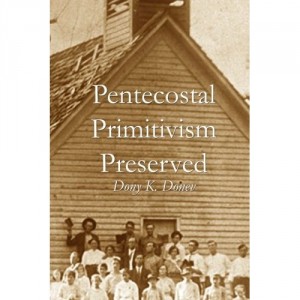
For years, the building on Azusa Street has also been an enigma. Most people are familiar with the same three or four photographs that have been published and republished through the years. They show a rectangular, boxy, wood frame structure that was 40 feet by 60 feet and desperately in need of repair. Seymour began his meetings in the Mission on April 15, 1906. A work crew set up a pulpit made from a wooden box used for shipping shoes from the manufacturer to stores. The pulpit sat in the center of the room. A piece of cotton cloth covered its top. Osterberg built an altar with donated lumber that ran between two chairs. Space was left open for seekers. Bartleman sketched seating as nothing more than a few long planks set on nail kegs and a ragtag collection of old chairs.
What the new sources have revealed about the Mission, however, is fascinating. The people worshiped on the ground level — a dirt floor, on which straw and sawdust were scattered. The walls were never finished, but the people whitewashed the rough-cut lumber. Near the door hung a mailbox into which tithes and offerings were placed since they did not take offerings at the Mission. A sign greeted visitors with vivid green letters. It read “Mene, Mene, Tekel, Upharsin” (Daniel 5:25, kjv), with its Ns written backwards and its Ss upside down. Men hung their hats on exposed overhead rafters where a single row of incandescent lights ran the length of the room.
These sources also reveal that the atmosphere within this crude building — without insulation or air conditioning, and teeming with perspiring bodies — was rank at best. As one writer put it, “It was necessary to stick one’s nose under the benches to get a breath of air.”
Several announced that the meetings were plagued by flies. “Swarms of flies,” wrote one reporter, “attracted by the vitiated atmosphere, buzzed throughout the room, and it was a continual fight for protection.”
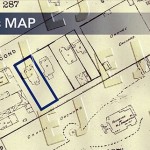
A series of maps drawn by the Sanborn Insurance Company give a clear picture of the neighborhood. The 1888 map discloses that Azusa Street was originally Old Second Street. The street was never more than one block in length. It ended at a street paving company with piles of coal, along with heavy equipment. A small house, marked on the map by a “D” for domicile, sat on the front of the property with the address of 87. (See highlighted section.) A marble works business specializing in tombstones stood on the southeast corner of Azusa Street and San Pedro. Orange and grapefruit orchards surrounded the property. On the right of the map a Southern Pacific railroad spur is clearly visible. The City Directory indicates that the neighborhood was predominantly Jewish, though other names were mixed among them.
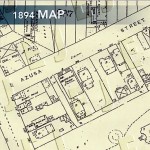
A second map of the property was published in 1894. Old Second Street had become Azusa Street, and the address had been changed to 312. The house had been moved further back on the property where it served as a parsonage. The dominant building at 312 Azusa Street was the Stevens African Methodist Episcopal Church. At the front of the building a series of tiny parallel lines on the map mark a staircase that stood at the north end of the building providing entry to the second floor, the original sanctuary.
The only known photograph of the church from this period shows three interesting features. First, it shows the original staircase. Second, and less obvious, the original roofline had a steep pitch. Third, three gothic style windows with tracery lines adorned the front wall.
By 1894, the citrus groves had largely disappeared. On the southern side they were replaced by lawn. The smell of orange blossoms and the serenity of the orchard were rapidly being replaced by the banging of railroad cars and the smell of new lumber. A growing number of boarding houses and small businesses, including canneries and laundries, were moving into the immediate area by this time. The property marked “YARD” on the map is the beginning of the lumberyard that soon came to dominate the area. The City Directory reveals fewer Jewish names, and more racial and ethnic diversity in the neighborhood, including African Americans, Germans, Scandinavians, and Japanese.
Stevens AME Church occupied the building at 312 Azusa Street until February 1904 when the congregation dedicated a new brick facility at the corner of 8th and Towne and changed their name to First AME Church. Before the congregation could decide what to do with the property on Azusa Street, however, an arsonist set the vacant church building on fire. The structure was greatly weakened, and the roof was completely destroyed. The congregation decided to turn the building into a tenement house. They subdivided the former second-floor sanctuary into several rooms separated by a long hallway that ran the length of the building. The stairs were removed from the front of the building and a rear stairwell was constructed, leaving the original entry hanging in space. The lower level was used to house horses and to store building supplies, including lumber and nails.
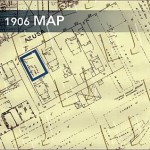
In 1906, a new Sanborn Map was published. (See 1906 map.) The building was marked with the words “Lodgings 2nd, Hall 1st, CHEAP.” The transition of the neighborhood had continued. The marble work still occupied the southeast corner of Azusa Street and San Pedro, but a livery and feed supply store now dominated the northeast corner. A growing lumberyard to the south and east of the property now replaced the once sprawling lawn. A Southern Pacific railroad spur curved through the lumberyard to service this business.
The Apostolic Faith, the newspaper of the Azusa Street Mission between September 1906 and June 1908, later referred to the nearby Russian community. Many of these recent immigrants were employed in the lumberyard. They were not Russian Orthodox Christians as one might guess; they were Molokans — “Milk drinkers.” This group had been influenced by some of the 16th-century Reformers. They did not accept the dairy fasts of the Orthodox Church. They were Trinitarians who strongly believed in the ongoing guidance of the Holy Spirit. Demos Shakarian, grandfather of the founder of Full Gospel Business Men’s International, was among these immigrants who were led to Los Angeles through a prophetic word given in 1855.
Henry McGowan, later an Assemblies of God pastor in Pasadena, was a member of the Holiness Church at the time. He was employed as a teamster. He timed his arrival at the nearby lumberyard so he could visit the Mission during its afternoon services.
This map suggests why some viewed the Mission as being in a slum. A better description would be an area of developing light industry.
In April 1906, when the people who had been meeting at the house at 214 North Bonnie Brae Street were forced to move, they found the building at 312 Azusa Street was for sale. The photograph below taken about the time that the congregation chose to move into the building shows the “For Sale” sign posted high on the east wall of the building, as well as the rear of the tombstone shop. Seymour, pastor of the Azusa Street Mission, and a few trusted friends met with the pastor of First AME Church and negotiated a lease for $8 a month.
An early photograph reveals what the 1906 version of the map indicates. The pitched roof had not been replaced. The building had a flat roof. The staircase that had stood at the front of the building had been removed.
In a sense, this building suited the Azusa Street faithful. They were not accustomed to luxury. They were willing to meet in the stable portion of the building. The upstairs could be used for prayer rooms, church offices, and a home for Pastor Seymour.
Articles of incorporation were filed with the state of California on March 9, 1907, and amended May 19, 1914. The church negotiated the purchase of the property for $15,000 with $4,000 down. It was given the necessary cash to retire the mortgage in 1908. The sale was recorded by the County of Los Angeles on April 12, 1908.
The Methodist Mission at the Eve of Bulgaria’s National Liberation
The history of the establishment of the first Bulgarian Protestant churches in Bansko, Merichleri, and Yambol demonstrates that the unforced engagement of Bulgarians in the creation of the first church communities was of decisive importance for the success of the evangelical mission. North of the Balkan Mountains, in the Bulgarian territories under the responsibility of the Methodist Episcopal Church, the process of establishing Bulgarian evangelical churches was significantly slower.
The first church resulting from the work of the Methodist mission was in the city of Tulcea. As early as 1860, Floken succeeded in converting a group of Molokans – a nonconformist Christian movement widespread in Russia during the 19th century – to Methodism. Subsequently, a Methodist congregation was also established in the same city among the German-speaking population. The first Bulgarian converts, however, were won over by Albert Long during his stay in Veliko Tarnovo, and later by Prettiman in Shumen. With the establishment of Methodist missionary stations in Bulgarian towns, and later with the expansion of educational activities associated with them, communities of Bulgarian followers began to form.
After Long and Prettiman withdrew to Constantinople, their efforts were continued by Gavrail Iliev, who settled in Svishtov. After a brief stay there, he began attracting followers, taking every opportunity to travel and preach in other settlements as well.
In 1865, Methodist Bishop Thompson visited the mission and, accompanied by Long, traveled to Tulcea and Svishtov. At the time of this visit, Gavrail Iliev was already serving a group of fifteen individuals who attended his meetings. Encouraged by the success in Tulcea and Svishtov, Bishop Thompson promised to send three new preachers to Tarnovo, Shumen, and Ruse; however, this expansion never materialized.
In 1870, Floken left a replacement from the ranks of Russian Methodists in Tulcea and went to undertake evangelistic work in Ruse. Hostile and aggressive attitudes from some locals in Ruse compelled Floken to depart for America in 1871. In 1872, Long undertook a new tour of Northern Bulgaria and noted the growth of the Methodist work in the Russian Methodist Church in Tulcea and in the congregation led by Gavrail Iliev in Svishtov.
In 1874, Floken returned to Ruse and began theological courses. Among the attendees was Stefan Genchev from Lovech, who was later sent to preach in his hometown, while Gavrail Krastev moved from Svishtov to Pleven. This marked the first significant expansion of Methodist ministry. Some graduates of the Ruse course began serving as traveling booksellers.
That same year, Bulgaria was visited by Harris, the new Methodist bishop responsible for the mission. Following this visit, Pastor Lansbury was permanently assigned to Svishtov and Pastor Chalis to Ruse. The latter’s wife, a physician, provided selfless service to the people of Ruse, removing many obstacles to the spread of the gospel in the city.
In 1876, the first annual conference of the Methodist Church in Bulgaria was held in Ruse. By that time, Methodist ministries among Bulgarians had been established in Svishtov, Ruse, Lovech, Pleven, Orhanie (today Botevgrad), Vidin, and Lom, as well as in numerous smaller settlements (e.g., Aidemir in the Silistra region, among others). Alongside the Methodist missionaries, Bulgarians such as G. Iliev, N. Voynov, Y. Tsvetkov, T. Nachev, T. Nikolov, and Y. Dzhumaliev were active. Despite the considerable spread of ministry and impressive supportive activities, including the establishment of schools, the total number of Bulgarians converted to the evangelical faith through the Methodist mission remained relatively small – approximately one hundred people.
Several factors account for this outcome. First, Methodist missionaries were far less committed to evangelistic activity compared with the missionaries in Southern Bulgaria. Practically, the mission’s success was largely the result of the persistence of Floken and Gavrail Iliev, supported by Dr. Long from a considerable distance. The mission devoted tremendous effort to educational and charitable work, yet this did not engage Bulgarians fully in the evangelical community. The comparatively conservative hierarchical structure of the church likely played a role, in contrast to the congregational churches of Southern Bulgaria, where the very nature of the church relied on the self-governance of Bulgarian evangelical congregations. While evangelical churches in Southern Bulgaria elected their leadership, collectively made important decisions, and actively participated in community building, the Methodists in the north largely remained in the shadow of the initiatives of official church personnel.
Methodist missionaries were far less successful in engaging Bulgarians in church life. Although the missionaries themselves acted as benefactors to many, the Methodist Church was considerably less effective than the Congregationalist Church in attracting Bulgarians to full membership. A substantial portion of Bulgarians who encountered the evangelical message and benefited from the service of Methodist missionaries never took the decisive step of formally joining the Methodist Church.

Dony K. Donev, D.Min., is a prominent researcher and author specializing in Bulgarian Protestant, Evangelical, and Pentecostal history, with over three decades of study. His work, including 19th Century History of Protestantism in Bulgaria and The Unforgotten: Historical and Theological Roots of Pentecostalism in Bulgaria, documents the development of these movements, their suppression under Communism, and the subsequent post-1989 revival.
Key aspects of Donev’s research on Bulgarian Protestant history include:
Origins (19th Century): Protestant work began in the 1800s, with denominations like Congregationalists (1856), Methodists (1857), and Baptists (1865) establishing missions, culminating in the first Bulgarian Protestant Church in 1871. Donev also highlights the 1871 publication of the Protestant Bulgarian Bible translation. His research, often in collaboration with the Institute of Bulgarian Protestant History, has focused on preserving, digitizing, and recovering documents, including church diaries, photographs, and, in some cases, saving records from destruction during the communist era.
Pentecostalism and Growth: The Unforgotten documents the arrival of the Pentecostal movement in Bulgaria, particularly through the influence of the Azusa Street Revival, tracing the roots of early Bulgarian Pentecostal families.
Post-Communist Revival: Donev has documented the rapid growth of the Protestant movement after 1989, noting a significant increase in membership from approximately 13,000 to over 100,000. Dr. Donev has published his dissertation on on Bulgarian Churches in North America.
March 4, 1906: William Seymour is expelled from the Santa Fe Mission
March 5, 2026 by Cup&Cross
Filed under Featured, Missions, News, Publication
On March 4, 1906, Seymour preached during the morning service at the Santa Fe Mission that speaking in tongues is the biblical evidence of baptism in the Holy Spirit. When he returned for the evening service, he found the church doors locked by Julia Hutchins. After consulting the leadership of the Southern California Holiness Association, to which the Santa Fe Mission belonged, Hutchins informed Seymour that she did not accept speaking in tongues (glossolalia) as part of the doctrine of holiness. One of the elders’ arguments was that Seymour himself had not been baptized in the Holy Spirit and had not experienced what he preached.
However, Seymour was not the first to make the connection between speaking in tongues and baptism in the Holy Spirit. Even his teacher, Charles Parham, who systematized the theological link between biblical sanctification and Spirit baptism, was an heir to a rich tradition of preachers and churches that accepted speaking in tongues as the sign of the baptism in the Holy Spirit within the holiness doctrine.
1905 – Lucy Farrow, who introduced Seymour to Parham and later helped him receive the invitation to pastor the Santa Fe Mission in Los Angeles, was baptized in the Holy Spirit and spoke in tongues. She was the niece of Frederick Douglass and pastor of a Holiness church in Houston. Lucy Farrow received the baptism in the Holy Spirit while working in the home of Charles Parham. At a prayer meeting in Houston in early 1906, she prayed for 25 people, all of whom were baptized in the Holy Spirit and spoke in tongues simultaneously. Shortly afterward, she traveled to Los Angeles, and when Seymour was expelled, it was Lucy Farrow who prayed for the first believers to receive Spirit baptism during the home prayer meetings that began on Bonnie Brae Street in April 1906.
1896 – During the revival meetings known as the “Shearer Schoolhouse Revival,” more than 100 men, women, and children were baptized in the Holy Spirit. They were part of a mountain community in North Carolina called the “Christian Union,” from which the Church of God (Cleveland, Tennessee) would later emerge.
1887 – In the revival meetings of Maria Etter, under the power of the Holy Spirit, believers (mainly Quakers and Methodists) fell into trances and spoke in unknown tongues, leading the secular press to call her a “voodoo priestess.”
1880 – The “Pentecostal Holiness Church Movement” documented Holy Spirit baptisms among its members.
1889 – Jethro Walthall of Arkansas was baptized in the Holy Spirit along with many others during a prayer meeting.
1875 – E. B. Swan testified that the so-called “Gift People” in Rhode Island practiced speaking in tongues.
1874 – Similar testimonies came from healing meetings in New York State, where many were baptized in the Spirit and spoke in tongues.
1855 – William Dowie spoke in unknown tongues during meetings of Frank W. Sandford in Shiloh, Maine. Later, Dowie founded the “Gift People” movement, and Sandford started a Bible school called “The Holy Spirit and Us” as part of his church. Ambrose J. Tomlinson, who in 1907 would organize the Church of God, also visited Shiloh in October 1901. Even Charles Parham stayed at the school for six weeks during the summer of 1900 to listen to Sandford’s lectures. It was there that Parham first heard speaking in tongues among the students in the school’s old prayer towers.
In 1906, the participants in the Azusa Street Revival sought the same experience of speaking in tongues that had occurred in the early hours of January 1, 1901, at Charles Parham’s school in Topeka, Kansas. Interestingly, a publication from January 6, 1900, reported that at Sandford’s school in Shiloh, many had been baptized in the Holy Spirit and spoke in unknown tongues following a prayer meeting that began on New Year’s Eve and lasted about ten days.
1854 – W. P. Simons and Robert Boyd separately testified about speaking in unknown tongues during evangelistic meetings led by D. L. Moody, attended by followers of the Scottish preacher Edward Irving.
Global Mission In Pentecostal Perspective
113 Murray W. Dempster, Byron D. Klaus and Douglas Petersen, eds., Called & Empowered: Global Mission in Pentecostal Perspective (Peabody, MA: Hendrickson Publishers, 1991), 321 pp. $14.95 paper. Reviewed by L. Grant McClung, Jr. Who has the answer to what Pentecostals believe about mission and the description of how they go about doing mission? Coming out of a sense of urgency that caused them to “act now and theologize later,” Pentecostals have been known more for action than reflection. Identifying who the Pentecostals were and how they did the job was a task largely left up to sympathizers from groups such as the Church Growth Movement. Other outside observers, however, were not always so sympathetic. This book is a statement by Pentecostals about Pentecostal missions, a move toward what I have called a “Decade of Self-Definition in the 1990s.” What has emerged since the mid 1980s are signs of a budding “pentecostal missiology,” a development exemplified in this volume. Readers of this excellent new contribution will find that Pentecostals have a broader understanding of wholistic mission issues than the supposed limited agenda of evangelism/church planting via the supernatural. This collection of twelve articles–all from Assemblies of God authors–and three “outside observer” responses has something to say about biblical/theological dimensions, the integration of gospel and culture, response to non-Christian religions, and missiological strategy. It reads well as a text (which I am using) or as a pre-study tool, for example, for a field conference or consultation devoted to understanding the Pentecostal/Charismatic contribution to world evangelization. The three editors are professors at Southern California College in Costa Mesa, California, a Christian liberal arts college sponsored by the Assemblies of God, and are also involved in Latin America ChildCare, an Assemblies of God ministry to underprivileged children in sixteen Latin American countries. The editors introduce each of the five sections of the book with a rationale for the theme of the section and a brief synopsis of each chapter in the section. These sectional introductions give an overall conceptual coherence to the volume, reducing the choppiness and unevenness that often attend multi-authored anthologies. Gordon Fee opens the first section on “Biblical and Theological Dimensions of Global Mission in the Pentecostal Tradition” with a chapter which aims to demonstrate that the roots of the Pentecostal conviction about the global mission of the church are to be found in Jesus’ proclamation of the kingdom of God. In the next chapter, 1 114 Murray Dempster utilizes the concept of the kingdom of God as an integrating center in the development of a wholistic Pentecostal theology which features evangelism, social service and social action. Douglas Petersen in the third chapter of this section adopts and modifies “the hermeneutical circle” of Latin American liberation theologians in order to promote a Pentecostal praxis which applies Jesus’ message of the kingdom within the context of the Third World. Section two focuses on “The Emerging Pentecostal Integration of Gospel and Culture” and features chapters written by Everett Wilson, Augustus Cerillo, Jr., and Del Tarr. Wilson analyzes the phenomenal growth of Pentecostalism in Latin America from a functional perspective, identifying the changing social conditions in Latin culture which encouraged indigenous, national Pentecostal leaders to create “a church of the people.” Cerillo identifies the issues that Pentecostals face in light of the ever-increasing global trend of urbanization, and offers some pertinent suggestions for formulating effective urban ministries. In rounding out this section, Tarr develops a model of communication for preaching the gospel across the different cultural regions of the globe. The issue of gospel and culture is taken up again in section three but the issue is analyzed from the perspective of differing worldviews. Each author describes the worldview under investigation in his chapter from his viewpoint as a participant: Peter Kuzmic analyzes the Marxist worldview, Sunday Aigbe analyzes the worldview of tribal people groups and Sobhi Malek analyzes the Muslim worldview. Given the breakup of the former Soviet Union subsequent to the writing of his chapter, Kuzmic sho.wed great insight in noting: “Anything written about the ‘communist world’ today should be written in pencil. All across Eastern Europe and in the Soviet Union monumental changes are taking place at a breathtaking speed and in most dramatic and unpredictable ways” (143-44). Even though sweeping changes have occurred in the Communist bloc countries, Kuzmic’s study still provides a goldmine of information in understanding what is happening in that part of the world. “Pentecostals and Current Missiological Strategies” is the topic of section four. A chapter by Gary McGee provides a descriptive historical overview of the multiple mission strategies that Pentecostals have used in this century. A jointly-written chapter by Byron Klaus and Loren Triplett documents the historical connection between non-formal/informal national leadership programs and the mushrooming growth of Pentecostalism, warns Pentecostals about their newly found reliance on formal structures of national leadership development and calls for a renewed commitment to indigenous leadership development “in ministry.” Missiologist Larry Pate, in the last chapter in the strategies section, describes the emergence of the 2 115 “two-thirds world missions movement” and assesses its implications for Pentecostal missions efforts. Pate makes a compelling case that theological and practical reflection on the implications of the global shift embodied in the two-thirds world missions movement is the most important strategic issue facing Pentecostal missions today. The fifth and final section of the book provides “Views from Outside” the Pentecostal movement, and according to the editors, the chapters in this section “stress the importance of Pentecostals learning to listen to the broader church as part of its missiological activity” (xviii). Pentecostal mission effort is evaluated from a Church Growth perspective by Peter Wagner, from an ecumenical perspective by Jeffrey Gros, FCS, and from a Third Wave perspective by Charles Kraft. These chapters, designed to provide “dialogical feedback,” are stimulating to read and insightful in both their positive appraisals and constructive criticisms. Hopefully, Called & Empowered will be expanded and revised in a subsequent edition to include a broader participation of missions practice and reflection from a wider variety of Pentecostal and Charismatic missions ministries, along with more contributions from women (all the authors are male) and voices from the “southern world” (only three of twelve essays are from non-North Americans). The book, however, is well-researched and highly readable for those seeking to look through the window into the self-understanding of Pentecostals and their responsibility in world evangelization. Even the casual observer of this tradition would agree that the energy Pentecostals expend in world missions activity flows out of the belief that Pentecostals are Called & Empowered. L. Grant McClung, Jr., is Coordinator of Research and Strategic Planning for the Church of God World Missions and Associate Professor of Missions and Church Growth at the Church of God School of Theology in Cleveland, Tennessee. 3
The Forgotten Azusa Street Mission: The Place where the First Pentecostals Met
For years, the building on Azusa Street has also been an enigma. Most people are familiar with the same three or four photographs that have been published and republished through the years. They show a rectangular, boxy, wood frame structure that was 40 feet by 60 feet and desperately in need of repair. Seymour began his meetings in the Mission on April 15, 1906. A work crew set up a pulpit made from a wooden box used for shipping shoes from the manufacturer to stores. The pulpit sat in the center of the room. A piece of cotton cloth covered its top. Osterberg built an altar with donated lumber that ran between two chairs. Space was left open for seekers. Bartleman sketched seating as nothing more than a few long planks set on nail kegs and a ragtag collection of old chairs.
What the new sources have revealed about the Mission, however, is fascinating. The people worshiped on the ground level — a dirt floor, on which straw and sawdust were scattered. The walls were never finished, but the people whitewashed the rough-cut lumber. Near the door hung a mailbox into which tithes and offerings were placed since they did not take offerings at the Mission. A sign greeted visitors with vivid green letters. It read “Mene, Mene, Tekel, Upharsin” (Daniel 5:25, kjv), with its Ns written backwards and its Ss upside down. Men hung their hats on exposed overhead rafters where a single row of incandescent lights ran the length of the room.
These sources also reveal that the atmosphere within this crude building — without insulation or air conditioning, and teeming with perspiring bodies — was rank at best. As one writer put it, “It was necessary to stick one’s nose under the benches to get a breath of air.”
Several announced that the meetings were plagued by flies. “Swarms of flies,” wrote one reporter, “attracted by the vitiated atmosphere, buzzed throughout the room, and it was a continual fight for protection.”
A series of maps drawn by the Sanborn Insurance Company give a clear picture of the neighborhood. The 1888 map discloses that Azusa Street was originally Old Second Street. The street was never more than one block in length. It ended at a street paving company with piles of coal, along with heavy equipment. A small house, marked on the map by a “D” for domicile, sat on the front of the property with the address of 87. (See highlighted section.) A marble works business specializing in tombstones stood on the southeast corner of Azusa Street and San Pedro. Orange and grapefruit orchards surrounded the property. On the right of the map a Southern Pacific railroad spur is clearly visible. The City Directory indicates that the neighborhood was predominantly Jewish, though other names were mixed among them.
A second map of the property was published in 1894. Old Second Street had become Azusa Street, and the address had been changed to 312. The house had been moved further back on the property where it served as a parsonage. The dominant building at 312 Azusa Street was the Stevens African Methodist Episcopal Church. At the front of the building a series of tiny parallel lines on the map mark a staircase that stood at the north end of the building providing entry to the second floor, the original sanctuary.
The only known photograph of the church from this period shows three interesting features. First, it shows the original staircase. Second, and less obvious, the original roofline had a steep pitch. Third, three gothic style windows with tracery lines adorned the front wall.
By 1894, the citrus groves had largely disappeared. On the southern side they were replaced by lawn. The smell of orange blossoms and the serenity of the orchard were rapidly being replaced by the banging of railroad cars and the smell of new lumber. A growing number of boarding houses and small businesses, including canneries and laundries, were moving into the immediate area by this time. The property marked “YARD” on the map is the beginning of the lumberyard that soon came to dominate the area. The City Directory reveals fewer Jewish names, and more racial and ethnic diversity in the neighborhood, including African Americans, Germans, Scandinavians, and Japanese.
Stevens AME Church occupied the building at 312 Azusa Street until February 1904 when the congregation dedicated a new brick facility at the corner of 8th and Towne and changed their name to First AME Church. Before the congregation could decide what to do with the property on Azusa Street, however, an arsonist set the vacant church building on fire. The structure was greatly weakened, and the roof was completely destroyed. The congregation decided to turn the building into a tenement house. They subdivided the former second-floor sanctuary into several rooms separated by a long hallway that ran the length of the building. The stairs were removed from the front of the building and a rear stairwell was constructed, leaving the original entry hanging in space. The lower level was used to house horses and to store building supplies, including lumber and nails.
In 1906, a new Sanborn Map was published. (See 1906 map.) The building was marked with the words “Lodgings 2nd, Hall 1st, CHEAP.” The transition of the neighborhood had continued. The marble work still occupied the southeast corner of Azusa Street and San Pedro, but a livery and feed supply store now dominated the northeast corner. A growing lumberyard to the south and east of the property now replaced the once sprawling lawn. A Southern Pacific railroad spur curved through the lumberyard to service this business.
The Apostolic Faith, the newspaper of the Azusa Street Mission between September 1906 and June 1908, later referred to the nearby Russian community. Many of these recent immigrants were employed in the lumberyard. They were not Russian Orthodox Christians as one might guess; they were Molokans — “Milk drinkers.” This group had been influenced by some of the 16th-century Reformers. They did not accept the dairy fasts of the Orthodox Church. They were Trinitarians who strongly believed in the ongoing guidance of the Holy Spirit. Demos Shakarian, grandfather of the founder of Full Gospel Business Men’s International, was among these immigrants who were led to Los Angeles through a prophetic word given in 1855.
Henry McGowan, later an Assemblies of God pastor in Pasadena, was a member of the Holiness Church at the time. He was employed as a teamster. He timed his arrival at the nearby lumberyard so he could visit the Mission during its afternoon services.
This map suggests why some viewed the Mission as being in a slum. A better description would be an area of developing light industry.
In April 1906, when the people who had been meeting at the house at 214 North Bonnie Brae Street were forced to move, they found the building at 312 Azusa Street was for sale. The photograph below taken about the time that the congregation chose to move into the building shows the “For Sale” sign posted high on the east wall of the building, as well as the rear of the tombstone shop. Seymour, pastor of the Azusa Street Mission, and a few trusted friends met with the pastor of First AME Church and negotiated a lease for $8 a month.
An early photograph reveals what the 1906 version of the map indicates. The pitched roof had not been replaced. The building had a flat roof. The staircase that had stood at the front of the building had been removed.
In a sense, this building suited the Azusa Street faithful. They were not accustomed to luxury. They were willing to meet in the stable portion of the building. The upstairs could be used for prayer rooms, church offices, and a home for Pastor Seymour.
Articles of incorporation were filed with the state of California on March 9, 1907, and amended May 19, 1914. The church negotiated the purchase of the property for $15,000 with $4,000 down. It was given the necessary cash to retire the mortgage in 1908. The sale was recorded by the County of Los Angeles on April 12, 1908.
7 Difficulties for Mission Bulgaria in 2018
 Properties law expansion both in ownership and taxes
- Price jumps to European standards and drastic increase in cost of operation
- Foreign language ban in religious services
- Organizational registration and foreign financial support limited under new government legislation
- Increase of LGBT, third gender will be introduced with legislated ratification of the Istanbul Convention
- Various evangelical organizations relocating their headquarters and structure away from the capital Sofia with the formation of a third evangelical alliance
- Changes in education legislation demand even independent (denominational) religious schools and their degrees to operate exclusively under government approved colleges and universities
110 Years Ago the First Bulgarian Mission in Chicago was Started
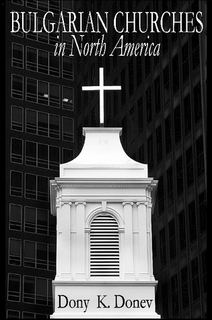 In May 1907, sponsored by the Chicago Tract Society, Petko Vasilev opened the Bulgarian Christian House in Chicago. The facilities had beds and a kitchen and served as a hotel and a shelter for new immigrants. In 1908, the name was changed to Bulgarian Christian Society and later was relocated several times.
A second similar work was started at the same time by Daniel Protoff called the Russian Christian Mission. Located in Chicago, it supported church services and a Bible school. In 1909, the City Missionary Society called Basil Keusseff to lead the mission. Keusseff was a Bulgarian born minister who was converted in Romania and was a graduate of the school in Samokov and Cliff College in Sheffield, England. In the 1890s, Keusseff pastored the Baptist church in Lom and then moved to Pittsburgh where he worked with Robert Bamber, pastor of the Turtle Creek Christian Church. The mission ministered to Russian, Bulgarian, Serbian, Croatian, Macedonian and Turkish minorities.
Around 1910, the ministry of the Bulgarian Christian Society was aided by Reverend Paul Mishkoff, a student at Moody Bible Institute. Coming from a poor but strong Protestant family, Mishkoff was called to preach at a very early age. He studied in the school at Samokov and was often sent to preach in the nearby villages. After finishing the school, Mishkoff decided to come and study at the Moody Bible Institute. He was helped by a Methodist missionary who gave him four dollars – the price of a third-class ticket from Sofia to New York where he was put on the immigrant’s train to Chicago. He was denied admission to Moody with the explanation that there was neither room nor funds for him. With no job and no money, the young preacher had to find food at the saloons where it was offered free for ones who drank. During his struggles, Mishkoff had lost all his possessions except a pocket size New Testament. In his personal story, he recalled, “But I had the copy of the Bulgarian Testament in my pocket not only to keep it, but to read it when I was sitting on the benches of the Union Station and other public places night after night. My soul was wakened anew. An ambition was roused in me: I must prepare myself for a preacher any way.” Through a financial miracle, Mishkoff was eventually able to graduate from the Moody Bible Institute. During the course of his studies, he was supported by Chicago Tract Society and he was able to minister to the 5,000 Bulgarians living in Chicago.
Also in 1910, the Bulgarian Christian Society established a library which served the Bulgarian community for over twenty years. The congregation of the mission numbered about fifty. The ministry included English classes and immigration law seminars. Several changes in the leadership of the mission began in 1921. In 1924, the mission was headed by Zaprian Vidoloff and the mission was renamed the Bulgarian Christian Mission. Vidoloff was a graduate of the Samokov School in 1910, a student of philosophy at the University of Sofia and a graduate of Union Theological College in Chicago. He entered pastoral ministry in 1915 and later served as the secretary of the Baptist Union. At the same time, he was secretary of the Bulgarian legation in Washington, D.C. from 1921 to 1923.
All Bulgarian religious organizations initiated by evangelicals before 1930 existed as missions. In February 1932, the First Bulgarian Church pastored by Joseph Hristov was started in Chicago.
How to Start a Bulgarian Church in America from A-to-Z
The Forgotten Azusa Street Mission: The Place where the First Pentecostals Met
For years, the building on Azusa Street has also been an enigma. Most people are familiar with the same three or four photographs that have been published and republished through the years. They show a rectangular, boxy, wood frame structure that was 40 feet by 60 feet and desperately in need of repair. Seymour began his meetings in the Mission on April 15, 1906. A work crew set up a pulpit made from a wooden box used for shipping shoes from the manufacturer to stores. The pulpit sat in the center of the room. A piece of cotton cloth covered its top. Osterberg built an altar with donated lumber that ran between two chairs. Space was left open for seekers. Bartleman sketched seating as nothing more than a few long planks set on nail kegs and a ragtag collection of old chairs.
What the new sources have revealed about the Mission, however, is fascinating. The people worshiped on the ground level — a dirt floor, on which straw and sawdust were scattered. The walls were never finished, but the people whitewashed the rough-cut lumber. Near the door hung a mailbox into which tithes and offerings were placed since they did not take offerings at the Mission. A sign greeted visitors with vivid green letters. It read “Mene, Mene, Tekel, Upharsin” (Daniel 5:25, kjv), with its Ns written backwards and its Ss upside down. Men hung their hats on exposed overhead rafters where a single row of incandescent lights ran the length of the room.
These sources also reveal that the atmosphere within this crude building — without insulation or air conditioning, and teeming with perspiring bodies — was rank at best. As one writer put it, “It was necessary to stick one’s nose under the benches to get a breath of air.”
Several announced that the meetings were plagued by flies. “Swarms of flies,” wrote one reporter, “attracted by the vitiated atmosphere, buzzed throughout the room, and it was a continual fight for protection.”
A series of maps drawn by the Sanborn Insurance Company give a clear picture of the neighborhood. The 1888 map discloses that Azusa Street was originally Old Second Street. The street was never more than one block in length. It ended at a street paving company with piles of coal, along with heavy equipment. A small house, marked on the map by a “D” for domicile, sat on the front of the property with the address of 87. (See highlighted section.) A marble works business specializing in tombstones stood on the southeast corner of Azusa Street and San Pedro. Orange and grapefruit orchards surrounded the property. On the right of the map a Southern Pacific railroad spur is clearly visible. The City Directory indicates that the neighborhood was predominantly Jewish, though other names were mixed among them.
A second map of the property was published in 1894. Old Second Street had become Azusa Street, and the address had been changed to 312. The house had been moved further back on the property where it served as a parsonage. The dominant building at 312 Azusa Street was the Stevens African Methodist Episcopal Church. At the front of the building a series of tiny parallel lines on the map mark a staircase that stood at the north end of the building providing entry to the second floor, the original sanctuary.
The only known photograph of the church from this period shows three interesting features. First, it shows the original staircase. Second, and less obvious, the original roofline had a steep pitch. Third, three gothic style windows with tracery lines adorned the front wall.
By 1894, the citrus groves had largely disappeared. On the southern side they were replaced by lawn. The smell of orange blossoms and the serenity of the orchard were rapidly being replaced by the banging of railroad cars and the smell of new lumber. A growing number of boarding houses and small businesses, including canneries and laundries, were moving into the immediate area by this time. The property marked “YARD” on the map is the beginning of the lumberyard that soon came to dominate the area. The City Directory reveals fewer Jewish names, and more racial and ethnic diversity in the neighborhood, including African Americans, Germans, Scandinavians, and Japanese.
Stevens AME Church occupied the building at 312 Azusa Street until February 1904 when the congregation dedicated a new brick facility at the corner of 8th and Towne and changed their name to First AME Church. Before the congregation could decide what to do with the property on Azusa Street, however, an arsonist set the vacant church building on fire. The structure was greatly weakened, and the roof was completely destroyed. The congregation decided to turn the building into a tenement house. They subdivided the former second-floor sanctuary into several rooms separated by a long hallway that ran the length of the building. The stairs were removed from the front of the building and a rear stairwell was constructed, leaving the original entry hanging in space. The lower level was used to house horses and to store building supplies, including lumber and nails.
In 1906, a new Sanborn Map was published. (See 1906 map.) The building was marked with the words “Lodgings 2nd, Hall 1st, CHEAP.” The transition of the neighborhood had continued. The marble work still occupied the southeast corner of Azusa Street and San Pedro, but a livery and feed supply store now dominated the northeast corner. A growing lumberyard to the south and east of the property now replaced the once sprawling lawn. A Southern Pacific railroad spur curved through the lumberyard to service this business.
The Apostolic Faith, the newspaper of the Azusa Street Mission between September 1906 and June 1908, later referred to the nearby Russian community. Many of these recent immigrants were employed in the lumberyard. They were not Russian Orthodox Christians as one might guess; they were Molokans — “Milk drinkers.” This group had been influenced by some of the 16th-century Reformers. They did not accept the dairy fasts of the Orthodox Church. They were Trinitarians who strongly believed in the ongoing guidance of the Holy Spirit. Demos Shakarian, grandfather of the founder of Full Gospel Business Men’s International, was among these immigrants who were led to Los Angeles through a prophetic word given in 1855.
Henry McGowan, later an Assemblies of God pastor in Pasadena, was a member of the Holiness Church at the time. He was employed as a teamster. He timed his arrival at the nearby lumberyard so he could visit the Mission during its afternoon services.
This map suggests why some viewed the Mission as being in a slum. A better description would be an area of developing light industry.
In April 1906, when the people who had been meeting at the house at 214 North Bonnie Brae Street were forced to move, they found the building at 312 Azusa Street was for sale. The photograph below taken about the time that the congregation chose to move into the building shows the “For Sale” sign posted high on the east wall of the building, as well as the rear of the tombstone shop. Seymour, pastor of the Azusa Street Mission, and a few trusted friends met with the pastor of First AME Church and negotiated a lease for $8 a month.
An early photograph reveals what the 1906 version of the map indicates. The pitched roof had not been replaced. The building had a flat roof. The staircase that had stood at the front of the building had been removed.
In a sense, this building suited the Azusa Street faithful. They were not accustomed to luxury. They were willing to meet in the stable portion of the building. The upstairs could be used for prayer rooms, church offices, and a home for Pastor Seymour.
Articles of incorporation were filed with the state of California on March 9, 1907, and amended May 19, 1914. The church negotiated the purchase of the property for $15,000 with $4,000 down. It was given the necessary cash to retire the mortgage in 1908. The sale was recorded by the County of Los Angeles on April 12, 1908.
95 Years Ago Voronaev Set Sail on a Pentecostal Mission to Europe
![51Sa1IcA8OL._SY344_PJlook-inside-v2,TopRight,1,0_SH20_BO1,204,203,200_[1]](https://cupandcross.com/wp-content/uploads/2014/03/51Sa1IcA8OL._SY344_PJlook-inside-v2TopRight10_SH20_BO1204203200_1.jpg) Rev. Ivan Voronaev’s last letter to Assemblies of God headquarters in Springfield, Missouri was received by Rev. J. Roswell Flower on June 22, 1920 and was marked “He plans to return to Russia.” The letter outlined Voronaev’s six-point mission strategy:
Rev. Ivan Voronaev’s last letter to Assemblies of God headquarters in Springfield, Missouri was received by Rev. J. Roswell Flower on June 22, 1920 and was marked “He plans to return to Russia.” The letter outlined Voronaev’s six-point mission strategy:
- he was leaving with his family and some brothers from New York to Russia on July 13, 1920 on the steamboat “Madonna”
- Voronaev trusted the Lord for the finances necessary to complete the mission
- First Russian Assembly of New York was poor and unable to meet the ministry expenses
- Voronaev was unable to get in touch with Assemblies of God missionaries Johnson and Schmidt
- but planned to preach in Russia
- finally, the group had decided to purchase Russian Bibles and New Testaments in New York to take to Russia.
The group included the families of Voronaev, Zaplishny, Koltovich, along with V. Klibik and N. Kardanov from Ossetia. They could only purchase tickets for the deck, which proposed problems for the children during the cold ocean nights. According to Voronaev’s later records, the group set sail from New York on July 15, 1920 (thou Martha C. Zaplishny- Jackson recalls July 8th or 17th in various statements). The only standing proof for the exact departure date is the ship’s records with the French Fabre Line.
Madonna sailed via Marseille in France and Naples, Italy. The group’s trip to Europe included a stop in Greece before reaching Constantinople on August 10, 1920. Both Voronaev and Zaplishny’s children have pictures from visiting “several other Balkan countries,” thou not well documented and quite improbable. Consecutively, when the Zaplishny family had to flee Bulgaria in 1924, they used the same route taking a train to Cherbourg, France and then a boat to New York’s Ellis Island.
Through all these difficulties, Voronaev reached Bulgaria by the end of 1920 and Odessa in the U.S.S.R by August 12, 1921. The movements his mission started from Varna to Vladivostock were Pentecostal pioneers for this part of the Old World. By the time Voronaev was arrested in 1930, over 400 Pentecostal churches with 20,000 members strong were started by his ministry throughout Eastern Europe.
Read about the legacy of Ivan Voronaev:
- Ivan Voronaev: The Death of a Hero is a Legacy to Remember
- Arrest and Imprisonment of Rev. Ivan Voronaev (1930)
- Arrest and Imprisonment of Ekaterina Voronaev (1933)
More about the Voronaev’s children:
Ivan Voronaev in the historical archives:
- Finding Ivan Voronaev (a.k.a. John Voronaeff) at the Graduate Theological Union of Berkeley, California
- Letters from Bulgaria: Overview of Rev. Ivan Voronaev’s Correspondence
X Youth Event Reunion
 X 7.7.7 @ Black Sea https://cupandcross.com/x-youth-event-at-the-black-sea-2/
X 8.8.8 @ the Heart of Bulgaria https://cupandcross.com/x-2008-in-the-heart-of-bulgaria-a-new-level-of-ministry/
X 9.9.9 @ Gipsy Ghetto of Samokov https://cupandcross.com/2009-x-event-transforming-the-status-quo-2/
X 10.10.10 @ Cyprus https://cupandcross.com/x-10-10-10-cyprus-reflection/
X 11.11.11 @ Chicago https://cupandcross.com/x-11-11-11-youth-event-afterglow/
X 12.12.12 @ End Time Revival https://cupandcross.com/12-12-12-revival-at-the-end-of-the-world/


