

Let the Protestant say the prayer: Protestant Participation in Bulgaria’s Liberation
 A considerable number of Protestants took part in the prematurely erupted April Uprising. Many of them were in the immediate circle of Benkovski, Vasil Volóv, and the other revolutionary apostles. Some Protestants joined during the uprising itself. According to Dimitar Strashimirov, about sixty men from the village of Tserovo, in the Pazardzhik region, joined Benkovski’s detachment under the leadership of Tsvyatko Brŭshkov. At that time Tserovo had 120 households, fifteen of which belonged to Bulgarian Protestants. Two roster protocols were compiled – one larger list for the Orthodox, and a smaller one for the Protestants. The leaders of the Protestant group were K. Teliyski and Nikola Kochov. From the same village came Ivan Cheshírov, one of the “tens-men” (leaders of groups of ten) in the Flying Column. Collective memory has preserved the names of two well-known Protestants from Panagyurishte as active participants in the uprising: Stefan Balabanov, who organized the sewing of clothing for the rebels, and Rad Minev, one of the most experienced arms-bearers of the insurgent town.
Protestants were also involved in the activities of nearly all revolutionary districts. Particularly dramatic was the fate of the evangelist Stoil Findzhikov, the master craftsman of the “cherry-wood cannons,” who became a symbol of the uprising. As a youth, Stoil had worked in a military workshop in Constantinople, where he learned details of firearms manufacture. On the eve of the uprising and during its course, prompted by Volov and Benkovski, he crafted and refined several of these primitive cannons. He fired his last “cherry-wood cannon” at the advancing Ottoman forces beneath Mount Kamenitsa. Under the pressure of the attacking bashi-bozouk irregulars, the defenders fled one by one, and some fell in battle.
The evangelist Petar Donchev from Panagyurishte also took an active part in the April Uprising. During the height of the revolt, he served as a trusted courier between the surrounding towns and villages, employed by both Benkovski and Volov. “Petraki,” as the insurgents called him, displayed remarkable resourcefulness, courage, and self-sacrifice. After the uprising he departed for the United States, where he studied theology, later returning to Bulgaria as pastor in Chirpan. Yet he remained throughout his life a passionate patriot and tireless public figure. He declined every offer of praise or reward after the Liberation with the simple words that “whatever he had done, he had done for God and for the Fatherland.”
The numerological slogan “1876 – Turkey will fall” was created by the Evangelical Christian Petar Vezhinov. Serving as couriers for the Internal Revolutionary Organization were Bulgarian Evangelical preachers: Veliko Petranov from Panagyurishte; N. Boyadzhiev and N. Kochev from the Pazardzhik region; Blago Sarandov and Petar Musevich from Macedonia. The pastor from Chirpan, Petar Doichev, was entrusted with important intelligence missions. Ivan Neykov served as the personal courier of Georgi Benkovski, while V. Karaivanov from Chirpan was suspected and arrested by the Ottoman authorities. Stefan Balabanov supplied a significant portion of the revolutionary uniforms, while Rad Manev, a gunsmith, manufactured weapons for the insurgents. The design for the “Chereshovoto Topche” (Cherry Cannon) was the work of the Evangelical Christian from Panagyurishte, master Stoil Findzhikov. At the decisive assembly in Oborishte, he was asked to deliver the prayer for the blessing of the cause for Bulgaria’s liberation.
When Georgi Benkovski gathered the insurgents in Oborishte before announcing the uprising, he declared: “Let the Protestant say the prayer.” The Protestant was Stoil Findzhikov, the historical figure who became the prototype for Ivan Vazov’s vivid character Borimechkata (The Bear Slayer). According to the recollections of Findzhikov’s daughter, Radka Kaloyanova, his prayer was: “Lord God, Who created heaven and earth, Who has helped many who have put their trust in You – help us as well, gathered here today, to succeed in our endeavor.” (Bulgarian Baptist Digest, Heralds of Truth)
The Methodist Mission at the Eve of Bulgaria’s National Liberation
The history of the establishment of the first Bulgarian Protestant churches in Bansko, Merichleri, and Yambol demonstrates that the unforced engagement of Bulgarians in the creation of the first church communities was of decisive importance for the success of the evangelical mission. North of the Balkan Mountains, in the Bulgarian territories under the responsibility of the Methodist Episcopal Church, the process of establishing Bulgarian evangelical churches was significantly slower.
The first church resulting from the work of the Methodist mission was in the city of Tulcea. As early as 1860, Floken succeeded in converting a group of Molokans – a nonconformist Christian movement widespread in Russia during the 19th century – to Methodism. Subsequently, a Methodist congregation was also established in the same city among the German-speaking population. The first Bulgarian converts, however, were won over by Albert Long during his stay in Veliko Tarnovo, and later by Prettiman in Shumen. With the establishment of Methodist missionary stations in Bulgarian towns, and later with the expansion of educational activities associated with them, communities of Bulgarian followers began to form.
After Long and Prettiman withdrew to Constantinople, their efforts were continued by Gavrail Iliev, who settled in Svishtov. After a brief stay there, he began attracting followers, taking every opportunity to travel and preach in other settlements as well.
In 1865, Methodist Bishop Thompson visited the mission and, accompanied by Long, traveled to Tulcea and Svishtov. At the time of this visit, Gavrail Iliev was already serving a group of fifteen individuals who attended his meetings. Encouraged by the success in Tulcea and Svishtov, Bishop Thompson promised to send three new preachers to Tarnovo, Shumen, and Ruse; however, this expansion never materialized.
In 1870, Floken left a replacement from the ranks of Russian Methodists in Tulcea and went to undertake evangelistic work in Ruse. Hostile and aggressive attitudes from some locals in Ruse compelled Floken to depart for America in 1871. In 1872, Long undertook a new tour of Northern Bulgaria and noted the growth of the Methodist work in the Russian Methodist Church in Tulcea and in the congregation led by Gavrail Iliev in Svishtov.
In 1874, Floken returned to Ruse and began theological courses. Among the attendees was Stefan Genchev from Lovech, who was later sent to preach in his hometown, while Gavrail Krastev moved from Svishtov to Pleven. This marked the first significant expansion of Methodist ministry. Some graduates of the Ruse course began serving as traveling booksellers.
That same year, Bulgaria was visited by Harris, the new Methodist bishop responsible for the mission. Following this visit, Pastor Lansbury was permanently assigned to Svishtov and Pastor Chalis to Ruse. The latter’s wife, a physician, provided selfless service to the people of Ruse, removing many obstacles to the spread of the gospel in the city.
In 1876, the first annual conference of the Methodist Church in Bulgaria was held in Ruse. By that time, Methodist ministries among Bulgarians had been established in Svishtov, Ruse, Lovech, Pleven, Orhanie (today Botevgrad), Vidin, and Lom, as well as in numerous smaller settlements (e.g., Aidemir in the Silistra region, among others). Alongside the Methodist missionaries, Bulgarians such as G. Iliev, N. Voynov, Y. Tsvetkov, T. Nachev, T. Nikolov, and Y. Dzhumaliev were active. Despite the considerable spread of ministry and impressive supportive activities, including the establishment of schools, the total number of Bulgarians converted to the evangelical faith through the Methodist mission remained relatively small – approximately one hundred people.
Several factors account for this outcome. First, Methodist missionaries were far less committed to evangelistic activity compared with the missionaries in Southern Bulgaria. Practically, the mission’s success was largely the result of the persistence of Floken and Gavrail Iliev, supported by Dr. Long from a considerable distance. The mission devoted tremendous effort to educational and charitable work, yet this did not engage Bulgarians fully in the evangelical community. The comparatively conservative hierarchical structure of the church likely played a role, in contrast to the congregational churches of Southern Bulgaria, where the very nature of the church relied on the self-governance of Bulgarian evangelical congregations. While evangelical churches in Southern Bulgaria elected their leadership, collectively made important decisions, and actively participated in community building, the Methodists in the north largely remained in the shadow of the initiatives of official church personnel.
Methodist missionaries were far less successful in engaging Bulgarians in church life. Although the missionaries themselves acted as benefactors to many, the Methodist Church was considerably less effective than the Congregationalist Church in attracting Bulgarians to full membership. A substantial portion of Bulgarians who encountered the evangelical message and benefited from the service of Methodist missionaries never took the decisive step of formally joining the Methodist Church.
Dony K. Donev, D.Min., is a prominent researcher and author specializing in Bulgarian Protestant, Evangelical, and Pentecostal history, with over three decades of study. His work, including 19th Century History of Protestantism in Bulgaria and The Unforgotten: Historical and Theological Roots of Pentecostalism in Bulgaria, documents the development of these movements, their suppression under Communism, and the subsequent post-1989 revival.
Key aspects of Donev’s research on Bulgarian Protestant history include:
Origins (19th Century): Protestant work began in the 1800s, with denominations like Congregationalists (1856), Methodists (1857), and Baptists (1865) establishing missions, culminating in the first Bulgarian Protestant Church in 1871. Donev also highlights the 1871 publication of the Protestant Bulgarian Bible translation. His research, often in collaboration with the Institute of Bulgarian Protestant History, has focused on preserving, digitizing, and recovering documents, including church diaries, photographs, and, in some cases, saving records from destruction during the communist era.
Pentecostalism and Growth: The Unforgotten documents the arrival of the Pentecostal movement in Bulgaria, particularly through the influence of the Azusa Street Revival, tracing the roots of early Bulgarian Pentecostal families.
Post-Communist Revival: Donev has documented the rapid growth of the Protestant movement after 1989, noting a significant increase in membership from approximately 13,000 to over 100,000. Dr. Donev has published his dissertation on on Bulgarian Churches in North America.
BULGARIA after 2026 Elections: Putin’s Trojan Horse in EU…
Bulgaria’s President Rumen Radev, a military general and pilot, is now Bulgaria’s new Prime Minister. He has served two presidential terms, and in January 2026 he resigned from office and entered the early parliamentary elections. Radev’s decisive victory in the parliamentary elections is a guarantee of absolute Parliamentarian majority for the first time since 1997.
A former member of the Communist Party, he has often taken ambiguous positions regarding Russia, considering Crimea to be ‘Russian’ and criticizing the European sanctions imposed in response to the war.” Given Radev’s attitude toward Putin and Russia, there is a risk of a pro-Kremlin government at a critical moment — he would be Putin’s Trojan horse in Europe.
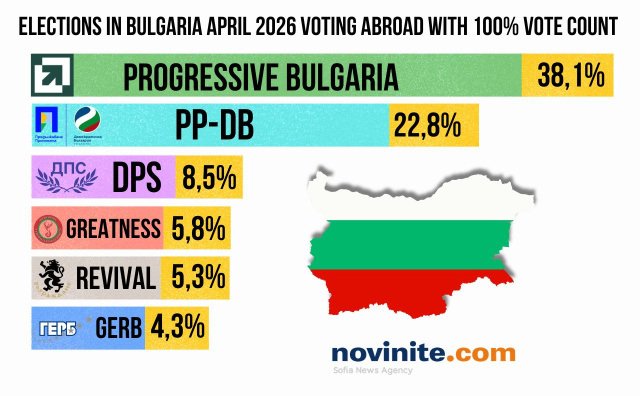
DW: ‘A Trojan Horse for Putin’: Foreign media on the elections in Bulgaria
France-Presse recalls that during his campaign, Radev called for “practical relations with Russia, based on mutual respect and equal treatment.”
POLITICO: Pro-Russian candidate Rumen Radev emerges as the winner of the elections in Bulgaria
CNN: Bulgaria’s Kremlin-friendly ex-president wins election in landslide
BBC: The election was called after the previous government tried to push through a controversial budget in December, prompting mass protests which Radev, as president, supported.
FoxNews: Tired of political turmoil, Bulgarians give ex-president a convincing mandate for change
Azusa Street Chronology 120 Years Ago…
JANUARY 2, 1906 William SEYMOUR ENROLLS in Charles PARHAM’S BIBLE TRAINING SCHOOL in Houston, Texas
FEBRUARY 1, 1906 During early February 1906, William J. Seymour receives an invitation from Mrs. Julia W. Hutchins to serve as pastor of the Holiness Church congregation she has founded in Los Angeles, California.
FEBRUARY 10, 1906 SEYMOUR LEAVES the BIBLE SCHOOL
FEBRUARY 22, 1906 William J. Seymour arrives in Los Angeles, California
FEBRUARY 24, 1906 Seymour preaches his first sermon as pastor of the Holiness Church at 9th Street and Santa Fe Avenue. He continues preaching on Sunday, February 25; Tuesday, February 27; and Friday, March 2, while holding meetings at 3 p.m. each afternoon.
MARCH 4, 1906 Seymour is LOCKED OUT of the church
MARCH 7, 1906 PRAYER MEETING at 114 SOUTH UNION STREET
MARCH 12, 1906 NIGHTLY MEETINGS BEGIN at 312 N. BONNIE BRAE St.
APRIL 6, 1906 The group at the Asburry house decides to engage in a 10-day fast while they pray for the baptism in the Spirit.
APRIL 9, 1906 FIRST BAPTISM IN THE HOLY SPIRIT IN LOS ANGELES
APRIL 12, 1906 William J. Seymour receives his baptism in the Holy Spirit and speaks in tongues.
APRIL 13, 1906 On Good Friday, Seymour and his friends lease the property at 312 Azusa Street and begin cleaning it up.
APRIL 15, 1906 SEYMOUR’S FIRST SERVICE AT 312 AZUSA STREET on EASTER 1906
APRIL 17, 1906 The LA TIMES INVESTIGATES
APRIL 18, 1906 At 5:48 a.m., San Francisco, California is rocked by an earthquake. During the next 4 days, the city burns. The first report on the Azusa Street Mission appears under the title, “Weird Babel of Tongues,” in the Los Angeles Daily Times. The Mission begins to grow.
APRIL 19, 1906 Los Angeles feels two earthquakes.
APRIL 21, 1906 BARTLEMAN WRITES “THE EARTHQUAKE!!!”
120 Years ago, the Azusa Street Revival Began with a Fast
On April 6, 1906 William J. Seymour and the faithful few gathered with him at the Asberry house, decided to engage in a ten-day fast while waiting on the baptism in the Spirit. The first baptism with the Holy Spirit would occur just three days later. Seymour himself would be baptized on the sixth day of the fast and on the seventh, which was Good Friday, Seymour and his followers leased an abandoned church property at 312 Azusa Street and begin cleaning it up. Easter was on April 15, 1906 when they held their very first Pentecostal service at Azusa Street. The rest is history…
ALIVE!
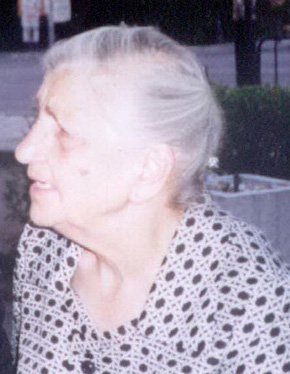 Rev. Dony K. Donev, D. Min.
“When I call to remembrance the unfeigned faith that is in thee, which dwelt first in thy grandmother Lois, and thy mother Eunice; and I am persuaded that in thee also.”
2 Timothy 1:5
My Grandma, Todorka Mindova, was one of the first Sunday school teachers in the Bulgarian Pentecostal Union. After successfully graduating from a training course in the city of Sliven led by Donka Kinareva and personally organized by Dr. Nicolas Nikolov, she was allowed to minister in the denomination. But for grandma, the faith was more than teaching or a sermon. It was life. Many Bulgarian Pentecostal ministers can testify to the effectiveness of her ministry. And for her constant fasting and thousands of answered prayers I could write a book.
But far more interesting for me as a child was the fact that being a Sunday school teacher, Grandma never tried to preach to me. In the hardest moments of life she would only confess these words, which I have remembered from my childhood: “We serve a living God.” More was not needed. For Grandma preached with her life. Read more
Speaking in Tongues in America Prior to the Azusa Street Revival of 1906 (Diamonds in the Rough-N-Ready Series)
The Azusa street revival swept the globe starting with California
January 1, 1901– The initial phenomenon of speaking in tongues occurred at Parham’s school in Topeka, Kansas
January 6, 1900 – Frank Sanford’s Shiloh school reported that “The gift of tongues has descended”
1896 – Over 100 people baptized in the Shaerer schoolhouse revival conducted by the Christian Union in the North Carolina mountains
1887 – People falling in trances and speaking in tongues were reported at Maria Etter’s revival meetings in Indiana
1874 – Speaking in tongues occurred during healing meetings reported in New York
1873 – William H. Doughty and the Gift People of Rhode Island spoke in tongues
1854 – V. P. Simmons and Robert Boyd reported tongue speaking during Moody’s meetings


