

Protestant Participation in the April Uprising (1876)
A considerable number of Protestants took part in the prematurely erupted April Uprising. Many of them were in the immediate circle of Benkovski, Vasil Volóv, and the other revolutionary apostles. Some Protestants joined during the uprising itself. According to Dimitar Strashimirov, about sixty men from the village of Tserovo, in the Pazardzhik region, joined Benkovski’s detachment under the leadership of Tsvyatko Brŭshkov. At that time Tserovo had 120 households, fifteen of which belonged to Bulgarian Protestants. Two roster protocols were compiled – one larger list for the Orthodox, and a smaller one for the Protestants. The leaders of the Protestant group were K. Teliyski and Nikola Kochov. From the same village came Ivan Cheshírov, one of the “tens-men” (leaders of groups of ten) in the Flying Column. Collective memory has preserved the names of two well-known Protestants from Panagyurishte as active participants in the uprising: Stefan Balabanov, who organized the sewing of clothing for the rebels, and Rad Minev, one of the most experienced arms-bearers of the insurgent town.
Protestants were also involved in the activities of nearly all revolutionary districts. Particularly dramatic was the fate of the evangelist Stoil Findzhikov, the master craftsman of the “cherry-wood cannons,” who became a symbol of the uprising. As a youth, Stoil had worked in a military workshop in Constantinople, where he learned details of firearms manufacture. On the eve of the uprising and during its course, prompted by Volov and Benkovski, he crafted and refined several of these primitive cannons. He fired his last “cherry-wood cannon” at the advancing Ottoman forces beneath Mount Kamenitsa. Under the pressure of the attacking bashi-bozouk irregulars, the defenders fled one by one, and some fell in battle.
The evangelist Petar Donchev from Panagyurishte also took an active part in the April Uprising. During the height of the revolt, he served as a trusted courier between the surrounding towns and villages, employed by both Benkovski and Volov. “Petraki,” as the insurgents called him, displayed remarkable resourcefulness, courage, and self-sacrifice. After the uprising he departed for the United States, where he studied theology, later returning to Bulgaria as pastor in Chirpan. Yet he remained throughout his life a passionate patriot and tireless public figure. He declined every offer of praise or reward after the Liberation with the simple words that “whatever he had done, he had done for God and for the Fatherland.”
In the early summer days of 1876, there existed a real danger that the bloody sacrifice of the Bulgarian people would be silenced. Had this occurred, the central idea of the revolutionary movement – and the sacrifice of tens of thousands – would have faded ingloriously into obscurity. At precisely this moment, Bulgarians from Pazardzhik and Plovdiv succeeded in secretly sending the first accurate and detailed descriptions of the events in the rebellious regions to the Protestant missionaries in Constantinople. A decisive man – Father Tilev of Pazardzhik – was the first to describe the massacres, the fires, the hangings, the mass slaughter of defenseless people, and the full horror experienced by the population in the affected districts. He entrusted the packet of writings to the Croat Ilitch, director of the Austrian post in Plovdiv, asking him to forward it to a friend in Constantinople who would deliver it personally to Dr. Albert Long. The first description was soon followed by a second and a third. Reports and accounts began to appear from other sources as well. Ivan Ev. Geshov of Plovdiv also sent a letter through Andrei Tsanov to Dr. Long, writing, among other things: “Many villages in the Pazardzhik region are in flames and the people are being exterminated. Is there no help or protection for them from somewhere?”
With the help of Andrei Tsanov, Dr. Long translated the letters into English and consulted Dr. George Washburn, director of Robert College. The two agreed that Dr. Long would systematize the shocking materials arriving in Constantinople, while Dr. Washburn would bring them to the attention of influential English and American figures in the Ottoman capital. Thus, the information reached Edwin Pears, an English barrister and correspondent for the Daily News, who sent the first alarming reports. The London editorial office initially refused to believe the atrocious descriptions and demanded telegraphic confirmation from Pears himself. Only then, on 23 June 1876, did the Daily News publish the first horrifying accounts of the tragedy of the Bulgarian people.
Dr. Long and Dr. Washburn presented the matter to the British ambassador Henry Elliot and the American minister Horace Maynard. Elliot stated that the matter had to be investigated and verified before being taken “seriously.” Undeterred, the two missionaries sent a second, even more detailed report to the Daily News, insisting that Britain intervene on behalf of the suffering Christian population. Gradually, the Disraeli–Beaconsfield government was cornered, and the prime minister attempted to deflect the issue by declaring in Parliament that “all this commotion is nothing but coffeehouse gossip.” This statement, however, marked the beginning of the crisis’ most intense phase.
More and more dispatches appeared in the Daily News and in a growing number of British and European newspapers. The Daily Mail sent the well-known American journalist Januarius MacGahan – then in London – to visit the sites of the atrocities and report his findings. Disraeli, for his part, ordered an “urgent inquiry” by the British Embassy in Constantinople. The ambassador entrusted the task to the youngest member of the mission, Walter Baring, along with his father-in-law, Fr. Gauracino, a Levantine, retired British consul, and significant debtor to the Ottoman state.
To the American missionaries it was clear that this move sought to obscure the truth about the massacre of an entire people. They immediately visited Minister Maynard again, insisting that the newly arrived first secretary and U.S. consul general in Constantinople, Eugene Schuyler, depart for the burned and blood-soaked regions of Bulgaria. This was also necessary because they feared that the Ottoman government would refuse permission for Baring to carry out his mission.
Minister Maynard expressed his profound sympathy for the Bulgarian people but explained that his duties in Constantinople did not include intervention in the political affairs of the empire, being limited exclusively to the promotion of “commercial relations.” In his view, only one Great Power – Britain – could exert real influence over Turkey. Dr. Washburn, exasperated, rose from his chair and firmly declared: “I am going directly to the telegraph office to inform the President of the United States that his representative in Turkey refuses to lift a finger to save an entire nation of suffering Christians. And I shall report the same to the American press.” The minister was compelled to ask Washburn to return to his office. With the assistance of Dr. Long, they devised a “skillful maneuver”: Eugene Schuyler would travel to Adrianople and the province “to identify and appoint a suitable correspondent for commercial matters.” Thus, the ground was prepared. Upon MacGahan’s arrival, the two Americans, both fluent in Russian, together with Petar Dimitrov, a graduate of Robert College and secretary of the newspaper Zornitsa, set out for the devastated regions of Bulgaria. They were later joined by the Russian consul in Adrianople, Prince Tsertelev.
Meanwhile, Dr. Jacob Clarke of Plovdiv was the first foreigner to visit Batak immediately after the massacre, accompanied by Pastor Nikola Boyadzhiev of Panagyurishte. Amid the ghastly scene and overwhelming stench, they placed in their suitcase several heads of children and women – still with their hair braided – and carried them back to Plovdiv. These were physical proofs intended to confront certain foreign skeptics, influenced by Ottoman officials, who claimed that the victims had been “rebels” whom the Turks were obliged to eliminate “to preserve order.” Dr. Clarke visited several consuls in Plovdiv and began taking out the severed heads one by one, asking: “Is this a rebel? And is this a rebel?” Britain, and soon all of Europe, recoiled in horror at the slaughter. One of the most renowned British war correspondents, Archibald Forbes, wrote:
“MacGahan accomplished brilliantly his mission of exposing the Turkish atrocities in Bulgaria in 1876. I know of nothing in journalism that surpasses, in language, pathos, and flaming indignation, writing that passed so spontaneously from heart to heart. His call stirred William Gladstone to a convulsive paroxysm of revulsion at the barbarities. It stirred England to the depths of her national soul. You could see people traveling on the railways reading those reports with burning faces and tears in their eyes.”
Throughout this entire dramatic period Dr. Albert Long, though remaining in Constantinople, continued – literally day and night – his efforts on behalf of the Bulgarian people. Even when, at the end of 1876 and the beginning of 1877, certain forces sabotaged the work of the Constantinople Conference of the Great Powers, which had agreed on autonomy for Bulgaria across its full ethnic territory, Dr. Long did not lose composure. He continued to seek solutions by every means available. Washburn wrote of him:
“It is a fundamental fact that, although Dr. Long kept modestly in the background, he was the center of everything that was done in Constantinople for Bulgaria during the massacres and the severe trials endured by the Bulgarians in their struggle for freedom.”
Finally, in early May 1876, just days after the outbreak of the April Uprising, a Bulgarian girl in Thessaloniki – Stefana Lanskova – was rescued from abduction intended to force her conversion to Islam. She was hidden in the home of the American consul in Thessaloniki, Hadzhi Lazarov (a Bulgarian Evangelical Christian from Voden who had taken American citizenship and service). This provoked violent unrest among fanatical Turks around Robert College in Constantinople. On May 6, 1876, Muslim extremists murdered the French and German consuls in Thessaloniki (Moulin and Abbott). The American consul, who was their primary target, survived. As unrest at Robert College intensified, ambassador Maynard appealed to President Grant for assistance who did not hesitate to dispatch an American naval squadron led by the USS Trenton to the Sea of Marmara to deter both the fanatical mobs threatening Robert College and the British naval squadron positioned at the Bosporus. It was in precisely this atmosphere that the large-scale efforts of American missionaries, journalists, and diplomats unfolded during the summer of 1876.
In s similar fashion Januarius MacGahan received assignments from the London Daily News and others to report from war zones, particularly the 1876 Bulgarian Uprising against the Ottoman Empire, where his vivid reports on atrocities. With special attention to the Batak Massacre that had shocked Europe and galvanized support for Bulgarian independence, leading to his posthumous title, “Liberator of Bulgaria.” His “orders” were to report the truth, which he did fearlessly, even following Russian armies without permission. His dispatches became crucial historical records of the conflict and Ottoman brutality over Bulgarian civilian population.
 Dony K. Donev, D.Min., is a prominent researcher and author specializing in Bulgarian Protestant, Evangelical, and Pentecostal history, with over three decades of study. His work, including 19th Century History of Protestantism in Bulgaria and The Unforgotten: Historical and Theological Roots of Pentecostalism in Bulgaria, documents the development of these movements, their suppression under Communism, and the subsequent post-1989 revival. Key aspects of Donev’s research on Bulgarian Protestant history include:
Origins (19th Century): Protestant work began in the 1800s, with denominations like Congregationalists (1856), Methodists (1857), and Baptists (1865) establishing missions, culminating in the first Bulgarian Protestant Church in 1871. Donev also highlights the 1871 publication of the Protestant Bulgarian Bible translation. His research, often in collaboration with the Institute of Bulgarian Protestant History, has focused on preserving, digitizing, and recovering documents, including church diaries, photographs, and, in some cases, saving records from destruction during the communist era.
Let the Protestant say the prayer: Protestant Participation in Bulgaria’s Liberation
A considerable number of Protestants took part in the prematurely erupted April Uprising. Many of them were in the immediate circle of Benkovski, Vasil Volóv, and the other revolutionary apostles. Some Protestants joined during the uprising itself. According to Dimitar Strashimirov, about sixty men from the village of Tserovo, in the Pazardzhik region, joined Benkovski’s detachment under the leadership of Tsvyatko Brŭshkov. At that time Tserovo had 120 households, fifteen of which belonged to Bulgarian Protestants. Two roster protocols were compiled – one larger list for the Orthodox, and a smaller one for the Protestants. The leaders of the Protestant group were K. Teliyski and Nikola Kochov. From the same village came Ivan Cheshírov, one of the “tens-men” (leaders of groups of ten) in the Flying Column. Collective memory has preserved the names of two well-known Protestants from Panagyurishte as active participants in the uprising: Stefan Balabanov, who organized the sewing of clothing for the rebels, and Rad Minev, one of the most experienced arms-bearers of the insurgent town.
Protestants were also involved in the activities of nearly all revolutionary districts. Particularly dramatic was the fate of the evangelist Stoil Findzhikov, the master craftsman of the “cherry-wood cannons,” who became a symbol of the uprising. As a youth, Stoil had worked in a military workshop in Constantinople, where he learned details of firearms manufacture. On the eve of the uprising and during its course, prompted by Volov and Benkovski, he crafted and refined several of these primitive cannons. He fired his last “cherry-wood cannon” at the advancing Ottoman forces beneath Mount Kamenitsa. Under the pressure of the attacking bashi-bozouk irregulars, the defenders fled one by one, and some fell in battle.
The evangelist Petar Donchev from Panagyurishte also took an active part in the April Uprising. During the height of the revolt, he served as a trusted courier between the surrounding towns and villages, employed by both Benkovski and Volov. “Petraki,” as the insurgents called him, displayed remarkable resourcefulness, courage, and self-sacrifice. After the uprising he departed for the United States, where he studied theology, later returning to Bulgaria as pastor in Chirpan. Yet he remained throughout his life a passionate patriot and tireless public figure. He declined every offer of praise or reward after the Liberation with the simple words that “whatever he had done, he had done for God and for the Fatherland.”
The numerological slogan “1876 – Turkey will fall” was created by the Evangelical Christian Petar Vezhinov. Serving as couriers for the Internal Revolutionary Organization were Bulgarian Evangelical preachers: Veliko Petranov from Panagyurishte; N. Boyadzhiev and N. Kochev from the Pazardzhik region; Blago Sarandov and Petar Musevich from Macedonia. The pastor from Chirpan, Petar Doichev, was entrusted with important intelligence missions. Ivan Neykov served as the personal courier of Georgi Benkovski, while V. Karaivanov from Chirpan was suspected and arrested by the Ottoman authorities. Stefan Balabanov supplied a significant portion of the revolutionary uniforms, while Rad Manev, a gunsmith, manufactured weapons for the insurgents. The design for the “Chereshovoto Topche” (Cherry Cannon) was the work of the Evangelical Christian from Panagyurishte, master Stoil Findzhikov. At the decisive assembly in Oborishte, he was asked to deliver the prayer for the blessing of the cause for Bulgaria’s liberation.
When Georgi Benkovski gathered the insurgents in Oborishte before announcing the uprising, he declared: “Let the Protestant say the prayer.” The Protestant was Stoil Findzhikov, the historical figure who became the prototype for Ivan Vazov’s vivid character Borimechkata (The Bear Slayer). According to the recollections of Findzhikov’s daughter, Radka Kaloyanova, his prayer was: “Lord God, Who created heaven and earth, Who has helped many who have put their trust in You – help us as well, gathered here today, to succeed in our endeavor.” (Bulgarian Baptist Digest, Heralds of Truth)
Greek-Bulgarian Interlinear of the New Testament Released on All Saints Day for the 500th Anniversary of the Protestant Reformation
Our decade long work of “Greek-Bulgarian Interlinear of the New Testament with Critical Apparatus Based on Nestle-Aland 27/28 and UBS-5” in Bulgaria is now released
After working on the New Bulgarian Translation of the Bible since 1996 and more actively on the interlinear version for the past decade, on October 31, 2017 for the 500th Anniversary of the Protestant Reformation in the Bulgarian capital of Sofia on All Saints Day 2017, we presented hot off the press the first edition of the Greek-Bulgarian Interlinear of the New Testament from the critical edition of GNT.
On the picture, a symbolic stack of the first 95 copies arranged at the presentation to commemorate with the work of the great reformers.

Doctrine of Free Will among Bulgarian Protestant and Pentecostal Believers
 by Dony K. Donev, D.Min.
Historical and Doctrinal Formation of Holiness Teachings and Praxis among Bulgarian Pentecostals (Research presentation prepared for the Society of Pentecostal Studies, Seattle, 2013 – Lakeland, 2015, thesis in partial fulfillment of the degree of D. Phil., Trinity College)
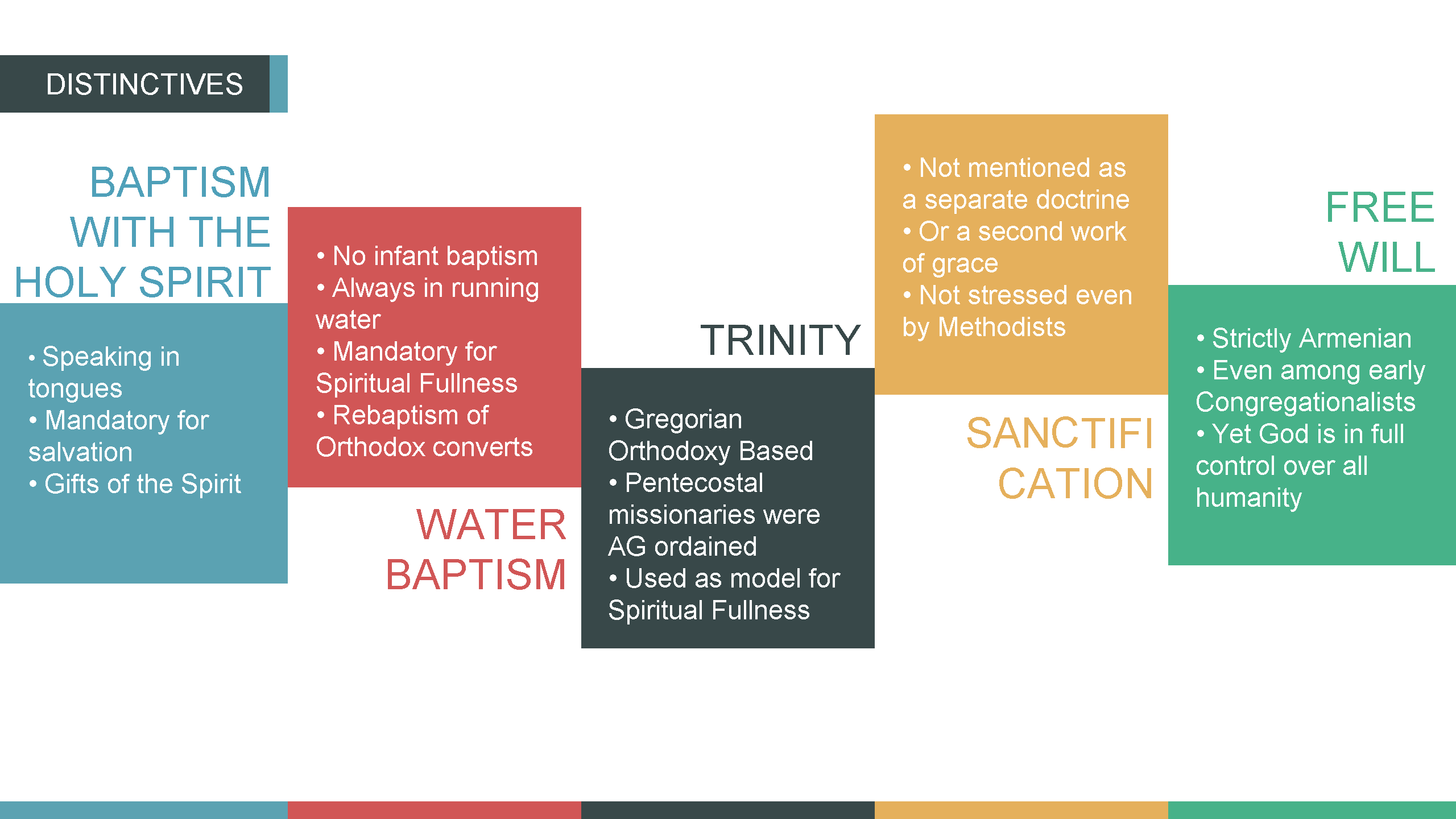
Another peculiar characteristic present among early Pentecostals around the globe was the subject of free will. This was not a problem for the movement in Bulgaria. As strange as it may sound, among all publications and teachings by missionaries in Bulgaria during the 19th century there is no mention of Calvinism, election or predestination. Because Bulgaria’s traditional Eastern Orthodox orientation, both Congregational and Methodist missionaries taught Armenian free will. Even though many Bulgarian ministers were educated in the Calvinistic schools like Princeton and Auburn, Calvinism never picked up among Bulgarian Protestants. With the explosive growth of Bulgaria’s Pentecostals in the 1920s, this Armenian theological heritage was widely accepted amongst the movement.
Protestant Strategies in Bulgaria during the 19th Century
April 20, 2015 by Cup&Cross
Filed under Featured, News, Publication
 by Dony K. Donev, D.Min.
Historical and Doctrinal Formation of Holiness Teachings and Praxis among Bulgarian Pentecostals (Research presentation prepared for the Society of Pentecostal Studies, Seattle, 2013 – Lakeland, 2015, thesis in partial fulfillment of the degree of D. Phil., Trinity College)
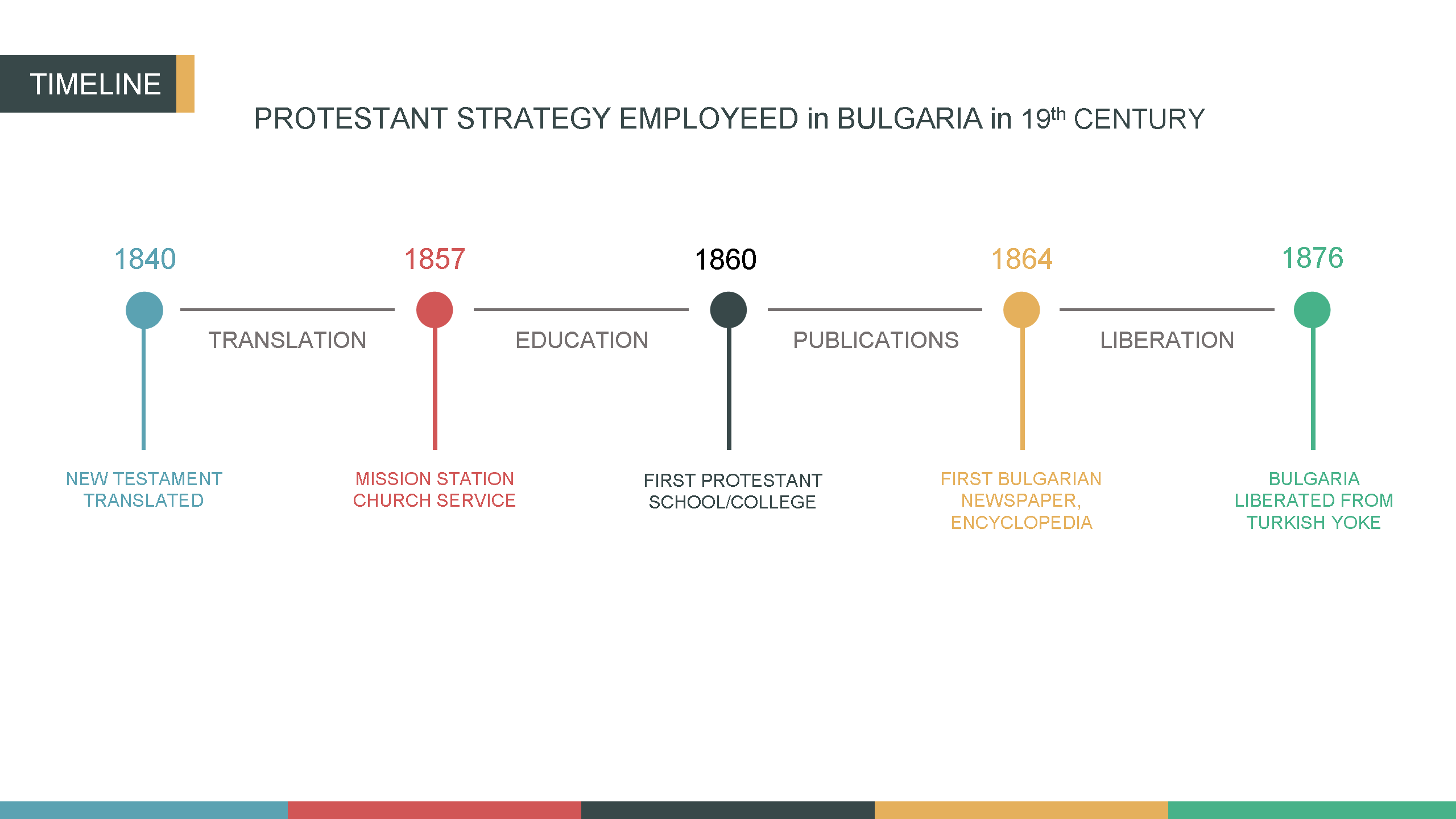
The early Bulgarian protestants were mainly Methodists and Congregational. They followed the strategy of the American and British missionaries, which began with a translation of the Bible in the 1840s, followed by the first mission stations and protestant services in the 1850s.
In the following decade, Protestant schools were established in over a dozen Bulgarian cities. A broad stream of educational publications were translated and provided to schools, churches and the open public. The final goal of the missionary strategy was the establishing of churches, which began in the 1870s and continued onward.
The main sources of influence were the American Board of Commissioners for Foreign Missions (setup in Boston) with its local centers in Turkey and then Bulgaria; as well as from the British and Foreign Bible Society which also had centers in Constantinople and its main Slavic arm through the Russian Bible Society based in St. Petersburg.
Additionally, Baptists entered Bulgaria with their own mission work in 1875 and the Adventists in 1891. Although there were no Presbyterians churches in Bulgaria at that time, many of the agents sent by American Board of Commissioners for Foreign Missions were in fact Presbyterian and were educated at Princeton and Drew along with many Bulgarian protestants who studied abroad.
With all these key players present, Bulgaria was eventually introduced to the rise of Higher Criticism (1880–93) and consecutively to the movement to revise the Westminster Confession of Faith (1900–1910). It was met with great resistance among Bulgarian churches. In this context, the search for holiness among Bulgarian evangelicals began at turn of the 20th country not only as an alternative to the liberal theological thought and praxis, but as a move toward a renewed spiritual identity, which ultimately became the channel for introducing Pentecostal-Holiness teachings.
25 Year Revival Cycles in Bulgaria’s Protestant History

2014 Pastor Johny Noer visits Bulgaria with a prophecy for a new spiritual revival in the land
1989 First visit of Pastor Johny Noer in Bulgaria. The Berlin Wall fell seven months later
1964 Pastor Stoyan Tinchev of the Bulgarian Church of God passed away. This was a breakthrough moment for the ministry of the denomination, which will occupy a historical place in the Bulgarian Pentecostal movement in the next half of century
1939 In the years before WWII, Dr. Nikolas Nikoloff returned to Bulgaria in a renewed attempt to unite all Pentecostal churches in the country. Future Pentecostal Union’s president Ivan Zarev is ordained to the ministry, which determined the pro-government course the denomination would take under the Communist Regime
1914 The beginning of the Great War stopped access of American missionaries to Bulgaria and opened the doors for liberal theology to enter traditional protestant churches. This factor alone allowed the success of the first Pentecostal missionaries sent to Bulgaria by the Assemblies of God in 1920.
1889 After the bylaws of the Congregational church are accepted in the city of Pazardjik in 1888, the Congregational denomination is registered in the capital Sofia on October 27, 1889. Interestingly, exactly a century later again in the capital Sofia on October 27, 1989, the communist militia uses force to stop Green Party protestors which marks the beginning of the fall of communism in Bulgaria.
1864 The monthly protestant periodical “Zornitsa” (Morning Star) is first published to become not only the most successful protestant publication in Bulgaria, but also a symbol of Bulgaria’s Enlightenment. At the same time, ABFMC agent Charles Mors began a Bible Study in Sofia from which the first evangelical church in the capital will emerged in 1879.
1839 In Smyrna (modern day Turkey) began the printing of the first modern day Bulgarian New Testament
1814 The agent of the British and Foreign Bible Society, Robert Pinkerton “discovered” the Bulgarians within the border of the Ottoman Empire and immediately calls for translators who can translate the Bible in the local vernacular. The year marks the beginning of Protestantism in Bulgaria.
Read Also:
- Prophetic Revival in Bulgaria: The Search for Holiness Continues
- Second Varna Declaration (October 5, 2014)
Pastor-Agents of the Secret Communist Police in Bulgaria Revealed

Silence in the face of evil is itself evil: God will not hold us guiltless.
Not to speak is to speak. Not to act is to act.
Dietrich Bonhoeffer
Pastors who served as agents of the secret police during the Communist Regime in Bulgaria are being revealed this week through special legal provision of the Bulgarian Constitution, which allows secret government dossiers and archives to be made public. The law excuses ministers who are retired, immigrated or deceased as it pays special attention to people who continue to serve on denominational boards, heads of religious organizations or church pastors.
The released records have revealed a significant count of Bulgarian evangelical pastors, who have served directly under the Communist government as secret agents and are currently serving in lead positions in their respective churches and denominations. At least 17 agents have infiltrated the Pentecostal churches in Bulgaria (including the Assemblies of God, Church of God and other charismatic denominations). The count is overwhelming in comparison with the Bulgarian Orthodox Church representing some 90% of Bulgaria’s general population with only 11 regional bishops with secret police dossiers.
The newly released documents reveal that these pastor-agents served the Regime through willfully betraying and reporting fellow ministers and their respective ministries, regularly submitting the names of new believers joining their congregations and the activities of their churches as a whole. Special interest in their reports seems to have been given to “foreign religious emissaries” – missionaries from sister-denominations in other countries who visited Bulgarian evangelicals with the purpose of bringing moral and financial support, smuggling Bibles or just encouraging the churches during their time of trials and tribulations under the Regime.
Even more disturbing is the lack of definite and unified response on behalf of the current denominational leaders and the repulsiveness of the general public on the issue as a whole. While the Bulgarian Evangelical Alliance appealed for prayerful but fair dealing with the said misconducts, the Bulgarian Assemblies of God has chosen to deal with the issue internally behind closed doors and the Church of God in Bulgaria has postponed discussion to its general meeting in March or perhaps May. Several outspoken leaders from the Congregational and Apostolic churches have been unsuccessful in bringing about a public debate involving all Bulgarian Protestants, while journalistic investigations in the Christian media have been openly attacked in attempt to be kept silent.
It is understood that many of the said pastor-agents were coerced to serve as such through pressure in their jobs, friends, families and in some cases even their children. Yet, the Bulgarian churches are now struggling to cope with the fact that leading ministers within their denominational structures have continually and purposefully reported on the life of the church, thus betraying fellow believers and ministers.
Protestant Revival in Bulgaria
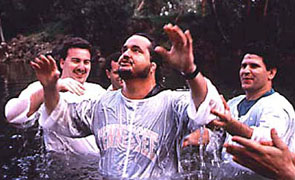 On November 10, 1989, a day after the border between East and West Berlin opened, the Bulgarian Communist leader of over 30 years resigned and change toward democracy began (Lalkov, 62-63). For those of us, who lived in the final days of Communist Bulgaria, the Fall of the Wall was a modern-day miracle. Emerging from severe Communist persecution and surrounded by the Balkan religious wars, the country of Bulgaria suddenly experienced a time of liberation. Before our very eyes, began a national spiritual revival despite a collapsing economy and political insecurity. Read more


