Rev. William Ward Meriam
On 22 April 1859, the Protestant missionary William Merriam and his wife were appointed as missionaries to the newly established missionary station in Plovdiv. This appointment formed part of a coordinated policy between the American Board of Commissioners for Foreign Missions and the Methodist Mission aimed at curbing the ambitions of the Catholic Uniate movement in the Balkans. The year 1859 marked the planned beginning of coordinated missionary activity on both sides of the Balkan Range. In 1857, Albert Long and Wesley Prettyman settled in Shumen (then Shumla). On Christmas Eve 1859, Dr. Long began holding regular worship services in the old capital Tarnovo, documenting a financial donation for a chitalishte (community cultural center) in which these services were to be conducted.
Almost simultaneously, in 1858, the Congregationalist Charles Morse settled in Sofia by appointment dated 26 March 1858, while the missionary Theodore Byington was appointed to Stara Zagora on 4 September 1858. Their settlement, as well as that of the missionary Merriam family in Plovdiv, is described in a letter from K. Vasilev to Nayden Gerov dated 15 October 1859. Prof. Hristo Hristov correctly notes the date of Merriam’s appointment to Plovdiv as 22 April 1859, as recorded in the archives of the American Board, whereas P. Angelova describes their later return to the city with the Clark family in October of the same year and therefore erroneously identifies Clark as “the first Protestant missionary in Plovdiv.” According to the American Board archives, however, Clark arrived half a year after Merriam.
The arrival of the Merriam family in Bulgaria marked the long-awaited beginning of serious activity aimed at the construction of churches in Sofia, Bansko, and Plovdiv, together with a school, as well as a similar institution in Stara Zagora. Rev. William Ward Merriam completed his theological studies at Harvard at the age of twenty-three and graduated from Andover Seminary only three years later. He married Susan Dimon on 1 September 1858 and was ordained by the Congregational Church on 28 November of the same year. His wife had been a long-serving teacher in Cambridge, Massachusetts.
On 17 January 1859, the couple sailed together for Smyrna, arriving there on 22 February. Almost immediately, on 12 March, a decision was taken to open a missionary station in Plovdiv. The Merriams then traveled to Adrianople (Edirne), where on 22 April 1859 they were formally appointed missionaries to Plovdiv and subsequently made several journeys to the city. In the autumn of the same year, the Clark family arrived from America and joined the new missionary station. The first missionary report from Plovdiv in 1859 states:
“On the part of the Bulgarians there exists a strong desire that the Bible be read in their native language… extensive fields, ripe for harvest, are open to native preachers, book distributors, and teachers… The Bulgarian nation is awakening to a new political life… No labor or sacrifice should be spared in order that these people may also be awakened to spiritual life.”
From the founding of the missionary station in Plovdiv, Protestant worship services were held every Sunday in Turkish, and the Bulgarian attendees soon expressed a desire to hear preaching in their own language. After the arrival of the Clark family in Plovdiv, a Bible study group was organized in their home. Following an unsuccessful rental agreement for a Greek-owned house, the missionaries rented the house of A. Zagarlia on Dzhambaz Tepe, where regular prayer meetings were attended by twelve to fifteen young Bulgarians.
On 21 July 1860, Merriam recorded in his diary: “Today Mr. Clark opened the school…” The first pupil was Zelo Mihailov from Chirpan, born in 1840, who had attended the Protestant college in Malta. Prior to the opening of the mission school, on 16 July, the pasha had been officially informed and exclaimed: “If all Protestant missionaries had begun with schools, they would have achieved far greater success.”
His comment demonstrates that the activities of the missionaries and the effectiveness of their educational work were well known to the authorities long before 1859–1860. On 24 November 1860, the Clark family rented a new residence due to the growing number of students. There were now five: Petar Musevich from Pazardzhik and Nikola Boyadzhiev from Panagyurishte, later joined by Georgi Penev from Chirpan, Ivan Tondzhorov from Samokov, and Andrey S. Tsanov from the Orhanie (Botevgrad) region. The Sunday school was attended by an additional seven to eight Bulgarian youths. Only two years later, students from the Protestant school were already singing a Bulgarian hymn in the church of St. Theotokos on the feast of Cyril and Methodius.
In the summer of 1862, the Merriam family traveled to Constantinople for the annual mission meeting. They were accompanied by their ten-month-old daughter Mary (born 27 August 1861, not a five-year-old son as erroneously stated by E. Shelton), while Susan Merriam was in an advanced stage of pregnancy. At the meeting with missionaries Morse and Byington, the expansion of the Bulgarian mission was discussed, which already counted thirty-two adherents in Plovdiv, Sofia, and Stara Zagora.
On 3 July 1862, the day before the American national holiday, while returning from the annual meeting along the road between Harmanli and Haskovo, in the region of Uzundzhovo, the Merriam family was attacked by brigands. A detailed account of the incident is found in a letter from Rufus Anderson, President of the American Board, dated 12 August 1862. The attack was carried out by five armed horsemen. Upon their appearance, the caravan’s guard – consisting of two well-armed mounted zaptiehs – fled without resistance, abandoning fifteen people traveling in five covered wagons. During the pursuit, a firefight ensued, and Merriam drew his own Colt revolver to defend his pregnant wife, who was holding their daughter. In response, the brigands opened fire, killing one of the horses and wounding two or three of the travelers. Merriam himself was struck by two bullets in his right side and died on the spot. He was only thirty-one years old.
His pregnant wife single-handedly defended her husband’s lifeless body and their infant daughter while the brigands looted the wagons. Two extraordinarily difficult days followed, during which Mrs. Merriam managed to transport her husband’s body to the nearest village. There she was met by a dispatched müdür, who assisted with the journey to Plovdiv. Burial could not be delayed, and under the protection of the British and Austrian consuls, it was carried out immediately in an Orthodox church. Some 20 days later, the trauma of the incident led to a premature birth, during which Mrs. Merriam died on 25 July 1862, together with her unborn twins. A special memorial service was held on 14 September of the same year by Rev. James Murray at the American Board’s Congregational church on Prospect Street in Cambridge.
The Merriams’ one-year-old daughter, Mary, was left a complete orphan in the very country to which God had called her parents as missionaries. She returned to Boston only on 12 May of the following year, aboard the sailing bark Smyrniota (owned by the Armenian merchant Marko Nikola Regio), which maintained a direct route between Smyrna and Boston. She was raised in the family of her uncle, John Newton Merriam, a prominent industrialist in Cambridge, Massachusetts. A high price – too often underestimated today – paid for the existence of an Evangelical church in Plovdiv.
 Dony K. Donev, D.Min., is a prominent researcher and author specializing in Bulgarian Protestant, Evangelical, and Pentecostal history, with over three decades of study. His work, including 19th Century History of Protestantism in Bulgaria and The Unforgotten: Historical and Theological Roots of Pentecostalism in Bulgaria, documents the development of these movements, their suppression under Communism, and the subsequent post-1989 revival. Key aspects of Donev’s research on Bulgarian Protestant history include:
Origins (19th Century): Protestant work began in the 1800s, with denominations like Congregationalists (1856), Methodists (1857), and Baptists (1865) establishing missions, culminating in the first Bulgarian Protestant Church in 1871. Donev also highlights the 1871 publication of the Protestant Bulgarian Bible translation. His research, often in collaboration with the Institute of Bulgarian Protestant History, has focused on preserving, digitizing, and recovering documents, including church diaries, photographs, and, in some cases, saving records from destruction during the communist era.
Bezmer Residents Launch Petition Against U.S. Aircraft Deployment
Residents of the Bulgarian village of Bezmer have launched a petition opposing the deployment of American KC-135 tanker aircraft at the nearby military airbase, saying they fear the move could make the region a potential target because of tensions surrounding Iran.
The initiative was announced by Bezmer Mayor Rosen Rusev, who said support is already spreading to neighboring villages in Tundzha Municipality and across the Yambol region. The campaign follows the approval by Bulgaria‘s Parliament and government of a U.S. request to station up to eight American tanker aircraft and up to 250 military personnel at the Bezmer Air Base.
Local residents say their main concern is that the aircraft could be used for logistical missions connected to the conflict involving Iran, increasing security risks for nearby communities. “People in the village are worried because there are no clear guarantees for the security of the settlement itself,” Rusev said. “We hear that Iranian missiles can reach a target within minutes, and we do not know what system could intercept them because Bulgaria does not have modernized equipment capable of stopping such missiles.”
The petition has already been joined by the mayors and residents of Kozarevo, Malomir, Bolyarsko and other nearby villages. Signature sheets have been placed in municipal offices, shops and other public locations, with organizers planning to collect signatures until Friday. The document is expected to be submitted to the National Assembly, the regional governor of Yambol, the mayor of Tundzha Municipality and Defense Minister Dimitar Stoyanov during his scheduled visit to the region. The mayors of municipalities across Yambol Province have also prepared a joint position on regional security.
According to Rusev, support has grown rapidly. “In just one commercial establishment we counted around 100 signatures in a single day. There are several more collection points, so I believe there are already between 300 and 400 signatures, and the number is continuing to rise.” He acknowledged that residents understand the petition alone is unlikely to reverse the decision, but said some have also organized a protest outside the airbase scheduled for Friday evening.
The mayors of neighboring villages said they are hearing similar concerns from local residents. Bolyarsko Mayor Vanya Peeva said, “People follow the news and understand what is happening. The concerns are serious.” Roza Mayor Roza Encho Yorgov added that nearby villages fear they could become collateral victims if the airbase were ever targeted. “Residents believe that if anything happens at the airbase, neighboring settlements could also suffer from a conflict that we ourselves are entering,” she said.
Residents interviewed in Bezmer expressed fears that their village could become a military target. Some said they have no objection to the presence of aircraft or international military exercises, which have long been held at the base, but view the current deployment differently because they believe the tankers could directly support operations related to the Middle East.
“We are worried because Bezmer is becoming a target,” one resident said, while another added, “We don’t want them here. The whole village doesn’t want them.” Others argued that Bulgaria should avoid involvement in conflicts that do not directly concern the country. Several people said they were prepared to escalate their actions through protests, road blockades and civil disobedience if necessary.
Reports indicate that thousands of people have now joined the petition, while the first American tanker aircraft are expected to arrive at the airbase on Friday.
Defending the government’s decision, Progressive Bulgaria MP Yavor Gechev said the deployment serves Bulgaria‘s national interests and fulfills the country’s NATO commitments. Speaking on Bulgarian National Television, he noted that the presence of American military aircraft in Bulgaria is not unprecedented.
“Previously, American aircraft were stationed at Sofia Airport. Now they will be where they belong – at a military airbase,” Gechev said.
He stressed that Bulgaria is not at war with Iran and wants the conflict to end, but argued that refusing the request could damage relations with the United States, which he described as one of Bulgaria‘s key strategic partners. “These are strategic decisions. If we reject this cooperation, we risk worsening our relations with the United States, and that would also have economic consequences,” he said.
Gechev acknowledged that some supporters of the governing majority disagree with the deployment but maintained that decisions involving national security require a broader statesmanlike approach. He declined to comment on speculation linking the deployment to other diplomatic or economic issues, saying not every aspect of diplomacy can be made public.
30 years ago in Chicago

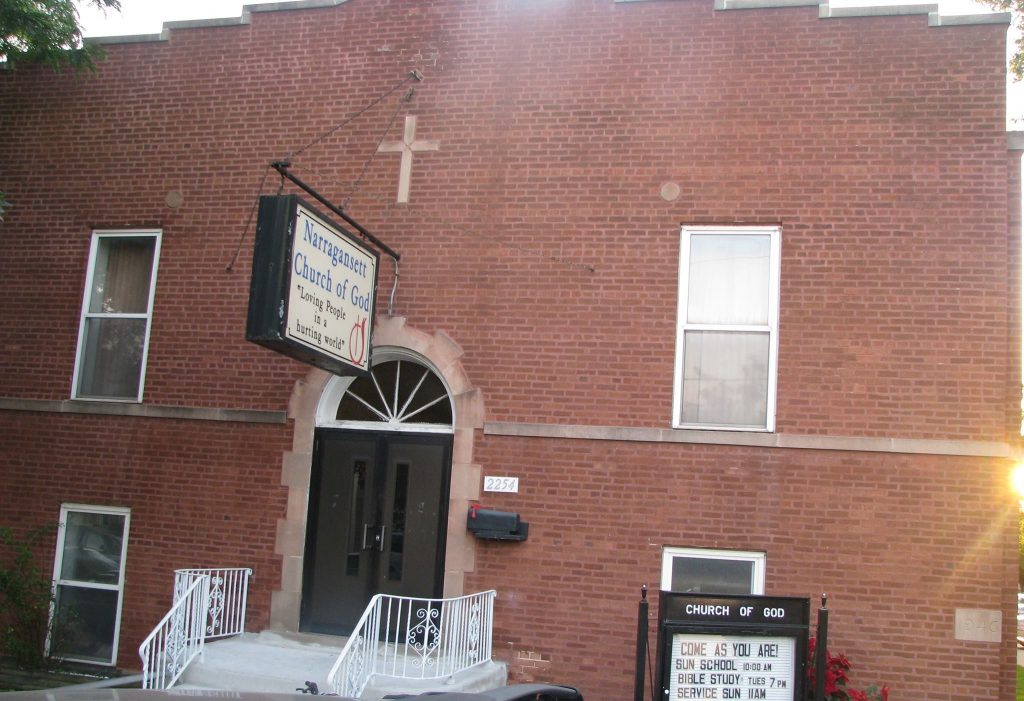
30 Years of the Bulgarian Church of God in Chicago
I left Chicago on this day 30 years ago (July 30, 1995). The Bulgarian church that day held service at 1 PM with 64 Bulgarians and many other internationals in attendance. Bulgarian students from the neighboring Indiana and Wisconsin attended as well. There was even a Bulgarian family from Alaska.
It was a Sunday. I left Chicago to preach in Beloit, WI that night and then left for Washington, D.C. the following morning. While driving north with quite the speed my Carolina blue Grand National began filling with white smoke. At first, I thought the air conditioner was on its last leg in the hot Chicago summer of 1995, but the air remained strong and cold. The cloud proceeded and it was so sensible that I had to slow down and basically stop on the side of the road. In my 35 years of ministry, I have only seen this one more time – in 2011 when the Glory of God descended over a youth camp we were preaching in the Bulgarian mountains. I did finally preach in Beloit and made it to D.C. the next day, but the vision of the cloud remained with me for the next 30 years.
Meanwhile, the word of mouth had spread and the Bulgarian church in Chicago was growing among the Bulgarian diaspora. On October 7, 1995, I was able to visit the church in Chicago again and present it to the National Overseer of the Bulgarian Church of God, Pastor Pavel Ignatov who visited the Bulgarian congregation in Chicago for the first time. By that time, it has become evident that the initial structuring for growth was giving more than expected results. The church became not only the first officially registered Bulgarian Pentecostal congregation in the United States, but also an important social and educational center able to minister to the 100,000 Bulgarians that live in the Great Lake region today.
Called to another mission, I left Chicago on July 30, 1995. The church bulletin upon my departure under Farewell and Appreciation read: “Today we are saying thank you to Dony for a job well done this past summer. He has served our church faithfully, and has been a tremendous blessing to Narragansett Ministries. Immediately following worship this morning, there is a dinner in Dony’s honor in the fellowship hall. And everyone is invited to attend.” Quiescently, while writing this next book for the 30th anniversary of the Bulgarian Church in Chicago, I was able to find this last bulletin in a box with several dozen letters I had sent weekly to my parents in Bulgaria. Surprising even to myself, those letters contain pictures, documents, dates, growth charts and progression predictions that are surprising even to me today. I remember spending countless nights in prayer, contemplating and strategizing over the new Bulgarian church plant, but I had forgotten all this was carefully documented as a case study.
The church congregation presented me with a plaque that represented my efforts and work in Chicago, which I have also kept until now. Because this plaque represents the prayers and the vision of many who are continuing the work today, establishing and leading Bulgarian churches around the world to providing pastoral care for many who have left the homeland in search for a better life. To these ministers goes my personal token of appreciation and thanks, “Well done thou good and faithful!” For me personally today a quarter of a century later, this plaque represents one very simply thing – I never betrayed my dreams. And in my book, this is well done…
Bulgarian Parliament Officially Approved U.S. Aircrafts
The Bulgarian Parliament Officially Approved U.S. Aircraft Deployment at Bezmer Base
The Bulgarian National Assembly approved the deployment of U.S. military tanker aircraft and personnel at Bezmer Air Base, authorizing support for American operations in the Middle East following a formal diplomatic request from Washington.
The resolution passed after nearly three hours of debate, with 135 lawmakers initially voting in favor, 13 against, and two abstaining. After “Revival” leader Kostadin Kostadinov requested a repeat vote, the proposal was approved again, receiving support from 124 deputies from Progressive Bulgaria and 15 from the Movement for Rights and Freedoms (DPS). One Progressive Bulgaria (PB) lawmaker voted against the measure, while two abstained. Twelve deputies from “Revival” opposed the resolution, while GERB, Democratic Bulgaria (DB), and We Continue the Change (PP) did not participate in the final vote.
The adopted resolution authorizes the temporary deployment of up to eight KC-135 aerial refueling aircraft, as many as 250 U.S. military personnel with personal weapons and ammunition, and the necessary airport equipment at Bezmer Air Base from July 24 through October 1, 2026.
Prime Minister Rumen Radev and Defense Minister Dimitar Stoyanov attended the parliamentary session at the request of the opposition. Before the vote, lawmakers also rejected a proposal to broadcast the debate live on national television and radio.
Stoyanov described the decision as difficult but necessary, saying the government had acted to protect Bulgaria‘s national interests while maintaining transparency. He stressed that the deployment would not undermine Bulgaria‘s sovereignty because Parliament retained the authority to approve the number of aircraft, personnel, and the duration of their stay.
“This is one of those decisions that is not easy to make, but it is necessary at this moment,” the defense minister said.
He emphasized that the aircraft are intended exclusively for aerial refueling and logistical support, not combat missions. “No offensive weapons systems of any kind will be deployed on Bulgarian territory. Their temporary presence does not make Bulgaria a party to the military conflict,” Stoyanov said, adding that the government had secured guarantees from its strategic partner to minimize security risks and had taken additional national and allied measures to protect the country.
According to Stoyanov, the American request is based on the bilateral Defense Cooperation Agreement signed in 2006 and made indefinite in 2016. He added that any deviation from the parameters approved by Parliament would require fresh authorization from the Bulgarian authorities.
During the debate, Prime Minister Radev rejected accusations that his government was pursuing contradictory policies. He argued that previous governments had misled the public by describing the earlier deployment of tanker aircraft at Sofia Airport as part of a military exercise.
“The note we received this time was the real note,” Radev said. “The law requires that Parliament approve a request of this nature, and we are not hiding behind anyone. We are proposing the deployment of up to eight aircraft at Bezmer, not 15 aircraft at Sofia Airport.”
Radev also criticized the previous decision to station tanker aircraft at Sofia’s civilian airport alongside commercial passenger traffic. He argued that large military aircraft carrying significant amounts of fuel should never have been based so close to the capital and its busy terminals.
The prime minister referred to remarks by U.S. Secretary of State Marco Rubio, who had publicly thanked Bulgaria for supporting U.S. operations in the Middle East. According to Radev, Rubio’s comments confirmed that the earlier deployment had not been linked solely to military exercises, as previously claimed.
Radev maintained that Bulgaria‘s broader foreign policy position had not changed. “I have been saying for years that the war in Ukraine has no military solution and that diplomacy and negotiations are the only path forward,” he told lawmakers. He insisted the government opposed expanding conflicts through additional weapons and funding while remaining committed to honoring Bulgaria‘s treaty obligations.
“If we want to be a reliable ally and an honest partner, we must honor the agreements we have signed. The United States is our main security ally. If we fail to meet our obligations, how can we expect them to meet theirs?” Radev said in his closing remarks.
The parliamentary debate exposed divisions across the political spectrum.
Former Foreign Minister Georg Georgiev of GERB criticized the government’s handling of the issue, arguing that Bulgaria should maintain a consistent foreign and defense policy. He accused the ruling majority of hypocrisy and political opportunism but said refusing support to an ally during a crisis would damage Bulgaria‘s credibility.
Viscountess Emily Anne Eliza Strangford
“I have looked upon nothing with such satisfaction as upon the six hospitals which I have built. Where there were most afflicted by the insurrection, old men, children, and mothers, nothing that was strange, because of typhus and dysentery. Sofia, one of my sisters, was only 18 years old – she died here, in the village of Radilovo, again from typhus, but before she died, she fed the hungry and treated the sick.” ~Lady Emily Strangford
Emily Ann Beaufort was born in 1826 as the youngest child in the family of the renowned geographer and oceanographer Admiral Sir Francis Beaufort, of French origin. The intellectual atmosphere of the Beaufort household actively encouraged her interests in travel, the natural sciences, and writing. From an early age, Emily accompanied her father on extensive journeys, which profoundly shaped her scientific curiosity and cosmopolitan outlook. Between 1843 and 1845, during travels along the coasts of the Orkney Islands in northern Scotland and Ireland, she collected marine algae and systematically preserved them in a two-volume herbarium.
Around the same time, Emily Ann Beaufort, now known as Lady Emily Strangford appeared in Bulgaria as the widow of the noble friend of the Bulgarian people and former president of the Royal Asiatic Society, Lord Strangford. As early as the beginning of the summer of 1876, Lady Strangford issued and circulated in England an appeal for the collection of relief funds for the victims of the April Uprising. Within the first weeks of the campaign alone, £29,000 were raised, a sum that continued to increase thereafter. The death of Lord Stranford in 1869 was a turning point in her life. The widow devoted herself to philanthropy and to voluntary work. After her curiosity for the exotic worlds, which was further developed under the influence of her husband into a stable interest and devotion, she changed her life and dedicated her efforts to help solve the issues of poverty, sufferings and social injustice.
On 15 August 1876, Viscountess Emily Anne Eliza Strangford publicly announced the establishment of the Bulgarian Peasant Relief Fund. Addressing the British public, she appealed for a total of £10,000 to assist Bulgarians left homeless and destitute in the aftermath of violence and devastation. At the same time, she volunteered her personal services, committing herself not merely as a donor but as an active organizer of relief on the ground. Upon her arrival in Bulgaria, Lady Strangford continued the work of the first hospital founded by the American missionary James Clarke, and soon expanded these efforts substantially. She organized and financed the construction of five additional hospitals in Karlovo, Panagyurishte, Perushtitsa, Petrich, and Radilovo. From Plovdiv, where she was primarily based, she personally supervised the organization, staffing, and operation of these institutions, either directly or through trusted collaborators. The Ottoman authorities permitted her voluntary activities and assigned a police officer in Plovdiv both to accompany her as a bodyguard and to monitor her work. Convinced of the transformative role of education, Lady Strangford deliberately located her shelter for homeless families in Plovdiv near a school, ensuring that children could attend classes regularly. Her vision of relief thus extended beyond immediate survival toward long-term social recovery. Drawing on reports by James Clarke, she structured her humanitarian activities across six rural districts identified as being in particularly deplorable condition. Material assistance was distributed on an unprecedented scale: clothing, bedding, cooking utensils, medicines, and other necessities reached tens of thousands of people. In addition, one hundred wooden huts were provided to homeless families. The total value of distributed aid reached £24,874, a sum remarkable both for its scale and for the speed with which it was deployed. From the very beginning of her stay, Lady Strangford provided extensive clothing assistance, including over 12,000 women’s traditional garments (sukmani), 10,000 pairs of men’s trousers (poturi), an equal number of men’s cloaks and coats, more than 5,000 rain cloaks (yamurluks), and nearly 1,500 blankets. In total, clothing was supplied to more than 20,000 individuals. Beyond emergency relief, she also funded the construction of dwellings, a mill, 110 distillation cauldrons for rose-oil production in Klisura and surrounding villages, five sawmills in the Rhodope Mountains, and large quantities of essential foodstuffs.
A public dining hall in Koprivshtitsa was likewise established, reinforcing local networks of support. Until that time, Bulgarian society under Ottoman rule had not witnessed a charitable initiative of comparable scope carried out within so brief a period. Lady Strangford’s philanthropy was distinctly personal and participatory. She worked in close contact with the local population, assisted by several young Bulgarian men who served as collaborators and translators. She entrusted reliable local figures with the direct management of relief activities. Nevertheless, the establishment of new institutions was not without difficulties. As a British woman operating independently, she was sometimes suspected of being a Protestant missionary or a foreign spy. In Karlovo, rumors circulated that the newly founded hospital might be a psychiatric institution or even a brothel, reflecting the climate of suspicion and uncertainty that accompanied her efforts. Several months after the establishment of these hospitals, Pastor Ivan Tondjorov founded another hospital in Plovdiv, which functioned for many years. During its early period, this institution provided medical care and refuge to members of Bulgarian revolutionary committees. Remarkably, the hospital continued to operate even after Tondjorov himself was arrested and imprisoned as a revolutionary in Yedi Kule in Thessaloniki, while other Bulgarian evangelicals were exiled to Diyarbakir for similar activities.
Before departing Bulgaria, Lady Strangford expressed her intention that the hospital buildings she had founded be converted into schools, thereby ensuring their continued service to Bulgarian society. She also facilitated the education of several young Bulgarian men who had worked with her, sending them to pursue studies at British universities. After her return to Great Britain, Lady Strangford remained energetically engaged in philanthropic and educational initiatives. She organized the Female Emigrant Society in Dorset Street, contributed to the establishment of a Medical School in Beirut, founded a geographical award in memory of her husband at Harrow School, and supported the creation of another hospital in Cairo, Egypt. When Emily Strangford died in 1887, she left behind extensive documentation, correspondence, and scholarly materials. In accordance with her will, she bequeathed a copy of a highly valuable Bible and her herbarium to her Bulgarian collaborator Valko Shopov, a gesture symbolizing the enduring personal and intellectual bonds she had formed during her humanitarian mission in Bulgaria.
Dony K. Donev, D.Min., is a prominent researcher and author specializing in Bulgarian Protestant, Evangelical, and Pentecostal history, with over three decades of study. His work, including 19th Century History of Protestantism in Bulgaria and The Unforgotten: Historical and Theological Roots of Pentecostalism in Bulgaria, documents the development of these movements, their suppression under Communism, and the subsequent post-1989 revival. Key aspects of Donev’s research on Bulgarian Protestant history include:
Origins (19th Century): Protestant work began in the 1800s, with denominations like Congregationalists (1856), Methodists (1857), and Baptists (1865) establishing missions, culminating in the first Bulgarian Protestant Church in 1871. Donev also highlights the 1871 publication of the Protestant Bulgarian Bible translation. His research, often in collaboration with the Institute of Bulgarian Protestant History, has focused on preserving, digitizing, and recovering documents, including church diaries, photographs, and, in some cases, saving records from destruction during the communist era.
Aftermath of the April Uprising, 1876
Following the suppression of the April Uprising, horrific massacres were carried out in Batak, Perushtitsa, and other places in southern Bulgaria. In northern Bulgaria, the uprising in the Tarnovo district was also suppressed and its principal leaders executed. All of this adversely affected the evangelical work of both missions north and south of the Balkan range. Evangelical preachers were forced to limit their movements and make do with greatly reduced gatherings. Despite this, Bishop Andrews concluded his report to the Board in New York with the following recommendation:
“As soon as a more favorable opportunity presents itself for the Bulgarian mission, brethren from America must be sent in accordance with the purpose adopted when the work received its new impetus. This must be done because, in the event of death, transfer of missionaries to America, or proven incapacity on the part of the brethren now here, their number will not be sufficient.”
The Year 1877: A dark cloud hung over the mission. Yet the missionaries maintained unwavering faith in God. As often happens, light began to appear in the darkness. In Svishtov, Pastor Challis noticed encouraging signs early in the year. Church members, almost without exception, attended the prayer and class meetings. Two were received into full membership, and six on trial, in one of the villages within the Svishtov circuit. The Sunday school was well attended, and Pastor Challis translated into Bulgarian the questions for the Sunday lessons. Pastor Lounsbury likewise began his work in Tarnovo under encouraging conditions. Initially the meetings were well attended, but threats soon caused a significant decline in participation. Gavrail Iliev spent most of his time outside Ruse, in towns and villages where the massacres had occurred. Aid was distributed to 1,620 families. The Bulgarian preachers did everything they could in the afflicted areas of northern Bulgaria.
Lovech, 1877: Pastor and Eight Members Killed
During the Russo–Turkish War of 1877, when Russian forces captured Lovech and later withdrew temporarily, bashi-bazouk bands re-entered the town and slaughtered many people. According to some accounts, a massacre occurred at the place where the evangelicals gathered. Eight people were killed, including the preacher Nikola Voynov. It is unclear why this is omitted in the manuscripts of Pastor St. Tomov, though the event is confirmed.
Yordan Ikonomov then completing his theological course at the seminary in Drew, USA, was sent that same year to work in Bulgaria. The superintendent appointed him to teach the young men preparing for the ministry.
The Death of Mrs. Challis: In April 1877 Russia declared war on Turkey with the aim of liberating Bulgaria from Ottoman rule. Mrs. Flocken fell ill, and Mrs. Challis was holding a small child in her arms. Pastor Flocken believed it best to take the women to Germany and then return to Bulgaria. Just as he was preparing to carry out this plan, Pastor Challis contracted smallpox, and his devoted wife refused to leave him. The disease spread to the child, making separation impossible. Flocken departed with his wife, but upon arriving in Budapest, Mrs. Flocken was unable to continue the journey. He placed her in a Christian hospital, where the next day she gave birth to a daughter. Eager to return to Ruse, he soon learned the sorrowful news of the death of Mrs. Challis, who had died of smallpox.
Meanwhile Russian troops were advancing toward Svishtov, and the superintendent advised Pastor Challis to take his child to the United States, as he would be unable to care for it in Bulgaria. Following this counsel, Pastor Challis left for America accompanied by Miss Siika Dimitrova, daughter of Grandfather Dimitar – one of the first evangelicals in Svishtov – who agreed to care for the child. They arrived in New York in June 1877. Upon the advice of the mission secretaries and the bishop, he took up work in his Annual Conference until the end of the war in Bulgaria. Flocken received word from Budapest that his wife and newborn child were not expected to live long. He summoned Lounsbury to Ruse and left for Budapest. The child died, but by God’s mercy his wife survived.
The Russians crossed the Danube, and the missionaries were forced to withdraw. The mission was divided by the warring armies. Under these circumstances the Board advised Flocken and Lounsbury to return to the United States, and they departed. Pastor Flocken arrived in New York on 1 February 1878, and Lounsbury several weeks earlier.
Dony K. Donev, D.Min., is a prominent researcher and author specializing in Bulgarian Protestant, Evangelical, and Pentecostal history, with over three decades of study. His work, including 19th Century History of Protestantism in Bulgaria and The Unforgotten: Historical and Theological Roots of Pentecostalism in Bulgaria, documents the development of these movements, their suppression under Communism, and the subsequent post-1989 revival. Key aspects of Donev’s research on Bulgarian Protestant history include:
Origins (19th Century): Protestant work began in the 1800s, with denominations like Congregationalists (1856), Methodists (1857), and Baptists (1865) establishing missions, culminating in the first Bulgarian Protestant Church in 1871. Donev also highlights the 1871 publication of the Protestant Bulgarian Bible translation. His research, often in collaboration with the Institute of Bulgarian Protestant History, has focused on preserving, digitizing, and recovering documents, including church diaries, photographs, and, in some cases, saving records from destruction during the communist era.
Januarius MacGahan: Turkish Atrocities in Bulgaria (Part 2)
At the next house a man stopped us to show where a blinded little brother had been burned alive, and the spot where he had found his calcined bones, and the rough, hard-vizaged man sat down and sobbed like a child…. On the other side of the way were the skeletons of two children lying side by side, partly covered with stones, and with frightful, sabre cuts in their little skulls. The number of children killed in these massacres is something enormous. They were often spitted on bayonets, and we have several stories from eye-witnesses who saw the little babes carried about the streets, both here and at Olluk-Kui, on the points of bayonets. The reason is simple. When a Mohammedan has killed a certain number of infidels, he is sure of Paradise, no matter what his sins may be. Mahomet probably intended that only armed men should count, but the ordinary Mussulman takes the precept in its broader acceptation, and counts women and children as well. The advantage of killing children is that it can be done without danger, and that a child counts for as much as an armed man. Here in Batak the Bashi-Bazouks, in order to swell the count, ripped open pregnant women, and killed the unborn infants. As we approached the middle of the town, bones, skeletons, and skulls became more numerous. There was not a house beneath the ruins of which we did not perceive human remains, and the street besides was strewn with them.
Before many of the doorways women were walking up and down wailing their funeral chant. One of them caught me by the arm and led me inside of the walls, and there in one corner, half covered with stones and mortar, were the remains of another young girl, with her long hair flowing wildly about among the stones and dust. And the mother fairly shrieked with agony, and beat her head madly against the wall. I could only turn round and walk out sick at heart, leaving her alone with her skeleton. A few steps further on sat a woman on a doorstep, rocking herself to and fro, and uttering moans heartrending beyond anything I could have imagined. Her head was buried in her hands, while her fingers were unconsciously twisting and tearing her hair as she gazed into her lap, where lay three little skulls with the hair still clinging to them.…
And now we begin to approach the church and the schoolhouse. The ground is covered here with skeletons, to which are clinging articles of clothing and bits of putrid flesh; the air is heavy with a faint sickening odour, that grows stronger as we advance. It is beginning to be horrible.
The school is on one side of the road, the church on the other. The schoolhouse, to judge by the walls that are in part standing, was a fine large building, capable of accommodating two or three hundred children. Beneath the stones and rubbish that cover the floor to the height of several feet, are the bones and ashes of two hundred women and children burnt alive between those four walls. Just beside the school house is a broad shallow pit. Here were buried a hundred bodies two weeks after the massacre. But the dogs uncovered them in part.
The water flowed in, and now it lies there a horrid cesspool, with human remains floating about or lying half exposed in the mud. Nearby, on the bunks of the little stream that runs through the village, is a sawmill. The wheel-pit beneath is full of dead bodies floating in the water.
The banks of this stream were at one time literally covered with corpses of men and women, young girls and children, that lay there festering in the sun, and eaten by dogs. But the pitiful sky rained down a torrent upon them, and the little stream swelled and rose up and carried the bodies away, and strewed them far down its grassy banks, through its narrow gorges and dark defiles beneath the thick underbrush and the shady woods as far as Pestera, and even Tatar Buzardjik, forty miles distant.
We entered the churchyard, but the odour here became so bad that it was almost impossible to proceed. We take a handful of tobacco, and hold it to our noses while we continue our investigation. The church was not a very large one, and it was surrounded by a low stone wall, enclosing a small churchyard about fifty yards wide by seventy-five long. At first we perceive nothing in particular, and the stench was so great that we scarcely care to look about us, but we see that the place is heaped up with stones and rubbish to the height of five or six feet above the level of the street, and upon inspection we discover that what appeared to be a mass of stones and rubbish is in reality an immense heap of human bodies covered over with a thin layer of stones. The whole of the little churchyard is heaped up with them to the depth of three or four feet, and it is from here that the fearful odour comes….
We were told there were three thousand people lying here in this little churchyard alone, and we could well believe it. It was a fearful sight – a sight to haunt one through life. There were little curly heads there in that festering mass, crushed down by heavy stones; little feet not as long as your finger on which the flesh was dried hard, by the ardent heat before it had time to decompose; little baby hands stretched out as if for help; babes that had died wondering at the bright gleam of sabres and the red hands of the fierce-eyed men who wielded them; children who had died shrinking with fright and terror; young girls who had died weeping and sobbing and begging for mercy; mothers who died trying to shield their little ones with their own weak bodies, all lying there together, festering in one horrid mass. They are silent enough now. There are no tears nor cries, no weeping, no shrieks of terror, nor prayers for mercy. The harvests are rotting in the fields, and the reapers are rotting here in the churchyard.
We looked into the church which had been blackened by the burning of the woodwork, but not destroyed, nor even much injured. It was a low building with a low roof, supported by heavy irregular arches, that as we looked in seemed scarcely high enough for a tall man to stand under. What we saw there was too frightful for more than a hasty glance. An immense number of bodies had been partly burnt there and the charred and blackened remains, that seemed to fill it half way up to the low dark arches and make them lower and darker still, were lying in a state of putrefaction too frightful to look upon.
I had never imagined anything so horrible.
We all turned away sick and faint, and staggered out of the fearful pest house glad to get into the street again. We walked about the place and saw the same things repeated over and over a hundred times. Skeletons of men with the clothing and flesh still hanging to and rotting together; skulls of women, with the hair dragging in the dust, bones of children and of infants everywhere. Here they show us a house where twenty people were burned alive; there another where a dozen girls had taken refuge, and been slaughtered to the last one, as their bones amply testified. Everywhere horrors upon horrors.
….Some of those who have been able to identify the bones of friends have made weak attempts at burying them. But they have no spades to dig graves with, and they are weak and starving. Besides, many of the survivors are women, who have
made fruitless efforts to keep the bodies of loved ones covered with a little earth. We had ample proof that wherever bones could be identified, they were tenderly cared for. We saw many well-kept graves decorated with flowers. We saw others that had been uncovered by the rain or the dogs, leaving parts of the skeleton exposed, that were still decorated with flowers. We even saw skulls lying on the ground, within a doorway or a garden wall, with a bouquet of flowers lying upon them, as though some one was caring for them, and was yet loth to bury them away out of sight. I saw one half buried, with the face upward, and its hollow eyes gazing reproachfully up at the sunny sky, with a bouquet carefully placed in its mouth; but most of these skeletons and bones have nobody to look after them.
Of the eight or nine thousand people who made up the population of the place, there are only twelve or fifteen hundred left, and they have neither tools to dig graves with nor strength to use spades if they had them. But why have the Turkish authorities not buried them out of sight? The Turkish authorities will tell you they have buried them, and that there were very few to bury. Of all the cruel, brutal, ferocious things the Turks ever did, the massacre of Batak is among the worst! Of all the mad, foolish things they ever did, leaving these bodies to lie here rotting for three months un-buried is probably the maddest and most foolish! But this village was in an isolated, out-of-the way place, difficult of access, and they never thought Europeans would go poking their noses here, so they cynically said, “These Christians are not even worth burial, let the dogs eat them.”
We talked to many of the people, but we had not the heart to listen to many of their stories in detail, and we restricted ourselves to simply asking them the number lost in each family. No other method would probably give a better idea of the fearful character of the massacre, and the way in which whole families were swept out of existence. “How many ware in your family?” we would ask. “Ten,” the answer would be, perhaps. “How many remain?” “Two.” “How many in yours?” “Eight.” How many remain?” “Three.” “How many in yours?” “Fifteen.” “How many remain?” “Five.” And so on in families numbering from five to twenty, in which only remained from one to five persons.
One old woman came to us, wringing her hands, and crying in that hard tearless manner of which I have already spoken, and when we could get her sufficiently calmed to tell us her story, she said she had three tall handsome sons, Ghiorghy, Ivantehu, und Stoyan, and they were all married to good and dutiful wives, Reika, Stoyanka, and Anka, and they had between them twelve beautiful children, Anghel and Tragan and Ghiorghy and Ivantchu, Letko, Assen, Boydan, Stoyan, Tonka, Gingka, Marika, and Reika, so that the family counted all told nineteen persons living under the same roof. Of all this large flourishing family, the tall handsome sons, the dutiful wives, and the twelve beautiful children, there remained only this poor old grandmother. They were all brutally slaughtered to the last one. Of this nourishing family tree there remained only this lifeless withered trunk, and the poor old woman sat down and beat her head against the ground, and fairly screamed out her despair…. We were told that any number of children and young girls had been carried off; that it was known in what Turkish villages they were kept, and that the Turks simply refused to restore them to their parents. Mr. Schuyler afterwards obtained a list, with the names and ages of eighty-seven girls and boys that had been carried off, with the name of the village in which each was kept…. We asked about the skulls and bones we had seen up on the hill upon first arriving in the village where the dogs had barked at us. These we were told were the bones of about two hundred young girls, who had first been captured and particularly reserved for a worse fate than death. They had been kept till the last; they had been in the hands of their captors for several days – for the burning and the pillaging had not all been accomplished in a single day – and during this time they had suffered all it was possible that poor weak trembling girls could suffer at the hands of brutal savages. Then, when the town had been pillaged and burnt, when all their friends had been slaughtered, these poor young things, whose very wrongs should have insured them safety, whose very outrages should have insured them protection, were taken, in the broad light of day, beneath the smiling canopy of heaven, coolly beheaded, then thrown in a heap there, and left to rot.”
~ J. A. MacGahan (The Daily News, August 22, 1876)
Dony K. Donev, D.Min., is a prominent researcher and author specializing in Bulgarian Protestant, Evangelical, and Pentecostal history, with over three decades of study. His work, including 19th Century History of Protestantism in Bulgaria and The Unforgotten: Historical and Theological Roots of Pentecostalism in Bulgaria, documents the development of these movements, their suppression under Communism, and the subsequent post-1989 revival. Key aspects of Donev’s research on Bulgarian Protestant history include:
Origins (19th Century): Protestant work began in the 1800s, with denominations like Congregationalists (1856), Methodists (1857), and Baptists (1865) establishing missions, culminating in the first Bulgarian Protestant Church in 1871. Donev also highlights the 1871 publication of the Protestant Bulgarian Bible translation. His research, often in collaboration with the Institute of Bulgarian Protestant History, has focused on preserving, digitizing, and recovering documents, including church diaries, photographs, and, in some cases, saving records from destruction during the communist era.
Januarius MacGahan: Turkish Atrocities in Bulgaria (Part 1)
“A pilgrim from the ends of earth I come
To kneel devoutly at your lowly tomb
To own our debt, we can never repay
To sigh with gratitude, thank God and pray
To bless your name and bless your name
For this I came.” ~Stoyan Vatralsky
“Since my letter of yesterday I have supped full of horrors. Nothing has as yet been said of the Turks that I do not now believe; nothing could be said of them that I should not think probable and likely. There is, it seems, a point in atrocity beyond which discrimination is impossible, when mere comparison, calculation, measurement are out of the question, and this point the Turks have already passed. You can follow them no further.…
But let me tell you what we saw in Batak: We had some difficulty in getting away from Pes[h]tera. The authorities were offended because Mr. Schuyler refused to take any Turkish official with him, and they ordered the inhabitants to tell us that there were no horses, for we had to leave our carriages and take to the saddle. But the people were so anxious that we should go that they furnished horses in spite of the prohibition, only bringing them at first without saddles, by way of showing how reluctantly they did it. We asked them if they could not bring us saddles, also, and this they did with much alacrity and some chuckling at the way in which the Mudir’s orders were walked over. Finally, we mounted and got off. We had been besieged all the morning by the same people who had blockaded us the night before, or who appeared to be the same, their stories were so much alike. We could do nothing but listen in pity to a few of them – it would have taken all day to hear each separate tale of misery and suffering – gave vague promises that we would do all in our power to relieve their misery upon our return to Constantinople. But diplomatic help is, alas! very slow. While ambassadors are exchanging notes and compliments inviting each other to dinner, discussing the matter over their coffee and cigars, making representations to the Porte, and obtaining promises which nobody believes in, these poor people are starving and dying. Many of them decided to seize this opportunity and accompany us to Batak, to visit their ruined homes, and others caught our bridle reins, determined to make us listen to their stories before we should start. One woman caught my horse, and held it until she could show me where a bullet had traversed her arm, completely disabling her from work, and this was only the least of her woes. Husband killed, and little children depending on that broken arm for bread; all of this told in a language so much like Russian that I could understand a great deal of it; so like Russian that I could easily have fancied myself amongst peasants of the Volga, or the denizens of the Gostinoidvor, Moscow. The resemblance is striking, and it is no wonder the Russians sympathise with these people….
Batak is situated about thirty miles south of Tatar Bazardjik as the crow flies, high up in a spur of the Balkans that here sweeps around to the south from the main range. The road was only a steep mountain path that in places might have tried the agility of a goat. There was a better one, as we learned upon our return, but with that perversity which distinguishes the Oriental mind, our guide took this one instead….
After three hours’ climbing by paths so steep that we were obliged to dismount and walk half the time without then seeming quite safe from rolling down into some abyss, mounting higher and higher until we seemed to have got among the clouds, we at last emerged from a thick wood into a delightful little valley that spread out a rich carpet of verdure before our eyes…. The mill-wheels are silent now. This little valley with its rich grassy slopes ought to have been covered with herds of sheep and cattle. Not one was to be seen. The pretty little place was as lonely as a graveyard, or as though no living thing had trod its rich greensward for years…. This was the village of Batak, which we were in search of.
…. We turned aside from the road, and passing over the debris of two or three walls and through several gardens, urged our horses up the ascent toward the dogs. They barked at us in an angry manner, and then ran off into the adjoining fields. I observed nothing peculiar as we mounted until my horse stumbled, when looking down I perceived he had stepped on a human skull partly hid among the grass. It was quite hard and dry, and might, to all appearances, have been there two or three years, so well had the dogs done their work. A few steps further there was another and part of a skeleton, likewise, white and dry. As we ascended, bones, skulls, and skeletons became more frequent, but here they had not been picked so clean, for there were fragments of half dry, half putrid flesh attached to them. At last, we came to a little plateau or shelf on the hillside, where the ground was nearly level, with the exception of a little indentation, where the head of a hollow broke through. We rode toward this with the intention of crossing it, but all suddenly drew reign with an exclamation of horror, for right before us, almost beneath our horses’ feet, was a sight that made us shudder. It was a heap of skulls, intermingled with bones from all parts of the human body, skeletons nearly entire and rotting, clothing, human hair and putrid flesh lying there in one foul heap, around which the grass was growing luxuriantly. It emitted a sickening odour, like that of a dead horse, and it was here that the dogs had been seeking a hasty repast when our untimely approach interrupted them.
In the midst of this heap, I could distinguish the slight skeleton form, still enclosed in a chemise, the skull wrapped about with a coloured handkerchief, and the bony ankles encased in the embroidered footless stockings worn by Bulgarian girls. We looked about us. The ground was strewed with bones in every direction, where the dogs had carried them off to gnaw them at their leisure.
At the distance of a hundred yards beneath us lay the town. As seen from our standpoint, it reminded one somewhat of the ruins of Herculaneum and Pompeii. There was not a roof left, not a whole wall standing; all was a mass of ruins, from which arose as we listened a low plaintive wail, like the “keening” of the Irish over their dead, that filled the little valley and gave it voice. We had the explanation of thin curious sound when we afterwards descended into the village. We looked again at the heap of skulls and skeletons before us, and we observed that they were all small and that the articles of clothing intermingled with them and lying about were all women’s apparel. These, then, were all women and girls. From my saddle I counted about a hundred skulls, not including those that were hidden beneath the others in the ghastly heap nor those that were scattered far and wide through the fields. The skulls were nearly all separated from the rest of the bones – the skeletons were nearly all headless. These women had all been beheaded.
We descended into the town. Within the shattered walls of the first house we came to was a woman sitting upon a heap of rubbish rocking herself to and fro, wailing a kind of monotonous chant, half sung, half sobbed, that was not without a wild discordant melody. In her lap she held a babe, and another child sat beside her patiently and silently, and looked at us as we passed with wondering eyes. She paid no attention to us, but we bent our ear to hear what she was saying, and our interpreter said it was as follows: “My home, my home, my poor home, my sweet home; my husband, my husband, my dear husband, my poor husband; my home, my sweet home,” and so on, repeating the same words over again a thousand times. In the next house were two engaged in a similar way; one old, the other young, repeating words nearly identical: “I had a home, now I have none; I had a husband, now I am a widow; I had a son, and now I have none; I had five children, and now I have one,” while rocking themselves to and fro, beating their heads and wringing their hands. These were women who had escaped from the massacre, and had only just returned for the first time, having taken advantage of our visit or that of Mr. Baring to do so. They might hare returned long ago, but their terror was so great that they had not dared without the presence and protection of a foreigner, and now they would go on for hours in this way, “keening” this kind of funeral dirge over their ruined homes. This was the explanation of the curious sound we had heard when up on the hill.
As we advanced there were more and more; some sitting on the heaps of stones that covered the floors of their houses; others walking up and down before their doors, wringing their hands and repeating the same despairing wail. There were few tears in this universal mourning. It was dry, hard, and despairing. The fountain of tears had been dried up weeks before, but the tide of sorrow and misery was as great as ever, and had to find vent without their aid. As we proceeded most of them fell into line behind us, and they finally formed a procession of four or five hundred people, mostly women and children, who followed us about wherever we went with their mournful cries. Such a sound as their united voices sent up to heaven I hope never to hear again.
….A little further on we came to an object that filled us with pity and horror. It was the skeleton of a young girl not more than fifteen lying by the roadside, and partly covered with the debris of a fallen wall. It was still clothed in a chemise; the ankles were enclosed in footless stockings, but the little feet, from which the shoes had been taken, were naked, and owing to the fact that the flesh had dried instead of decomposing were nearly perfect. There was a large gash in the skull, to which a mass of rich brown hair, nearly a yard long, still clung, trailing in the dust. It is to be remarked that all the skeletons found here were dressed in a chemise only, and this poor child had evidently been stripped to her chemise, partly in the search for money and jewels, partly out of mere brutality, and afterwards killed. We have tallied with many women who had passed through all parts of the ordeal but the last, and the procedure seems to have been, as follows: They would seize a woman, strip her carefully to her chemise, laying aside articles of clothing that wore valuable, with any ornaments and jewels she might have about her. Then as many of them as cared would violate her, and the last man would kill her or not as the humour took him.
Dony K. Donev, D.Min., is a prominent researcher and author specializing in Bulgarian Protestant, Evangelical, and Pentecostal history, with over three decades of study. His work, including 19th Century History of Protestantism in Bulgaria and The Unforgotten: Historical and Theological Roots of Pentecostalism in Bulgaria, documents the development of these movements, their suppression under Communism, and the subsequent post-1989 revival. Key aspects of Donev’s research on Bulgarian Protestant history include:
Origins (19th Century): Protestant work began in the 1800s, with denominations like Congregationalists (1856), Methodists (1857), and Baptists (1865) establishing missions, culminating in the first Bulgarian Protestant Church in 1871. Donev also highlights the 1871 publication of the Protestant Bulgarian Bible translation. His research, often in collaboration with the Institute of Bulgarian Protestant History, has focused on preserving, digitizing, and recovering documents, including church diaries, photographs, and, in some cases, saving records from destruction during the communist era.
Protestant Participation in the April Uprising (1876)
A considerable number of Protestants took part in the prematurely erupted April Uprising. Many of them were in the immediate circle of Benkovski, Vasil Volóv, and the other revolutionary apostles. Some Protestants joined during the uprising itself. According to Dimitar Strashimirov, about sixty men from the village of Tserovo, in the Pazardzhik region, joined Benkovski’s detachment under the leadership of Tsvyatko Brŭshkov. At that time Tserovo had 120 households, fifteen of which belonged to Bulgarian Protestants. Two roster protocols were compiled – one larger list for the Orthodox, and a smaller one for the Protestants. The leaders of the Protestant group were K. Teliyski and Nikola Kochov. From the same village came Ivan Cheshírov, one of the “tens-men” (leaders of groups of ten) in the Flying Column. Collective memory has preserved the names of two well-known Protestants from Panagyurishte as active participants in the uprising: Stefan Balabanov, who organized the sewing of clothing for the rebels, and Rad Minev, one of the most experienced arms-bearers of the insurgent town.
Protestants were also involved in the activities of nearly all revolutionary districts. Particularly dramatic was the fate of the evangelist Stoil Findzhikov, the master craftsman of the “cherry-wood cannons,” who became a symbol of the uprising. As a youth, Stoil had worked in a military workshop in Constantinople, where he learned details of firearms manufacture. On the eve of the uprising and during its course, prompted by Volov and Benkovski, he crafted and refined several of these primitive cannons. He fired his last “cherry-wood cannon” at the advancing Ottoman forces beneath Mount Kamenitsa. Under the pressure of the attacking bashi-bozouk irregulars, the defenders fled one by one, and some fell in battle.
The evangelist Petar Donchev from Panagyurishte also took an active part in the April Uprising. During the height of the revolt, he served as a trusted courier between the surrounding towns and villages, employed by both Benkovski and Volov. “Petraki,” as the insurgents called him, displayed remarkable resourcefulness, courage, and self-sacrifice. After the uprising he departed for the United States, where he studied theology, later returning to Bulgaria as pastor in Chirpan. Yet he remained throughout his life a passionate patriot and tireless public figure. He declined every offer of praise or reward after the Liberation with the simple words that “whatever he had done, he had done for God and for the Fatherland.”
In the early summer days of 1876, there existed a real danger that the bloody sacrifice of the Bulgarian people would be silenced. Had this occurred, the central idea of the revolutionary movement – and the sacrifice of tens of thousands – would have faded ingloriously into obscurity. At precisely this moment, Bulgarians from Pazardzhik and Plovdiv succeeded in secretly sending the first accurate and detailed descriptions of the events in the rebellious regions to the Protestant missionaries in Constantinople. A decisive man – Father Tilev of Pazardzhik – was the first to describe the massacres, the fires, the hangings, the mass slaughter of defenseless people, and the full horror experienced by the population in the affected districts. He entrusted the packet of writings to the Croat Ilitch, director of the Austrian post in Plovdiv, asking him to forward it to a friend in Constantinople who would deliver it personally to Dr. Albert Long. The first description was soon followed by a second and a third. Reports and accounts began to appear from other sources as well. Ivan Ev. Geshov of Plovdiv also sent a letter through Andrei Tsanov to Dr. Long, writing, among other things: “Many villages in the Pazardzhik region are in flames and the people are being exterminated. Is there no help or protection for them from somewhere?”
With the help of Andrei Tsanov, Dr. Long translated the letters into English and consulted Dr. George Washburn, director of Robert College. The two agreed that Dr. Long would systematize the shocking materials arriving in Constantinople, while Dr. Washburn would bring them to the attention of influential English and American figures in the Ottoman capital. Thus, the information reached Edwin Pears, an English barrister and correspondent for the Daily News, who sent the first alarming reports. The London editorial office initially refused to believe the atrocious descriptions and demanded telegraphic confirmation from Pears himself. Only then, on 23 June 1876, did the Daily News publish the first horrifying accounts of the tragedy of the Bulgarian people.
Dr. Long and Dr. Washburn presented the matter to the British ambassador Henry Elliot and the American minister Horace Maynard. Elliot stated that the matter had to be investigated and verified before being taken “seriously.” Undeterred, the two missionaries sent a second, even more detailed report to the Daily News, insisting that Britain intervene on behalf of the suffering Christian population. Gradually, the Disraeli–Beaconsfield government was cornered, and the prime minister attempted to deflect the issue by declaring in Parliament that “all this commotion is nothing but coffeehouse gossip.” This statement, however, marked the beginning of the crisis’ most intense phase.
More and more dispatches appeared in the Daily News and in a growing number of British and European newspapers. The Daily Mail sent the well-known American journalist Januarius MacGahan – then in London – to visit the sites of the atrocities and report his findings. Disraeli, for his part, ordered an “urgent inquiry” by the British Embassy in Constantinople. The ambassador entrusted the task to the youngest member of the mission, Walter Baring, along with his father-in-law, Fr. Gauracino, a Levantine, retired British consul, and significant debtor to the Ottoman state.
To the American missionaries it was clear that this move sought to obscure the truth about the massacre of an entire people. They immediately visited Minister Maynard again, insisting that the newly arrived first secretary and U.S. consul general in Constantinople, Eugene Schuyler, depart for the burned and blood-soaked regions of Bulgaria. This was also necessary because they feared that the Ottoman government would refuse permission for Baring to carry out his mission.
Minister Maynard expressed his profound sympathy for the Bulgarian people but explained that his duties in Constantinople did not include intervention in the political affairs of the empire, being limited exclusively to the promotion of “commercial relations.” In his view, only one Great Power – Britain – could exert real influence over Turkey. Dr. Washburn, exasperated, rose from his chair and firmly declared: “I am going directly to the telegraph office to inform the President of the United States that his representative in Turkey refuses to lift a finger to save an entire nation of suffering Christians. And I shall report the same to the American press.” The minister was compelled to ask Washburn to return to his office. With the assistance of Dr. Long, they devised a “skillful maneuver”: Eugene Schuyler would travel to Adrianople and the province “to identify and appoint a suitable correspondent for commercial matters.” Thus, the ground was prepared. Upon MacGahan’s arrival, the two Americans, both fluent in Russian, together with Petar Dimitrov, a graduate of Robert College and secretary of the newspaper Zornitsa, set out for the devastated regions of Bulgaria. They were later joined by the Russian consul in Adrianople, Prince Tsertelev.
Meanwhile, Dr. Jacob Clarke of Plovdiv was the first foreigner to visit Batak immediately after the massacre, accompanied by Pastor Nikola Boyadzhiev of Panagyurishte. Amid the ghastly scene and overwhelming stench, they placed in their suitcase several heads of children and women – still with their hair braided – and carried them back to Plovdiv. These were physical proofs intended to confront certain foreign skeptics, influenced by Ottoman officials, who claimed that the victims had been “rebels” whom the Turks were obliged to eliminate “to preserve order.” Dr. Clarke visited several consuls in Plovdiv and began taking out the severed heads one by one, asking: “Is this a rebel? And is this a rebel?” Britain, and soon all of Europe, recoiled in horror at the slaughter. One of the most renowned British war correspondents, Archibald Forbes, wrote:
“MacGahan accomplished brilliantly his mission of exposing the Turkish atrocities in Bulgaria in 1876. I know of nothing in journalism that surpasses, in language, pathos, and flaming indignation, writing that passed so spontaneously from heart to heart. His call stirred William Gladstone to a convulsive paroxysm of revulsion at the barbarities. It stirred England to the depths of her national soul. You could see people traveling on the railways reading those reports with burning faces and tears in their eyes.”
Throughout this entire dramatic period Dr. Albert Long, though remaining in Constantinople, continued – literally day and night – his efforts on behalf of the Bulgarian people. Even when, at the end of 1876 and the beginning of 1877, certain forces sabotaged the work of the Constantinople Conference of the Great Powers, which had agreed on autonomy for Bulgaria across its full ethnic territory, Dr. Long did not lose composure. He continued to seek solutions by every means available. Washburn wrote of him:
“It is a fundamental fact that, although Dr. Long kept modestly in the background, he was the center of everything that was done in Constantinople for Bulgaria during the massacres and the severe trials endured by the Bulgarians in their struggle for freedom.”
Finally, in early May 1876, just days after the outbreak of the April Uprising, a Bulgarian girl in Thessaloniki – Stefana Lanskova – was rescued from abduction intended to force her conversion to Islam. She was hidden in the home of the American consul in Thessaloniki, Hadzhi Lazarov (a Bulgarian Evangelical Christian from Voden who had taken American citizenship and service). This provoked violent unrest among fanatical Turks around Robert College in Constantinople. On May 6, 1876, Muslim extremists murdered the French and German consuls in Thessaloniki (Moulin and Abbott). The American consul, who was their primary target, survived. As unrest at Robert College intensified, ambassador Maynard appealed to President Grant for assistance who did not hesitate to dispatch an American naval squadron led by the USS Trenton to the Sea of Marmara to deter both the fanatical mobs threatening Robert College and the British naval squadron positioned at the Bosporus. It was in precisely this atmosphere that the large-scale efforts of American missionaries, journalists, and diplomats unfolded during the summer of 1876.
In s similar fashion Januarius MacGahan received assignments from the London Daily News and others to report from war zones, particularly the 1876 Bulgarian Uprising against the Ottoman Empire, where his vivid reports on atrocities. With special attention to the Batak Massacre that had shocked Europe and galvanized support for Bulgarian independence, leading to his posthumous title, “Liberator of Bulgaria.” His “orders” were to report the truth, which he did fearlessly, even following Russian armies without permission. His dispatches became crucial historical records of the conflict and Ottoman brutality over Bulgarian civilian population.
Dony K. Donev, D.Min., is a prominent researcher and author specializing in Bulgarian Protestant, Evangelical, and Pentecostal history, with over three decades of study. His work, including 19th Century History of Protestantism in Bulgaria and The Unforgotten: Historical and Theological Roots of Pentecostalism in Bulgaria, documents the development of these movements, their suppression under Communism, and the subsequent post-1989 revival. Key aspects of Donev’s research on Bulgarian Protestant history include:
Origins (19th Century): Protestant work began in the 1800s, with denominations like Congregationalists (1856), Methodists (1857), and Baptists (1865) establishing missions, culminating in the first Bulgarian Protestant Church in 1871. Donev also highlights the 1871 publication of the Protestant Bulgarian Bible translation. His research, often in collaboration with the Institute of Bulgarian Protestant History, has focused on preserving, digitizing, and recovering documents, including church diaries, photographs, and, in some cases, saving records from destruction during the communist era.
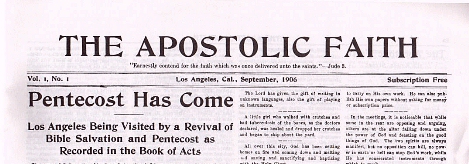
PENTECOST has COME