

From ETERNITY to HERE (Review and Reflection)
 Dony K. Donev
To write this review of Frank Viola’s From Eternity to Here for The Pneuma Review has taken almost a year. In order to critique (even review) one’s work, you must know it. And not merely to have read it once or even twice, but to understand in depth the presuppositions that have led to its writing and the goals set with its publication. The way this is done is through studying the very mindset behind the author’s complete works. For the reading of a book must turn into a journey or it will never get you anywhere. Have I done all this – most probably not, but I sure tried. So, here is the result of my journey.
In times of postmodernism, when metanarratives, and especially Biblical metanarratives, are being deconstructed and questioned by just about every secular movement, there has been a consistent attempt to explain the story of the Bible again to a postmodern and unchurched generation in a way they would actually understand.
To begin with the obvious, the book is comprised of three narratives that already have been much openly discussed:
- The Bride of Christ
- The House of God
- The Body of Christ and the Family of God
The careful reader immediately notices the family-framed language of the description, which perhaps derives from the story of the first family in Genesis, where Viola begins to show the true message of the Bible. It is not merely the fall of Adam and Eve, but the whole creation being God’s very plan for redemption of the universe and the salvation of mankind. This perspective changes the understood purpose of the Gospel from preoccupied with the fall of humankind to God-centered missio Dei.
The description of the creating and joining of Adam and Eve is simply phenomenal as it recreates the plan of God for humanity and the universe from a Biblical point of view. And from the very beginning, the book resembles the expository apologetic style of Augustine in De Civitate Dei (as even the full title De Civitate Dei contra Paganos is promptly resembled by Pagan Christianity). But instead of being philosophical, what we have here is much more a narrative, very similar to the approach taken by St. Symeon the New Theologian.
The view of God’s love is very similar to the way Karl Barth treats it in his commentary to the Romans. Perhaps, because Viola sees it from his own experience of knowing God from God’s own perspective through God’s grace. And at times when speaking of the ultimate purpose of God for mankind and the universe, Viola, almost like Barth, walks a very thin line bordering universalism. And while it is true that God draws the creation to Himself through His love, any self-conscious theologian would make his listeners aware of the danger of universalism, except, of course, if he/she subscribes to such a soteriological view. So, I wrote Viola with the question if he subscribes to universalism and his response was “No.” And I guess it would be quite difficult to be a Universalist, while considering hell a real and unpleasant place.
The three discourses of the book have been much discussed since its publication, yet a few observations are in order. Part one represents an ageless romance of transcendent and eternal God who creates His bride and reconciles the entire creation with Himself in order to redeem her back to His love – a passion that passes through space and time like no other.
The second narrative shows God on a mission. And while the Creator is described as “homeless” and searching for a home within His own creation, His mission is only completed in making mankind His home. Thus, the creation searches with God and a deserted and wildered mankind is found by God only to find eternal rest in Him alone.
This introduces the third “new species” discourse that quite frankly resolves the dilemma of one whole generation, whereas the story of the Bible is reconciled anew with a postmodern human mindset shaped by a Star Trek, Star Wars, Matrix-like culture. The union of Adam and Eve also puts a completely new perspective on the Biblical role of women and it makes an interesting case for their equal roles in creation and ministry.
Disappointment has been expressed in the unchurched language used in the book to describe God’s emotions, but what about a sermon preached in 1741 by one Jonathan Edwards under the name “Sinners in the Hands of an Angry God”? Yet, a warning is indeed in order as the beginning of the 21st century is marked by a surge of postmodern apologetics through which Christian authors address issues outside the institutionalized church (social, political and economical) with the language of the people. But this attempt often goes so “deep undercover” that it remains foreign even to the church itself. A prime example for this phenomenon was the “Purpose Driven Church,” which being a powerful address to the unchurched, often remains a mystery to many mainline Christians who simply could not separate themselves from the known church language. A fair warning would be finding a balanced way to present Biblical truths while keeping the language of the Bible itself as God intended it.
But even with the above, Viola’s story remains missional and concerned with Missio Dei not only for a selected few, but the entire mankind and the whole creation. And this brings the mission of God not to the foreign lands where it has been sent for centuries, but very much home where the real issue is. Embracing God’s love still remains the only spiritual ground where spiritual things do not replace the center of the Gospel – the incarnation of Christ Himself. And only then, the essence of being missional becomes the central dimension to the life and ministry of the church.
Viola views the loss of this dimension historically when the church was absorbed in the culture of Rome and Byzantium in a cultural ideology described by Eastern Orthodoxy as a symbiosis between church and state, which slowly, but surely removes Christ from the center of church and life. But this book is different from the rest, because it proposes a new ideological presupposition that encounters and resolve the deconstruction of church beliefs and praxis proposed by Pagan Christianity. Many traditional and even postmodern representatives of organized religion are terrified by the idea which Viola suggests, watching thousands of people leaving their churches to form not another church, not even a movement, but a new and phenomenal experience – a new phenomenon in the experience of God. For the claim that many current models of organized religion have reached a point of final capacity in the postmodern struggle of becoming more and more nominal may not be so farfetched after all.
John The Baptist’s Bones Found In Bulgaria
John the Baptist’s Bones Found? | Source: University of Oxford
Bones that are theorized to be the bones of John the Baptist have recently been dated to the 1st century AD, confirmed as a male, and also found to be from an mtDNA haplogroup that is most common in the Middle East region he would have been from. The bones were found in 2010 during an excavation under an old church in Bulgaria called Sveti Ivan, which translates as St. John. Under the church, in a small marble sarcophagus near the altar, was a knucklebone, a tooth, and part of a cranium. Three animal bones were also found inside the sarcophagus. Only one of the human bones found still contained enough collagen to be radiocarbon dated.
This new research from Oxford University will be presented in a documentary called ‘Head of John the Baptist’ airing on the National Geographic Channel in the UK June 17th. A team from the Oxford Radiocarbon Accelerator Unit at Oxford University dated the knucklebone, that was taken from a right hand, to the first century AD. The researchers were surprised by this, but have specified that without better evidence there is no way to prove that the bones belonged to John the Baptist.
Professor Thomas Higham said: “We were surprised when the radiocarbon dating produced this very early age. We had suspected that the bones may have been more recent than this, perhaps from the third or fourth centuries. However, the result from the metacarpal hand bone is clearly consistent with someone who lived in the early first century AD. Whether that person is John the Baptist is a question that we cannot yet definitely answer and probably never will.”
Researchers from the University of Copenhagen also contributed by reconstructing the mitochondrial DNA genome sequence from three of the bones. They established that all the bones came from the same person, and also that they were from mtDNA haplogroup that is most common in the Middle East, which is where John the Baptist was from. They also established that the bones were from a male.
Dr Hannes Schroeder said: “Our worry was that the remains might have been contaminated with modern DNA. However, the DNA we found in the samples showed damage patterns that are characteristic of ancient DNA, which gave us confidence in the results. Further, it seems somewhat unlikely that all three samples would yield the same sequence considering that they had probably been handled by different people. Both of these facts suggest that the DNA we sequenced was actually authentic. Of course, this does not prove that these were the remains of John the Baptist but nor does it refute that theory as the sequences we got fit with a Near Eastern origin.”
The archaeologists who discovered the bones also found a small box made out of hardened volcanic ash close to the sarcophagus. The box contained inscriptions in Greek that directly referenced John the Baptist and his feast day, asking God to ‘help your servant Thomas’. “One theory is that the person referred to as Thomas had been given the task of bringing the relics to the island. An analysis of the box has shown that the tuff box has a high waterproof quality and is likely to have originated from Cappadocia, a region of modern-day Turkey. The Bulgarian researchers believe that the bones probably came to Bulgaria via Antioch, an ancient Turkish city, where the right hand of St John was kept until the tenth century.”
In a separate study by Oxford researchers, it was found using historical documents that, in the fourth century AD, monks had taken relics of John the Baptist out of Jerusalem, including parts of his skull. “These relics were soon summoned to Constantinople by the Roman Emperor who built a church to house them there. These relics were soon summoned to Constantinople by the Roman Emperor who built a church to house them there. Further research by Dr Kazan suggests that the reliquary used to contain them may have resembled the sarcophagus-shaped casket discovered at Sveti Ivan. Archaeological and written records suggest that these reliquaries were first developed and used at Constantinople by the city’s ruling elite at around the time that the relics of John the Baptist are said to have arrived there.”
Dr Kazan said, “My research suggests that during the fifth or early sixth century, the monastery of Sveti Ivan may well have received a significant portion of St John the Baptist’s relics, as well as a prestige reliquary in the shape of a sarcophagus, from a member of Constantinople’s elite. This gift could have been to dedicate or rededicate the church and the monastery to St John, which the patron or patrons may have supported financially.”
Bulgarian Bible (1871 Constantinople Edition) on Amazon.com
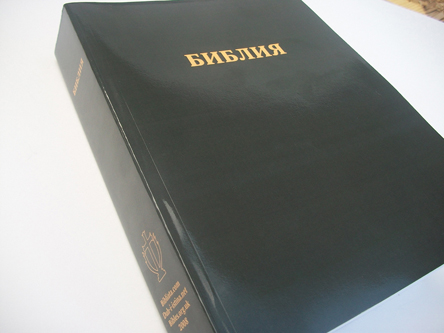
- Bulgarian Bible (1871 Constantinople Edition) now available worldwide through Amazon.com markets
- The Story of the Bulgarian Bible presented to The Pneuma Foundation
- New Printed Revised Edition of the Constantinople Bible Published (2008)
- Digital Constantinople Bible Published (2007)
- Cup & Cross Presents “The Story of the Bulgarian Bible” at ETS (2006)
- “The Story of the Bulgarian Bible” Presentation at ETS (video)
21st Century Revival of Study Bibles
June 20, 2012 by Cup&Cross
Filed under Featured, News, Publication
 We are undertaking the task of comparing and reviewing a growing number of Study Bibles appearing on the book market recently in what appear to be a 21st century Revival of Study Bibles. We will be including some classical titles as well, but overall this study will have three parts dealing with three distinct types of Study Bibles namely: (1) Non-Pentecostal, (2) Pentecostal and (3) Prophecy Related. The following titles are among the ones we have chosen to review in the course of the study:
I. Non-Pentecostal
- Orthodox Study Bible – in relations to Eastern mysticism and its historical effect on the Pentecostal experience
- Reformation Study Bible – within the scope of formation of evangelical identity among Pentecostals
- Wesley Study Bible – with the purpose of studying the relations between Wesleyan-Holiness tradition and Pentecostal theology
- C.S. Lewis Bible – in the scope of its relation to Pentecostal and Charismatic ethics and religious praxis
- Maxwell Leadership Bible – as per its relations to the leadership paradigms involving and affecting Pentecostal and Charismatic communities
- NetBible and its relations to general formations within Pentecostal Theology
II. Pentecostal
- Spirit Filled Study Bible – written by leading Pentecostal scholars
- Full Life Study Bible – classic Pentecostal and foundation for the youth oriented Fire Bible and the Life In The Spirit Study Bible
- Word Study Bible – including selected teachings from Hagin, Copeland, Sumrall, Savelle, Hayes, Osborn, Wigglesworth, Kuhlman and McPherson
- Kenneth Copeland Study Bible – considered as a fundamentalist Pentecostal teaching
- Jimmy Swaggart’s Expositor’s Study Bible – as an introduction of Pentecostal ethics and praxis
- Dake Study Bible – as a classic example on Pentecostalism and Last Days Prophecy coming together
III. Prophecy Related
- Scofield Study Bible and its dispensational effect on early Pentecostals
- John Hagee Prophecy Bible combining understanding of prophetic themes with doctrines of salvation, covenants, and questions about the Christian faith.
- Jeffrey Prophecy Study Bible regarded as the most comprehensive prophecy study Bible
- Tim LaHaye Prophecy Study Bible combining the knowledge of 48 leading Bible experts of prophecy
- Jack Van Impe Prophecy Bible as a valuable source with a wealth of information on Bible prophecy
- Perry Stone Hebraic/Prophetic Study Bible gleaning from 44,000 hours of Bible Study and produced within 34 years of ministry
F. Sanders (a.k.a. Theologue) has further compiled a comprehensive list of study Bibles, which we truly recommend.
Services in South Carolina


Pentecostal Primitivism Preserved
June 10, 2012 by Cup&Cross
Filed under Books, Featured, News, Publication
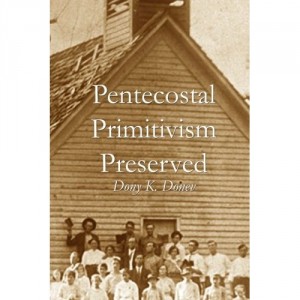 Cup & Cross Ministries International is happy to announce the publication of Pentecostal Primitivism Preserved.
Entering the era of the New Millennium, the Christian Church faces a great number of new existential dilemmas. Finding their answers is not only essential, but also formational for the future of the global Christian Community. Failure to do so will transform the church into just another nominal organization separated from the leadership of the Holy Spirit and the power of God.
In attempt to answer the present ecclesial predicaments, this work suggests a way of remembering and returning to the past. Judging from his own Eastern Pentecostal Tradition and personal salvific experience, the author calls the Christian Church to neo-primitivism expressed in the rediscovering and reclaiming of the basic order of the Primitive Church of the first century. Dr.Donev proposes a new understanding of the Pentecostal experience expressed in power, prayer and praxis. Furthermore, reclaiming of the original experience is the answer for the church of the 21st century only if expressed in discipleship after the example of Christ. It is only through such process that the Christian community will be enabled to preserve its own identity and transmit the faith once delivered to the saints to the future generations.
KMJ at the Hard Rock Cafe on Beale Street in Memphis
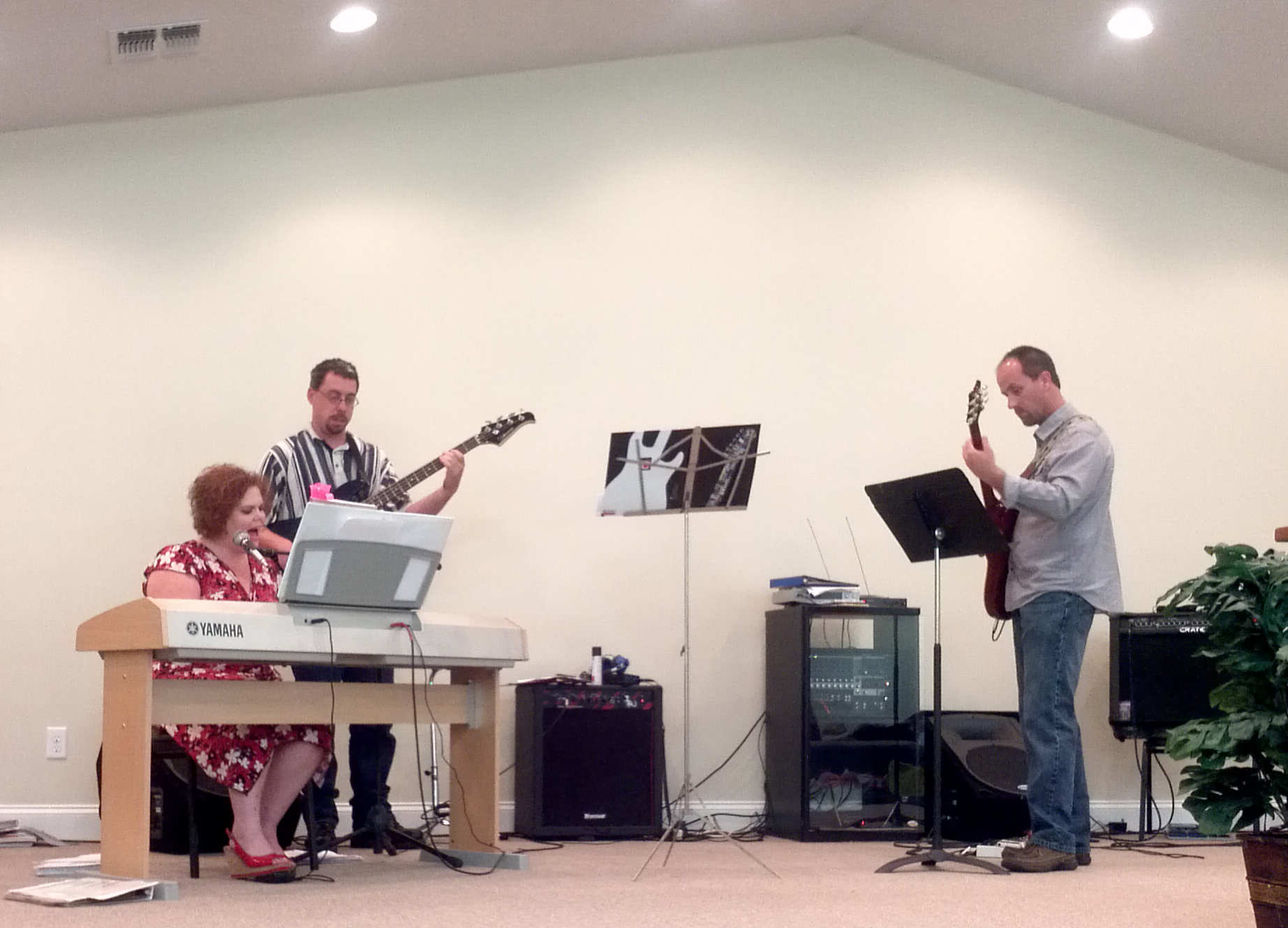
 Our friends and long time ministry partners from the KMJ Praise Band have been invited to hold:
CHURCH ON BEALE STREET
at THE HARD ROCK CAFÉ MEMPHIS, TN
Join us in prayer to support them and make plans to be there if you are in the area, as they are preparing for this milestone in their ministry. Feel free to share the following poster information:
MATTERS OF THE HEART MINISTRY WITH KMJ PRAISE WILL BE TAKING PART IN “CHURCH ON BEALE” – A DAY OF PRAISE FOR THE LORD IN DOWN TOWN MEMPHIS, TN. SEVERAL CHRISTIAN BANDS HAVE COME TOGETHER FOR THIS AFTERNOON OF PRAISE AND WORSHIP.
ON JUNE 10,2012 KMJ PRAISE WILL START OFF THE CONCERT AT 1:00 PM. COME ONE AND ALL! COME ENJOY THE HISTORIC BEALE STREET, OUR GREAT VIEW OF THE OLE MISSISSIPPI RIVER AND AN AFTERNOON FULL OF PRAISE!
Doors at 11:30am
Show at 12:00pm
Free to the public, all ages are welcome
“Church on Beale” is a faith based concept for groups that may play music in their local churches but would like to reach out with their music to others. Seven groups are signed up to perform. Christian music has evolved over the years and the Hard Rock Cafe is giving some great musicians the opportunity to perform at their location in Memphis. From Southern Gospel to Rock Gospel this event will have quite a variety of, again, “faith based” music! This will be an uplifting event and, we involved in it, want to thank the Hard Rock Cafe for allowing us a venue for the many talented musicians to perform.
2012 South Georgia Homecoming Revival


HOLY GHOST PROTOCOL

The Mission IS NOT Impossible
For many years now, our humble publication has informed of our ministry both in the United States and abroad. We have written with a special focus on the country of Bulgaria, and we have prayed for you supporting us every step of the way for which we are truly thankful. But in this brief, we’d like to take the time and speak to the needs and obstacles in your life. For in a time of crises, the House of God must be strengthen before it can fulfill the Mission of God.
We have felt impressed by the Holy Ghost to share this with you not only as an encouragement, but as our commitment to minister to you as well. As you seek an answer for your needs in the presence of God this season, we join with you in prayer for:
- A time of spiritual renewal and Holy Ghost leadership that comes just in time from the Throne Room in glory with a direct and miraculous answer for your situation and your need
- A debt free home where a family could be raised in the faith of the Lord in safety and security for tomorrow
- A giver in your life who would bring an unexpected blessing into you and your family for the very need you have had for such a long time
God has created a need in someone’s life, which only you can answer.
We pray, that as you respond to this need, a parallel resolution is provided for your situation as well.
This mission is NOT impossible, but only through a HOLY GHOST PROTOCOL
WAR ON THE SAINTS: Revival Dawn and the Baptism of the Spirit
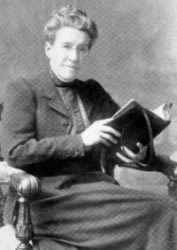 The name of Jessie Penn-Lewis often occurs in works related to the Welsh revival of 1904, not surprisingly, as she was a major chronicler of the movement. She wrote an article each week in the “The Life of Faith,” tracing the course of the spiritual movement first throughout Wales, and then through many lands and by many individuals. She contributed to a number of periodicals and produced her own history of the revival called “The Awakening in Wales – and Some of its Hidden Springs.” She is also well known for her extreme caution regarding what she perceived to be possible demonic intrusions in the developing Pentecostal work of her day, and her later involvement with Evan Roberts. We have included the entire chapter.
Chapter XII: Revival Dawn and the Baptism of the Spirit.
We have seen that the period in the believer’s life wherein he receives the Baptism of the Holy Spirit is the special time of danger from the evil supernatural world, and the Baptism of the Spirit is THE ESSENCE OF REVIVAL. Revival dawn, is, therefore, the great moment for deceiving spirits to find entrance into the believer by deception through counterfeits, resulting sometimes in the possession dealt with in preceding pages.
The hour of Revival is a time of crisis and possible catastrophe. A crisis in the history of every individual, as well as in the history of a country, a church, or a district. A crisis for the unregenerate man, wherein he settles his eternal destiny, as he accepts, or rejects conversion to God; a crisis to those who receive the fulness of the Holy Spirit, and to those who reject Him; for to the believer who bends and receives the Holy Spirit, it is the day of the visitation of the Most High, but to others it means the decision whether they will become spiritual men or remain carnal (1 Cor. iii. i); whether they will elect to remain in defeat in the personal life, or determine to press on as overcomers. Few go through the crisis without deception by the enemy in more or less degree, and only those who cling to the use of their reasoning faculties at this time, can hope to be saved from the catastrophe of becoming a victim to the subtle workings of evil supernatural powers. If the believer does become deceived by evil spirits at the time that he is baptized with the Spirit, almost immediately after the highest point of his experience, he begins through deception to descend into a pit which ultimately means depth of darkness, bondage and misery, until he is undeceived and returns to the normal path. Those who do not discover the deceptions, sink into deeper deception, and become practically useless to God and to the Church.
REVIVAL THE HOUR AND POWER OF GOD
Revival is the hour and power of God, and of the devil, for the descent of the Divine power brings the accompanying onslaught of evil supernatural powers. It means MOVEMENT IN THE SPIRITUAL REALM. Revival itself is the hour of God, when heaven is opened, and the power of God works among men, but when the Divine power appears to pass away, and evil supernatural powers manifest their workings in a man, or a church, or a country,then men marvel that the devil’s work should be where God had been so manifest, not knowing that the devil was planting his seeds, and DOING HIS WORK, FROM THE DAWN OF REVIVAL. Revival ebb began with its flow, but all unseen.
In the hour and power of God in Revival, the “Tempter” appears to be absent, but he is present as the Counterfeiter. Men say there is ”no devil,” and yet it is his greatest harvest time. He is netting his victims, mixing his workings with the workings of God, and beguiling the saints more effectively than he was ever able to do with his temptations to sin. As a counterfeiter, and deceiver, the ever-watchful foe uses his old methods of deception and guile on new converts, who, having victory over known sin, think the Tempter has left them, not knowing his new ways. His absence is only apparent, and not real. Satan was never more active among the sons of God.
WHY REVIVAL STOPS
The Devil’s great purpose is to stop the Revival power of God, and every Revival that has been given of God to awaken His people, has ceased after a time, more or less short, because of (i) the Church’s ignorance of the laws of the spirit for co-working with God; and (2) the insidious creeping on of the powers of darkness, unrecognized, and yielded to by the people of God through ignorance. Those who are born of the Spirit at such a period of the manifested power of the Holy Spirit emerge into a spiritual world, where they come into contact with spirit-beings of evil, OF WHOSE EXISTENCE THEY HAVE NO EXPERIMENTAL KNOWLEDGE. They become conscious of spiritual forces and things which they think must be of God, and they do not know of the possibility of workings mingled by wicked spirits with the things of God. This is the reason why Revival, which quickens the Church, and for a period manifests to the world the regenerating, uplifting power of God, produces as an aftermath a number of genuine Spirit-born believers who are said to have “religious mania,” or are called “cranks.” And this is why “Revival” is sooner or later checked and discredited, the testimony to the world destroyed, the sober section of the Church dismayed, and made fearful of its effects.
To put it in bluntest language, the Revival hour is the occasion for evil spirits to obtain “possession” of spiritual believers, and REVIVAL CEASES BECAUSE OF SUCH POSSESSION. The most spiritual believers, baptized with the Holy Spirit, and most fitted to be used of God in Revival service, may become deceived and possessed by evil spirits in their outer being THROUGH ACCEPTING THE COUNTERFEITS OF SATAN. Believers who are not so abandoned to the Spirit escape the acute “possession,” but in their contact with hitherto unknown workings from the spiritual realm, are equally open to deception which is manifested in a less recognizable way. What is called the “fanatical” spirit, which in some degree, follows Revival, is purely the work of evil spirits. At Revival dawn the ignorant are teachable, but through their “spiritual experiences,” later on they become unteachable. Pre-Revival simplicity gives place to Satanic “infallibility,” or an unteachable spirit. Dogged, stubborn obstinacy in a believer after Revival is not from the source of the man himself, but from evil spirits deceiving his mind, holding his spirit in their grip, and making him unbending and unreasonable. The scheme of the powers of darkness in Revival dawn, is to drive, or push to extreme, what is true. Their “push” is very slight and imperceptible at the beginning, in suggesting thoughts, or impelling to actions a very little contrary to reason, but as the “push” is yielded to, and the use of the reason is silenced, those who are thus deceived in due course become fanatical. The judgment of those believers impelled to unreasonable actions, may be against, and even resisting the things they are supernaturally urged to do: yet they are unable to stand against the supernatural power driving them, which they think and believe is from God.
REVIVAL AND WAR ON SATAN
All this, and much else already dealt with in preceding pages, together with the after history of all Revivals of the past, shows that REVIVAL MINUS WAR ON SATAN AND HIS WICKED SPIRITS, must always appear to end in partial failure through the mixed results, consequent upon Satanic counterfeits of the working of the Holy Spirit.
The Church, therefore, sorely needs believers equipped with knowledge and discernment, to meet the Satanic counterfeits which invariably follow the advent of Revival, knowing the symptoms of Satanic deception and possession, and able to resist the powers of darkness, and teach the children of God the way of victory over them, as well as the aggressive warfare upon them. War upon the attacking spirits of evil is indispensable for maintaining the health, sanity and spiritual power of those who are revived. A PURE REVIVAL–free from the usual aftermath–is POSSIBLE if the Church understood the truth about the powers of darkness, as well as the way of co-operation with the Holy Spirit. Apart from this same knowledge of the workings of Satan and his wicked spirits, so as to be able to recognise their presence under any guise, no one can with safety accept all the supernatural manifestations which accompany Revival, or believe all Seeming “Pentecostal power” to be of God. A PURE Revival is Divine power in full operation, minus sin and Satan. It is not cold “belief,” but life, and it has to do with the spirit, not the intellect.
PRAYER FOR REVIVAL
Apart from this same knowledge, those who pray for Revival do not clearly understand what they pray for, nor how to act when their prayers are answered; for they are not prepared to meet the Satanic opposition to their prayers; nor even the dangers attendant upon prayer for Revival.
Why is there not yet world-wide Revival in answer to world-wide prayer? For the same reason that Revival subsides when it has begun, and that prayer meetings for Revival may end in catastrophe, or powerlessness. The check to Revival, both when it has begun, and in the prayer preceding its advent, is caused by the spirits of evil deceiving or hindering the praying ones. The hindrance to Revival, at the present time lies, not only in this opposition of the powers of darkness, but in the PRESENT CONDITION OF THE MOST SPIRITUAL SECTION OF THE CHURCH, through whom alone God can work in Revival power. These are the believers who know the Baptism of the Holy Spirit, and were liberated in spirit in the Revivals of the last decade, but who are now driven back into themselves by the pressure of the enemy in the atmosphere, or else are in captivity to the foe through his counterfeits. Let these quenched or deceived believers be liberated once more, and THOSE WHO ARE NOW USELESS WILL BE PRICELESS IN VALUE for teaching and strengthening others when Revival is once more given.
INSTRUMENTS FOR REVIVAL
The Holy Spirit is still in those who were baptized with the Spirit, during the last Revivals. The mistake at the time of the Revival in Wales in 1904 was to become occupied with the effects of Revival, and not to watch and pray in protecting and guarding the cause of Revival. The Spirit baptized souls, at present locked up in spirit, or side-tracked through Satanic deceptions, are still those who would be the instruments through whom God could work, were they but set free. Useless now, but priceless in maturity, and experience and knowledge for the guiding and guarding of a Revived Church, when they are once more liberated for true co-working with the Holy Spirit of God.
How, then, should the Lord’s praying ones pray at the present time? They should pray (i) Against evil spirits now blocking and hindering Revival. (ii) For the cleansing and delivering of those who became possessed through deception during the time of later Revivals. (iii) That when Revival is once more given it may be kept pure, and (iv) For the preparation of instruments for Revival, trained and taught of God to guard against further inroads of the powers of darkness. In brief, let all who pray for Revival, pray for light to reach those who HAVE BEEN ENSNARED INTO BONDAGE TO THE DECEIVING POWERS OF DARKNESS, that they may be set free, and once more become usable in Revival service; then will the forces of evil be beaten back from the ground they have regained, which still belongs to God. The Baptism of the Holy Spirit is the essence of Revival, for Revival comes from a knowledge of the Holy Spirit, and the way of co-working with Him which enables Him to work in Revival power. The primary condition for Revival is, therefore, that believers should individually know the Baptism of the Holy Ghost. This term being used as a convenient expression for describing a definite influx of the Holy Spirit which thousands of believers throughout the Church of Christ have received as a definite experience. Such an infilling of the Spirit was the cause not only of the Revival in Wales in 1904, but of all other Revivals in the history of the world. The fact that the counterfeiting work of Satan follows Revival through such an opening of the spiritual world as enables the evil spirit-beings to find access to believers under the guise of the Divine Spirit, must not hold back the children of God from seeking the true flood tide of the Spirit, for the bringing about of pure Revival, and the emancipation of the Church of Christ from the bonds of sin and Satan.
WHAT IS A TRUE BAPTISM OF THE SPIRIT?
It is of primary importance to understand what is a true Baptism of the Spirit, the conditions for its reception, and the effects of obtaining it. Previous chapters will have thrown much light upon what it is not, and the dangers to be avoided in seeking it. It is not an influence coming upon the body, nor, according to the records in the Acts of the Apostles, does it result in physical manifestations, such as convulsions, twitchings and writhings of the human frame; nor does it rob a man of the full intelligent action of the mind, or ever make him irresponsible for his speech and actions.
In brief, the place of the indwelling of the Spirit of God in man, gives the key to all the true manifestations connected with the Baptism of the Spirit, as well as the conditions for receiving it, and the results in personal experience and service. THAT PLACE IS THE HUMAN SPIRIT. Once let the believer understand that his SPIRIT lS the organ through which the Holy Spirit carries out all His operations in and through him, he will be able to discern the true meaning of being filled with the Holy Ghost, and how to detect the counterfeit workings of Satan in the realm of the senses. The Baptism of the Holy Spirit may be described as an influx, sudden or gradual, of the Spirit of God into a man’s spirit, which liberates it from the vessel of the soul, and raises it into a place of dominance over soul and body. The freed spirit then becomes an open channel for the Spirit of God to pour through it an outflow of Divine power. The mind receives, at the same time, a clarifying quickening, and the “eye of the understanding” is filled with light (Eph. i. I8). The body becomes entirely under the man’s complete control, as the result of the dominance of the spirit, and often receives a quickening in strength for endurance in the warfare service he finds he has emerged into. That the Spirit of God OPERATES THROUGH THE ORGAN OF A MAN’S SPIRIT, as shown in the epistles of Paul, needs to be kept in mind in reading the records of the working of the Holy Spirit in the Acts of the Apostles.
THE INFLUX OF THE HOLY SPIRIT AT PENTECOST
On the day of Pentecost, the 120 disciples–men and women–were filled in the spirit, as the Spirit of God filled the atmosphere, and their tongues were liberated, so that THEY THEMSELVES as intelligent personalities, could speak of the mighty works of God as the Spirit gave utterance, i.e., gave them power to speak. The record gives no hint that they became automatons, or that the Spirit spoke HIMSELF through them, or INSTEAD of them. From a spirit under the clothing of, and the afflatus of the Spirit of God, they themselves were given intelligent insight into, and utterance about, the wonderful things of God, as they were “moved” in spirit by Him. This influx of the Divine Spirit into their spirits, not only left their mental powers in full action, but clarified them, and increased their keenness of discernment and power of thought, as seen in the action and the words of Peter, who spoke with such convincing power that through his words–inspired by the Spirit, but spoken by him in intelligent clearness of mind–three thousand were convicted and saved, the true influence of God the Holy Spirit being manifested through him, not in “control” of those who heard him, but in a deep conviction in their consciences which turned them to God, not conquered by terror of God, but by a godly awe, which led them to godly sorrow and repentance. The “falling upon” of the Spirit (Acts xi. I g), is therefore upon the spirit, clothing it with Divine light and power, and raising it into union of spirit with the glorified Lord in heaven; at the same time, baptizing the believer into one spirit with every other member of the mystical Body of Christ, joined to the Head in heaven. All who are thus liberated and clothed in spirit are “made to drink of one Spirit” (I Cor. xii. 13)–the Holy Spirit–Who then, through the spirit capacity of each member of the Body, is able to distribute to each the gifts of the Spirit, for effective witness to the Risen Head, “dividing to each one severally even as He will.” (See Cor. xii. 4-11).
THE HOLY SPIRIT REVEALING CHRIST IN HEAVEN
Another aspect of the true Baptism of the Spirit, having an important bearing upon the experiences of believers to-day, is to be found in the words of Peter on the Day of Pentecost, showing that the revelation of Christ given by the Holy Spirit at such a time, was of Christ as the glorified Man in heaven (Acts ii. 33,34), and not in any vision or manifestation as a Person within. The same attitude to Christ as seated on the right hand of God, is uniformly to be seen in all the later records of the work of the Spirit in the Acts of the Apostles. The martyr Stephen sees the “Son of Man, standing on the right hand of God” (Acts vii. 56), and Paul on the road to Damascus is arrested by a light from heaven (Acts ix. 3; xxii. 6; xxvi. I3), out of which clothing of light the Ascended Lord spoke to him, saying, ”I am Jesus”
The Holy Spirit fills the human spirit of the believer, and communicates to him the very Spirit of Jesus, joining him in one spirit to the Spirit of the glorified Lord, imparting to him the life and nature of Christ for the building up of a new creation in His likeness (Rom. viii. 29; Heb. ii. 2-13). Instead of being turned inward to a self-centred apprehension of Christ, he is, by the influx of the Spirit of God into his spirit, lifted, so to speak, out of the narrow limit of himself, into a spiritual sphere where he finds himself one spirit with others who are joined to the Living Head forming one Body–or spirit organism– for the influx and outflow of the Spirit of the Lord.
REVIVAL DEPENDS UPON TRUE UNDERSTANDING OF THE BAPTISM OF THE SPIRIT
This aspect of the true meaning of the Baptism of the Spirit and its spiritual effect, has an important bearing upon Revival, and the reason why Revival does not come.
Revival is an OUTFLOW OF THE SPIRIT OF GOD THROUGH THE ORGAN OF THE HUMAN SPIRIT LIBERATED FOR His USE. When the influx of the Spirit takes place into the spirits of many believers, and finds outlet through all, the unity which was so marked in the early Church is seen, and the united power becomes strong enough to overflow through all these liberated ones to others. But if the believer turns INWARD, either (I) through the pressure of opposition, (2) powers of darkness in the atmosphere, or (3) to worship and pray in a self-centred way; or is occupied in any degree with an inward experience, THE OUTFLOW OF THE HOLY SPIRIT IS HINDERED; the unity with other liberated believers is checked by an invisible barrier, which has come between, and the released spirit, which was kept dominant over soul and body so long as the man turned outward as a channel for the inflow and outflow of the Holy Spirit, sinks down into the soul-vessel, a “spirit in prison”, so to speak, once more. “Revival” is then checked at its very birth, because believers who seek, and obtain a Baptism of the Spirit, do not clearly understand the conditions upon which the inflow was given, nor how to co-operate with the Holy Spirit in the purpose of His coming; which is to make them channels for the OUTFLOW of rivers of living water.. The influx of the Spirit of God to a man’s spirit, means love, joy, and liberty, buoyancy, light and power. It means a revelation of Christ as the Risen and Ascended Lord, which brings joy unspeakable and full of glory; and an intimate sense of His nearness in fellowship and communion, which makes the “I in you” a living power. It is at this time that ignorance is dangerous. If the believer does not understand that all this is an EFFECT WHICH IS INWARD AS A RESULT OF THE UNION WITH CHRIST IN HEAVEN, and an effect which will continue only so long as he abides in the right attitude toward the glorified Christ in heaven, he will turn into and sink down into the soul, I.e., into himself; and then the deceiving spirits will counterfeit in the sense-sphere the true experiences which he had IN SPIRIT through the incoming of the Holy Ghost. These ”experiences” then have little result beyond the circumference of the believer. When the true influx of the Holy Spirit to the spirit took place, there was (I) unity with others in the same Spirit, (2) joy, (3) liberty of’ utterance, (4) power to witness to Christ, (g) effective and permanent results in the lives of others, and a heavenly “fire” from God in a burning, consuming white heat intensity of SPIRIT (Rom. xii. II) in service to God. But when the sense counterfeit takes place, supernatural “experiences” frequently occur at the very same time that a wrong spirit is discernible, such as harshness, bitterness, pride, presumption, disunion, etc., showing either (I) that the “experiences” are not from the spirit, or (2) that the spirit is out of co-working with the Holy Spirit, and (3) the Holy Spirit is no longer able to bring forth the pure fruit of the Spirit through the believer’s Spirit and life. (Footnote:This may only be temporary, until the believer becomes conscious that something Is wrong, and he takes steps to regain his right condition of spirit, when the Holy Spirit again manifests His Presence and power.) The after counterfeit of the true is also marked by, (1) inability to recognize and unite with the Spirit of God in others, this being contrary to the pattern of the oneness of the Body shown in I Cor. xii., where the same Spirit in each member is in harmony with the Spirit in the other; (2) the spirit of separation and division on account of not seeing eye to eye in non-essential matters, for union of spirit, where the Holy Spirit is ruling and working, is possible apart from unity of faith, which can only be according to the degree of knowledge.
WHY BELIEVERS DO NOT OBTAIN THE BAPTISM OF THE SPIRIT
Believers who know that a Baptism of the Spirit is possible, and obtainable by them, may not receive that Baptism because of many misconceptions about experiences.
The reception of the Holy Spirit, and the Pentecostal measure of the enduement, or clothing, of the Spirit, vary in manifestation and result according to the preparation of, and the knowledge of the believer. Many do not receive the Baptism of the Spirit, because they have misconceptions which hinder them from co-operation with the Spirit of God in His workings, on account of these varying facts in connection with it, and the consequent apparent contradictions of teaching about it.
THE RECEPTION OF THE GIFT OF THE HOLY SPIRIT
After the manner, of the Lord’s dealing with His disciples, and borne out in the experience of many today, it is clear that there is a reception of the Holy Spirit answering to the experience of the Easter Day, as the initial stage of the manifestation of the Holy Spirit in enduement of power, by an influx of the Spirit of God into the human spirit, which liberates the man for utterance and witness bearing. The reception of the Holy Spirit in its initial form requires certain conditions which the believer should be able quickly and simply to fulfil. The (I) putting away of every known sin in the life; (2) definite trust in the power of the Blood of Christ to cleanse from all unrighteousness (1 John i. 9); (3) obedience right up to the edge of light through the Word of God; (4) full surrender to God as His entirely, with not one thing clung to and withheld from Him; (5) the act of faith in which the believer, fulfilling these conditions, takes the Gift of the Holy Spirit, as simply as he received the gift of eternal life through Christ.
Believers should understand that these simple conditions can be carried out by the action of the will alone, with no conscious feeling of any kind. Once the transaction is made, it should be held to persistently and steadily, without question or deviation from a fixed volition. In some cases the entry of the Holy Spirit into the renewed spirit in the manifestation of the fruit of the Spirit (Gal. v. 22) very quickly follows the fulfilment of the conditions. But the believer should be on guard not to turn to any experience as the basis of continued faith, or it will quickly pass away. The transaction with God upon His Word stands good, whether manifested in spirit-consciousness of the Holy Spirit’s presence or not. Once made, the transaction should be held to, experience or no experience, by the surrendered believer. It is from this stage that the Spirit of God now works to discipline and lead the believer on into knowledge of the greater influx of His power which is the enduement for service, and for aggressive warfare against the principalities and powers of Satan.
THE ENDUEMENT FOR SERVICE AND THE CONDITIONS
Some say they have prayed for hours for this needed equipment, to no purpose; others have spent weeks or months in waiting upon God for some experience they think accompanies this Baptism, with very grave results in a counterfeit power breaking forth upon them with manifestations afterwards acknowledged to have come from the deceiving spirits of Satan. Others have received a true influx of the Spirit, but through ignorance and misconceptions have given place at the same time to the workings of evil spirits in the physical frame. This we have already dealt with in earlier chapters, and need only now set forth the conditions for knowing the enduement for service, and the effects which follow.
THE AWAKENED SENSE OF NEED
In the first place there must be a definite assurance that such an enduement of power is possible, and a deep conviction of, and sense of need. This may come about in the believer by his discovering that he has no effectiveness in his life and service, although he may have known for years the Holy Spirit in His indwelling power. Especially, the sense of need may be acute in lack of utterance and power to witness for God; and almost complete absence of the aggressive power against the forces of darkness so marked in the early church. Sometimes those who are thus being moved by the Spirit to the sense of need, which precedes the greater influx of His power, are diverted or hindered from pressing on by others who are not at the same stage of the spiritual life, and who say this enduement is not obtainable. A believer in such a case should put aside the voices of men, and dealing with God direct, PUT TO THE PROOF FOR HIMSELF whether God will meet his awakened need. This means a definite transaction with God, that, (I) He will give to the suppliant what HE MEANS by a “Baptism of the Holy Ghost”; and (2) in His own way grant to His redeemed one the liberty of utterance and, power for effective service, which he should have for fulfilling his part as a member of the Body of Christ. This should be a transaction with God in a deliberate act of the will, which must not be departed from, whatever the after experience may be. This is taking the enduement of the Spirit by faith, on the ground of the Word of God. “Christ redeemed. . having become a curse for us . . . that we might receive the promise of the Spirit through faith . . . ” (Gal. iii 13-14). As we have seen there is no command given to the Church after Pentecost to “wait” for a personal enduement for service. The Spirit of the Lord fell upon those in the house of Cornelius without any ”waiting,” and He will do so still upon any believer directly he is in the right attitude, and fulfilling the conditions for the Spirit of God to flood his spirit with His power. The waiting on the part of the believer, is really a patient waiting for the Spirit of God to do the work in him that is required, after he has definitely dealt with God for such an enduement of His Spirit. A ”waiting” which is consistent with the faithful discharge of the duties of ordinary life, wherein he learns the minute obedience to all the known will of God, which is necessary when he is given more definite service later on.
THE OBSTACLES TO THE BAPTISM OF THE SPIRIT
During this period the believer’s faith-dealing with God must continue to be active, trusting the Spirit of God to prepare him for the enduement required for his sphere of service. The danger now is the using of excuses to cover up lack of power, or else shrinking from the examination of points in the life which the Spirit of God is dealing with, or even quenching the Spirit by refusing to yield up to God what He claims, or quailing from some sacrifice, upon which turns the liberation of the spirit of the seeker for the influx of the greater measure of power.
In the initial reception of the Spirit, the conditions necessary, dealt with a narrow sphere. It meant just the centre of the man dealt with, in will and heart, the former in surrender to God, and the latter cleansed from the love of sin. But in the enduement of power the scope of God’s dealings widens. The man’s SPIRIT has to be separated from the entanglements of the soul, and the lawful things belonging to the natural, or soul-man, have to be surrendered, so that he may become a spiritual man, governed only by his spirit. He must have every trace of an unbending spirit removed, that his spirit may co-operate with the Holy Spirit with pliability; he must lose every degree of an unforgiving spirit, so as to give no inlet to evil spirits, when, by the moving of the Holy Spirit, he may be charged to rebuke sin, or suffer rejection for Christ’s sake; and be freed from a narrow grasping spirit, if he is to be a wide channel for the outflow of the gracious life-giving Spirit of God. Moreover, the man who seeks an enduement of power must be willing for the Spirit of God thoroughly to deal with his life, and remove out of it every obstacle to his immediate readiness to fulfil all the will of God; he must be searched in motive, and taught the principles of righteousness, for the enduement of the Spirit which he seeks to know, means an AGGRESSIVE WARFARE AGAINST SIN, and thc powers of evil, and how can the Holy Spirit convict of sin by the preaching of righteousness, if the man He equips as a messenger of God is ignorant of the law of righteousness? He must learn what GOD’s ATTITUDE TO SIN IS IN HIS OWN LIFE, ere he can be God’s witness against sin in others.
WHY DELAY IN THE BAPTISM OF THE HOLY GHOST
If a believer has made the transaction with God for the Baptism of the Spirit, and taken it by faith, and for a prolonged period there is no evidence in experience, he should renew his prayer to God for the removal of all obstacles as quickly as possible, and be on the alert to co-operate with God in every trace of light given him. Misconceptions as to the way the Spirit will work may prevent the believer recognizing the evidence that his prayer has been answered. He may be expecting an experience similar to some other believer, or have some thought in his mind governed by his wishes or prayers, which blinds him to the working of the Holy Spirit in an opposite manner.
It is here that advantage is given to the spirits of evil. If the believer is bent upon some special mark as evidence of the Baptism, the deceiving spirits use every possible means to give the seeker the counterfeit. The influx of the Spirit of God into the believer’s spirit bears its own evidence, in the release of the spirit into light, liberty and power, resulting in liberty of utterance for witness bearing, and the co-working conviction of others by the Holy Spirit, which is the ultimate purpose of His coming. Believers who are being disciplined and trained by the Holy Spirit for the enduement of power, should continue in present service for Christ, in the keenest faithfulness up to light, using to the full the measure of grace already received, for it is in the path of faithful service that the assurance of the enduement of power may be given. It is God’s law that His children use all He has given them ere He gives more. The believer must DEMONSTRATE HIS OBEDIENCE TO GOD to the utmost extent of his present knowledge, learning to heed the sense of his spirit, and using his mind and judgment in reliance upon the illuminating of the Spirit of God, as he seeks to know the mind of God in His Word.
THE SPEAKING IN TONGUES
A question arises here as to whether believers may now speak in unknown tongues, as the disciples did at the time of the Holy Spirit’s infilling at Pentecost. There are those that say, Yes, but the truths set forth in preceding chapters, show that until the spiritual section of the Church of Christ are more acquainted with the counterfeiting methods of the spirits of evil, and the laws which give them power of working, any testimony to such experience as true, cannot be safely relied upon. (The subject of speaking in tongues is not further dealt with, as the counterfeits in connection with it are only a fraction of the countless counterfeits being forced upon the children of God at the present time, numbers of which are not referred to in these pages. A believer not deceived by counterfeit speaking in tongues can be deceived and possessed by accepting other counterfeits. An understanding of the broad principles showing the basic differences between the way of God’s working, and the deceptive imitations by Satan, will enable spiritual believers to discern for themselves all the counterfeits they meet with to-day.)
Let it be said again: REVIVAL IS AN OUTFLOW OF THE SPIRIT OF GOD THROUGH THE ORGAN OF THE HUMAN SPIRIT, and the Baptism of the Spirit is the influx of the Spirit of God into the man’s spirit, whereby it is released from all obstacles and bonds which oppress or hold it down, and closes or reduces its capacity as an outlet for the Holy Spirit. These obstacles may return through the deceptive workings of the Adversary, and the believer become locked up in spirit again, or rendered practically useless to God and His people.
THE OBJECTIVES OF THE TRUTHS ABOUT THE POWERS OF DARKNESS
There are two objectives to the truths which have been set forth in preceding pages. The first is, the removal of these obstacles, so that the Revival power which is lying locked up in many, may break forth once more, and the Church of Christ press on into maturity and power, victorious over the powers of darkness hindering her progress. These have gained their purpose of checking Revival through the ignorance of God’s people, but they can be defeated and driven back from the ground they have gained, by knowledge of their workings, and by aggressive prayer against them. The truths about them, when put into operation, will not only set free individual believers, but disperse the block in the atmosphere in a church, or a town, or a country.
If it is proved that one evil spirit can be rendered powerless by prayer, then all the hosts of Satan in their onslaught on the Church can be conquered, if the children of God would use the weapons of victory. IF ALL HELL HAS BEEN CONQUERED BY CHRIST THE FORCES OF SATAN CAN BE TURNED BACK, AND THE CHURCH OF CHRIST DELIVERED FROM THEIR POWER.
WHY GOD PERMITS SATAN’S ATTACKS
The hindrance to aggressive warfare against the foe lies in the unwillingness of the Church to face the truth; not in the lack of weapons for victory. Believers are content because they are ignorant of their state. The good they have, blinds them to the greater good, and the greater need of the Church. Therefore, to arouse them from their self-satisfied condition, God has permitted Satan to sift His people, for Satan cannot go one shade beyond the permission of God. Believers will be taught the truth about themselves only by experience, therefore God permits experience. The Church of Christ must be matured, and prepared for the Lord’s appearing, therefore God permits the onslaught of the foe, for only through the fire of sifting will the people of God be urged forward to the battle and victory which will drive the forces of Satan from their place in the heavenlies, making way for the Church to ascend to her place of triumph with the Lord.
Wrong conceptions of Divine things can only be destroyed by experience. Many of the children of God are deceived whilst they think they are protected by God. They comply with the conditions for God to work, apart from intelligent understanding of why He does so, and they do not realize that it is just as possible IGNORANTLY TO COMPLY WITH THE CONDITIONS FOR EVIL SPIRITS TO WORK, through ignorance of the laws governing both Divine and Satanic workings. The supernatural manifestations of the present time, are being forced upon the notice of the Church of Christ, by the wreckage of work for God, and of devoted individual believers. Other children of God go into the midst of such manifestations in a blind confidence that God will protect, yet often they are not protected, because they do not understand the conditions for such protection. Sometimes their confidence covers a wrong condition in themselves, which is hidden from their knowledge, i.e., (1) they have a secret self-confidence that they are capable of judging what they see and hear, which has no basis of true reliance upon God through a deep consciousness of their ignorance; (2) a secret spirit of curiosity, of desiring to see what is “wonderful”; (3) a secret wanting to go to such gatherings, without first seeking, with unbiassed mind, a clear knowledge of the will of the Lord; or they may have (4) a real purpose of obtaining more blessing from God, which covers a deeply hidden pride, or self-ambition to be among the first in the Kingdom of God. Any of these hidden causes can frustrate God’s protection, but where there is a true, pure, single-eyed reliance upon God to protect from the wiles of Satan, with a keen watching unto prayer, and a ready mind open to truth as God gives it, together with an unbiassed faithfulness to the will of God–even though, for purposes greater than the personal good, the far seeing wisdom of God may allow the believer to discover by sore experience the deceptive workings of the Counterfeiter–such an one will be able to say, “out of them all the Lord delivered me.”
SATAN’S VICTIMS MADE VICTORS
The second, and greatest, ultimate result of the operation of the truths concerning the deceptive workings of Satan and the way of victory, is in connection with the dispensational position of the Church, in view of the closing days of the age, and the Millennial Appearing of the Ascended Lord. That Millennial Appearing of the Glorified Christ means to Satan and his hierarchy of powers, the triumph of his erstwhile victims, and their ascension to the throne of Christ, where, in reigning with their Lord, they will “judge angels” (I Cor. vi. 2, 3). It means to the fallen archangel the deepest cup of humiliation he has yet had to drink, when redeemed man, who was for a little while made lower than the angels (Heb. ii. 7), and cast down, by his fall, near the level of the beast, is lifted up again, and made to sit among princes; lifted up above the high position which Satan once occupied as a great archangel of God; lifted up to one nature, and one life and position with the Son of God as an heir of God, and joint-heir with Christ (Rom. viii. 17, Heb. ii. 11-12); lifted up with the Redeeming Lord, far above all principality and power and every name that is named in heaven or on earth, or below the earth; lifted up to the very side of the Triumphant Lord, to the place of judgment of the foe. For Satan, there awaits the abyss–the bottomless pit–the lake of fire. For his victims–the sharing of the throne of the Son of God, above the angels and archangels of God.
THE NAME OF THE CALVARY VICTOR AND ITS POWER
Is it a marvel, then, that at the close of the Age, and on the eve of the Millennial triumph of the Church, the whole hierarchy of evil powers endeavour to submerge the future judges of the fallen hosts of Satan? Is it any marvel that GOD PERMITS THE ONSLAUGHT, for it has been His way throughout the Ages to use this planet as the battle ground and training school of His people? The Son of God Himself had to become obedient unto death, even the death of the Cross, ere He was given the NAME which is above every name; that NAME which now speaks to every fallen angel, and every evil spirit among the dregs of the spirit world, of the CONQUEST OF CALVARY. And every member of the Christ, who will reign with Him, and share in His judgment of the fallen angels, must individually, whilst on the planet of earth, learn first in person, not only to walk in victory over sin, but to trample under foot the viper brood of hell, in the Name of the Conqueror. They must overcome AS HE OVERCAME,” if they are to share His throne and conquest. He led the way. They must follow. He passed through the hour and power of darkness on Calvary, and passed through it to the place of victory. United to Him in spirit, they pass through the same dark atmosphere, filled with the hosts of evil, to their place of triumph in Him.
That closing onslaught from the hosts of darkness is upon the Church. Not one living member of the Risen Head can escape attack if he is a true “joint” in the Body (Ephes. iv. 16). Some will know it before others, according to their place in the Body. “If the whole Body were an eye, where were the hearing?’ They who are of the “feet” will know it latest, but know it they will, for they who are of the “feet” must also ascend, though the foot be the last part to move heavenward, and is nearest earth of the ascending Body. Some of the “elect” of the Body–yea, many–may “fall” victims to the deceptive wiles of Satan, but though they may seem submerged for a time, and–to their own vision–rendered useless to their Lord, if they but see how all the deceits of Satan can be turned into steps of victory, and equipment for the deliverance of others from his power, they can arise again, and become as it were “eyes” to the Body of Christ, in its advance through the aerial hosts of darkness contesting the way. They can arise again when they discover that what was meant by Satan to overwhelm them, can be changed by the light of truth into a glorious liberation from the enemy’s power, and thus make them witnesses, not only to men, but to the principalities and powers in the heavenly regions (Ephes. iii. 10) of the manifold wisdom of God. The hierarchy of Satanic power may hope to delay their judgment for a season, but the purposes of God must ultimately come to pass. He will draw His Church through to join the Risen Head in due season, even though the hour and power of darkness now surrounds her. The ULTIMATE OF THE CALL TO WAR AGAINST THE POWERS OF DARKNESS IS REVIVAL! But the ultimate of that Revival which will come as the result of victory over Satan is ASCENSION TRIUMPH: THE MILLENNIAL APPEARING OF THE CHRIST AND THE CASTING OF SATAN AND HIS EVIL POWERS TO THE ABYSS.
Even so, come Lord Jesus.


