

After 40 days of protests police removes protesters from Parliament square in Sofia, Bulgaria
Comments Off on After 40 days of protests police removes protesters from Parliament square in Sofia, Bulgaria
Anti-government protests in Bulgaria’s capital have been going on for 40 days, and escalated Tuesday evening as several hundred demonstrators trapped the officials inside Parliament in a bid to oust the left-leaning government.
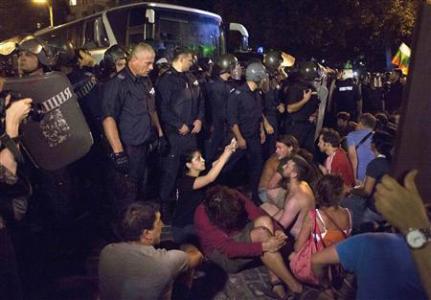 (Reuters) – Hundreds of protesters built barricades around Bulgaria’s parliament, effectively trapping over 100 lawmakers, ministers, and journalists in the building for more than seven hours on Tuesday following a brief scuffle with police. Protesters pulled out sidewalk tiles and piled garbage bins to cut off roads to Bulgaria’s parliament, shouting “Mafia!” and “Resign!” and “Red Garbage!”, to keep the deputies under blockade until the Socialist-led government steps down. An earlier attempt to get deputies out of the parliament with a bus led to a scuffle with police. It was aborted after protesters threw bottles and other objects at the bus, while others sat in front of it.
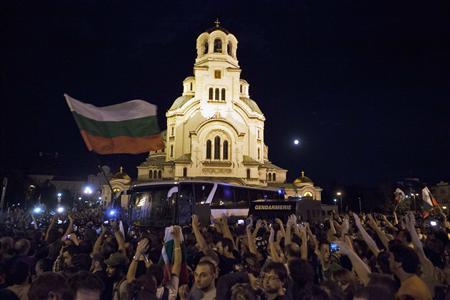 Thousands of Bulgarians have been protesting almost daily in Sofia since last month following a government decision to name a powerful media magnate as security chief, which many see as an example of private interests controlling state institutions. The government’s withdrawal of the appointment failed to quell public discontent in the European Union’s poorest country, which also is one of the bloc’s most corrupt. Seven protesters were treated for head injuries, the national radio said. Two police officers were also wounded.
Growing in the Life of Faith
 Having evolved from Wesleyan-holiness movement and having received great formational impact from many of the 20th century denominations, Pentecostalism inherits numerous church practices. Yet, several practices are historically, culturally and ecclesiastically distinctive from the Pentecostal churches. Among them are:
1. Baptism with the Holy Spirit accompanied by the initial evidence of speaking in tongues (glossolalia).
2. Practicing of the gifts of the Spirit, with the gifts of speaking and interpreting of tongues being predominant.
3. Foot washing services, as a part of the communion service.
4. Enthusiastic and emotional worship involving the whole congregation.
5. Altar services accompanied with shouting, running and trances.
6. Prayer clothes as a part of prayer for the sick.
7. Life of holiness, not only as a personal lifestyle, but as a discipleship model as well.
8. Inspiring the process of uniting and unifying people from different social, educational, economical and cultural backgrounds forming a movement without borders.
The absence of the above practices in Pentecostal discipleship will result in the following negative implications:
1. Discontinuity with Pentecostal heritage.
2. Discontinuity with Pentecostal theology.
3. Mutilation of Pentecostal Practices.
4. Discontinuity with Pentecostal identity and transformation into a new identity distinct from the Pentecostal one.
5. Failure to fulfill the divine calling for the Pentecostal mission.
Indeed, discipleship can exist without the above listed practices and actions, in the same way it exists in other Christian denominations and movements. However, discipleship of this type will not carry a Pentecostal distinctiveness. Therefore, it is clear that Pentecostal discipleship can exist and be productive only when modeled after distinct Pentecostal practices. Only then will Pentecostal discipleship be a cross-cultural and a cross-denominational movement.
It is unfortunate that Pentecostal practices, even within the global Pentecostal community, are disappearing. It is even more troubling that in many congregations and movements they are mutating to create a new identity much different from the Pentecost of the Bible. For example, in the beginning of the 21st century:
1. Baptism with the Holy Spirit accompanied by the initial evidence of speaking in tongues (glossolalia) is often replaced by the modern and postmodern religious experiences like “holy laughter,” “holy rain,” etc.
2. Practicing of the gifts of the Spirit, is a rare appearance often replaced by “prophetic” utterance and leadership of types quite distanced from the Biblical prophetic operation.
3. Foot washing services are not a part of our worship any longer.
4. Enthusiastic and emotional worship involving the whole congregation is more often faked and imitated than genuinely inspired by the Holy Spirit. The reason: great desire for the results without much discipline to go through the process.
5. Altar services accompanied with shouting, running and trances may still occur, yet they often do not fulfill their original purpose: to reconcile both Christians and sinners with their Creator.
6. Prayer clothes as a part of prayer for the sick are practiced as ministry, yet the results of healing are often not there.
7. A life of holiness has been rejected as impossible, impractical and foolish. The few who still press forth for practicing it have been classified as social outcasts by both the world and the global Christian community.
8. The idea of uniting and unifying people from different social, educational, economical and cultural backgrounds forming a movement without borders has been implemented by the world into the idea of a “global community,” yet it has very little presence and practice in the Pentecostal churches.
Leading and Managing a Growing Church
According to George Hunt the three main roles of each pastor of an effective and growing church are:
- Leader communicating the church vision, purpose, and direction
- Manager utilizing people and resources, assigning specific roles, jobs, and tasks, in order to achieve the mission’s purpose.
- Administrator facilitating the flow of the organization and makes sure it is efficient. (p. 26).
The following paper is a basic list of my actions in my present context of ministry grouped according to the above categories.
Leadership
- Creating, providing and consciously supporting a spiritual environment of prayer for leadership decision-making.
- Vision: Receiving the vision for the department and communicating a vision through all existing structures to all people in the department without any exception.
- Purpose: presenting a purpose of the vision – what would be the results of fulfilling the vision.
- Mission: how does the vision compliment the overall mission of the congregation?
- Relationships: relating to people s needs, spiritual growth and transformation.
- Message: in the church context providing a message related to the vision empowering the gifts of the people, encouraging with a hope for the future and at the same time ministering to their present situation personally, in their families as a basic church structure, and in the corporate presence of the church congregation as a community.
- Interacting with existing systems, structures and hierarchy in the church through providing an adequate leadership model in the assignment department.
Management
- Creating, providing and consciously supporting a spiritual environment of prayer for management decision-making.
- Creating an environment for adequate and timely problem solving in relationship to relationships between people and resources or both.
- Forming and continuously developing a dynamical financial strategy in accordance with the overall financial strategy of the congregation that provides for the ministry needs.
- Budget planning as a part of the annual church budget presented by the senior pastor and approved by the pastoral/church council.
- Creating relationships with long and short term sponsors.
- Providing and implementing long and short term fundraiser strategies.
- Finding, creating and building resources providing and adequate model for their purposeful usage.
- Creating annual and/or five-year projections for the further development of the ministry department in accordance with the available resources and the adequately provided leadership plans.
Administration
- Creating, providing and consciously supporting a spiritual environment of prayer for administration decision-making.
- Establishing communication with leaders and members through a variety of mail outs, websites, weekly bulletins, monthly newsletters and presentations.
- Cataloging member profiles in an information database to create a holistic church communication structure, and available for planning an extended church strategy.
- Forming basic structures and systems to aid the youth ministry:
- Volunteer leaders
- Student leaders
- Small groups
- Small group leaders
- Weekly meetings
- Wednesday night leaders
- Sunday school teen program, etc.
- Providing training, feedback and communication with the department structures aiming better results and relationships.
- Participating in church boards, interacting with directors, establishing and executing the proper chain of command.
- Creating and publishing reports and statistics inclusive of results.
- Analyzing the available data, structuring the results with proper feedback and providing a strategic plan for further development of the ministry.
Called & Empowered
 Called & Empowered is a collection of essays that addresses a number of critical post-modern issues. The main purpose of the book is to introduce and answer problematic questions related to church and culture. A great addition is the compilation of in-depth cultural studies and recent theological developments viewed in Christian context. What made the book interesting for me personally was the presence of a number of well-balanced critical perspectives which were presented from different viewpoints. Because they were combined with different cultural factors, they were helpful in understanding the Global Mission of Pentecostalism. The supportive evidence focused on the Kingdom, culture, social formation and unity.
On the Kingdom of God
During the latter part of the twentieth century, the doctrine of the Kingdom of God was of great concern for many theologians and missiologists. In my short educational experience, I have been introduced to a number of works on the subject, some of which were quite controversial. However, it has been interesting to read about the Kingdom strategy of Jesus, along with the development of the Kingdom theology in the context of third world praxis. It seems that in both cases, it is reasonable to accept the fact that since the Kingdom of God was a prime concern in the ministry of Jesus, as well as in the ministry of John the Baptist and the apostles, it should carry the same importance in our Christian life and activities. Unfortunately, this may not be the observed reality in Christianity today. However, traditionally and historically, Pentecostal Christians have always focused on the Kingdom of God. A very particular example in this case is the already-not-yet proposal, which is directly associated with Kingdom theology.
On Gospel and Culture
This particular division in Called and Empowered has a very important discussion on the urbanization of the Pentecostal mission. Historically, Pentecostal revivals do not begin in huge urban centers and do not focus or attract them. It seems that such revivals occur mainly among people who are neither highly educated, nor economically prosperous. Also they do not occupy a high rank in the social hierarchy. It is only after they have had a period of successful existence as aggressively growing religious organizations that the Pentecostal Churches and ministries start aiming at the great cultural, economical and political urban centers. Such progressive development is evident in the Bible. Undeniably, the first move of the Holy Spirit in Acts 2 was among uneducated people such as fishermen and tax collectors. Similar concern was expressed by Gentiles present in Jerusalem on the day of Pentecost. Nevertheless, shortly thereafter the Gospel was preached before kings, politicians, governors and military leaders. Therefore, what Pentecostalism rediscovers today is not a new blending of culture and Gospel, but rather a reclamation of the continuity of historical inheritance.
On Pentecostal Response to Marxism
A very good point was made by Dr. Kuzmic in his exposition on Marxism in relation to the existence of Pentecostalism. It is always quite disturbing when a parallel between Marx’s socialism and Christianity is being made. In Eastern Europe however, this idea is not as neoteric as proposed by some Western writers. In the early twentieth century Nikolay Berdyaev, one of the most prominent socialist writers, introduced what is considered probably the first comparison between Christianity and Marxism. The similarities are many: common wealth, economical and social balance, peace, brotherhood, ect. Also, communism in many ways imitates Christianity. Good examples are the establishment of the social and economical infrastructure of cultural communes, work unions and agricultural cooperatives which have common assets. A similar example is the almost “religious” dedication required by the Communist Party.
What is missed, however, is the simple fact that Marxism, different from Christianity, lacks God. As Dr. Kuzmic points out, Marx hated all gods, including Christ. Therefore, there is no room for comparison. If Communism is Christianity without Christ, it then stands far away from the whole idea of the existence of Christianity. This was shown through the enormous failure of communism in Eastern Europe. Since Dr. Kuzmic has personally experienced all of the above, his exposition on Marxism in relation to Pentecostalism assesses the true danger of such a parallel.
On Ecumenism and Pentecostal Mission
The last evidence is drawn from the discussion on Ecumenical Mission offered in Called & Empowered and my long-term relationship with the World Council of Churches. The World Council of Churches is one of the numerous organizations which promote worldwide Christian unity through reconciliation, theological dialogue, sharing of resources and the vision of a community life rooted in a particular cultural context.
The vision of the World Council of Churches is based on the common Christian mission of introducing Christ and Christianity to the world. I am persuaded that the future of World Missions is for Christians uniting with a common purpose for our Christian mission. Undoubtedly, such process will take time and mutual efforts. I am reminded of this as I observe my home country, Bulgaria where Protestant Christians are divided against one another and unity is lacking. Unified missions will not only bring oneness and harmony back into the church, but it will formulate the ecclesiastical community after the image of the Early Church from the Book of Acts. The results from such a unified mission will not only be world changing, but self-changing as well.
Mission Applications
The following part of this overview will include a mission application response to the evidences listed above. As it focuses on the Eastern European context, it will further suggest mission applications in the present Protestant reality in the region, and more specifically among the Bulgarian Pentecostals. The above four evidence accents were chosen among others because they all pertain to today’s Bulgarian Protestant reality. The kingdom of God as both present reality and eschatological hope takes a bit different perspective in a society where forty five years of Communist regime has left a deep scar on people’s mentality. Healing for the emotional and social wounds has not been provided by rapidly changing governments and political models, crime has increased, severe economical crises have occupied and there remains a constant fear and lack of hope for the future. In such context, the Kingdom of God is much more than a present reality or a future hope. It is all that the Protestant church in Bulgaria really has.
Gospel and culture are an essential part of Bulgarian missions work. On the Balkan Peninsula where Bulgaria is located, there are more than 150 languages and dialects spoken. Adding the crossroads of three world religions, three continents and constant migration of people that has been going on for thousands of years, makes this Europe’s melting pot of cultures and ethnoses. Discovering a paradigm which will serve as a buffer between the ever-changing Balkan culture and the eternal Gospel will be the ever-present factor that determines the success of Protestantism on the Balkans.
In Eastern European cultural and social context, the mentioning of Communism indeed has a different meaning. The Pentecostal church in Bulgaria historically and ideologically has opposed Communism in every form, and thus Pentecostal Christianity in Bulgaria must differentiate from Communism in order to remain in its historical distinctives. In order to be successful in its mission and message, and at the same time remain within its original identity, the Bulgarian Protestant movement must continue to oppose Communism in all of its forms.
The final evidence of ecumenism must be understood in Eastern European settings not only as an ecumenical cooperation of different religious formations, but as a union between all existing Protestant groups. As costly as such idea may seem, it will strengthen Eastern European Protestantism. Historically, in Bulgaria an organization called Bulgarian Evangelical Alliance (United Evangelical Churches) has served such purpose by preserving the identity of the denominations members. Such unity of cooperation must continue in even more strategic and planned ways in order to provide Bulgarians with the proper social context for national Protestant reformation and revival.
Luke and Acts Published (New Bulgarian Translation)


We are both happy and humbled to announce the publication of the Luke/Acts volume of the New Testament in Bulgarian. This fourth and final volume of our literal translation was presented to the churches on the day of Pentecost, which this year in Bulgaria was on June 25th. It has taken us almost seven years to complete the translation work as we published: John: Gospel, Epistles and Apocalypse (2007), Mark (2010), Matthew (2011) and finally the Luke: Gospel and Acts (2013). We thank friends and foes for the internal motivation without which this work would have never been completed. We are now working on the publication of a Study New Testament in Bulgarian, which will be ready for print by the end of this summer.
Pentecostal Bible Schools In the United States
- ACTS International Bible College in Eden Prairie, Minnesota. Member of ACEA.
- Advanced Institute of Ministry in San Francisco. AIM is a member of ACEA.
- Advantage College in Sacramento, CA. International Pentecostal Holiness Church
- Advocate Institute of Advocate Ministries in Birmingham, Alabama area. Member of ACEA.
- All Nations Traning Center of Metro Christian Fellowship in Kansas City. ANTC offers the Transit School of Leadership, and the CPx church planting experience course.
- All Saints Bible College Sponsored by the International Church of God in Christ (COGIC), with headquarters in Memphis, TN.
- Alpha Bible College & Seminary “accredited Bible college through our affiliation with School of Bible Theology, San Jacinto, CA”.
- American Indian College Assemblies of God.
- Assemblies of God Theological Seminary
- Beulah Heights Bible College founded in 1918, the Southeast’s oldest Bible College. In Atlanta, Georgia.
- Bethany College of Scotts Valley, CA. Assemblies of God
- Bethesda Christian University Connecting Korea and America: a Pentecostal/charismatic Christian university for
 Korean speaking students. Main campus in Anaheim, California (USA) and two extension campuses in Seoul, S. Korea.
 - Black Hills Indian Bible College Assemblies of God.
- Brewer Christian College and Graduate School in Jacksonville, Florida.
- Brownsville Minisitry Training Center The Elisha Project: “offering a two-year program emphasizing hands-on, practical ministry and leadership training through fathering and mentoring from leaders passionate about discipleship.”
- Calvary Chapel Bible College in Murrieta, California. See also their Extension Campuses in the United States and around the world.
- Calvary Chapel Menifee School of Ministry in Menifee, California.
- Calvary Chapel Murrieta School of Ministry in Murrieta, California.
- Cathedral Bible College of Myrtle Beach, SC.
- Central Bible College in Springfield, Missouri. Assemblies of God.
- Central Theological College (Formerly Spectrum Bible College) offering two-year Bible program and a one-year ministry practicum.
- Charles H. Mason Seminary Part of the Interdenominational Theological Center in Atlanta.
- Chico Extension of the Calvary Chapel Bible College in Chico, California.
- Christ for the Nations Institute in Dallas, TX.
- Christian Life College educating Pentecostal/charismatics for over 50 years in Chicago.
- Christian Life College in Stockton, California.
- Church of God Educational Institutions Links to ministry training centers affiliated with Church of God (Cleveland, TN) including Lee University; Pentecostal Theological Seminary(Formerly the Church of God Theological Seminary); Hispanic Institute of Ministry (El Instituto Ministerial Hispano) in Dallas, Texas; Han Young Theological University (formerly Korean Theological College) in Seoul, Korea; European Bible Seminary; Colegio Biblico Pentecostal (Puerto Rico Bible College); and others.
- Coastland University affiliated with the Calvary Chapel fellowship of churches.
- Columbia Evangelical Seminary distance mentorship program and classroom setting in Buckley, WA.
- Cornerstone Bible Institute and Seminary in Harrisonburg, Virginia. Part of the apostolic and cell-based church movement Cornerstone Church and Ministries International and member of ACEA.
- Cornerstone School of Ministry operated by Cornerstone Chapel in Medina, Ohio.
- Cottonwood School of Ministry Part of the Cottonwood Christian Center in Los Alamitos, California.
- Covenant Bible College & Seminary (overseen by the Pentecostal Holiness Church of America).
- DOMATA School of Missions. Classes held at the Mark Brazee Ministries office complex in Broken Arrow, Oklahoma.
- East Texas Theological Seminary
- Elim Bible Institute in Lima, NY.
- Emmanuel Bible Institute of Ministry operated by Emmanuel Christian Center (Foursquare) in Salina, Kansas.
- Emmanuel College affiliated with International Pentecostal Holiness Church.
- Escondido Bible College Located in North San Diego County, California. Formerly Cathedral Bible College. Affiliated with the International Church of the Foursquare Gospel.
- Eugene Bible College in Eugene, Oregon. Affliated with the Open Bible Churches headquartered in Des Moines, Iowa.
- Evangel University in Springfield, MO. Assemblies of God.
- Faith Christian Fellowship School Of Ministry
- Faith Chrisitan University with Main Campus in Orlando, Florida, extension campuses and internet distance learning.
- Faith School of Theology A ministry school in Charleston, Maine founded in 1959. A Berean Study Center (Assemblies of God curriculum).
- FIRE School of Ministry
- Florida Christian University Study in a classroom or in the distance learning program.
- For a complete list of Foursquare Bible Institutes, Colleges, and Schools of Ministry see their National Christian Education index. Numerous local churches offer institutes and certified ministry training including: Emmanuel Bible Institute of Ministry operated by Emmanuel Christian Center in Salina, KS; Angelus Bible Institute in Los Angelus, California; Institute of the Bible and Ministry operated by Living Way Fellowship in Littleton, Colorado; Hispanic Theological Institute of the Northwest in Wenatchee, Washington; Facultad de Teologia in Montebello, CA; New Life Foursquare Leadership Training Institute in Canby, Oregon; V.I.D.A. Instituto Biblico (A.B.I. Extension) in Chino, California; Yellowstone Valley Bible Instituteoperated by Faith Chapel in Billings, Montana; Praise School of Ministry in Los Angeles, California; Victory School of Ministry in Ada, Oklahoma; Logos in Moreno Valley, California; and many more. See the list for current contact information when website is not available.
- Free Gospel Bible Institute Over 45 years educating and preparing men and women for Pentecostal ministry, in Export, Pennsylvania.
- Full Gospel Baptist Bible Institute in Philadelphia, Pennsylvania.
- Golden Springs Calvary Chapel Bible College extension campus at Calvary Chapel Golden Springs in Diamond Bar, California.
- Grace Bible College and Seminary in Roanoke, Alabama. Founded in 2003 by Bishop Lyndon B. Hutcherson. Offering distance and classroom instruction.
- Grace Bible School located on the campus of Word of Grace Church (pastored by Gary Kinnaman) in Mesa, Arizona.
- Grace Christian University A theological training program that offers affordable and accredited higher Christian education to build faith and develop culturally rooted Christians leaders around the world. On campus, correspondence, and extension campus programs available.
- Grand Canyon University in Phoenix, AZ. Also offering online degrees in Chinese.
- Greater Grace Bible College in Tacoma, Washington. Extension school of Maryland Bible College & Seminary.
- Healing River International School of Ministry Member of ACEA.
- Hebron Life Bible College & Seminary In Blanchard, OK. Founded by John & Sharon Rathbun.
- Heritage Bible College in Dunn, North Carolina. Affiliated with Pentecostal Free Will Baptist Church
- Holmes Bible College Independent Bible College founded in 1896, in Greenville, SC. In ministry partnership with International Pentecostal Holiness Church.
- IHOPU Schools at the University include Forerunner School of Ministry and Forerunner Media Institute. Affiliated with Friends of the Bridegroom International and the International House of Prayer. In Kansas City, Missouri.
- IMI School of Ministry and Music
- Institute For Strategic Christian Leadership offers undergraduate and graduate levels classes in several regional campuses throughout the east coast.
- International Children’s Ministry Institute Campus in Litchfield, Illinois. Regularly conducting overseas schools in Russia, India, Thailand, and several African nations.
- Jacksonville Theological Seminary and Revelation Message Bible College
- Jubilee School of Ministry ministry training school by Jubilee Christian Fellowship in Fairfield, Iowa.
- The King’s College and Seminary Founded by Pastor Jack Hayford
- Kingswell Theological Seminary “Equiping leaders to build healthy churches and engage contemporary culture.”
- Latin American Bible Institute — Texas Assemblies of God residential institute in San Antonio, TX. Courses are offered in both
 English and
  Spanish.
 - Latin American Bible Institute — California Assemblies of God residential institute in La Puente, California. Bilingual and bicultural theological education.
- Lee University Affiliated with the Church of God in Cleveland, Tennessee.
- L.I.F.E. Bible College Pentecostal/Charismatic Bible college founded in 1923 by Aimee Semple McPherson. Affliated with the International Church of the Foursquare Gospel.
- L.I.F.E. Bible College East In Christiansburg, Virginia. Affliated with the International Church of the Foursquare Gospel.
- Maryland Bible College & Seminary in Baltimore. Affiliated with Greater Grace World Outreach.
- Masters Commission USA The founding Masters Commission at Phoenix First Assembly of God.
- Master’s Institute operated by the International Lutheran Renewal Center
- Messenger College in Joplin, Missouri. Part of the Pentecostal Church of God.
- Metro Jackson Master’s Commission “This is a 9 month program for intense training to be a closer follower of Christ.”
- Ministry Training College residential training institute of Christian International Ministries, founded by Bill Hamon. Campus is in Santa Rosa Beach, Florida.
- Minnesota Graduate School of Theology
- Miracle Valley Bible College & Seminary Pentecostal Bible College and Seminary founded in 1958 by A. A. Allen.
- Monterey Bay Calvary Chapel Bible College extension campus at Calvary Chapel Monterey Bay in Monterey, California.
- MorningStar School of Ministry
- National Bible College and Seminary in Ft. Washington, Maryland.
- Native American Bible College Assemblies of God.
- New Beginnings School Of Ministry in Lawrenceville, Georgia.
- New England Foursquare Bible Institute Offering a diploma in Biblical Studies, taught by experienced local pastors. Classes are held at area churches, headquarters in Uxbridge, MA.
- New Hope Christian College New Hope Christian College in Eugene, Oregon and Pacific Rim Christian College in Honolulu, Hawaii are becoming one college in two locations: NHCC Eugene and NHCC Hawaii
- New Life Bible College in Cleveland, TN. Where “the bible is the only textbook used in the classroom.” Part of Norvel Hayes Ministries.
- New York Calvary Chapel Bible College extension campus at Harvest Christian Fellowship in New York City.
- North Central University in Minneapolis, Assemblies of God. Carlstrom Deaf Studies.
- Northwest College in Kirkland, WA. Assemblies of God.
- Old Bridge Calvary Chapel Bible College extension campus at Calvary Chapel Old Bridge in Old Bridge, New Jersey.
- Oral Roberts University in Tulsa, Oklahoma.
- Oregon College of Ministry a Foursquare Bible college formerly known as East Hill Institute of Ministry, in Gresham, Oregon.
- Patten University An interdenominational Christian liberal arts college in Oakland, CA. Affiliated with the Church of God (Cleveland, TN). Founded by Dr. Bebe Patten.
- Payne Bible College Founded in 1970, affilated with Christ International Churches. In Mississippi.
- Pillsbury Institute of Applied Christianity Based in the St. Louis, Missouri area, offering on-campus and distance learning programs. Member of ACEA.
- Pinecrest Bible Training Center An interdenominational, Full Gospel Bible school, in Salisbury Center, New York.
- Portland Bible College Church-affiliated college offering two and four-year degrees. Sponsored by City Bible Church, Frank Damazio, Pastor. Member of ACEA.
- Radical Change Bible College Online and local classes from Kissimmee, FL. Jason writes: “This fullgospel/charismatic school offers ministry degrees based on ministry experience and also trains in ministry. They have blessed me and my ministry vision.”
- Regent University Virginia Beach, VA.
- Rhema Bible Training Center Word of faith Bible institute in Tulsa, Oklahoma, founded by Kenneth Hagin.
- River City School of Ministry part of Family Christian Center in Orangevale, CA.
- River of Life School of Ministry In Rusk, Texas. Offering a two year Bible School program that trains students in missions, pastoral care, children’s and youth ministry, and worship.
- Samuel E Walker School of Ministry
- School of Bible Theology Undergraduate/Graduate Pentecostal Seminary affiliated with the Pentecostal Assemblies of God of America.
- School of the Local Church In Tulsa, Oklahoma. Founded by Bob Yandian.
- Seattle Bible College “Where emerging leaders are transformed and equipped to change their world for Christ.”
- Simpson University in Redding, CA.
- Spirit Fire World Outreach School A church ministry school in Titusville, Florida.
- Southeastern College in Lakeland, FL. Assemblies of God.
- Southwestern Assembly of God University of Waxahachie, TX. Assemblies of God.
- Southwestern Christian University Formerly Southwestern College of Christian Ministries, in Bethany, Oklahoma. Affiliated with the International Pentecostal Holiness Church. See alsoGraduate School of Southwestern Christian University
- St. Michael’s Seminary A ministry of the Charismatic Episcopal Church.
- South Texas Bible Institute
- Texas Bible Institute
- The Call School a division of Wagner Leadership Institute
- Trinity Bible College in Ellendale, ND. Assemblies of God.
- Trinity Episcopal School of Ministry
- Trinity Life Bible College in Sacramento, CA
- Tucson Theological Seminary Classroom and internet classes.
- University of the Nations in Kona, Hawaii. Part of Youth With A Mission (YWAM). Programs include: Colleges of Communication, The Arts, Christian Ministries, Counselling & Health Care, Education, Science and Technologies, and Humanities and International Studies. There are also Discipleship Traning Schools for young adults and families as well as a Korean Discipleship Training School.
- Urban Harvest Theological Seminary
- Valley Forge Christian College in Phoenixville, PA. Assemblies of God.
- Valor Christian College Formerly known as World Harvest Bible College, founded by Pastor Rod Parsley.
- Vanguard University in Costa Mesa, CA. Assemblies of God. (Formerly Southern California College)
- Victory Bible Institute a ministry of Victory Christian Center in Tulsa, Oklahoma. Founded by Billy Joe Daugherty.
- Victory School of Ministry operated by Victory Life Fellowship (Foursquare) in Ada, Oklahoma.
- Vineyard Leadership Institute Learn hands-on in this two year program in the context of a local church. Part of the Vineyard Church of Columbus.
- Wagner Leadership Institute Institute of practical ministry founded by C. Peter Wagner
- West Angeles Bible College Ministry school of West Angeles Church of God in Christ.
- Western Bible College of the Assemblies of God. In the Phoenix-Tucson area.
- Word and Spirit Institute Pentecostal Bible institute operated by Puget Sound Christian Center in Tacoma, Washington.
- World Center School of Ministry
- World Revival School of Ministry
- Youth With A Mission Search for Discipleship Training Schools Find up-to-date listings of ministry training opportunities worldwide. See also YWAM’s University of the Nations website.
- Yellowstone Valley Bible Institute operated by Faith Chapel (Foursquare) in Billings, Montana.
The Once and the Future Church
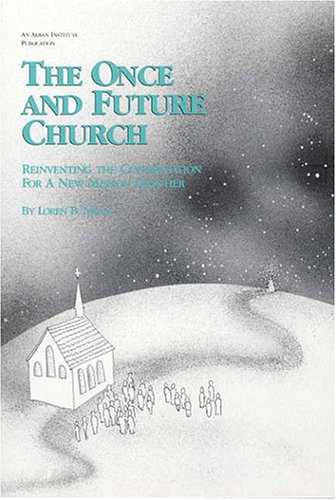 “The Once and the Future Church” is a discussion of the paradigm shift occurring in the church today. The thesis deals with the lost paradigm of the apostolic church and the process of rediscovering the lost paradigm in the present/future church. The result is renovation of the church and its mission.
Mead presents the main problem of the present church with its leaders who have grown under a paradigm that has ceased to work. The continuous living in different paradigms have created in the church a painful polarization between the old and the new and this has been a conflict, which the majority has preferred to avoid.
The four groups, which are subject of the present challenge of dislocation, are the clergy, the laity, the bishop and the congregation. The clergy have created alternative for genuine ministry called clericalism. The laity has separated itself from the experience of church. The bishop is struggling with the battle between the above two. The congregation is left with the painful experience of continuous dislocation.
In his forecast for the future development of this process, Mead calls for steadiness and perseverance through uncertainty, and thus reinventing the church. This process will confront parish with congregation, servanthood versus conversion, exclusivity and inclusiveness. The new church demands a new theology localized away from the academy to the new missionary frontier. Building the future church requires a better sense of community. And finally, the renovation process within the community of believers is an intergenerational mission. In this sense, the rediscovery of the church continues from generation to generation thus transmitting those forms of community discovered by the present church to the future one.
Bulgaria Protests – Day 12 at Independence Square in capital Sofia
Comments Off on Bulgaria Protests – Day 12 at Independence Square in capital Sofia
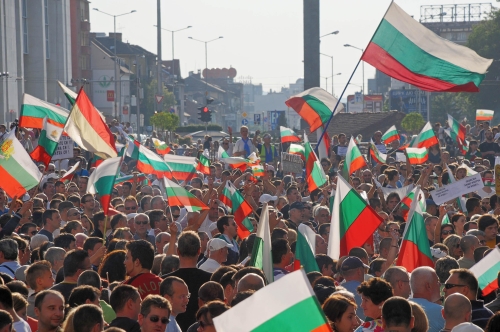
EVERY day, for the last twelve days, at exactly 6:30pm, Independence Square, a busy intersection in the center of Sofia, has been the starting point for a protest march that passes by the parliament building, the so-called Eagle’s bridge and the National Palace of Culture. Around 10,000 people participate every evening. They are calling for more transparency, less corruption and an end of the local oligarchs’ rule.
Only three weeks into the job, the new Bulgarian government is facing the fate of the old one. Large-scale protests are being held daily not only in Sofia but other major cities too just four months after demonstrations forced the previous conservative administration to resign. The protests were sparked by a string of dodgy appointments by the new government. The most controversial was the nomination of the Bulgarian Kim Dotcom, Delyan Peevski, a 32-year-old media mogul, as head of the powerful national security agency. A member of DPS, the ethnic Turkish party, the junior coalition partner in the Socialist-led government, Mr Peevski controls a media empire of numerous high-circulation newspapers, popular TV channels and news websites all of which tend to change allegiance according to who is in power. Mr Peevski’s political résumé is equally questionable: after spending two years as a deputy minister in a previous Socialist-led government, he was fired in 2007 and prosecuted on extortion and corruption charges. (He was eventually cleared.)
“My trust in this government is gone after this appointment,” said Rosen Plevneliev, the president, who questioned Mr Peevski’s “reputation and competence”. As the protests gathered speed, Mr Oresharski admitted the appointment was a mistake and parliament reversed the decision.
But the U-turn failed to appease the protesters. They are now demanding the resignation of the whole government as well as changes in the electoral law to allow smaller parties to enter parliament. Unlike the demonstrations earlier this year, the current rallies are largely peaceful. More and more members of the middle class are joining the protests, including popular actors, writers and musicians as well as families with babies and strollers.
“We feel that nobody is steering the boat,” says Mihail Vuzharov, one of the protestors who is a marketing specialist at a medical IT startup. “In fact, the boat has been sinking for decades.” Therefore, adds Justine Toms, a business-development manager in Sofia, “we are protesting against the people who should be in jail and are instead appointed at high posts in the state.” Most Bulgarians tend to agree with Mr Vuzharov and Ms Toms: over 80% say they support the protests, according to a poll by Alpha research. Today sixty prominent intellectuals, lawyers, journalists and human rights activists posted online a “charter for disbanding the plutocratic model of the Bulgarian state” calling for genuine democracy and the rule of law .
The wide backing by Bulgaria’s society (the educated elite in particular) makes the situation extremely tough for the government according to Tihomir Bezlov, political analyst with the Center for the Study of Democracy in Sofia. Most analysts agree that it won’t be able to serve its full four year term. In fact, the odds were against the government of Mr Oresharski from the very beginning. The Socialist party was able to form a cabinet only because GERB, the ex-ruling party of Boiko Borisov which won the May 12th snap elections, was unable to muster a parliamentary majority. With only half of the votes in parliament, the Socialists and their partners from DPS were left reliant on the unpredictable, ultra-nationalist Ataka party.
After twelve days of protests and with new ones planned for the coming weeks, the risk of yet another early election is increasing. Demonstrators will continue to gather at Independence Square every evening…
Fire from Heaven
![fire-from-heaven[1]](https://cupandcross.com/wp-content/uploads/2013/06/fire-from-heaven1.jpg) In 1965, Dr. Harvey Cox wrote a book entitled The Secular City, as an attempt to offer a theology for the age of coming postmodernism. In it, he regarded rapid urbanization and cultural deconstruction as challenges that demand answers from 20th century Christianity.
In 1965, Dr. Harvey Cox wrote a book entitled The Secular City, as an attempt to offer a theology for the age of coming postmodernism. In it, he regarded rapid urbanization and cultural deconstruction as challenges that demand answers from 20th century Christianity.
But in the mid-1990s, Cox wrote another book entitled Fire from Heaven, which served as a response to some of the questions raised previously in The Secular City. The new research suggested the rapidly growing Pentecostal movement as the answer to the postmodern quest for religion and spirituality. As such, Pentecostalism represented the process of spiritual restoration of significance and purpose to oppose despair and hopelessness (p. 33). The book further proposed that Pentecostalism in global perspective is a solution to the modern-day Christianity crisis.
Formative Context
The research begins at the turn of the twentieth century with the American context as the original formative environment for modern-day Pentecostalism (chapter one). Since the time was a peak for millennial expectations and holiness quests, a second Pentecost was a natural culmination. The factors that presupposed the Pentecostal movement are then used to provide further proof for the success of Pentecostalism as religious and social reformation. Since, this is not constrained geographically to its roots and tradition, a global impact Christianity is possible.
Pentecostal Beginnings
After establishing the contextual formative factors of modern-day Pentecostalism, Fire from Heaven considers its beginning at the Azusa Street revival. The research describes it as a revolutionary event of social reformation of classes, genders and races which did not just spark Pentecost but aided its spread in America. The focus on William Seymour is well deserved, since the Azusa Street events were the end of a long formative process through which Pentecostalism emerged. On the other hand, Los Angelis in the beginning of the 20th century was not only a proper social context for such event, but also provided the right medium through which this event could spread nationally. This is the difference between Pentecostal historians who see a heritage of historical developments that lead to modern-day Pentecost, and commentators outside Pentecostalism who only have a glimpse of the largely publicized events and accounts.
Pentecostal Growth
One aspect of Pentecost, which seems central for the research, is its power to influence and grow. Fire from Heaven gives a brief account of modern Pentecostal history in regard to the global growth and increasing influence of the movement. The interesting aspect in the approach is that the author is an outsider in regard to Pentecostalism and observes the historical developments as cause and effect processes, rather than personal heritage. Yet, even with such an approach, Pentecostalism becomes a personal experience for the author which he uses as a proof for his thesis. Cox admits that the rapid growth of Pentecostalism is not an accidental event, but it is supported by the fact that this particular religious movement is able to provide applicable answers to religious quests and crises and thus serves as a movement for social transformation. This research finds the power of Pentecostalism in its simple but applicable message.
Toward Pentecostal Theology of Experience
The heart of Fire from Heaven is the proposal of three major primitive developments that have been attributed to the Pentecostal message: primal piety, primal speech and primal hope (p. 82). These are easily identified in Pentecostal circles as holiness, glossolalia and eschatological hope. Of great interest to the Pentecostal believer are the associations which Fire From Heaven offered. For example, the sign of speaking in tongues expresses the Pentecostal appeal for interdenominational union and racial equality which serves as a restorational factor for the original creation and order before the division at the Tower of Babel.
Furthermore, this story of Pentecostalism proposed that miracles and wonders were not connected to power alone. Instead, they were the results of piety and holiness of both the individual Christian and the ecclesial community. Finally, the recovery of the first hope became the answer for the present quest for existence. As such, the eschatological return of Christ for judgment over all and to restore the creation to its original order became the motivation and meaning for the Pentecostal Christian in the present life.
Pentecostalism in a Global Context
Another Biblical practice applied by early Pentecostals was evangelization with special interest to its global aspect of missions. Chapters 7-12 of Fire from Heaven deals with the global spread of Pentecostalism as a religious movement that was able to respond equality in different cultural contexts. Cox uses chapters seven and eight to show that Pentecostalism approached the 20th century world not only as a religious movement, but as a social one as well. Modern-day issues like the role of women, music, etc., which were coherent factors in the world’s 20th century history, were viewed and addressed by Pentecostals as well.
Chapters nine through twelve are Cox’s personal observations and evaluation of Pentecostal worship praxis in Pentecostal churches around the world. Unfortunately, European Pentecostal churches are not a part of this in-depth analysis, which limits the global overview of the research. The mentioned examples, however, give enough material to show Pentecostal characteristics, approaches and reasons why more and more people join this movement. The book finishes with a return to American Pentecostalism and its effect on present American spirituality as well as cultural and social developments.
Mission Applications
The above book review agreed with my understanding and practice of Pentecostal theology since I have learned and lived it in the underground Bulgarian Church of God. As I read the pages of Fire from Heaven, I began to feel that something had been lost since the time when modern Pentecost began. The twenty first century Christianity offers everything except the primitivism, purity and power of its own Holiness roots. My visit with Dr. Cox at Harvard Divinity School in the summer of 2000 not only served as a proof for me, but it provided the groundwork for the writing of my masters thesis on the subject of “Pentecostal Primitivism Preserved.”
The central theme of my research was an appeal for remembering and returning to the past. Based on my own Eastern Pentecostal tradition and personal salvific experience, my paper went a step further than Dr. Cox’s Fire from Heaven and called the Christian Church to neo-primitivism as expressed in the rediscovering and reclaiming of the basic order of the Primitive Church of the first century. Additionally, my master’s thesis reformulated the three primal distinctives of the Pentecostal experience as power, prayer and praxis. Finally, the paper called for a reclaiming of the original experience as the answer for the church of the 21st century, but only when expressed in discipleship after the example of Christ. The conclusion pointed out that only through such process would the Pentecostal community be enabled to preserve its own identity and transmit the faith once delivered to the saints of the future generations.
We have used this approach in the mission work in Bulgaria for the past few years and it has proven to be an effective Biblical strategy for missions. While it is yet a bit early to speak of its successes and failures, I might add that its practical implementations have gained a large interest among ministers and the membership of the Bulgarian Church of God. Since the fall of the Berlin Wall, the political and economical challenges in Eastern Europe have strongly affected the Evangelical Churches in Bulgaria. As the Protestant Church in Bulgaria is entering a new constitutional era in the history of the country, more than ever before, reformation in doctrines and praxes is necessary in order to adjust to a style of worship liberated from the dictatorship of the communist regime is needed. Fire from Heaven is an encouragement that Pentecostalism as a church model and social-religious formative process is the answer for contexts equal to the present Bulgarian reality.
New Protests in Bulgaria over New Security Chief
Comments Off on New Protests in Bulgaria over New Security Chief
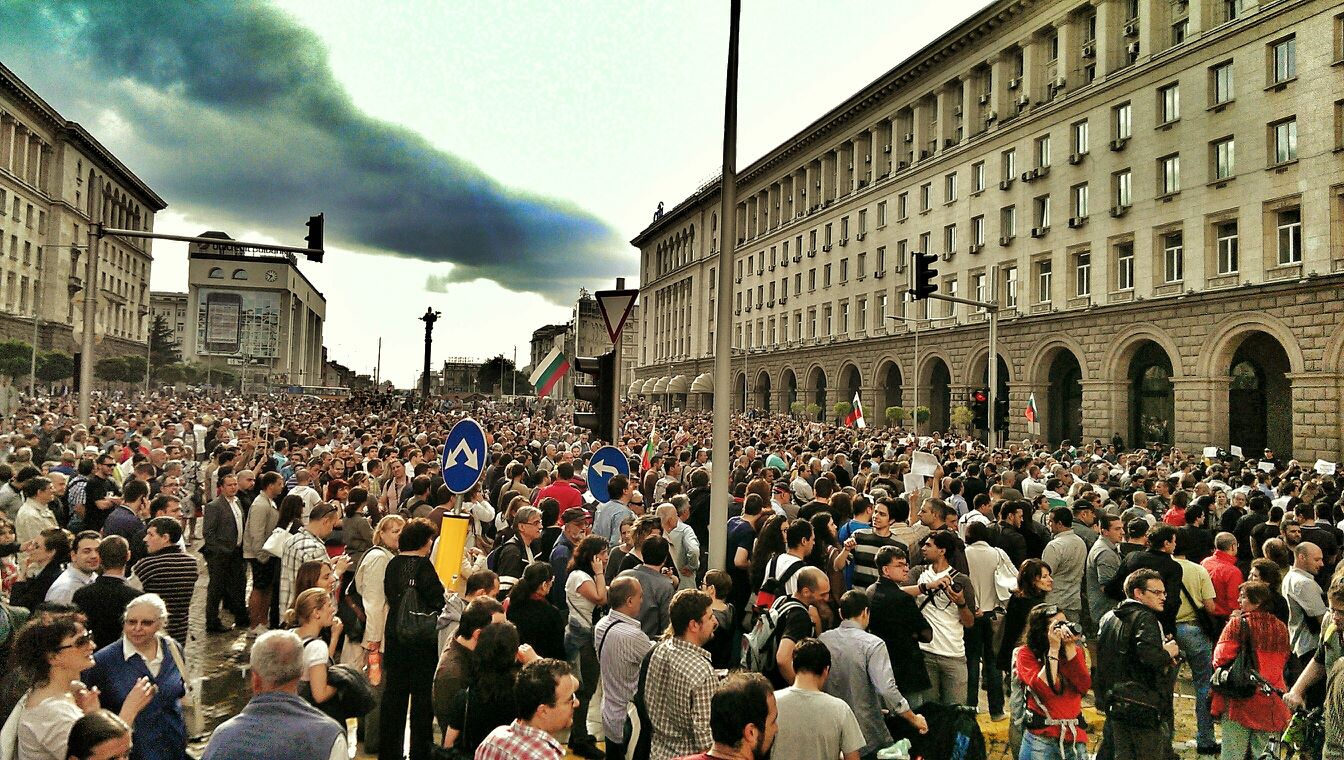
BBC News: Opposition MPs in the Bulgarian parliament have protested after a media tycoon was appointed to head the national security agency.
Delyan Peevski, 32, a member of the country’s Turkish minority party, was voted into the post without a debate by the ruling Socialists and their allies. He had been nominated by the new Prime Minister, Plamen Oresharski. President Rosen Plevneliev demanded a review of the vote, questioning Mr Peevski’s “reputation and competence” as a crowd of thousand protesters gathered outside parliament in the capital, Sofia.
Mr Peevski joined a Socialist-led government in 2005 as deputy emergency response minister but was sacked two years later and investigated over corruption allegations. The investigation was later dropped. The Socialists have been governing in a fragile minority government as a result of last month’s general election, which followed unrest over the country’s economic crisis.
External specialist: Mr Oresharski has defended the appointment of Mr Peevski, saying Bulgaria needs to take serious steps to stop organised crime and smuggling and he is best suited for the job, despite lacking experience. “Peevski was chosen because he is not part of the system and we deliberately looked for such an external specialist so that he can restructure it,” he told reporters.
However, the speed of the appointment has raised questions. British Ambassador Jonathan Allen wrote on Twitter: “The appointment has been rushed through with no hearings, debate or opportunity to find out about candidate. Why?” President Plevneliev, from the Gerb party which lost the election, said the decision would have “longstanding negative consequences for Bulgaria”.


