

Bulgaria: New Interim Government Ahead of Early Elections
President Iliana Yotova has formally nominated Andrey Gyurov, Deputy Governor of the Bulgarian National Bank (BNB), as Bulgaria’s caretaker Prime Minister. The handover of the caretaker government mandate is scheduled for Thursday, February 12, at 10:00 a.m., when Yotova will meet Gyurov at the presidency and task him with forming an interim cabinet under Article 99, paragraph 5 of the Constitution. Gyurov is one of five senior civil servants who had indicated their willingness to take on the caretaker prime minister role during presidential consultations, alongside Deputy Ombudswoman Maria Filipova, Audit Board Chair Dimitar Glavchev, and his deputies Margarita Nikolova and Silvia Kadreva.
Bulgaria holds consultations for new government
The president, Rumen Radev, is holding consultations with parties, but if they refuse or fail to form the government, he will appoint an interim government and call a snap election.
Bulgaria, a NATO member state, has held seven national elections in the past four years as consecutive governments failed to keep control of a fractured parliament.
Kalina Yurukova, 21-year-old student, said: “If you steal constantly, you must think you are above everyone else. And for people who are arrogant and have not a shred of shame, I cannot have respect or associate myself with them.”
Earlier this month, the government withdrew its 2026 budget plan, the first drafted in euros, due to the mass protests. Opposition parties and other organisations said they were protesting against plans to hike social security contributions and taxes on dividends to finance higher state spending.
Bulgarian government resigns amid protests
SOFIA, Dec 11 (Reuters) – Bulgaria’s government resigned on Thursday after less than a year in power, following weeks of street protests over its economic policies and its perceived failure to tackle corruption.
Prime Minister Rosen Zhelyazkov announced the decision in a televised address just minutes before parliament was due to vote on a no-confidence motion. The resignation comes less than three weeks before Bulgaria is due to join the euro zone on January 1.
“Our coalition met, we discussed the current situation, the challenges we face and the decisions we must responsibly make,” Zhelyazkov said, confirming that the government would step down.
Thousands of Bulgarians rallied on Wednesday evening in Sofia and dozens of other towns and cities, the latest in a wave of demonstrations highlighting public anger over endemic graft and successive governments’ inability to root it out.
“We realise that the protest was against arrogance and conceit, this is not a social protest, but a protest for values,” Zhelyazkov said. “It was not a meeting of political opponents over policies but over attitudes, and therefore it unites different components of Bulgarian society.”
Bulgaria gets new government
Bulgaria gets new government as former rivals enter uneasy alliance
SOFIA, Bulgaria (AP) — Bulgaria’s parliament on Tuesday formally approved the country’s new government proposed by the two main political rivals in a bid to end a 30-months-long political crisis, restore stability and spur economic development in the poorest EU member country.
The GERB party of ex-Premier Boyko Borissov, which won the April general election, and the runner-up, the pro-European liberal coalition “We Continue the Change – Democratic Bulgaria” have agreed to form the first-ever Bulgarian government where the post of prime minister will change hands halfway through.
Lawmakers voted 132-69 to elect Nikolay Denkov, a 60-year-old chemistry professor and former education minister, as prime minister. Denkov is a founding member of the reformist “We Continue the Change” party.
In a separate vote, legislators also approved the Cabinet, in which GERB’s Maria Gabriel, a former European Commissioner, will serve as deputy head of government and foreign minister. After nine months, Denkov and Gabriel will switch positions for the rest of the term.
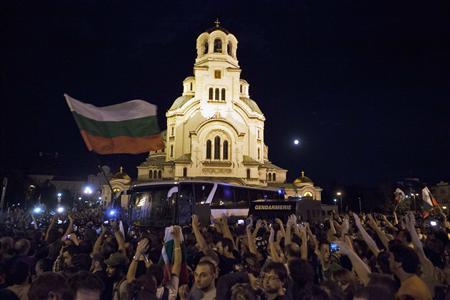
Bulgaria calls October 2 snap elections amidst caretaker government
SOFIA, Aug 1 (Reuters) – Bulgarian President Rumen Radev set Oct. 2 as the date for the country’s fourth parliamentary election in less than two years on Monday, after the collapse in June of reformist Prime Minister Kiril Petkov’s coalition government. Radev also appointed former labour minister Galab Donev to lead a caretaker government to serve from Aug. 2 until a new government is formed after the election. Radev will outline the priorities of the new government on Tuesday, his office said in a statement.
The European Union country faces surging inflation, natural gas supply doubts and other impacts from the war in Ukraine. The appointment of Donev, 55, a presidential adviser on social policies, is seen as a sign that shielding households from soaring energy and food prices will be a priority for the caretaker administration. This could involve efforts to renew Russian gas imports as well as mending diplomatic relations with Moscow strained under Petkov’s government.
BULGARIA has a NEW Government! For Now…
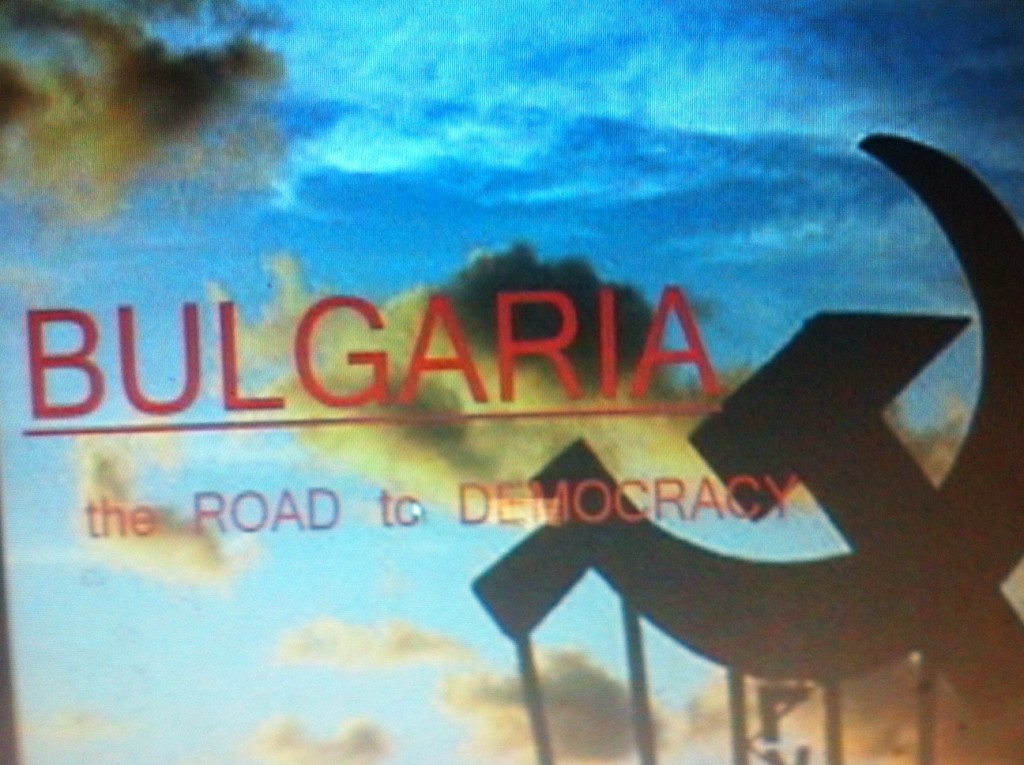
SOFIA, Bulgaria – After three National Parliament elections held in 2021 alone and three acting temporary cabinets, Bulgaria now has a new government based on a 4-partisan coalition. Will it outlast its first 100 days? ONLY GOD KNOWS!
Bulgaria’s PM Designate Petkov Presents New Government Ahead of Parliament Vote
Bulgarian Prime Minister designate Kiril Petkov presented the composition of his future government to the nation as he seeks to end eight months of political deadlock. Petkov, 41, leader of the newly formed centrist party We Continue the Change (PP), reached an agreement a day earlier with three other left-wing and center-right groups to form a coalition government.
Petkov’s party will hold 10 of the 21 ministerial positions, including prime minister and two deputy prime minister posts. The four-party coalition will control 134 seats in Bulgaria’s 240-seat parliament, which is set to vote on approving the new government on December 13. Petkov, whose party came in first on an anti-graft platform, told media on December 11 that the future government will have “zero tolerance” for corruption and said one of his first priorities will be to reform the Anti-Corruption Commission.
The new coalition is expected to have a majority of 134 lawmakers in the 240-seat parliament. “The agreement is 140 pages and details all policies. It gives the chance for the coalition to be strong and work for a long time,” Petkov told the national BNR radio after the party signed the document with each of its partners separately.
SUPPORTING PARTIES:
- Bulgarian Socialist Party (socialist democrats)
- There is Such People (centrist democrats)
- Democratic Bulgaria (democrats)
Present 227 out of 240 MPs registered in the plenary hall. Instead of presenting Kiril Petkov’s candidacy, the plenary day began with a declaration on behalf of the GERB-SDS group, which will not support the draft cabinet.
“You organized brutal repression in the persecution of political opponents,” Desislava Atanasova said. She accused the president of undermining democracy.
The New Cabinet: “Vazrazhdane” will Not Support the “Petkov” Cabinet
The parliamentary group of “Vazrazhdane” will not support the draft cabinet “Petkov”, because according to its leader Kostadin Kostadinov the policies are a continuation of the GERB government, and the impression was that it the cabinet was created in foreign embassies
The New Cabinet: DPS will Not Support the “Petkov” Government
The Movement for Rights and Freedoms (DPS) will not support the proposed program, structure and composition of the Council of Ministers, because it has participated in the talks about them. This was announced by DPS leader Mustafa Karadayi. According to him, the Movement will be a constructive opposition and will contribute to solving problems and protecting rights and freedoms.
Bulgaria set for snap election as president appoints interim government
Bulgaria’s new president called an early national election for 26 March and appointed a former parliamentary speaker as caretaker prime minister until then.
Ognyan Gerdzhikov, 70, currently a professor of law and head of an arbitration court, served as speaker of parliament in a centrist government from 2001 to 2005 and is now the country’s interim prime minister until the March elections. Kiril Ananiev, 61, currently a deputy finance minister in charge of budgets, will take over as finance minister, two sources familiar with the matter told Reuters. Ananiev is seen as a safe pair of hands, having served as deputy finance minister in five different governments. The appointments show that President Rumen Radev, who took office this month after winning an election with the backing of the opposition Socialists, is seeking continuity and balance, analysts said.
Temp Bulgarian Government Assigned before Early Elections in March 2017
During their first cabinet meeting, the caretaker ministers of Bulgaria have agreed on a new structure of the government and have been assigned several tasks. There will be four Deputy Prime Ministers in the interim government, the same number as in the previous cabinet, according to the list of decisions sent by the government’s press office. Their portfolios, however, will be slightly different as the elected cabinet had a Deputy PM for “coalition policy”, while the caretaker government does not include such a post and has a deputy to oversee the preparation of Bulgaria’s Council of the EU presidency instead.
- Interim Health Minister Ilko Semerdzhiev will also be Deputy Prime Minister in charge of social policies.
- Stefan Yanev, the caretaker Defense Minister, for his part will have a Deputy Prime Minister office overseeing internal order and security.
- Deputy Prime Ministers on EU funding (Malina Krumova) and the rotating EU presidency(Denitsa Zlateva) will have no portfolios.
The Prime Minister will have as many as 16 staff, including advisers, experts and assistants in his political cabinet. Each deputy Prime Minister with a portfolio will have three experts and the same number of advisers and assistants on his or her team. Deputy PMs without portfolios will count on 10-strong cabinets. In a separate move, Health Minister Semerdzhiev and Labour Minister Galab Donev have been tasked to be the government’s representatives to the National Council on Tripartite Cooperation – meetings of state authorities with businesses and trade unions.
As Deputy PM on internal order, Stefan Yanev has been tasked with the overall coordination of the early parliamentary election scheduled for March 26.
Voting in Government Elections is Now Mandatory in Bulgaria
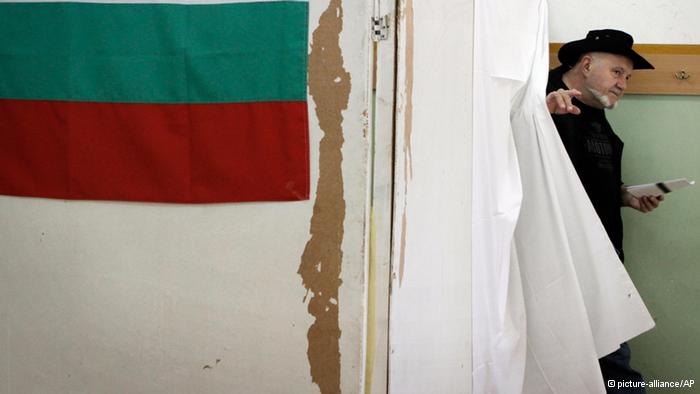 Bulgaria’s parliament paved the way for the introduction of compulsory voting in elections on Thursday, passing a draft bill to amend the electoral code at its first reading.
1. The last national election in 2014 saw the lowest turnout in 25 years, of about 48%
2. A big factor is popular disenchantment with what is seen as a corrupt and out-of-touch political elite that has failed to lift living standards
3. In 2013, voter frustration with rampant corruption and organized crime erupted into months of street protests
4. Concerns about corruption and the judiciary have also kept Bulgaria and northern neighbor Romania out of the EU’s borderless Schengen zone
5. European Union member Bulgaria has had five governments in less than three years
6. Presidential elections are due in October and elections for a new parliament in 2018
7. Voting will be mandatory done personally by voters
8. The bill passed on Thursday allows non-voters to be sanctioned, either by a citation or by having their social benefits withdrawn for three months
9. Under the new measures approved by parliament, those failing to cast ballots will be deleted from voting registers and will need to register again
10. Bulgarian citizens living abroad would be able to vote only in Bulgarian embassies i.e. London and Ireland for the U.K. and Washington, D.C. and Chicago in the United States, eliminating the greater majority living at other locations.
Government Elections in Bulgaria (2005-2015)
2005 Parliamentary Elections
2006 Presidential Elections
2007 Municipal Elections
2009 Parliamentary Elections
2009 European Parliament elections
2011 Presidential Elections
2011 Local Elections
2013 Early parliamentary elections
2014 Early Parliamentary Elections
2015 Municipal Elections


