

95th anniversary of the Pentecostal movement in Bulgaria
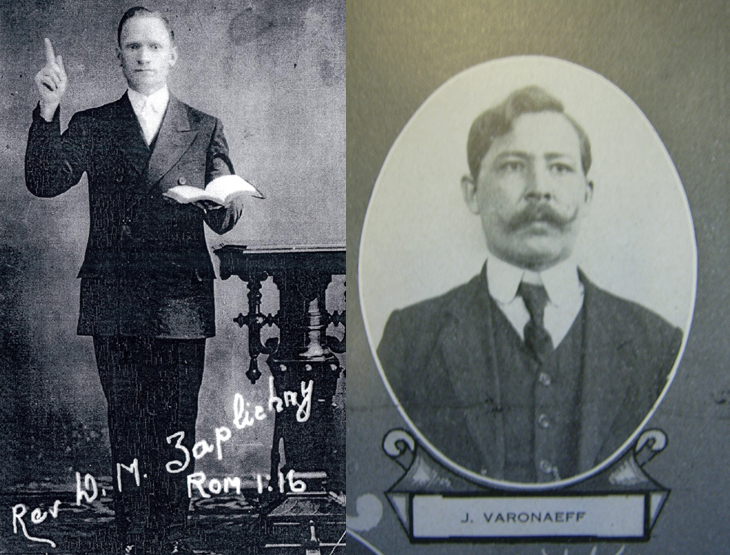 The church in Bulgaria is celebrating the 95th anniversary of its Pentecostal movement in 2015. We were able to participate in this season of celebration and honoring heroes of the faith through a series of lectures and video broadcasts on various topics of Pentecostal history, doctrine and praxis. Additionally, in 2015 we were able to prepare and publish a Bulgarian Prayer New Testament and the Bulgarian translation of Ivan Voronaev’s biography we authored back in 2010. We are thankful to the Lord for this opportunity to minister to the Bulgarian congregation and are looking forward to the Azusa Revival anniversary in 2016.
Celebrating 25 Years in the Ministry
We’ve completed another successful term of ministry for 2015 marking a decade since the start of Mission BULGARIA in 2005 and also our 25th anniversary in the ministry. From humble beginnings in September of 1990, God has taken us to a full quarter century of ministry literally throughout the globe.
As the Thanksgiving season is now upon us, we will be commemorating this event more extensively with a series called “25 Years of Miracles.” The series contains testimonies with various healings and miracles from our ministry, which we’ve collected and recorded through the years.
We are grateful to the Lord for giving us the opportunity to preach the Gospel and be a part of your life through our ministry. Thank you for your partnership and friendship through the years and Happy Thanksgiving!
#PRAYforPARIS
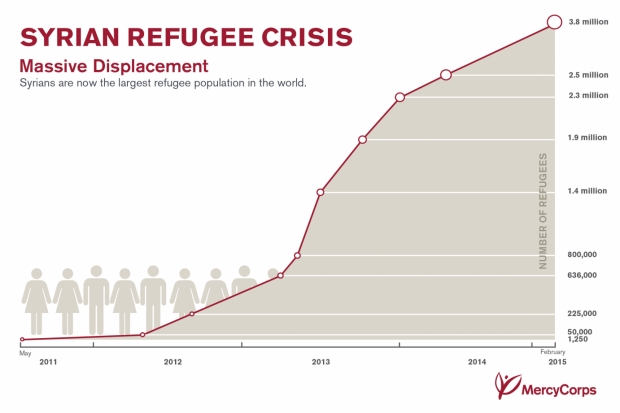
Toward a Pentecostal Solution to the Refugee Crises in the European Union
 Rev. Dony K. Donev, M.Div., D.Min.
We saw them everywhere during our ministry trips through Europe. Long columns of dark bearded men, covered women and malnourished, underdressed little children. They fill the refuge villages in Bulgaria near the Turkish border. Many of them were forced to travel in long trains from Austria to Hungary, Germany and all the way to the large Muslim ghettoes of Amsterdam and East Berlin. And even at the Dover side of the English Channel, where tens of miles long truck columns were parked directly on the interstate waiting for the refugees to pass with the ferryboats.
Every minister/missionary should at least wonder about a solution to this largest migration wave of the century. What is the proper human, Biblical approach toward these people regardless if they are persecuted Christians, migrating terrorists or just refugees without a country? What would be the Pentecostal (in the Spirit of Pentecost) response to their fate?
Several outspoken Pentecostal denominations have already raised awareness to the issue with a call for a “Christian assimilation.” Frankly, “assimilation” as an anthropological term is outdated even in the most assimilative cultures in the world. In the United States, once a melting pot of ethnos and cultures, modern day emigration takes terms in creating subcultures. In such cultural setting, assimilation is fairly hard to achieve and quite imperialistic as an approach. It is also not a religious term – the proper faith language being “proselytizing.” Even the Bible states that at the end “every tongue shall confess” picturing a multitude of ethnoses, not merely one assimilated culture. With all this, a call for cultural assimilation on part of Christianity borders a call for crusades, even the thought of which is inapplicable in 21st century’s society.
On the part of Islam, a Muslim subculture allowing assimilation without conflict and resistance will be practically impossible to achieve. And how exactly do you convert with words in a culture that allows speaking only to men? We all know of ministries or missions that have done successful work among Muslims, but what is observed in today’s context of ministry among Muslim migrants is unfamiliar to even experienced missionaries. A Muslim subculture is being created so fast, so vast and so unified throughout European Union countries, that it threatens to assimilate the Christian local host-culture before being assimilated or culturized within Western Christendom. Pentecostal churches throughout Europe are simply not prepared for such challenge, as confirm leaders of “Maranatha Ministries,” the largest Pentecostal church in the Netherlands.
The single greatest challenge is perhaps that the Islamic culture is not like any of the known subcultures in the Western World. While Hispanics focus on their language and Asians accent on their heritage and predecessors, the Islamic subcultures are being centralized around the Sharia Law. The newly forming subculture then is not simply ethnic or heritage oriented, but a legal precedent – often in direct contradiction with the law of the land. How do we engage the Sharia Law mindset with the law of Grace to effectively penetrate with the Message of Salvation such closely guarded culture, will be the answer to this current dilemma of ministry. Although not a complete solution, the following practical steps are much more Christ like and suitable to the situation than a theoretical assimilation, which may prove to be nothing more than a 21st century crusade:
- Fast from your daily Starbucks (Costa, or coffee brand of your choice) for a month. With the money you can sponsor one refugee child out of starvation. The cost is the same, but saving a child tastes much better than java
- Team up with a Pentecostal church in Europe, which is directly working within the refugee camps. It will not be hard to find one as only a few Pentecostal churches in Western Europe are involved in refugee work
- Prayerfully consider going to Europe yourself and contribute your time and resources toward a refugee camp.
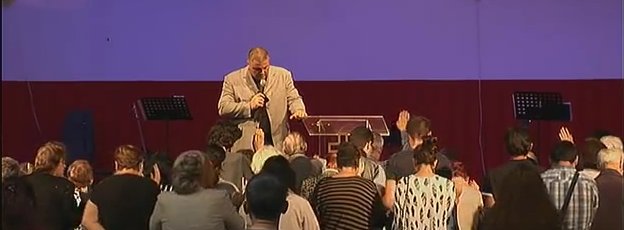
Ministering at CitiPointe Church
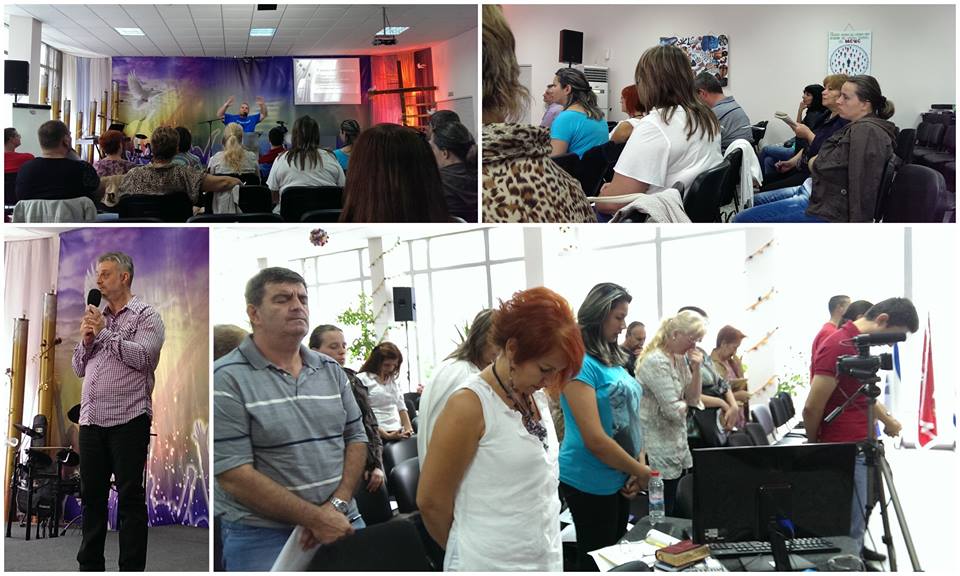
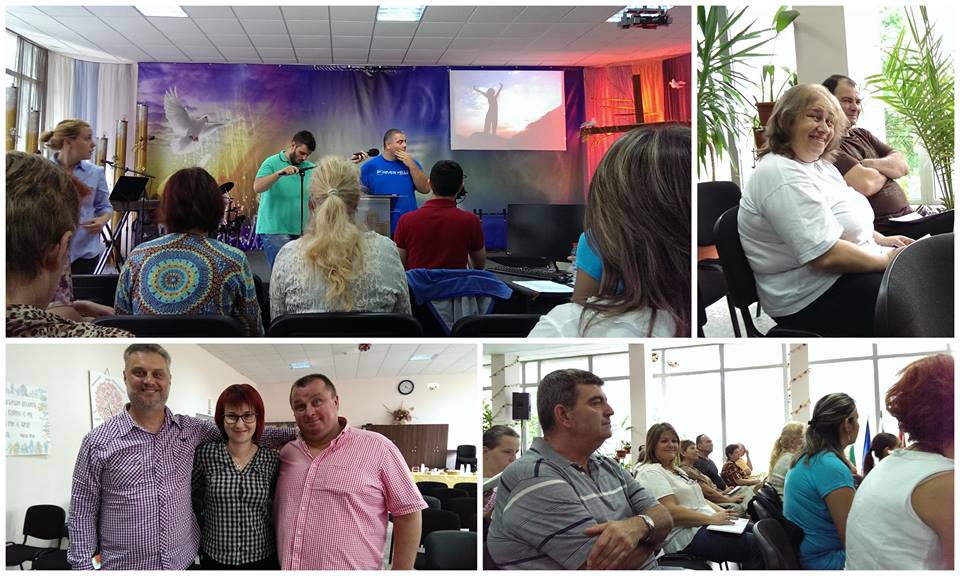
Reformation Leadership Summit 2015
Water Baptism in the Thundja River

Presenting the Scrolls from the Second Varna Declaration
https://www.youtube.com/watch?v=-kHytj8yK8E
We,
The believers from different churches in Bulgaria
declare on this day of October 5th 2014 in the city of Varna,
- That we, according to The Holy Scriptures, will do our best to “fulfill the vows to the Lord” (Psalm 116:14), which were written and signed by 5,000 believers in the two scrolls produced on April 9th 1989 in the same city of Varna
- In which we presented our requests, prayers and intersession for those in authority, that we may live peaceful and quiet lives in all godliness and holiness (1 Timothy 2:2)
- Reminding now our authorities in these two second scrolls about the urgent New Testament warning, that “God did not spare angles, when they sinned and He did not spare the ancient world, when He brought the flood on its ungodly people, and that He did not spare Sodom and Gomorrah but burned them to ashes and made them an example of what is going to happen to the ungodly” (2 Peter 4-6).
These two second scrolls are again signed by Christians in Bulgaria both on October 5, 2014 and further on by Christians all over the country, to whom theses second scrolls are being brought and presented.
On behalf of the Bulgarian Christians
Read Also:
- Prophetic Revival in Bulgaria: The Search for Holiness Continues
- 25 Year Revival Cycles in Bulgaria’s Protestant History
95 Years Ago Voronaev Set Sail on a Pentecostal Mission to Europe
![51Sa1IcA8OL._SY344_PJlook-inside-v2,TopRight,1,0_SH20_BO1,204,203,200_[1]](https://cupandcross.com/wp-content/uploads/2014/03/51Sa1IcA8OL._SY344_PJlook-inside-v2TopRight10_SH20_BO1204203200_1.jpg) Rev. Ivan Voronaev’s last letter to Assemblies of God headquarters in Springfield, Missouri was received by Rev. J. Roswell Flower on June 22, 1920 and was marked “He plans to return to Russia.” The letter outlined Voronaev’s six-point mission strategy:
Rev. Ivan Voronaev’s last letter to Assemblies of God headquarters in Springfield, Missouri was received by Rev. J. Roswell Flower on June 22, 1920 and was marked “He plans to return to Russia.” The letter outlined Voronaev’s six-point mission strategy:
- he was leaving with his family and some brothers from New York to Russia on July 13, 1920 on the steamboat “Madonna”
- Voronaev trusted the Lord for the finances necessary to complete the mission
- First Russian Assembly of New York was poor and unable to meet the ministry expenses
- Voronaev was unable to get in touch with Assemblies of God missionaries Johnson and Schmidt
- but planned to preach in Russia
- finally, the group had decided to purchase Russian Bibles and New Testaments in New York to take to Russia.
The group included the families of Voronaev, Zaplishny, Koltovich, along with V. Klibik and N. Kardanov from Ossetia. They could only purchase tickets for the deck, which proposed problems for the children during the cold ocean nights. According to Voronaev’s later records, the group set sail from New York on July 15, 1920 (thou Martha C. Zaplishny- Jackson recalls July 8th or 17th in various statements). The only standing proof for the exact departure date is the ship’s records with the French Fabre Line.
Madonna sailed via Marseille in France and Naples, Italy. The group’s trip to Europe included a stop in Greece before reaching Constantinople on August 10, 1920. Both Voronaev and Zaplishny’s children have pictures from visiting “several other Balkan countries,” thou not well documented and quite improbable. Consecutively, when the Zaplishny family had to flee Bulgaria in 1924, they used the same route taking a train to Cherbourg, France and then a boat to New York’s Ellis Island.
Through all these difficulties, Voronaev reached Bulgaria by the end of 1920 and Odessa in the U.S.S.R by August 12, 1921. The movements his mission started from Varna to Vladivostock were Pentecostal pioneers for this part of the Old World. By the time Voronaev was arrested in 1930, over 400 Pentecostal churches with 20,000 members strong were started by his ministry throughout Eastern Europe.
Read about the legacy of Ivan Voronaev:
- Ivan Voronaev: The Death of a Hero is a Legacy to Remember
- Arrest and Imprisonment of Rev. Ivan Voronaev (1930)
- Arrest and Imprisonment of Ekaterina Voronaev (1933)
More about the Voronaev’s children:
Ivan Voronaev in the historical archives:
- Finding Ivan Voronaev (a.k.a. John Voronaeff) at the Graduate Theological Union of Berkeley, California
- Letters from Bulgaria: Overview of Rev. Ivan Voronaev’s Correspondence
Pacifism as a Social Stand for Holiness among Early Bulgarian Pentecostals
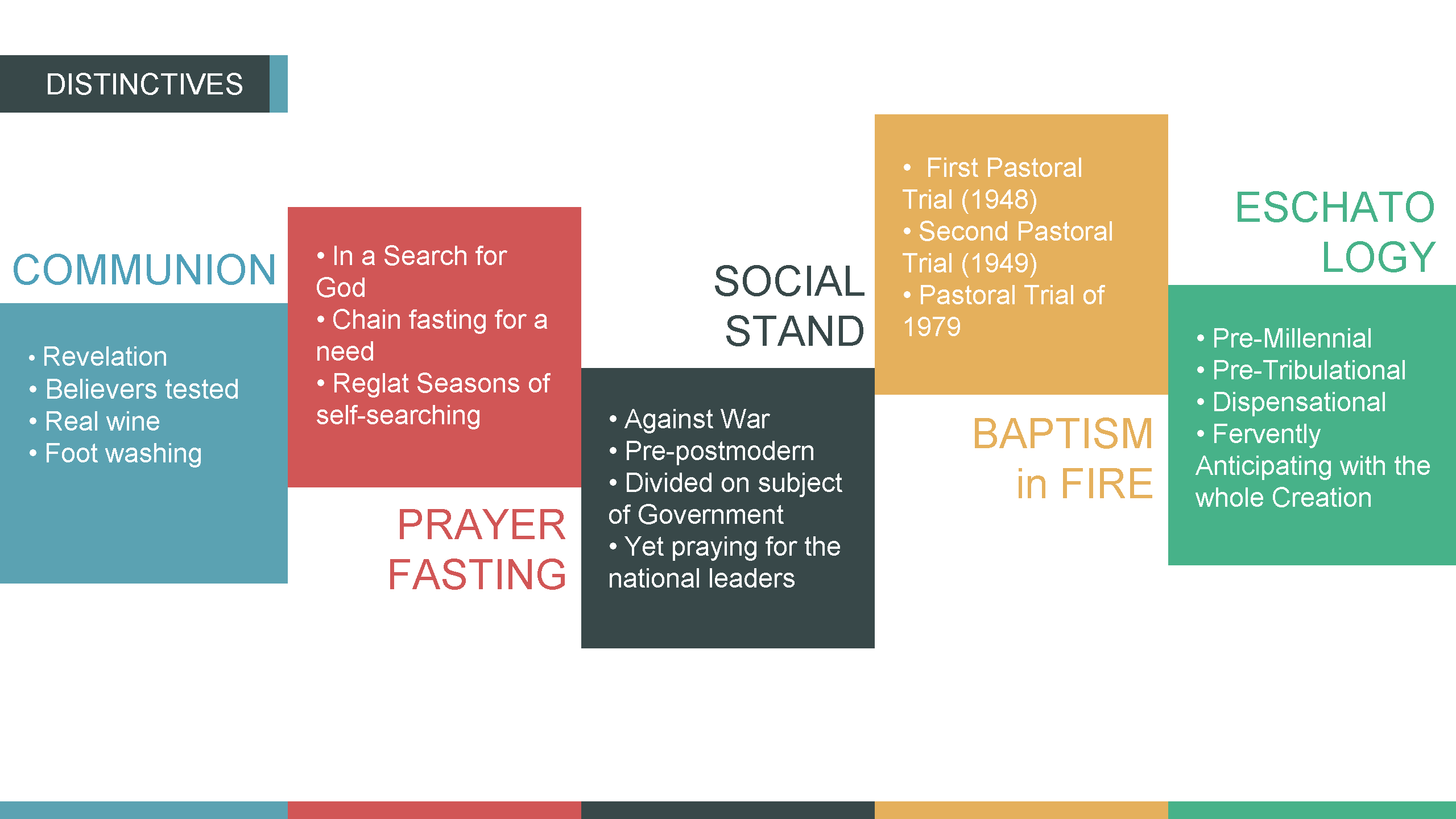 Historical and Doctrinal Formation of Holiness Teachings and Praxis among Bulgarian Pentecostals (Research presentation prepared for the Society of Pentecostal Studies, Seattle, 2013 – Lakeland, 2015, thesis in partial fulfillment of the degree of D. Phil., Trinity College)
When Pentecostalism began to spread rapidly in Bulgaria in the 1920s, it was viewed hostile as by both Protestant and Orthodox traditions. Not fasting during lent and not sacrificing for the dead, not honoring Mary or the saints was all detrimental in the formation of the identity of Pentecostal churches in Bulgaria. Even insignificant things like not wearing a cross, or not making the sign of the cross and not lighting candles and incense were noticed and severely criticized by the surrounding culture. And of course not drinking alcohol in Bulgaria and the Pentecostal abstinence was met with enormous opposition from other religious groups. Along with that any benevolence, social involvement, spiritual upbringing of minors (including sport actives) was all condemned as harmful protestant propaganda.
But one specific evangelical stand could never be forgiven – the protestant pacifism in the form of conscientious objection against carrying arms. For the newly re-born Balkan state, in a place where war has been ongoing for centuries, to refusal to go to war was essentially to refuse to be a Bulgarian.
The pacifism of Bulgaria’s evangelicals was silent but powerful against both Hitler’s fascism and the militant atheism of the coming Communist Regime. Their deep Christian conviction simply did not allow them to kill, carry a weapon, imprison another human being, swear allegiance to the communist state or take orders from another authority but God. And for their stand, many ministers and believers paid a heavy price. About 40 ministers and members of the Bulgarian Church of God alone were sentenced to hard prison labor for noncompliance with the mandatory military service. Hundreds more known and unknown believers from other evangelical churches followed.


