
February 28-March 2, 2019
College Park Marriott Hotel & Conference Center

Almost exactly a decade ago, the year 2009 was monumental for this Decade of Destiny.
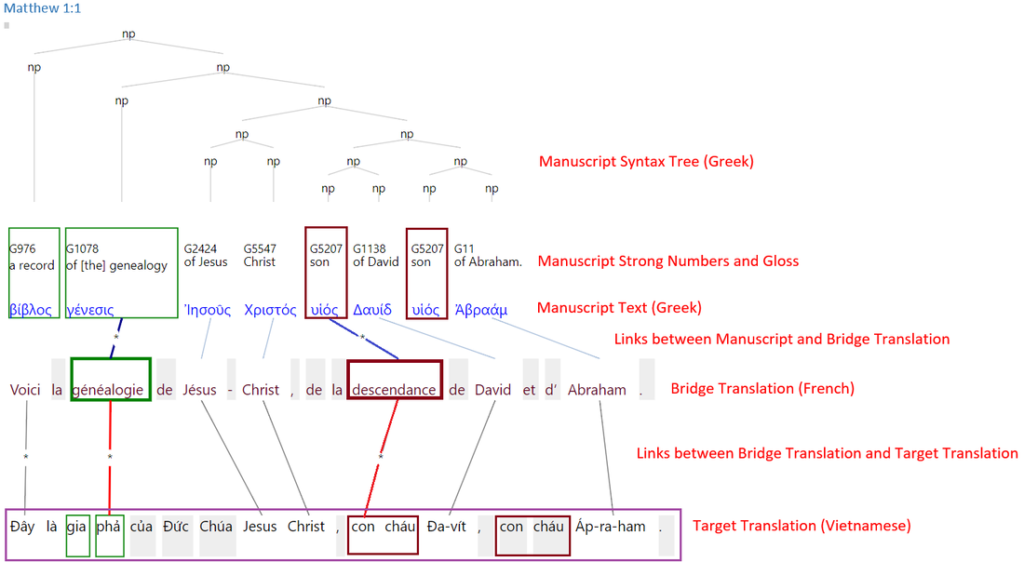
Upon the invitation of Logos Bible Software, we traveled to their annual BibleTech Conference in San Jose, California to present the more clear approach to Bible translation and its implementation in our new Bulgarian Bible Interlinear.
Our first stop to the conference was a very fruitful meeting with Dr. Albert Wardin at the Billy Graham Archives. This meeting became the reason to further direct our research on Ivan Voronaev and the roots of Bulgarian Pentecostalism to a new archive location in route to Berkeley University.
The trip was strategically planned to visit Bulgarian congregations on the way in
These short but blessed visits consecutively materialized into the 2020 Vision for Bulgarian Churches in North America. Most memorable among all was our meeting in El Cerrito, which happened to be just a few miles from our research location in Berkeley and not far from the ministry center for the Bulgarian Slavic diaspora in Concord. It was at this meeting that our missional strategy for San Francisco and Phoenix was born and later finalized in ministry with the Bulgarian church in Las Vegas.
Perhaps more needs to be said later about the Berkeley connection and the vision of the Arizona quarters in detail. Especially in part of the divine connection broadcasts that became an essential part of our own Bibliata.TV. But most importantly, now the 2020 Vision is almost completed as a Decade of Destiny, what follows is a strongly proven paradigm for church growth and revitalization. And as such, it has effectively spread to so many Bulgarian churches abroad – from a simple vision for 20 churches into 20 different countries.
APOSTOLIC JOURNEY OF HIS HOLINESS POPE FRANCIS
TO THE UNITED ARAB EMIRATES
(3-5 FEBRUARY 2019)
A DOCUMENT ON
HUMAN FRATERNITY
FOR WORLD PEACE AND LIVING TOGETHER
INTRODUCTION
Faith leads a believer to see in the other a brother or sister to be supported and loved. Through faith in God, who has created the universe, creatures and all human beings (equal on account of his mercy), believers are called to express this human fraternity by safeguarding creation and the entire universe and supporting all persons, especially the poorest and those most in need.
This transcendental value served as the starting point for several meetings characterized by a friendly and fraternal atmosphere where we shared the joys, sorrows and problems of our contemporary world. We did this by considering scientific and technical progress, therapeutic achievements, the digital era, the mass media and communications. We reflected also on the level of poverty, conflict and suffering of so many brothers and sisters in different parts of the world as a consequence of the arms race, social injustice, corruption, inequality, moral decline, terrorism, discrimination, extremism and many other causes.
From our fraternal and open discussions, and from the meeting that expressed profound hope in a bright future for all human beings, the idea of this Document on Human Fraternity was conceived. It is a text that has been given honest and serious thought so as to be a joint declaration of good and heartfelt aspirations. It is a document that invites all persons who have faith in God and faith in human fraternity to unite and work together so that it may serve as a guide for future generations to advance a culture of mutual respect in the awareness of the great divine grace that makes all human beings brothers and
sisters.
DOCUMENT
In the name of God who has created all human beings equal in rights, duties and dignity, and who has called them to live together as brothers and sisters, to fill the earth and make known the values of goodness, love and peace;
In the name of innocent human life that God has forbidden to kill, affirming that whoever kills a person is like one who kills the whole of humanity, and that whoever saves a person is like one who saves the whole of humanity;
In the name of the poor, the destitute, the marginalized and those most in need whom God has commanded us to help as a duty required of all persons, especially the wealthy and of means;
In the name of orphans, widows, refugees and those exiled from their homes and their countries; in the name of all victims of wars, persecution and injustice; in the name of the weak, those who live in fear, prisoners of war and those tortured in any part of the world, without distinction;
In the name of peoples who have lost their security, peace, and the possibility of living together, becoming victims of destruction, calamity and war;
In the name of human fraternity that embraces all human beings, unites them and renders them equal;
In the name of this fraternity torn apart by policies of extremism and division, by systems of unrestrained profit or by hateful ideological tendencies that manipulate the actions and the future of men and women;
In the name of freedom, that God has given to all human beings creating them free and distinguishing them by this gift;
In the name of justice and mercy, the foundations of prosperity and the cornerstone of faith;
In the name of all persons of good will present in every part of the world;
In the name of God and of everything stated thus far; Al-Azhar al-Sharif and the Muslims of the East and West, together with the Catholic Church and the Catholics of the East and West, declare the adoption of a culture of dialogue as the path; mutual cooperation as the code of conduct; reciprocal understanding as the method and standard.
We, who believe in God and in the final meeting with Him and His judgment, on the basis of our religious and moral responsibility, and through this Document, call upon ourselves, upon the leaders of the world as well as the architects of international policy and world economy, to work strenuously to spread the culture of tolerance and of living together in peace; to intervene at the earliest opportunity to stop the shedding of innocent blood and bring an end to wars, conflicts, environmental decay and the moral and cultural decline that the world is presently experiencing.
We call upon intellectuals, philosophers, religious figures, artists, media professionals and men and women of culture in every part of the world, to rediscover the values of peace, justice, goodness, beauty, human fraternity and coexistence in order to confirm the importance of these values as anchors of salvation for all, and to promote them everywhere.
This Declaration, setting out from a profound consideration of our contemporary reality, valuing its successes and in solidarity with its suffering, disasters and calamities, believes firmly that among the most important causes of the crises of the modern world are a desensitized human conscience, a distancing from religious values and a prevailing individualism accompanied by materialistic philosophies that deify the human person and introduce worldly and material values in place of supreme and transcendental principles.
While recognizing the positive steps taken by our modern civilization in the fields of science, technology, medicine, industry and welfare, especially in developed countries, we wish to emphasize that, associated with such historic advancements, great and valued as they are, there exists both a moral deterioration that influences international action and a weakening of spiritual values and responsibility. All this contributes to a general feeling of frustration, isolation and desperation leading many to fall either into a vortex of atheistic, agnostic or religious extremism, or into blind and fanatic extremism, which ultimately encourage forms of dependency and individual or collective self-destruction.
History shows that religious extremism, national extremism and also intolerance have produced in the world, be it in the East or West, what might be referred to as signs of a “third world war being fought piecemeal”. In several parts of the world and in many tragic circumstances these signs have begun to be painfully apparent, as in those situations where the precise number of victims, widows and orphans is unknown. We see, in addition, other regions preparing to become theatres of new conflicts, with outbreaks of tension and a build-up of arms and ammunition, and all this in a global context overshadowed by uncertainty, disillusionment, fear of the future, and controlled by narrow-minded economic interests.
We likewise affirm that major political crises, situations of injustice and lack of equitable distribution of natural resources – which only a rich minority benefit from, to the detriment of the majority of the peoples of the earth – have generated, and continue to generate, vast numbers of poor, infirm and deceased persons. This leads to catastrophic crises that various countries have fallen victim to despite their natural resources and the resourcefulness of young people which characterize these nations. In the face of such crises that result in the deaths of millions of children – wasted away from poverty and hunger – there is an unacceptable silence on the international level.
It is clear in this context how the family as the fundamental nucleus of society and humanity is essential in bringing children into the world, raising them, educating them, and providing them with solid moral formation and domestic security. To attack the institution of the family, to regard it with contempt or to doubt its important role, is one of the most threatening evils of our era.
We affirm also the importance of awakening religious awareness and the need to revive this awareness in the hearts of new generations through sound education and an adherence to moral values and upright religious teachings. In this way we can confront tendencies that are individualistic, selfish, conflicting, and also address radicalism and blind extremism in all its forms and expressions.
The first and most important aim of religions is to believe in God, to honour Him and to invite all men and women to believe that this universe depends on a God who governs it. He is the Creator who has formed us with His divine wisdom and has granted us the gift of life to protect it. It is a gift that no one has the right to take away, threaten or manipulate to suit oneself. Indeed, everyone must safeguard this gift of life from its beginning up to its natural end. We therefore condemn all those practices that are a threat to life such as genocide, acts of terrorism, forced displacement, human trafficking, abortion and euthanasia. We likewise condemn the policies that promote these practices.
Moreover, we resolutely declare that religions must never incite war, hateful attitudes, hostility and extremism, nor must they incite violence or the shedding of blood. These tragic realities are the consequence of a deviation from religious teachings. They result from a political manipulation of religions and from interpretations made by religious groups who, in the course of history, have taken advantage of the power of religious sentiment in the hearts of men and women in order to make them act in a way that has nothing to do with the truth of religion. This is done for the purpose of achieving objectives that are political, economic, worldly and short-sighted. We thus call upon all concerned to stop using religions to incite hatred, violence, extremism and blind fanaticism, and to refrain from using the name of God to justify acts of murder, exile, terrorism and oppression. We ask this on the basis of our common belief in God who did not create men and women to be killed or to fight one another, nor to be tortured or humiliated in their lives and circumstances. God, the Almighty, has no need to be defended by anyone and does not want His name to be used to terrorize people.
This Document, in accordance with previous International Documents that have emphasized the importance of the role of religions in the construction of world peace, upholds the following:
– The firm conviction that authentic teachings of religions invite us to remain rooted in the values of peace; to defend the values of mutual understanding, human fraternity and harmonious coexistence; to re-establish wisdom, justice and love; and to reawaken religious awareness among young people so that future generations may be protected from the realm of materialistic thinking and from dangerous policies of unbridled greed and indifference that are based on the law of force and not on the force of law;
– Freedom is a right of every person: each individual enjoys the freedom of belief, thought, expression and action. The pluralism and the diversity of religions, colour, sex, race and language are willed by God in His wisdom, through which He created human beings. This divine wisdom is the source from which the right to freedom of belief and the freedom to be different derives. Therefore, the fact that people are forced to adhere to a certain religion or culture must be rejected, as too the imposition of a cultural way of life that others do not accept;
– Justice based on mercy is the path to follow in order to achieve a dignified life to which every human being has a right;
– Dialogue, understanding and the widespread promotion of a culture of tolerance, acceptance of others and of living together peacefully would contribute significantly to reducing many economic, social, political and environmental problems that weigh so heavily on a large part of humanity;
– Dialogue among believers means coming together in the vast space of spiritual, human and shared social values and, from here, transmitting the highest moral virtues that religions aim for. It also means avoiding unproductive discussions;
– The protection of places of worship – synagogues, churches and mosques – is a duty guaranteed by religions, human values, laws and international agreements. Every attempt to attack places of worship or threaten them by violent assaults, bombings or destruction, is a deviation from the teachings of religions as well as a clear violation of international law;
– Terrorism is deplorable and threatens the security of people, be they in the East or the West, the North or the South, and disseminates panic, terror and pessimism, but this is not due to religion, even when terrorists instrumentalize it. It is due, rather, to an accumulation of incorrect interpretations of religious texts and to policies linked to hunger, poverty, injustice, oppression and pride. This is why it is so necessary to stop supporting terrorist movements fuelled by financing, the provision of weapons and strategy, and by attempts to justify these movements even using the media. All these must be regarded as international crimes that threaten security and world peace. Such terrorism must be condemned in all its forms and expressions;
– The concept of citizenship is based on the equality of rights and duties, under which all enjoy justice. It is therefore crucial to establish in our societies the concept of full citizenship and reject the discriminatory use of the term minorities which engenders feelings of isolation and inferiority. Its misuse paves the way for hostility and discord; it undoes any successes and takes away the religious and civil rights of some citizens who are thus discriminated against;
– Good relations between East and West are indisputably necessary for both. They must not be neglected, so that each can be enriched by the other’s culture through fruitful exchange and dialogue. The West can discover in the East remedies for those spiritual and religious maladies that are caused by a prevailing materialism. And the East can find in the West many elements that can help free it from weakness, division, conflict and scientific, technical and cultural decline. It is important to pay attention to religious, cultural and historical differences that are a vital component in shaping the character, culture and civilization of the East. It is likewise important to reinforce the bond of fundamental human rights in order to help ensure a dignified life for all the men and women of East and West, avoiding the politics of double standards;
– It is an essential requirement to recognize the right of women to education and employment, and to recognize their freedom to exercise their own political rights. Moreover, efforts must be made to free women from historical and social conditioning that runs contrary to the principles of their faith and dignity. It is also necessary to protect women from sexual exploitation and from being treated as merchandise or objects of pleasure or financial gain. Accordingly, an end must be brought to all those inhuman and vulgar practices that denigrate the dignity of women. Efforts must be made to modify those laws that prevent women from fully enjoying their rights;
– The protection of the fundamental rights of children to grow up in a family environment, to receive nutrition, education and support, are duties of the family and society. Such duties must be guaranteed and protected so that they are not overlooked or denied to any child in any part of the world. All those practices that violate the dignity and rights of children must be denounced. It is equally important to be vigilant against the dangers that they are exposed to, particularly in the digital world, and to consider as a crime the trafficking of their innocence and all violations of their youth;
– The protection of the rights of the elderly, the weak, the disabled, and the oppressed is a religious and social obligation that must be guaranteed and defended through strict legislation and the implementation of the relevant international agreements.
To this end, by mutual cooperation, the Catholic Church and Al-Azhar announce and pledge to convey this Document to authorities, influential leaders, persons of religion all over the world, appropriate regional and international organizations, organizations within civil society, religious institutions and leading thinkers. They further pledge to make known the principles contained in this Declaration at all regional and international levels, while requesting that these principles be translated into policies, decisions, legislative texts, courses of study and materials to be circulated.
Al-Azhar and the Catholic Church ask that this Document become the object of research and reflection in all schools, universities and institutes of formation, thus helping to educate new generations to bring goodness and peace to others, and to be defenders everywhere of the rights of the oppressed and of the least of our brothers and sisters.
In conclusion, our aspiration is that:
this Declaration may constitute an invitation to reconciliation and fraternity among all believers, indeed among believers and non-believers, and among all people of good will;
this Declaration may be an appeal to every upright conscience that rejects deplorable violence and blind extremism; an appeal to those who cherish the values of tolerance and fraternity that are promoted and encouraged by religions;
this Declaration may be a witness to the greatness of faith in God that unites divided hearts and elevates the human soul;
this Declaration may be a sign of the closeness between East and West, between North and South, and between all who believe that God has created us to understand one another, cooperate with one another and live as brothers and sisters who love one another.
This is what we hope and seek to achieve with the aim of finding a universal peace that all can enjoy in this life.
Abu Dhabi, 4 february 2019
| His Holiness Pope Francis |
The Grand Imam of Al-Azhar Ahmad Al-Tayyeb |
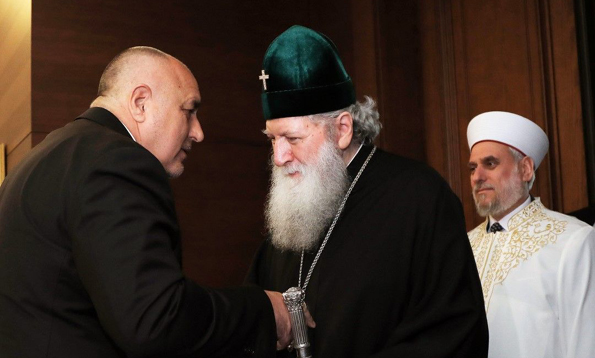
The new Religion Bill (aka Denominations Acts) was voted in on the last working day of 2018 by the Bulgarian Parliament. At the beginning of the parliamentarian season, on January 31, 2019 Parliament considered several new corrections to the just voted-in bill as follows. Those new corrections were all voted in on Friday and allowed for:
Additionally, a one time tax amnesty would be given to various confessions at $ 5.2 million, as $ 5.1 million of this amount goes to the Muslim confession. Some sources cite that with interest of years past, the Muslim confession actually owes the state over $10 million and European Union organisations have been summoned to intervene to this “tax amnesty” as being illegal to the current code.
One reason for this is some $20 million in annual income the Muslim confession collects annual from renting properties, which should be sufficient to pay their tax. Just for comparison, at one time our building in Sofia owed $90,000 in waste tax, but was quickly summoned to pay it. But this is not the scary part just yet!
This rather large government stipend of roughly $50 million annually is designated in the government budget as “Orthodox and Muslim confession” (singular). Such in Bulgaria does not exist, except if administrative merge of those religions is meant by the government with the current legislation. There has been lot of talk that the great tax exemption toward the Muslim confession has been done in order to secure ethnic peace on the Balkans and to some extent, Muslim religious leader are confirming this in recent days. Additionally, after meeting with the Eastern Orthodox patriarch and the Muslim chief mufti this week, the Bulgarian Prime Minister stated that:
“The Bulgarian state should pay for its Bulgarian churches/confessions … in order to prevent foreign intelligence from dividing our nation.”
Such rhetoric seems to have been taken directly from the historical archives and brings the painful memory of the 1949 Pastoral Process when 15 Protestant pastors were sentences by the Communist Regime as “spies of foreign intelligence centers.” Perhaps for this reason, Bulgaria was promptly noted as one of the most intolerant countries in the Europe Union in a study by the University of Nevada, which collected survey data covering a total of 450,000 people in 100 countries.
France adheres to a strict form of secularism, known as laïcité, which is designed to keep religion out of public life. This principle was entrenched by law in 1905, after fierce anti-clerical struggles with the Roman Catholic church.
For the first quarter of 2019, the government will focus on three reforms: unemployment benefits, reforming the state and the revision of the 1905 law separating religion and government affairs. The reform of France’s unemployment benefits which is central to Macron’s social program, was officially launched in November but there is still a lot of work to be done.
The changes that Macron wants to bring in include a “safety net” for the self-employed, meaning that entrepreneurs, craftsmen, traders or farmers who find themselves in the unfortunate situation of having their business liquidated will, for the first time, receive compensation from the State. Other changes include the right to unemployment benefits for workers who resign and incentives for companies to limit unstable contracts. Meanwhile, the state reform, which was originally delayed in July 2018, is also a big item on the agenda for the French government in early 2019.
February 28-March 2, 2019
College Park Marriott Hotel & Conference Center
Across the Black Sea, Georgia has had even more success. It reduced the number of state-run orphanages from 50 to two. The number of orphans dropped also, from 5,000 in 2005 to about 75 now, UNICEF says. However, Romania has made the largest improvement. The European Union has provided millions of dollars in aid to support Romanian child-welfare reforms. Private aid agencies like Hope and Homes for Children have helped place children with foster families or smaller homes where they experience a more usual childhood.
Bulgaria remains one of the poorest countries not only in the EU but also in the Balkans. Some parents cannot even afford to provide proper nourishment for their children. Furthermore, food deficiencies, which hit youngsters hardest, prevent children from growing up into healthy young adults. Romany (Gipsy) communities are mostly affected by poverty. Their children are often required to work in order to make ends meet. With unemployment at over 80% for this minority, the adults suffer greatly from discrimination in the workplace. In turn, this affects the children since their unemployed parents cannot provide for them at a basic level.
Many steps have been taken to implement children’s rights and respond to the needs of those most at risk on the streets. There have been campaigns to increase public awareness and improved public understanding of the situation. Today, between 2,500 and 4,000 children are still sleeping rough. These are mostly Romany children finding shelter in Bulgaria’s larger cities. Besides the fact that these children are particularly vulnerable to trafficking and economic or sexual exploitation, they live their day to day lives in horrific conditions. Lack of caring adults and a lack of food are just some of the realities faced by street children.

Explore the intersection of Bible and technology at this year’s BibleTechconference, coming to Seattle on April 11–12, 2019.
Learn about advances in biblical studies from over 25 leaders in the tech, Bible translation, and publishing industries. Plan on discovering new ways technological advances equip us to explore and share God’s Word.
Presentations at the conference include:
See the complete list of topics and speakers at Faithlife.com/bible-tech.
Join us on April 11–12 in Seattle, WA, for BibleTech! Register now.
Although the Book of Revelation has been vastly studied and interpreted throughout church history, usually the focus is on one major issue within the text, namely, the role and future of the church. The main reason for this has been the in-depth prophetic and pastoral messages to the Seven Churches. The value of the messages to the Seven Churches of Revelation is constituted by the fact that they are the last recorded Biblical messages to the Christian Church. For this reason, the letters to the Seven Churches obviously do not contain all of the usual elements used in the New Testament epistolary form.
Dony K. Donev, D. Min.
“I sit down alone: only God is here; in His presence
I open and read this book to find the way to heaven”
– John Wesley
Our search for the theological and practical connection between Pentecostalism and Eastern Orthodoxy continues with yet another publication by St. Vladimir’s Press titled, Orthodox and Wesleyan Scriptural Understanding and Practice. The book represents an ongoing dialogue between the Orthodox and Wesleyan confessions and it emphasizes how theologians from both sides are attempting to discover commonalities in theology and praxis. To come together, not so much as theologians and thinkers, but as practical doers motivated by the proper interpretation of Scripture. As observed from the title, as well as through the text, these similarities are not necessarily in theological convictions, but in the proceeding Biblical approach toward interpretation of Scripture.
Orthodox and Wesleyan Scriptural Understanding and Practice is a compilation of essays from the Second Consultation on Orthodox and Wesleyan Spirituality under the editorship in 2000 of S.T. Kimbrough, Jr., who contributed the chapter on Chares Wesley’s’ Lyrical Commentary on the Holy Scriptures. I must issue the caution that the book is not an easy read, at least not for the reader who intends to understand it. But it is by no means a book to be easily passed by Pentecostal scholars searching for the Biblical roots of Pentecostalism within the Eastern Orthodoxy.
The book begins with an interesting observation of the exegesis of the Cappadocian Fathers by John A. McGuckin, and continues with an article on the spiritual cognition of my personal favorite, Simeon the New Theologian by Theodore Stylianopoulos. Although the discussion on Gregory the Theologian, Basil of Caesarea and Gregory of Nyssa was thoughtful and presented in an interesting manner, the essay on St. Simeon struck me as well structured, but a bit shallow.
An interesting approach was taken in Tamara Grdzelidze’s essay where she presented an orthodox perspective of the Wesleyan position on authority of scriptural interpretation. The essay had a very strong exposition in regard to the Wesleyan understanding of the importance of Scripture in Christian living. However, the latter part, which dealt with the influence of tradition, was not investigated to its full capacity, which left the text (perhaps on purpose) open to multiple interpretations. Nevertheless, this issue was resolved later in the book by Ted Campbell that dealt with the subject from the Wesleyan perspective.
A central theme throughout the book was the comparison of prayers and song lyrics from both camps. Although I am no musical expert, I must agree with the authors, that theology within music has played an important role in both Orthodox and Wesleyan traditions, as it continues to do so in the everyday spiritual experience of the Pentecostal believer. This rather practical approach seemed to be the heart of the discussion where both sides could agree.Finally, the role of the Holy Spirit is viewed as central for the reading, understanding and practicing of Scripture in both the Orthodox and Wesleyan traditions. For the Pentecostal reader, it may be easy to accept this presumption as similar to the Pentecostal experience, yet the book describes it in terms which will be somewhat foreign to many Pentecostals. Although the said similarities between the interpretations of Scripture may be self explanatory for the western Pentecostal reader, they may be easily disregarded as unimportant by people who practice theology and ministry in an Eastern European context due to the ever-present tension between the Orthodox and Protestant denominations. But even if the Pentecostal scholar gathers nothing else from this book, he/she must remember this one thing: The time has come for a formal Orthodox-Pentecostal dialogue, like the one which the World Council of Churches has been trying to put together since 1991.


