

Bulgaria’s Parties Seek Control over Religion
Two alternative legislative proposals put forward by Bulgaria’s main parliamentary fractions would give the state more oversight over the activities of the country’s faith groups.
Bulgaria’s parliament is seeking to change the Law on Religious Confessions, to limit external financing and crack down on religious “radicalism”.
Two separate pieces of legislation – one backed by party leaders of the ruling GERB party, the opposition Socialist Party and the Movement for Rights and Freedoms, MRF – and another introduced by GERB’s minor coalition partner, VMRO, were both deposited in the assembly on Monday.
The first proposal aims primarily to introduce state subsidies for the major religious denominations of up to 15 million levs [7.5 million euros] a year.
This sum would be divided among the faiths whose followers number at least 1 per cent of the population, according to the latest census data. In practice, this would mean that only the Bulgarian Orthodox Church and the Muslim community would be eligible for the cash.
The alternative proposal, introduced by Defence Minister Krasimir Karakachanov’s VMRO party, follows similar lines. However, it focuses also on the fight against “radicalization” and seeks the introduction of more oversight of religious activities and financing by the state.
Both proposals would only allow foreign preachers to deliver sermons in the presence of locally accredited clerics. The two proposals are a response to a cross-party agreement reached after an April National Security Consultation Council, organized by President Rument Radev.
However, the plans are already dividing the ruling GERB-United Patriots coalition, with the latter claiming they were not consulted by Prime Minister Boyko Borissov’s party about the plans.
On Sunday, Iskren Vesselinov of VMRO, one of the three parties in the United Patriots, told Bulgarian National Radio that there had been “a problem with communication” within the coalition about the legislative proposal.
“We had to introduce it to parliament before we received statements from the major religious communities because the other piece of legislation was already deposited, which would have slowed down the entire reform process,” Vesselinov added.
The lack of consultation with religious communities may also turn out to be an issue, experts warned.
“There is a problem with the philosophy of the reform proposals; until now, the Religious Confessions law sought to guarantee the rights of the faith communities. Now it will seek to introduce oversight and control,” Mihail Ivanov, an ethnic minorities expert from New Bulgarian University who took part in the preparation of the 2002 law, told BIRN.
He noted other problems, too – that both plans introduce a discriminatory element that divides the two big religions from the many smaller faith communities and limit the ability of foreign preachers to practice in Bulgaria.
“The changes don’t take into account important religious differences – for example, the Catholic Church is a unitary body and its Bulgarian priests receive their funding from the Vatican. This would now be rendered illegal,” Ivanov observed. According to him, the same applies for visiting clergymen who might not now be allowed to preach in places where there is no local pastor of their faith. Another issue Ivanov pointed out is that both proposals would increase the regulatory role of the Religious Confessions Directorate under the Council of Ministers. This would, in practice, place control over donations, religious institution accreditation and educational program matters in the hands of the executive power.
However, Ivanov said the positive sides of the changes include the two major Bulgarian religions receiving state financing guarantees. “It is good that the debate about religious regulations has been opened; now the political forces need only to leave the discussion to experts and members of the religious communities themselves,” he concluded.
Using state funding for “illegal activities” by religious denominations will be sanctioned with prison terms of 3-6 years. With these sanctions in mind, the new legal measure embodies the following rationale:
- Churches and ministers must declare all foreign currency money flow and foreign bank accounts
- Participation of foreign persons in the administration of any denomination is strictly forbidden
- Foreign parsons shall not be allowed to speak at religious meetings in any way shape or form especially religious sermons
- Anonymous donations and donorship to religious organization is not permitted
- Bulgarian flag shall be present in every temple of worship
- The new measure will block all foreign interference in the faith confessions and denominations in Bulgaria
August 2018 Update: Churches across Bulgaria have petitioned against the new changes in the Law of Religion as they constitute:
- Limitations on freedom of religion and speech
- Merge church and state
- Establish goverment control over preaching
- Ban any missionary work and preaching in a foreign language
- Halt international support for religious organizations
- Removes meeting form rented closed properties
- Legalizes discrimination on basis of religion and faith convictions
Pray for Pastor Andrew in Turkey

Prayers for Pastor Andrew Brunson Imprisoned in Turkey
NRB’s president & CEO, Dr. Jerry A. Johnson, is urging Christians in America to pray as the July 18 trial date for imprisoned American Pastor Andrew Brunson approaches.
Furthermore, Johnson is encouraging Christians to sign a petitiondemanding the release of Brunson, who has been wrongfully detained in Turkey and denied due process rights for years.
“Let’s unite in prayer for Pastor Brunson and his family,” he said.
“It’s time for the Church to pray. It’s time for the Church to speak up and stand up. Let your voice be heard,” he added, noting the petition that is currently being circulated by the American Center for Law and Justice (ACLJ) has been signed so far by more than 580,000 individuals.
A U.S. citizen who pastored churches in Turkey for more than two decades, Brunson was arrested by Turkish authorities in October 2016 and held without charges for months. The North Carolina native was then kept in prison after being accused, without compelling evidence, of being a member of a terrorist group. A few months ago, an official indictment was filed by Turkish prosecutors, who are seeking a 35-year sentence for the American pastor.
After eight months of imprisonment, Brunson’s trial began with a hearing on April 16. A second hearing was held on May 6, and the third hearing is now scheduled for July 18.
The European Centre for Law and Justice (ECLJ), an international affiliate of ACLJ, is actively advocating for Brunson before international institutions and media.
On June 25, ECLJ addressed the 38th Session of the United Nations Human Rights Council, again drawing the council’s attention to Brunson’s plight.
“Turkey has made it clear that this is a sham trial, and, as indicated by President Erdoğan’s multiple demands to swap Pastor Brunson for Fethullah Gülen, Pastor Brunson is undoubtedly a political prisoner being held as a bargaining chip for Turkey,” ECLJ stated.
“Turkey has violated many international laws and obligations, as well as its own constitution, by arresting and detaining an innocent pastor in prison for over a year and a half based on the hearsay testimony of clearly questionable secret witnesses. Moreover, Turkey has denied Pastor Brunson the opportunity to mount an adequate defence by flippantly dismissing all defence witness testimony,” it added.
“The ELCJ respectfully requests that this Council remind Turkey of its obligations and make every effort to ensure that Pastor Brunson is released and allowed to return home.”
On June 30, Turkey’s leading news source, the Hurriyet Daily News, ran an opinion piece by columnist Serkan Demirtas with the headline: “Pastor Brunson’s detention has become too costly for Turkey.”
In the article, Demirtas noted that Brunson’s release “would sure help the ongoing reconciliation process between Turkey and the U.S.” He also claimed that “many diplomats in Ankara expect his potential release followed by his deportation pending trial on the July 18 hearing.”
He acknowledged, however, that “it is impossible to foresee what the court’s decision will be.”
Pray for Romania
Chaplaincy in Bulgaria: To Gain Legal Status via a Milti-Ministry Center
August 5, 2018 by Cup&Cross
Filed under Featured, Missions, News, Publication
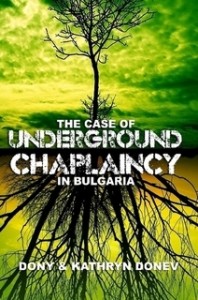 Bulgarian Chaplaincy Association celebrated 20 years of Military Ministry in Bulgaria since the first event co-hosted by the Bulgarian Armed Forces and government officials in 1997.
2018 The Road toward a Balkan Multi-Ministry Center and Legal Status
2017 Bulgarian Chaplaincy Association: Legal Case Renewed
2015 Revisting the Integration Proposal with Local NATO Programs by Bulgarian Chaplaincy Association
2014 Bulgarian Chaplaincy Association: Vision and Resolution Reaffirmed
2012 First Class of the Master’s of Chaplaincy Ministry Program
2011 Master’s of Chaplaincy Ministry Program Continues
2010 Master’s of Chaplaincy Ministry Program begins in Sofia, Bulgaria
2009 Bulgarian Chaplaincy Association holds an introductory chaplaincy course in Yambol, Bulgaria
2008 The Case of a NATO Chaplaincy Model within the Bulgarian Army released
2007 Bulgarian Chaplaincy Associations Recognized by U.S. Department of State
2006 Registration for the Bulgarian Chaplaincy Association Rejected by Bulgarian Court
2005 The Bulgarian Chaplaincy Association presented before the Bulgarian Evangelical Alliance
2004 Three U.S. Bases in Bulgaria to be Built by 2010
2003 The Case of a NATO Chaplaincy Model within the Bulgarian Army
2002 First Balkan Chaplaincy Conference at the Central Church of God in Sofia, Bulgaria
2001 Church of God Chaplaincy Commission to visit Bulgaria
2000 Euro-seminar: Christian ethics in the military forces
1997 First Military Ministry Seminar in Veliko Tarnovo
With all this accomplished, in the beginning of the 21st century law and chaplaincy meet on the road to democracy as Bulgaria remains the only country in NATO without military force chaplaincy. But before chaplaincy could be legalized completely and endorsed by the state to its full functionality, several changes must be undergone. Some of them are:
- Legal provision allowing chaplains to work as staff in the army, which guarantees the equal presence of protestant chaplains as well.
- The approval, acceptance and implementation of a NATO based model for chaplaincy within the structures of the Bulgarian Army.
- Periodical and systematic educational strategy toward chaplaincy workers among Bulgarian evangelicals.
- A paradigm for cooperation of Bulgarian chaplains from various ethnic, religious and cultural backgrounds.
- Further research publications to enhance the efficiency of chaplaincy within the Bulgarian national context.
Also important [click to read]:
- U.S. Department of State recognizes our chaplaincy efforts in Bulgaria
- Bulgarian Chaplaincy Association: Integration Proposal with Local NATO Programs
- Bulgarian Chaplaincy Association: Vision and Resolution
- Chronology of our role and involvement in developing Church of God chaplaincy in Bulgaria since 2001
- Master’s of Chaplaincy Ministry Program in Bulgaria Reflections
- The Past Decade of Chaplaincy in Bulgaria (2006-2016)
- Related Publications and Presentations by Cup & Cross Ministries International
More Publications on the Topic and History of Events:
- Chaplaincy Conference and Master’s of Chaplaincy
- Chaplaincy Course in Yambol, BULGARIA
- Bulgarian Chaplaincy Association Annual Meeting
- Family Seminar for Military Men and Women
- Cup & Cross Ministries in Church of God Publications
- The Case of a NATO Chaplaincy Model within the Bulgarian Army
- 10 Years of Military Ministry in Bulgaria
- National Chaplaincy Conference
- Bulgarian Chaplaincy Association Gains Legal Status
- Chaplain Dees Visits Bulgaria
- Chaplaincy Course at the Bulgarian Evangelical Theological Institute
- Bulgarian Chaplaincy Association
- Meeting the NATO Chaplain
- National Chaplaincy Meeting
- Chaplaincy Developments in Bulgaria
- U.S. Bases in Bulgaria
- National Chaplaincy Meeting
- Chaplaincy in Bulgaria
- HEALTHCARE CHAPLAINCY IN BULGARIA
- Chaplaincy in Bulgaria
- Mission Bulgaria
PRAY: Plague Outbreak in Bulgaria
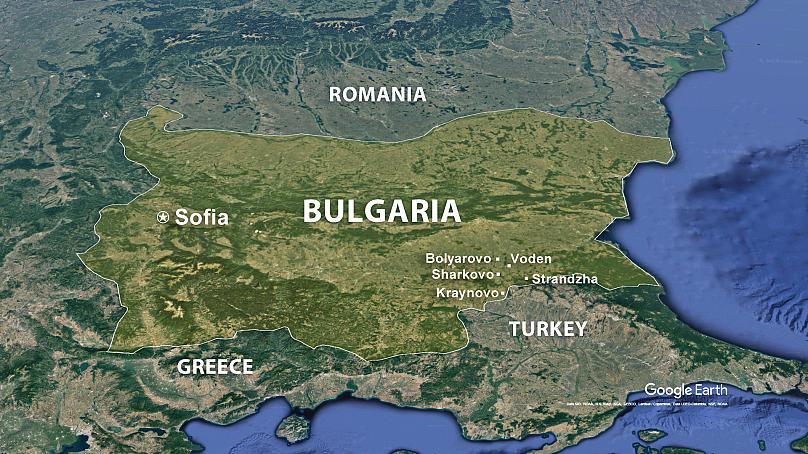
A secondary outbreak of the animal plague was found in the town of Bolyarovo, Bulgaria. This was announced today by the Bulgarian National Food Ministry.
Threats of EU restrictions on the export of dairy products have encouraged the Bulgarian government to euthanize more than 4,000 sheep and goats in villages close to the Turkish border. Some experts say ovine rinderpest can lead to an 80% mortality rate of a sheep herd and a 100% mortality rate among goats in a matter of a week.
The first positive test results in Voden were confirmed by the French agricultural lab CIRAD on 23 June. In connection with a new outbreak of African swine fever virus in feral pigs near the border of Bulgaria in Tulcea, Romania, the Executive Agency for Forests calls on Bulgarian hunters to strictly observe the preventive measures imposed to reduce the spread of the disease, the agency said.
According to the Agency, “the Bulgarian hunter is the most important figure not only for the use and management of wildlife but also for the protection of its health.” The moral right and privilege of hunters is to take seriously and responsibly the problem and to help fight the African a plague in feral pigs, which initially involves more intense individual shooting to reduce the population of wild boar in the country to levels of 0.3 per 100 hectares. ” Increasing shooting by individual hunting will in no way affect planned hunting for group hunting of wild boar for the upcoming hunting season, noted by the FIA.
The report reminds that since the beginning of the year, the Forestry Agency has taken urgent action by convening a meeting of the Hunting Council which has imposed preventive measures to prevent the occurrence of African swine fever in Bulgaria. In addition to augmenting the population, hunters must immediately notify an official veterinarian of each wild boar corpse found. The decisions of the Hunting Board meeting were sent to all the regional structures of the agency as well as to the six state forest enterprises. All hunting associations in the country are well informed about the disease. Particular attention is paid to the municipalities along the Danube and on the islands along the river, the municipalities of Silistra and Dobrich along the land border with Romania and the Black Sea border.
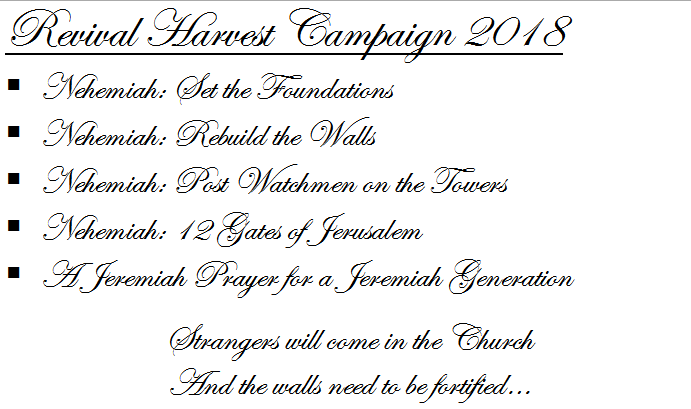
Revival Harvest Campaign: REBUILDING the WALLS
Gateway Cities
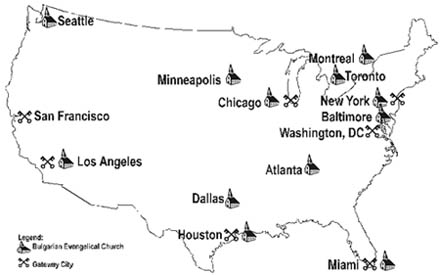 Recent analysis of migrant churches in the United States reveals the predominant majority of them are located in cities which have a high influxation and concentration of immigrants. Such localities are called “gateway cities”. Immigrants typically enter the United States through one of these cities and settle there. These areas contain over half of the foreign-born population in the United States as follows
1. New York, NY Foreign born population 18.7%
2. Los Angeles, CA Foreign born population 27.1%
3. Houston, TX Foreign born population 12.3%
4. Washington, DC Foreign born population 8.6%
5. Miami, FL Foreign born population 33.6%
6. Chicago, IL Foreign born population 11.1%
7. San Francisco, CA Foreign born population 20.0%
20 Things to Fix on the Old Missionary Car
20 things to fix on the old missionary car so you go again:
 1. Better tires and front alignment
2. Replace old leaking radiator and refill with new antifreeze
3. Engine oil and filter change
4. Touch up rusted rear fenders
5. Fix non-working horn
6. Air condition recharge
7. Cracked rear bumper fix
8. New spark plugs and tune up
9. New air filter and box cover replacement
10. New propane filter and evaporator cleanup
11. Mono-injection tune up for propane fuel line
12. New windshield wipers
13. Leaking wipers fluid tank fix
14. Engine temperature gauge fix
15. Replace 20 year old gas pump filter
16. Trunk and leaks fix
17. High beam bulbs replace
18. Rewire all electric plugs and chargers
19. Replace driver side window mechanism
20. Don’t forget to anoint it like Wesley did his horse. It works!
2018 Annual Conferences of Bulgarian Churches in America
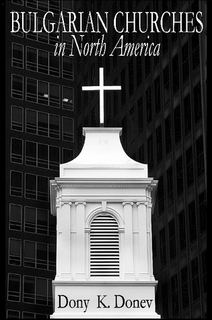 The congregations within the Alliance of the Bulgarian Evangelical Churches in North America meet every Memorial Day weekend for an annual conference:
- Dallas (2002)
- Chicago (2003)
- Minneapolis (2004)
- Los Angeles (2005)
- Dallas (2006)
- Chicago (2007)
- Minneapolis (2008)
- Los Angeles (2009)
- Houston (2010)
- Las Vegas (2011)
- Chicago (2012)
- Dallas (2013)
- Minneapolis (2014)
- Las Vegas (2015)
- Houston (2016)
- Chicago (2017)
- Jacksonville (2018)
READ ALSO:
- The story of the first Bulgarian Church of God in the Untied States
- San Francisco Springs
- Finding Friends in Phoenix or the Story of an Arizona State Quarter
- Prognoses about Bulgarian Churches in North America
The Sinking of Cross-cultural Bridges and the Collapse of the “Western Theological Corpus”

Bridges to people and culture do not work any longer because they never touch the water of troubled cross-cultural issues. For the same reason, contextual theology does not work any more – once faced with the deep cross-cultural crises of faith and conviction, it sinks with no hope.
We have long observed the collapse of the “Western Theological Corpus,” as Andrew Walls calls the structural problem in missions today. Main reason for its collapse is the failure to give answers to the theological questions emerging from the Global South. As a result, the colonial approach of doing missions, resonating in imperialistic cross-cultural ministry and ethnic conquest for assimilation of cultures, all have failed both the indigenous people and the mission sending agencies. Prayer has hence turned into a protest and prophecy for a new reality, where the encounter of missions is no less than the very cross-roads where we encounter God and others together.


