

10 Years Bulgarian Chaplaincy Association
Comments Off on 10 Years Bulgarian Chaplaincy Association
 A decade ago we established the Bulgarian Chaplaincy Association with a vision for ministry in the Bulgarian army, Ministry of Internal Affairs, jail and prison systems, Bulgarian seaports and airports, and the healthcare system. Out of these five goals set before us in 2006 we have fulfilled them all:
1. Tolerant and equal representations of all confessions in the chaplaincy ministry
2. The implementation of a contextualized chaplaincy model
3. The integration of chaplaincy education in all Bulgarian theological higher educational institutions
4. And the educational and consultant work on government and church levels
except:
5. The establishment of legal grounds for regular paid chaplaincy service in the Bulgarian army, Ministry of Internal Affairs, jail and prison systems, Bulgarian seaports and airports, and the healthcare system.
After designing and teaching the Masters of Chaplaincy Ministry program in two major evangelical universities in Bulgaria, we now have some of our trained chaplains working in jails, prisons, healthcare, civil emergency services and the corporate/political level. The legal system in Bulgaria, however, is yet to provide the proper measure for restoring chaplaincy in Bulgaria’s armed forces. To this final step fulfillment we pledge out support in 2016.
Bulgarian Chaplaincy Association: Vision and Resolution
Bulgarian Chaplaincy Association
Resolution No. 1
We,
The founding members of the Bulgarian Chaplaincy Association in its first national assembly today August 19, 2006 in hotel Diana Palace, Yambol
In regard of:
1. Bulgaria’s membership in NATO and its upcoming integration in the European Union
2. The transformations within the Bulgarian Army from mandatory toward standard paid service and the participation of Bulgarian contingent in NATO and UN missions
3. Contract agreement for NATO airbases on Bulgarian territory
4. The strategic renewal of chaplaincy ministry in the Bulgarian army
5. And the present need of chaplaincy ministry integrated in the Bulgarian army, Ministry of Internal Affairs, jail and prison systems, Bulgarian seaports and airports, and the healthcare system,
Declare our support toward:
1. The establishment of legal grounds for regular paid chaplaincy service in the Bulgarian army, Ministry of Internal Affairs, jail and prison systems, Bulgarian seaports and airports, and the healthcare system
2. Tolerant and equal representations of all confessions in the chaplaincy ministry
3. The implementation of a contextualized chaplaincy model
4. The integration of chaplaincy education in all Bulgarian theological higher educational institutions
5. And the educational and consultant work on government and church levels.
We, the founding members of the Bulgarian Chaplaincy Association will work toward the renewal, popularization and equal religious representation of chaplaincy ministry in all professional areas.
August 19, 2006
Diana Palace, Yambol
Also important [click to read]:
- U.S. Department of State recognizes our chaplaincy efforts in Bulgaria
- Bulgarian Chaplaincy Association: Integration Proposal with Local NATO Programs
- Chronology of our role and involvement in developing Church of God chaplaincy in Bulgaria since 2001
- Master’s of Chaplaincy Ministry Program in Bulgaria Reflections
- The Past Decade of Chaplaincy in Bulgaria (2006-2016)
- Related Publications and Presentations by Cup & Cross Ministries International
95 Years Ago Ivan Voronaev Finally Reached the City of Odessa
![51Sa1IcA8OL._SY344_PJlook-inside-v2,TopRight,1,0_SH20_BO1,204,203,200_[1]](https://cupandcross.com/wp-content/uploads/2014/03/51Sa1IcA8OL._SY344_PJlook-inside-v2TopRight10_SH20_BO1204203200_1.jpg) Not So “Little Odessa” (from the book The Life and Ministry of Rev. Ivan Voronev)
Not So “Little Odessa” (from the book The Life and Ministry of Rev. Ivan Voronev)
By the end of the summer of 1921, Voronaev and Koltovich received their permits to return to Russia and on August 12, 1921 landed in Odessa.[1] It had taken Voronaev over a decade of traveling around the globe to return to his motherland as a Pentecostal preacher and fulfill the divine calling: “Voronaev, Voronaev. Go to Russia!”
The results of his commitment and sacrifice increased quickly. For the first three months in Odessa, he labored among the evangelical churches, sharing his testimony and preaching the full gospel. Then, on November 21, 1921 he organized the Christian Evangelical Faith (Confession).[2] In two years time, the new community had over 370 members and the news of the new Pentecostal teaching spread rapidly across the U.S.S.R. In 1924, the Odessa community organized a regional assembly and at the second assembly in 1925, the Ukrainian Union of Evangelical Christian Faith (Confession) was established.
By 1927, more than 350 Pentecostal Assemblies with membership of 17,000 strong were part of the Union,[3] which continued to grow and by 1944 exceeded 20,000 in Ukraine and 80,000 strong in the whole U.S.S.R.[4] Voronaev’s church in Odessa alone was reported to have over 1,000 members.[5] Government persecution was inevitable. Numerous publications against Voronaev’s work were circulated not only through Communist propaganda, but by some Baptist periodicals, who characterized the Pentecostal ministry as sectarian at best.[6] The Regime could not afford the meetings of large groups of people who were not part of the Communist Party. The Voronaev family paid the ultimate price of their calling for organizing and growing the Pentecostal community in Communist Russia.
In the summer of 1930 the repressions against Russian Pentecostals began. On July 6 (almost exactly 10 years after he left America for his prophesied mission to Russia) Ivan E. Voronaev and B.R. Koltovich, along with some 800 Russian pastors,[7] were arrested for preaching the Gospel through the support of churches outside the U.S.S.R., both sufficient reasons to be convicted in espionage and imprisoned in Siberian work camps.[8] Voronaev’s wife was also sentenced to imprisonment in mid-Asia. Their children were left without provision and no one to take care of them…[9]
[1] Ibid.,8.
[2] Ibid.,9.
[3] Koltovich, “Minutes of the Jubilee Meeting”, 10 and Evangelist (Odessa: 1928, No. 1) Quoted in Durasoff, 73 and Smolchuck, 4.
[4] Zhidkov, “On the Roads …” (Bv, No. 3, 1957), 62. Around 1936 Donald Gee, who had an extensive ministry at the Assemblies of God training program for ministers at Gdanks (Danzig), Poland, claimed some 80,000 Pentecostals in Russia in Upon All Flesh (Springfield: The Gospel Publishing House, 1947), 31. Both quoted in Durasoff, The Russian Protestants. For a more detail discussion on the growth of Pentecostalism in the U.S.S.R see V.I. Franchuk, Prossila Rossia Dozhdia u Gospoda (n/a: Kiev, 2001).
[5] McLeod, Hugh. Christianity: World Christianities c. 1914-c. 2000 (Cambridge: Cambridge University Press, 2006), 97.
[6] Durasoff, 73.
[7] McLeod, 97.
[8] Burgess, Stanley M. and Eduard M. van der Maas, The New International Dictionary of Pentecostal and Charismatic Movements (Zondervan: Grand Rapids, 2002), 1179-80.
[9] For the situation in Russia and the story of the Voronaev children see Voronaeff, Paul. Christians under the Hammer and the Sickle (Wichita: Defender Publishers, 1935). Book was printed a total of 11 times in some three years time.
Ministering in Bellshire
Bulgaria to ban all foreign preachers
 The Patriotic Front, a newly established political formation in Bulgaria, filed changes to the 2002 Religious Dominations Act last Thursday. The new measure bans all foreign citizens from preaching on the territory of Bulgaria, as well as preaching in any other language than Bulgarian.
The draft amendments also foresee banning foreign organizations, companies and citizens from providing funding or donating to Bulgarian religious denominations. All the religious denominations in Bulgaria will be obliged to perform their sermons, rituals and statements only in Bulgaria. One year’s time will be given to translate religious books into Bulgarian.
Financially, the draft laws would ban not only foreign physical and legal entities from funding Bulgarian religious institutions, but also companies with foreign ownership that are legally registered in Bulgaria. Using state funding for “illegal activities” by religious denominations will be sanctioned with prison terms of three to six years. With these sanctions in mind, the new legal measure embodies the following rationale:
- Churches and ministers must declare all foreign currency money flow and foreign bank accounts
- Participation of foreign persons in the administration of any denomination is strictly forbidden
- Foreign parsons shall not be allowed to speak at religious meetings in any way shape or form especially religious sermons
- Anonymous donations and donorship to religious organization is not permitted
- Bulgarian flag shall be present in every temple of worship
- The new measure will block all foreign interference in the faith confessions and denominations in Bulgaria
An Urgent Call for Chaplain Ministry on the Balkans
 Our ministry has been working in the country of Bulgaria for over 25 years now. During this time we have ministered in over 300 local congregations across the country. While we do a lot of ministry in the capital Sofia, we are even more often on the road evangelizing in remote locations. When we minister in Bulgaria we do 3-5 services on any given Sunday. Additionally, we travel to teach and minister to various local churches during the week.
With this vision in mind, over a decade ago we organized and established the Bulgarian Chaplaincy Association as a Christian ministry outside of the church walls. Today, our first responder chaplains trained by our Masters of Chaplaincy Ministry Program face extreme conditions on the Balkans and in Europe as follows:
7/2016 – Christians pay price as extreme Islam surges after attempted coup in Turkey
6/2016 – 30+ people were killed in an attack at Ataturk International Airport by three suicide bombers
3/2016 – 31 people are killed and 150 injured in three explosions at the Brussels airport
11/2015 – 130 people killed in a series of attacks by gunmen and suicide bombers at Paris stadium
1/2015 – 11 killed after attack on Paris offices of satirical newspaper Charlie Hebdo
5/2014 – 4 killed at the Jewish Museum in Brussels
Also important [click to read]:
- U.S. Department of State recognizes our chaplaincy efforts in Bulgaria
- Bulgarian Chaplaincy Association: Integration Proposal with Local NATO Programs
- Bulgarian Chaplaincy Association: Vision and Resolution
- Chronology of our role and involvement in developing Church of God chaplaincy in Bulgaria since 2001
- Master’s of Chaplaincy Ministry Program in Bulgaria Reflections
- The Past Decade of Chaplaincy in Bulgaria (2006-2016)
- Related Publications and Presentations by Cup & Cross Ministries International
EU Referendum
by David Hathaway
I feel that I must write to you, urging you to pray. Yesterday I took part in two TV programmes regarding the referendum which will be broadcast on Revelation TV before June 23rd.
I am greatly troubled by the debate on both sides of the referendum on the EU. Neither side is dealing with the major issues, with claim and counter claim covering the main issues with a smoke screen, so that the public are being totally deceived. The two main issues being batted over the net are migration and the economy.
Migration is an issue so big that it dwarfs all other topics. The EU cannot handle this, it is not a political or military problem. Its root and answer is totally spiritual. Neither Britain nor the EU can solve this without God – but to accept Moslem countries such as 78 million Turks into ‘Christian’ Europe, either now or in the future -will create terrorism because our own experience is that they do not integrate, and it will bring Syria and Iraq directly on to our borders. The flood tide will be unstoppable.
The economy is also part of the smokescreen. The EU is an economic experiment which has failed. Of all the trading groups in the world, it has the lowest growth rate. Any attempt on our part to join it will inevitably bring disaster on us. Who are the economists who say that we will be worse off coming out of the EU? Why did they not foresee and warn us of the last recession in 2008?! It is no thanks to the EU and these economists that our recovery is faster and better than theirs. Proof enough that we are stronger without them.
Now for the major issue. If we remain in the EU we will have to surrender, not just sovereignty, but all democracy.
The EU is not democratic in any way. Just as under communism, the EU ‘parliament’ only votes through the issues presented to them by unseen, unelected ‘leaders’. I have known for many years that when sitting, the EU Parliament has so many pieces of legislation to pass in a limited time that there is very little discussion, so that bad laws are passed without question. Most of these issues, if brought before our Parliament, would be subject to much discussion, debate and amendment.
The other major issue of democracy is that many of the countries in the EU have never been democratic in the sense which Britain has. Our democracy dates back 800 years to the Magna Carter. German experience of democracy only came after the last war! Previously a collection of tribes or ‘princedoms’, finally united under the Kaiser, and then under Hitler – but never experiencing democratic rule until after WWII. Most of the countries which came out of communist control had also not experienced democracy. One would question France, especially Italy which is similar to Germany, also Spain under Franco, in fact with most of the countries within the EU, if they had experienced democratic government, it was only relatively recently. Look also at history in Austria, Hungary under the Hapsburgs.
In Europe, only Britain has a long and hard won history of true democracy. How can we even contemplate surrendering 800 years of history – and of bloodshed? Did the millions who gave their lives to defeat Napoleon – the Kaiser – Hitler – and communism, die in vain? Why are we surrendering our hard won freedoms in order to be ruled by an unelected ‘cabal’ whom we don’t know? No one is telling us who are the so-called ‘visionaries’, whose experiment we are, as they seek to establish the ‘New World Order’ of a Utopia without God?
Then there is the spiritual issue. In the treaties forming the Union, they openly rejected any suggestion of recognising our Judeo/Christian heritage. The European Parliament Building in Strasburg – built to continue the rebellion against God which started in Babylon with its famous tower; the ‘Woman on the Beast’ after which Europe gets its name – ‘Europa’: these two symbols alone identify Europe with rejection of God! The EU is designed to follow the French pattern of a totally secular state. Yet former French President Chirac himself said that, ‘in establishing a totally secular state, we created a dry river bed of atheism which will draw a flood tide of militant religion.’ You only have to look at France over the last year to see how prophetic his words were – truly the biggest threat to France today is that militant religion! Then the Bible is clear that God’s judgement is over the way that we treat Israel. In Britain we have supported Israel – both historically and now today. The EU has rejected Israel and politically and financially supports the Palestinians against Israel.
These issues were all dealt with when I produced my documentary film, ‘The Rape of Europe’ (which is available to watch below), 16 years ago. The fact that the EU features in Daniel’s prophetic picture as the last empire before Christ sets up His Kingdom on earth, is important, but just evidence of the truth of Bible prophecy.
Cup & Cross Publications and Presentations
July 25, 2016 by Cup&Cross
Filed under Featured, News, Publication, Research
Cup & Cross Ministries International Presentations by Year:
2004 Postcommunist Believers in a Postmodern World at the Lilly Fellows Research Conference, Samford University
2005 Bulgarian Churches in North America at the Bulgarian Evangelical Alliance Annual Meeting – Chicago
2005 Internal Motivation at the Bulgarian Chaplaincy Association Quarterly Meeting – Bulgaria
2006 Introductory Chaplaincy Training Course at the Bulgarian Chaplaincy Association Quarterly Meeting – Bulgaria
2006 The Story of the Bulgarian Bible at Evangelical Theological Society – Washington, DC
2007 Bulgarian American Congregations: Cultural, Economic, Leadership Dimensions at Society for Pentecostal Studies
2009 Using Bible Technologies in a Censured Context: The Case of Postcommunist Bulgaria at BibleTech – Seattle
2009 How to Do Ministry on the Internet at Leadership Development Institute – Cleveland, TN
2010 The Untold Story of the Life and Ministry of Rev. Ivan Voronaev at Society for Pentecostal Studies – Minneapolis
2010 Using Computer Technologies in the Making of the New Bulgarian Translation of the Bible at BibleTech – San Jose
2010 Bulgaria: The Road to Democracy at the University of Nebraska – Lincoln, NE
2011 How to Broadcast Your Church Services for Free at Leadership Development Institute – Cleveland, TN
2011 The (un)Forgotten: The Story of Rev. Ivan Voronaev’s Children at Society for Pentecostal Studies – Memphis
2013 The Video Bible Project on the Internet at BibleTech – Seattle
2015 Historical and Doctrinal Formation of Holiness Teachings and Praxis among Bulgarian Pentecostals at Society for Pentecostal Studies at Southeastern University in Lakeland, FL
Cup & Cross Ministries International Publications by Year:
January 1994, “Going Up”, Christian News, Newspaper of the Bulgarian Church of God
1998-2003, Commentary on the Gospel of John for the Bulgarian On-Line Bible [http://www.bibliata.com]
September 2000, To Harvard and Back a Hundred Years Later (A Biographical Sketch of Stoyan K. Vatralsky)
May 2001, Pentecostal Primitivism Preserved
March 2002, Sunday School Lesson Series
April 2005-2010, Bulgarian Protestant History Series in the Bulgarian Evangelical Newspaper
April 2005-2010, About the Bible Series in the Bulgarian Evangelical Newspaper
Fall 2005, Postcommunist Believers in a Postmodern World in East-West Church & Ministry Report
Spring 2006, When East Met West in East-West Church & Ministry Report
July 2006, Roberts College in Pro & Anti Newspaper
July, 2007-2009 Letters from Bulgaria: A Series on Bulgarian Pentecostal Heritage in Pentecostal Evangel
2008 Analytical Overview and Church Planting Proposal for Bulgarian American Congregations Considering Cultural, Economic and Leadership Dimensions
2009 Pentecostal Primitivism
2010 About the Bible, a monograph on the history of the Bulgarian Bible
2011 Tetraevangelion: The Complete Works of the Gospel Writers in the New Bulgarian Translation Series (2007-2013)
2012 Bulgarian Study New Testament
2015 Complete Greek-Bulgarian Interlinear of the New Testament
Baby Bishops: Aye or Nay?
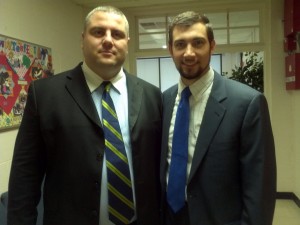 Rev. Dony K. Donev, D.Min.
A lot was said about ordaining younger ministers around the 2012 Assembly. The proposed Item 25, properly numbered recommending lowering the age requirement to 25 years, did not pass. Naturally, discussions stopped perhaps in wait for the next Assembly. But the question still stands open before our church.
My personal opinion was like many others on the floor. If we had to wait, they should have to wait too. But this self-centered conviction changed suddenly as we were invited to preach at the Higher Praise church in Cherry Log, GA pastored by Rev. Stephen D. Henderson (age 28 at the time).
This goes against every organizational rule we have, because when an active pastor is not allowed to vote in business sessions, the congregation he pastors is left voiceless. Alas, all business carried at the assembly affects the said church, which basically has no representation in General Council. So if a church pays for its young pastor to be sent to Assembly and represent the congregation, but without the right to vote this representation does not amount to much in the end. There is something fundamentally wrong with this.
The argument of age is of course connected with one’s experience. But let’s face it, multitudes of pastors leave the ministry for one reason or another having already gained both age and experience. And unfortunately, so many of them leave exactly because of the experience they have had aging within the church. Actually in today’s world, if you have not gained enough life experience and if you don’t know yourself by age 25, you will most probably not gain what’s needed by age 30.
Therefore, if a man is appointed a pastor of a church by consideration and approval of the Administrative Bishop, he should be allowed to vote. If he is trusted enough to take care of the church’s spiritual life and business, surely he must be trusted to represent his congregation and vote toward its betterment as a part of the whole organization. Not doing so is not simply discriminative against the minister on the basis of age, but against the church he leads as well. And yes, this argument goes further to support women who have been entrusted and appointed to serve as church pastors as well.
The Road Ahead for the Master’s of Chaplaincy Ministry Program (2016-2020)
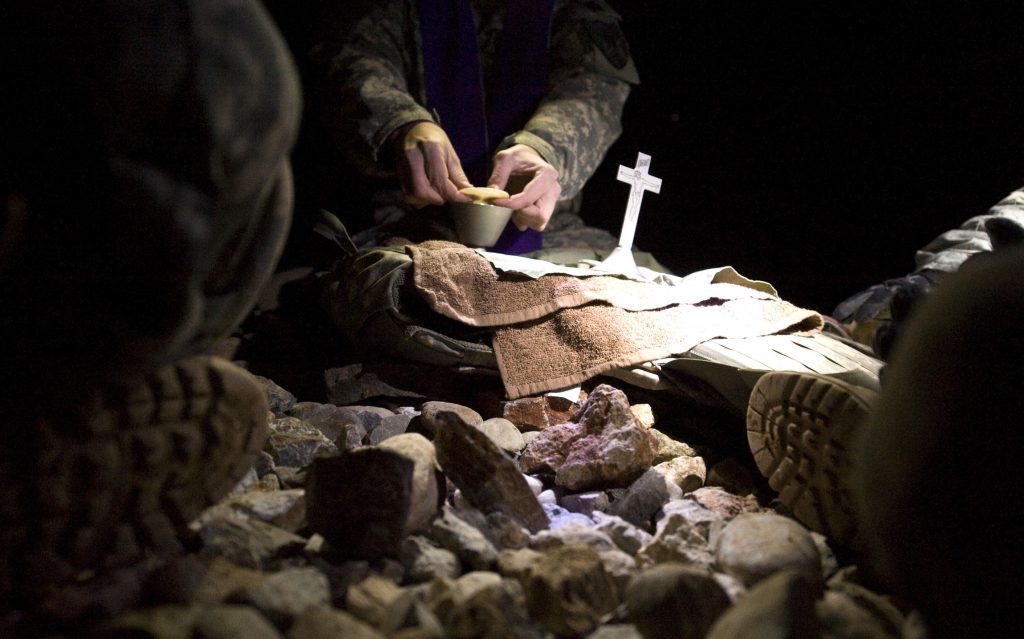
We are proud to announce that the Master’s of Chaplaincy Ministry Program, we designed and launched in Bulgaria in 2006, has been selected to be part of the Social Service Program of New Bulgarian University. After being for years a valuable part of the regular curriculum of the Bulgarian Evangelical Theological Institute and the St. Trivelius Institute in the capital Sofia, the chaplaincy program has received the highest level of recognition as successful graduates will be finally able to receive government recognized degrees and apply their knowledge and training in chaplaincy on a professional level. The chaplaincy program can also serve within the Integration Proposal of local NATO programs and be instrumental in dealing with the enormous wave of Middle East migrants crossing through Bulgaria today.
In the beginning of the 21st century in Bulgaria, law and chaplaincy meet on the road to democracy. But before chaplaincy could be legalized completely and endorsed by the state to its full functionality, several changes must be undergone. Some of them are:
- Legal provision allowing chaplains to work as staff in the army, which guarantees the equal presence of protestant chaplains as well.
- The approval, acceptance and implementation of a NATO based model for chaplaincy within the structures of the Bulgarian Army.
- Periodical and systematic educational strategy toward chaplaincy workers among Bulgarian evangelicals.
- A paradigm for cooperation of Bulgarian chaplains from various ethnic, religious and cultural backgrounds.
- Further research publications to enhance the efficiency of chaplaincy within the Bulgarian national context.
Also important [click to read]:
- U.S. Department of State recognizes our chaplaincy efforts in Bulgaria
- Bulgarian Chaplaincy Association: Integration Proposal with Local NATO Programs
- Bulgarian Chaplaincy Association: Vision and Resolution
- Chronology of our role and involvement in developing Church of God chaplaincy in Bulgaria since 2001
- Master’s of Chaplaincy Ministry Program in Bulgaria Reflections
- The Past Decade of Chaplaincy in Bulgaria (2006-2016)
- Related Publications and Presentations by Cup & Cross Ministries International
Further Developments on the Master’s Degree of Chaplaincy Ministry in Bulgaria
We are proud to announce that the Master’s of Chaplaincy Ministry Program, we designed and launched in Bulgaria in 2006, has been selected to be part of the Social Service Program of New Bulgarian University. After being for years a valuable part of the regular curriculum of the Bulgarian Evangelical Theological Institute and the St. Trivelius Institute in the capital Sofia, the chaplaincy program has received the highest level of recognition as successful graduates will be finally able to receive government recognized degrees and apply their knowledge and training in chaplaincy on a professional level. The chaplaincy program can also serve within the Integration Proposal of local NATO programs and be instrumental in dealing with the enormous wave of Middle East migrants crossing through Bulgaria today.
The Master’s Degree of Chaplaincy Ministry in Bulgaria was:
- Upgraded to the necessary educational and professional levels, applicable to the specific context of ministry in Bulgaria (December 2010)
- Presented in its upgraded form for approval before the educational board of BETI in 2011 (January 2011)
- Applied in its full capacity with the remaining modules in Theology (Spring 2011), Counseling (Fall 2011) and Master’s Thesis (exp. 2012)
- Transferred to the New Bulgarian University in Sofia under their new social worker studies program.
Also important [click to read]:
- U.S. Department of State recognizes our chaplaincy efforts in Bulgaria
- Bulgarian Chaplaincy Association: Integration Proposal with Local NATO Programs
- Bulgarian Chaplaincy Association: Vision and Resolution
- Chronology of our role and involvement in developing Church of God chaplaincy in Bulgaria since 2001
- Master’s of Chaplaincy Ministry Program in Bulgaria Reflections
- The Past Decade of Chaplaincy in Bulgaria (2006-2016)
- Related Publications and Presentations by Cup & Cross Ministries International


