

Kenneth E. Hagin: The Glory of God

Announcing BibleTech 2013
 Announcing BibleTech: 2013! Seattle, Washington
Preparations are underway for BibleTech 2013. Set aside March 15-16, 2013 for a fresh look into the exciting ways that technology is affecting the way we study, visualize, and communicate the Scriptures.
Why Attend?
This is an exciting time for Bible technology! Web 2.0 and Internet-connected mobile devices offer new ways to interact with Scripture. Bible software developers are building new visualizations and data sets. Publishers are excited about delivering content electronically. And open source projects and APIs are sparking creativity and getting more people involved in developing technology for Bible study.
Yet with all the projects underway, there’s been little opportunity for focused networking and peer-to-peer learning.
BibleTech 2013 will inspire and inform you by:
- offering fresh ideas
- forging new relationships
- exposing you to the work others are doing at the intersection of Bible study and technology
Missio Nexus
 “Missio Nexus,” a new cooperative missions network, has been launched as the umbrella association for world missions efforts from North America.
Until recently, two associations of missions agencies and denominations have operated in the United States and Canada: CrossGlobal Link (formerly IFMA) and The Mission Exchange (formerly EFMA). Church of God World Missions is a founding member of the former EFMA. In October 2010, the executive leadership and member agencies of both associations voted to merge, thus uniting into one association that will represent 35,000 North American missionaries globally.
The official launch of the new association and the announcement of the newly-branded network name comes in February 2012 during the North American missions bicentennial celebration. Membership and services will now be offered to individual members, missions training programs, and local churches, including participation in the next meeting of the North American Missions Leaders Conference, scheduled for September 20-21, 2012 in Chicago (see http://www.themissionexchange.org/ #mce_temp_url# for news, information, and member services).
Introducing Missio Nexus – Learning At The Speed of Life March VLOG from ehdesign on Vimeo.
MISSIONS TEST 3: Missionary Testament

Dony K. Donev, Cup & Cross Ministries International
The following World Missions series were sparked by a partial sign with the words “Missions Check,” we saw in Atlanta on our way to a mission’s trip to Europe just a weeks after the great tornado of 2011. We’ve observed the events that followed for over a year now, thus launching these series with a purpose. After serving in various ministry positions around the globe as a part of the Church of God for over 20 years, we have built a solid platform as a response to current problems and issues on the mission filed. In the past seven years alone, our ministry team has survived several consecutive denominational splits, and coming on the other side still preaching Jesus Christ and Him risen, this is what we have to state…
Check the Facts
Let’s face it – the simple truth is that as Pentecostals, we like to exaggerate. We love it when the numbers speak for themselves. The examples are so many that anywhere we look we find more numbers than actual people. The pastoral monthly reports must be there to ensure our way of life. Some even put a pen to the missionary’s statistics in order to calculate that every $33 or $55 or $77 given to missions returns as one saved human soul.
But do these numbers tell our story right? Hardly so! For who can count the tears shed in one’s intercessory prayer? And who can count the words of one’s heart cry toward God? Jesus Himself considered 99 as equal to the one lost, and the poor widow’s offering as much as all given by the rich. Seems appropriate to suggest that these are the real facts that count in the Kingdom of Heaven and they are the facts we should consider even in this earthly life.
Check the People
When you get down and personal with the issue, the problem is not in the numbers, but in the people who create them. Because before they are seen by all around us, facts are created first and foremost in the hearts of people and there lays the weakest link of any group of people. Wrong attitudes like jealousy, gossip, unconstructive criticism, disloyalty to leadership and negation of goals will ultimately affect the performance and can even destroy the group.
Even secular corporate companies for years have searched for people with a certain level of emotional intelligence (EI), defined as the ability to identify, assess, and control the emotions of oneself, of others, and of groups. It is said that EI has a direct effect on maximum performance and building relationships with personality. But working in the spiritual world, the control of emotion is not sufficient. What the church needs is people with spiritual intelligence (SI); and not merely a corporate based combination of Intelligence Quotient (IQ) and Emotional Quotient (EQ), but a truly Pentecostal, in-the-Spirit formed form of spiritual inelegance identified with spiritual knowledge, professional training and adequate experience in the ministry.
Check Yourself
The truth of the matter is that many see neither the people nor the facts, but are out for number one. This self-indulging political agenda has brought us to a point in the history of our church where we are not who we say we are anymore. The contrasts in our identity are so many, that five Pentecostal generations later, we stand at the verge of unprecedented identity crises for which very few have realistic answers or solutions.
1. Check your overall motives for missions and ministry. Thirty days of solitude fasting always helps clear the mind and the body from unnecessary baggage.
2. If there is sin, it is you at fault, not someone else. Make sure it is dealt with in a timely and proper fashion or it will destroy you within.
3. Forgive without forgetting. This means to keep on forgiving every time you remember the fault of the other person. If your brother has offended you, it is you that needs to find forgiveness (Mt. 19)
4. If you see one fallen by the road, it is you that must take care of him/her. You may be the only solution for the problems nearest to you.
5. Take responsibility in owning your feelings. Bitterness is a strong weapon in the hands of the enemy, but even negative emotions are a powerful tool in the hand of the Lord.
6. Express yourself. Start a blog and keep posting at least twice weekly. Then sum it all in a book and publish it. You will be surprised how many followers will find you.
7. Start preaching out of your comfortable zone, without a pulpit or set time. Broadcast it on uStream, publish it on YouTube. Whatever it takes you, get out there and just preach Jesus.
8. Appoint a morning hour for prayer and keep it just for you and God regardless of what may be going on around you.
9. Read all the books you were supposed to read in seminary. If you missed seminary, now may be a good time to submit your application.
10. Find other ways to grow. Not just as a professional or an expert, but as your own person. Be a self worth being.
11. Whatever you do, do not stay in the dry, out in the desert. There is a whole new promised land waiting for you. Surpass the midlife urges to bottle up your emotions and just keep on walking.
12. Remember: the place where you are going is worth all the effort.
Related articles:
Missions Test 1: Mission, Method & Message (2012)
Missions Test 2: Means, Motive & Opportunity (2012)
MissionSHIFT (Part 1): Paradoxes in Missions (2011)
MissionSHIFT (Part 2): Free Will Missions (2011)
MissionSHIFT (Part 3): WebMissions – The Good, The Bad and The Ugly (2011)
M3: Missions for the Third Millennium – A Public Position (2010)
8 Simple Rules for Doing Missions in the Spirit (2009)
Church of God Eastern Europe Missions: Leadership, Economics and Culture (2009)
Read also: Why I decided to publish Pentecostal Primitivism?
MISSIONS TEST 2: Means, Motive & Opportunity
Dony K. Donev, Cup & Cross Ministries International
The following World Missions series were sparked by a partial sign with the words “Missions Check,” we saw in Atlanta on our way to a mission’s trip to Europe just a weeks after the great tornado of 2011. We’ve observed the events that followed for over a year now, thus launching these series with a purpose. After serving in various ministry positions around the globe as a part of the Church of God for over 20 years, we have built a solid platform as a response to current problems and issues on the mission filed. In the past seven years alone, our ministry team has survived several consecutive denominational splits, and coming on the other side still preaching Jesus Christ and Him risen, this is what we have to state…
In times of hardships, when every church, family and person are tested and tried, missions must remain the front line of our church, the harbor for the lost and the heartbeat of God within us. In fact, missions are the only spiritual process that keeps a church alive during crises. For without a heartbeat after the Heart of God, a church is simply dead and dying…
But how do we know if our church is indeed missional and not mission-minded in name only? How do we know if we pass the MISSIONS TEST? Here are several guidelines:
(1) MEANS: Follow the Money
They did in the book of Acts right when the first mission wave in the early church was gaining speed. Literally! And while money is not the foundation of missions, merely its means to accomplish the plan of God, it sure helps to have it when you are in the mission field (speaking of one’s own experience).
The transparent report of church’s finances show a lot about the church itself. If the larger flow of finances is pointed inward, being used for church and family only, your church is not missional. To put it simple, the moment you vote to decrease money for missions, you are decreasing the mission’s outreach of your church – how far your church reaches with its mission. Yes, overspending must be always eliminated and smart stewardship of any missional budget is essential, but they should never alter the flow of finances to missions toward the internal needs of the church; because the rerouting back to the intended recipient will be virtually impossible. For such shift inevitably affects not just numbers and members, but the very ecclesial identity redefining the church from a missional extravert to a cognitive introvert congregation.
(2) MOTIVE: Follow the Structure
The missional structure of a church is initially invoked by an internal, organic, process of motivation produced by our very identity as a people of God. Prominent psychologists today tell us that the internal motivation is that pure, primitive, productive force which drives us from within. And it is no different in missions, where a fine line between calling and career is drawn. For once Missio Dei becomes a professional occupation for a primary payout, the point of missions has already been lost. And if the point of existence for a church structure is not the mission to the world, the church is probably not fit for the Kingdom. So Jesus told the rich young ruler.
A lesson learned from the drying banks of Rio Grande. We can trim a river, direct it and guide it to serve our needs, to produce power for electricity, to provide watering for farming, but it will soon loose its God given source of internal power to flow and will dry out. Altering the natural structure of missions if and when needed, must be done with the understanding that it may ultimately dry it out from within. Therefore, changes in the structure and praxis of missions should only be driven by a return to the first, primary model invoked by the search of God’s heart for lost men and under the direct leadership of the Holy Spirit.
(3) OPPROTUNITY: Follow the Spirit
Spiritual power comes from one source only – prayer in the Spirit. Spiritual power for missions must be prayed for, waited for, expected and exercised, anticipated and acted upon. And while individual prayer affects both the person and the church, nothing moves the Heavens like the continuous, corporate prayer of a congregation. This is what we learn from the day of Pentecost. And based on this, is the true test for mission readiness: The last time you had a church wide meeting, with the sole purpose to pray for the missionaries you’ve sent, is the moment your church ceased being missional. For being missional is “not an act, but a habit” – not a price, but a process. And not a single goal, but one constant going and striving toward the fulfillment of the Great Commission.
As a partner in the Great Commission, our church must carry a message, not merely a political involvement or social concern, but of a spiritual message, both in origin and in practice. For if you preach what you’ve not prayed through, you preach nothing but yourself. And if you have no message to share with the world, your mission endeavor is but a religious vacation to a foreign land. Therefore, our prayer for missions is foremost one constant call to the Spirit for new opportunities in the harvest. For it is ultimately God, who creates the opportunity of Missio Dei as His severing plan for saving the world. And if a church is to follow the call to be missional, it must abide in a relationship with God – the visionary, initiator and empowerer of missions. (Mission Ready, 2014)
Related articles:
Missions Test 1: Mission, Method & Message (2012)
MISSIONS TEST 3: Missionary Testament (2012)
MissionSHIFT (Part 1): Paradoxes in Missions (2011)
MissionSHIFT (Part 2): Free Will Missions (2011)
MissionSHIFT (Part 3): WebMissions – The Good, The Bad and The Ugly (2011)
M3: Missions for the Third Millennium – A Public Position (2010)
8 Simple Rules for Doing Missions in the Spirit (2009)
Church of God Eastern Europe Missions: Leadership, Economics and Culture (2009)
Read also: Why I decided to publish Pentecostal Primitivism?
MISSIONS TEST 1: Mission, Method & Message
Dony K. Donev, Cup & Cross Ministries International
The following World Missions Series were sparked by a partial sign with the words “Missions Check,” we saw in Atlanta on our way to a mission’s trip to Europe just a weeks after the great tornado of 2011. We’ve observed the events that followed for over a year now, thus launching these series with a purpose. After serving in various ministry positions around the globe as a part of the Church of God for over 20 years, we have built a solid platform as a response to current problems and issues on the mission filed. In the past seven years alone, our ministry team has survived several consecutive denominational splits, and coming on the other side still preaching Jesus Christ and Him risen, this is what we have to state…
A people is a group owning a vision. Vision is what we do today in order to have a better tomorrow. Mission is the things we do to accomplish the vision. And if mission without a vision is blind, mission without a message is blind without a tongue. It feels and it hears, but it can never fully perceive and speak to be heard.
A mission is distinct by the method via which it brings its message. These three are ultimately and intrinsically connected. If mission is what we do, method is how we do it, then message is what we want people to know after we have done it…
But the method of bringing the message quite often changes the message itself. Thus changing, adapting and altering the ministry method must be done with careful consideration of the long-term shift they create not merely in our mission, but on our own Pentecostal identity as well. While adjustments may be needed in missions as the world around us changes, the message must remain the same at all cost. For who is the source and the ultimate agent of change, except the author of the message – God in whom there is no shadow of change?
A good number of churches in the 21st century are choosing to abandon their mission programs as dysfunctional and obsolete in order to follow a more corporate-based model of becoming mission-sending agencies and/or partners with such. While this may be financially and structurally beneficial, such paradigm cannot work for any Pentecostal church with local or global representation without changing forever its corporate identity.
At the same time, there is no need to restart or reset missions, for Mission Dei is not a circular, seasonal or repetitive process in human history. It is solemnly based on the ultimate, one-time event of the crucifixion and resurrection of Jesus Christ, the Son of God. This salvific monument on the stage of eternity neither needs, nor will it ever repeat and recycle itself again into history. And it most certainly does not need our human participation to be reset into a new century. The only restarting that is ever needed is our own resubmission at the old rugged cross on Calvary.
Changing our missional structure to fit, the ever-changing world we live in, is a reaction, generally done post-factum if not too late. And any reaction is simply not leading, but following. Which bids the question, is the church leading in this world or is our mission being reduced to the needs of the current social system. For the Bible still calls us to be not conformed to this world, but transformed by the mind of Christ. To be not merely a culturally relevant church, but a Bible-based alternative culture in a sinful world.
The lesson of the contemporary and culturally relevant church should have been learned centuries ago by Byzantine Orthodoxy. For it is not the change of the world that affects the outcome of ministry, but the change of the church by transformation within. And it is there that the preservation of our cross-fixed, blood-washed, and power resurrected identity must remain constant and unchanging. Thus, we find simply irrelevant, any call for a culturally relevant church, which causes the change or yet even the loss of the message of eternal salvation.
Related articles:
Missions Test 2: Means, Motive & Opportunity (2012)
MISSIONS TEST 3: Missionary Testament (2012)
MissionSHIFT (Part 1): Paradoxes in Missions (2011)
MissionSHIFT (Part 2): Free Will Missions (2011)
MissionSHIFT (Part 3): WebMissions – The Good, The Bad and The Ugly (2011)
M3: Missions for the Third Millennium – A Public Position (2010)
8 Simple Rules for Doing Missions in the Spirit (2009)
Church of God Eastern Europe Missions: Leadership, Economics and Culture (2009)
Read also: Why I decided to publish Pentecostal Primitivism?
Prayer for Bulgaria: 7 Dead after Suicide Bombing at Bourgas Airport
July 18, 2012 – Bourgas, BULGARIA
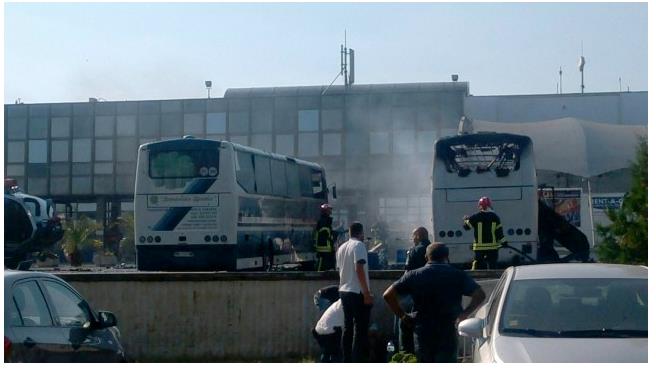
At least seven people are dead and dozens are injured after a suicide bombing targeting Israeli tourists vacationing in Bulgaria. The bus was carrying mostly Israeli youth when it exploded on Wednesday July 18, 2012, police and hospital officials say. Two pregnant women and an 11 year old child are among the injured.
The blast occurred shortly after someone boarded the vehicle transporting Israeli tourist from Tel Aviv around 5:00 PM local Bulgarian time. A total of 146 adults and 8 children were traveling with “Air Via” charter flight 392.
According to BBC News, Israeli Prime Minister Benjamin Netanyahu claimed “All the signs lead to Iran” and “Israel will respond forcefully to Iranian terror. Iran has made no public comments to the Israeli accusations.” Russian InterFax published an immediate denial of the accusation on behalf of right wing Shi’a Islamic terrorist organization Hezbollah.
This terrorist attack is unprecedented for any country member of the European Union. The targeted location at the Black Sea, and not the capital Sofia, is the closest possible border point between Europe and the Middle East. For the Bulgarian people, this attack is as traumatic as the 9/11 attack was for the American people.
Meanwhile, the United States condemned the deadly attack on Israeli tourists in Bulgaria, as White House press secretary Jay Carney said Carney declared that the US stands with the Israeli people and the people of Bulgaria.
In January, 2012 there were reports that Israel had asked Bulgaria to tighten security for Israeli tourists traveling by bus. This followed a reported discovery of a suspicious package found on a bus with Israeli tourists traveling from Turkey to Bulgaria. CIA Director Petraeus also visited Bulgaria on unannounced trip in June of this year.
Currently, the Bourgas airport has been closed and flights are being diverted to Varna. All airports, bus and train stations remain under a close watch after Bulgaria’s capital mayor called for tightened security measures.
Bourgas is a Black Sea port city just over an hour drive from our base location of Yambol, Bulgaria. The First Pentecostal church on the Balkans was founded in Bourgas in 1920 by Assemblies of God missionaries, Donisey Zaplishny and Ivan Voronaev and consecutively lead to the establishment of the Bulgarian Church of God in 1928.





Read more:
Netanyahu Vows ‘Forceful Response to Iranian Terror’: All signs are that Iran and Hizbullah are behind blast, on the 18th anniversary of the AMIA attack in Argentina that killed 85.
FOX News: Explosion targets Israeli tourists in Bulgaria
The TIMES: Israeli tourists killed in bus bombing
Novinite.com: Israeli Tourists’ Bus Blast in Bulgaria Terrorist Attack
CNN: Official: Three dead in Bulgaria bus blast
Haaretz: 7 reported killed in terror attack against Israelis in Bulgaria
BBC: Explosion hits a bus carrying Israeli tourists in Bulgaria
The Jerusalem Post: 3 dead in suicide bombing on Israeli bus in Bulgaria
AFP: Three dead in Bulgaria bus blast
Financial Times: Bulgaria bus blast kills Israeli tourists
White House: Statement by U.S. President on the Terrorst Attack in Bulgaria
U.S. Department of State: Statement by Secretary of State on the Attacks in Bulgaria
Our Ministry Map in Bulgaria
View Mission BULGARIA in a larger map
Why I Decided to Publish Pentecostal Primitivism?
Dony K. Donev
Pentecostal Primitivism is the title of my master’s thesis completed over a decade ago. It was significant to me because the research changed my perspective on Pentecostalism completely. Traditionally, we have assigned our faith paradigm to the Wesleyan Quadrilateral. But Pentecostal faith is much simpler and straight forward. The Pentecostal experience simplified the way we see our faith, being less in our own reach and persecution of reality, and more in God’s control; less me-centered and more God-centered. Although it originates from Wesley’s renewal theology of sanctification, Pentecostals are not methodistic as Wesleyanism tends to be. With this in mind, I wrote Pentecostal Primitivism as a proposal for a 21st century reclaiming of the original model of Pentecostal faith, which could be described in the simplified triangular formula of power, prayer and praxis.
Our Ministry Map in the USA
View GLOBAL MINISTRY in a larger map


