

Collapse of the Western Theological Corpus: Conquistadorial Colonial Theology Toward the Global South is Over

Bridges to people and culture do not work any longer because they never touch the water of troubled cross-cultural issues. For the same reason, contextual theology does not work any more – once faced with the deep cross-cultural crises of faith and conviction, it sinks with no hope.
We have long observed the collapse of the “Western Theological Corpus,” as Andrew Walls calls the structural problem in missions today. Main reason for its collapse is the failure to give answers to the theological questions emerging from the Global South. As a result, the colonial approach of doing missions, resonating in imperialistic cross-cultural ministry and ethnic conquest for assimilation of cultures, all have failed both the indigenous people and the mission sending agencies. Prayer has hence turned into a protest and prophecy for a new reality, where the encounter of missions is no less than the very cross-roads where we encounter God and others together.
Doing Missions in the Spirit in 2018
A Call for Righteousness over Orthodoxy
A Call to Righteousness over the Road Ahead

A Call to Righteousness over Italy
A Call to Righteousness over Spain
December 15, 2024 by Cup&Cross
Filed under Featured, News, Publication
A Call to Righteousness over Portugal
A Call to Righteousness over Yambol
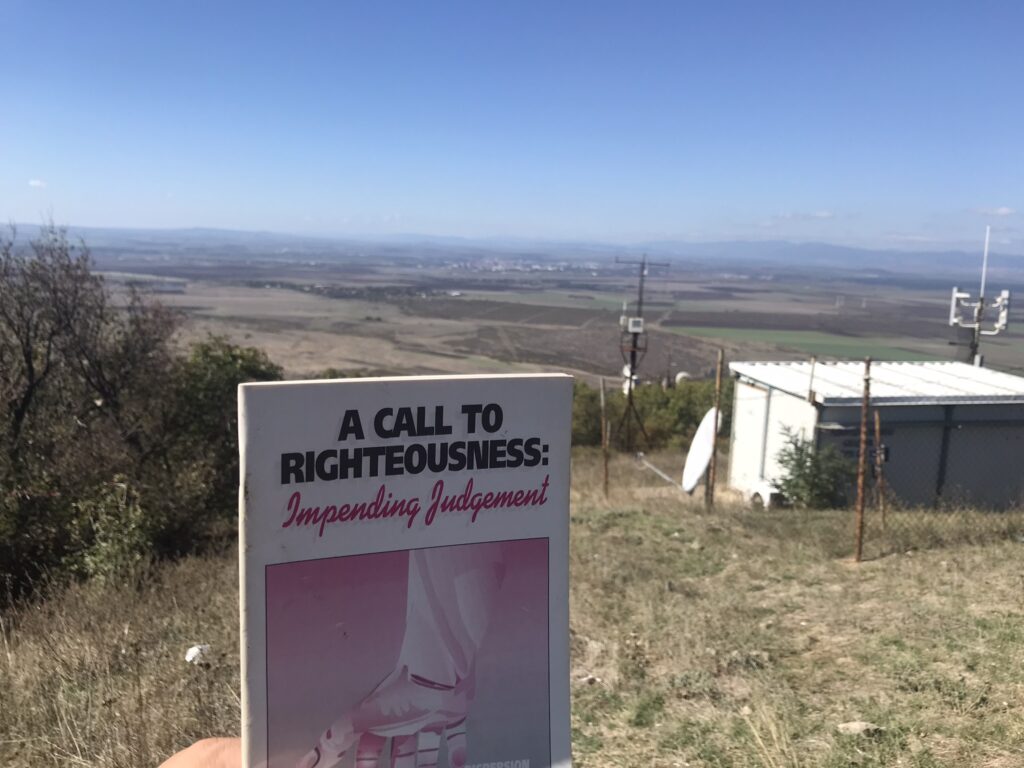
A Call to Righteousness over Bulgaria
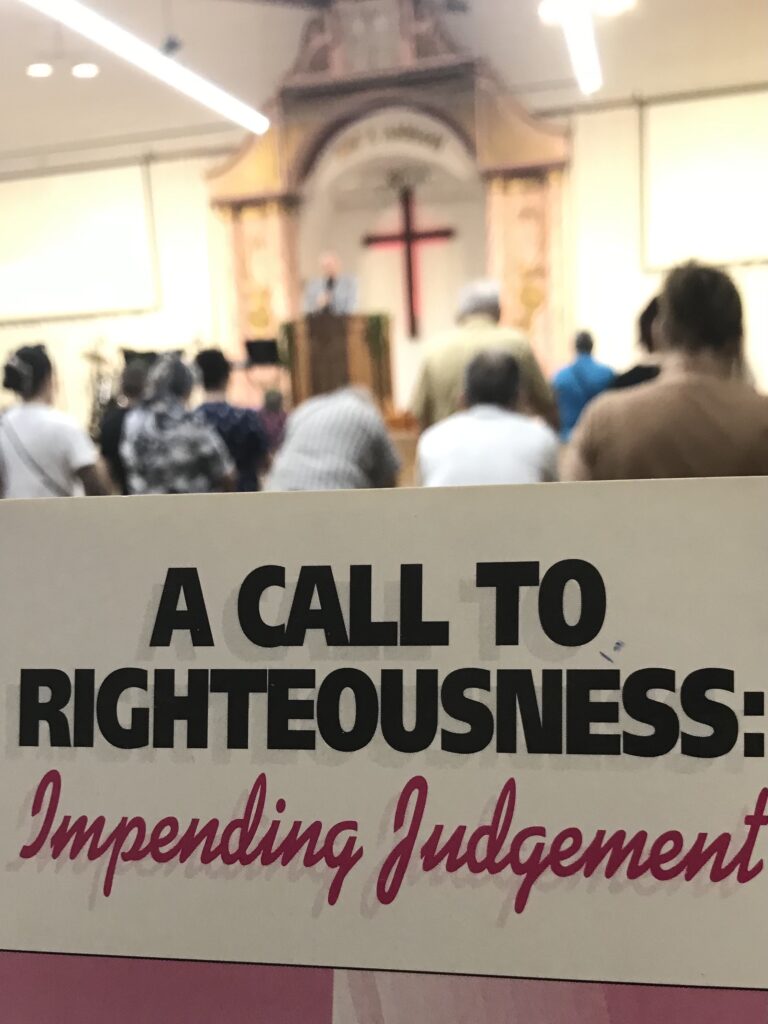
Wild Fire Inferno over Bulgaria
A Call to Righteousness over the Danube
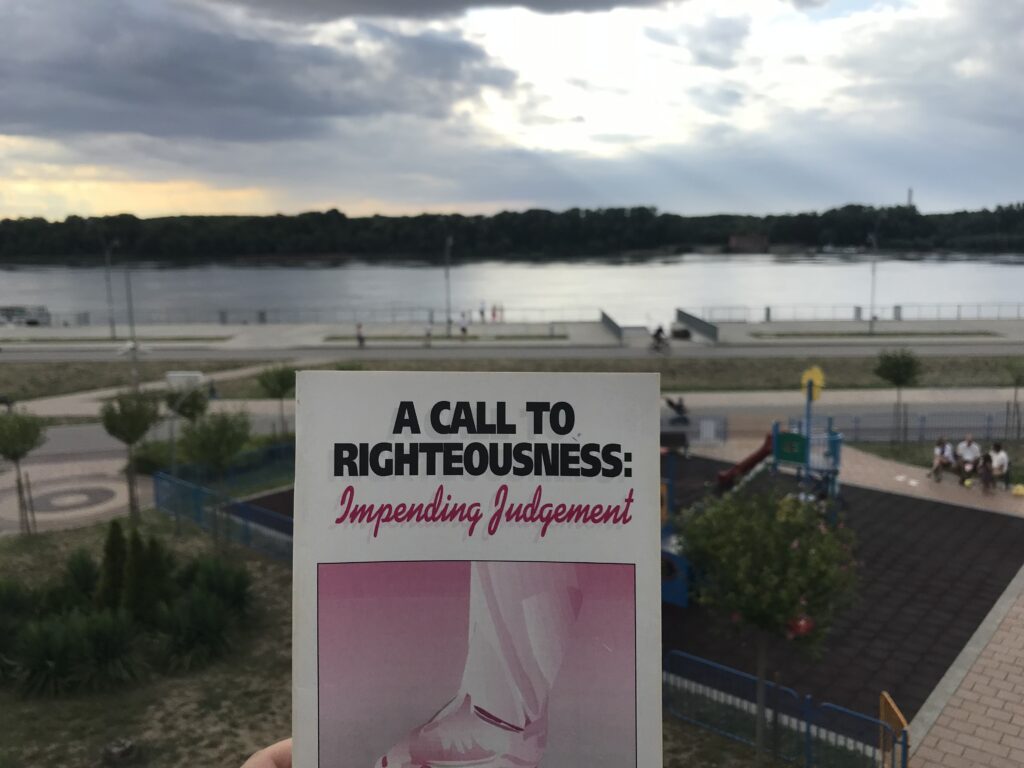
In 1994, as a prophetic warning to the nation some seven years before the 9/11 attacks, Dr. David Franklin wrote “A Call to Righteousness: Impending Judgment.” Drawing conclusions from Ezekiel’s chapter 12 desolation, destruction, dispersion, despair and prophetic hope in chapter 14, he warns that:
(1) When a nation persists in violence, the Sovereign Lord confronts and holds responsible
(2) When a nation forgets God, He allows for times of repentance
(3) If repentance is ignored, God will expose and execute judgment on an unfaithful nation.
The book continues with a call for international righteousness (p. 10) and a critique of the debt-free myth proclaiming a time of economic shift (p. 11-12). Remember, this warning was written two decades before anyone in America had mentioned foreclosure, crises or global economic crises. But my favorite chapter still is the interpretation of Ezekiel’s vision of the departure of the Glory of God (p. 20-21).
 I read this book back in 1999 and frankly had forgotten about it until 2011 when, at a young ministers training camp in the mountains of Bulgaria, we experienced what we consider the most genuine appearance of the Glory of God in our whole ministry. We wrote about it then and presented our observation at the 2012 Missions Conference at the Good Shepherd Church of God inPahokee,FL. The four points of our observation carry a tremendous prophetic resemblance to what Dr. David Franklin had proclaimed in his book 18 years ago:
(1) Every time God renews His covenant with His people, He shows His presence.
(2) We know that God is present in the covenant, because He shows His glory. It happened to Moses and his generation. And it also happened to Solomon several hundred years later.
(3) When a generation looses the vision of the Glory of God, God begins renewing His covenant again with a new generation.
(4) God is not satisfied with a people who know the signs and the blessings of the covenant. He rests not until He is revealed as the God of the covenant.


