

The (un)Forgotten: The Story of Rev. Ivan Voronaev’s Children
![51Sa1IcA8OL._SY344_PJlook-inside-v2,TopRight,1,0_SH20_BO1,204,203,200_[1]](https://cupandcross.com/wp-content/uploads/2014/03/51Sa1IcA8OL._SY344_PJlook-inside-v2TopRight10_SH20_BO1204203200_1.jpg) The (un)Forgotten: Story of the Voronaev Children
The (un)Forgotten: Story of the Voronaev Children
Missions & Intercultural Studies
Dony K. Donev, D. Min.
Cup & Cross Ministries International
Presented at the 40th Annual Meeting of the Society for Pentecostal Studies
Our presentation at the 2010 SPS meeting in Minneapolis opened a door for discussion of early missionaries to Eastern Europe with a special focus on Rev. Ivan Voronaev. But the story and ministry of Rev. Ivan Voronaev cannot be separated from his main supporter and partner in the ministry – his wife and children.
During the time of original research, it became obvious that Ivan Voronaev was successful in the ministry both in the United States and Europe only through the obedience of his family. They followed his call for missions, leaving behind the comfort of life in America. The Voronaevs sacrificed the future of their children for the unknown reality of Russia’s greatest depression. The strive for survival followed the imprisonment of both parents along with the virtually impossible task to re-immigrate from Russia and reunite in the United States, and the constant struggle to save their parents from certain death in Stalin’s consecration camps even when all hope was lost.
The Voronaevs’ story presents an early historical case study on Pentecostal missionaries and their children, not only as second generation believers, but as second generation Pentecostal immigrants as well. This example is particularly interesting since it combines both mission and immigration, as integral parts of the Pentecostal identity at the dawn of the movement. To add to this there is the relationship between missionary families and the mission-sending agency, on this occasion being the Missions Department of the Assemblies of God and in part the Russian Evangelical Diaspora.
In this context, the research on the Voronaev family has three distinct parts: (1) life in Russia and the imprisonment of the parents, Ivan and Katherine Voronaev, (2) back to America under the care of Assemblies of God Missions’ Department and (3) and the after years, with a special focus on the life and ministry of the oldest of the Voronaev’s children, Paul.
The research will utilize the available archive information at the Assemblies of God archives in Springfield, MO, as well as some Russian library material from Moscow and Kiev, which have become available after the presentation of our 2010 Voronaev paper. Special attention will be given to Paul Voronaev’s personal correspondence after his return to the United States and subsequent papers, relative to the story of the Voronaev’s children, published by him in later years. As Rev. Ivan Voronaev’s personal end is yet unknown, it is our hope that story of the Voronaev children, will provide a much needed closure to the life and ministry of one of the earliest Eastern European missionaries in Pentecostal history.
Master’s Degree of Chaplaincy Ministry in Bulgaria
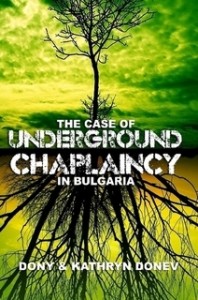 The Master’s Degree of Chaplaincy Ministry was intended to:
1) Present a master’s level course work by the Bulgarian Chaplaincy Association and its educational initiative to the Bulgarian Evangelical Theological Institute (BETI) and the Bulgarian Ministry of Education.
2) Be received and approved by BETI as a master’s level educational program on a national level.
3) Aid BETI’s faculty with an international team of qualified professors for the completion of the educational process.
4) Satisfy the educational requirements for a chaplaincy vocation properly contextualized for Bulgaria in association with secular educational institutions, if necessary.
5) Provide the necessary knowledge and practical skills to people with a call on their lives for chaplaincy ministry
- Chaplaincy Conference and Master’s of Chaplaincy
- Chaplaincy Course in Yambol, BULGARIA
- Bulgarian Chaplaincy Association Annual Meeting
- Family Seminar for Military Men and Women
- Cup & Cross Ministries in Church of God Publications
- The Case of a NATO Chaplaincy Model within the Bulgarian Army
- 10 Years of Military Ministry in Bulgaria
- Bulgarian Chaplaincy Associations Recognized by U.S. Department of State
- National Chaplaincy Conference
- Bulgarian Chaplaincy Association Gains Legal Status
- Chaplain Dees Visits Bulgaria
- Chaplaincy Course at the Bulgarian Evangelical Theological Institute
- Bulgarian Chaplaincy Association
- Meeting the NATO Chaplain
- National Chaplaincy Meeting
- Chaplaincy Developments in Bulgaria
- U.S. Bases in Bulgaria
- National Chaplaincy Meeting
- Chaplaincy in Bulgaria
- HEALTHCARE CHAPLAINCY IN BULGARIA
- Chaplaincy in Bulgaria
- Mission Bulgaria
X Youth Event Reinvisioned 2014
 X 7.7.7 @ Black Sea https://cupandcross.com/x-youth-event-at-the-black-sea-2/
X 8.8.8 @ the Heart of Bulgaria https://cupandcross.com/x-2008-in-the-heart-of-bulgaria-a-new-level-of-ministry/
X 9.9.9 @ Gipsy Ghetto of Samokov https://cupandcross.com/2009-x-event-transforming-the-status-quo-2/
X 10.10.10 @ Cyprus https://cupandcross.com/x-10-10-10-cyprus-reflection/
X 11.11.11 @ Chicago https://cupandcross.com/x-11-11-11-youth-event-afterglow/
X 12.12.12 @ End Time Revival https://cupandcross.com/12-12-12-revival-at-the-end-of-the-world/
New Voices from the Past: The Untold Story of the Life and Ministry of Rev. Ivan Voronaev
New Voices from the Past: The Untold Story of the Life and Ministry of Rev. Ivan Voronaev
Missions & Intercultural Studies
Dony K. Donev, D. Min.
Cup & Cross Ministries International
Presented at the 38th Annual Meeting of the Society for Pentecostal Studies
The name Ivan Efimovich Voronaev is of a central importance for the development of Pentecostalism in Communist Russia and its Eastern European satellites. Voronaev was saved in his early life in Russia and then became a powerful Baptist minister, but after being persecuted for preaching the Gospel, in 1912 he immigrated with his family through Japan to the United States. Voronaev’s ministry touched both Baptist and Pentecostal churches from California and Washington to New York and Connecticut, before he undertook the difficult journey across the Atlantic, through Constantinople and Bulgaria to reach his native land. Voronaev established Pentecostal churches along the way laying the foundation of Pentecostalism in Eastern Europe. Although his story has been told many times, very little has been documented about his early ministry before he converted to Pentecostalism and launched what would become an international Pentecostal campaign reaching people from Seattle to Siberia (going eastbound). This present study reviews Voronaev’s ministry based on documents from the early period of his life, examining his connections with Baptist and Assemblies of God denominations in the United States. It then presents information about his mission trip to Eastern Europe, with a special focus on his stay in Bulgaria and the foundation of his work in Russia. But long before finding his place in the ministry, the story of Ivan Voronaev begins with his personal quest for identity in ministry, beginning with a search for a name…
Sunday School program from the Declaration of Faith for the Bulgarian Church of God
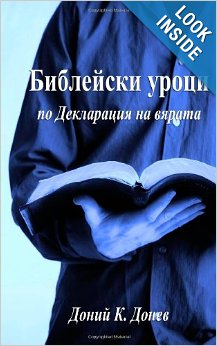 Sunday School program from the Declaration of Faith for the Bulgarian Church of God
The Sunday School program for the Bulgarian Church of God was envisioned at the end of 2000. Because of the lack of continuity with Sunday School programs taught in the time before the communist Regime and general unavailability for translated curriculum, we created the program from scratch as follows:
2001 Taught first series at the Capital Church of God in Sofia
2002 Presented the newly published Sunday School to the General Presbyters Council of the Bulgarian Church of God
2003 Taught complete Sunday School series at Church of God in Pravetz Bulgaria
2005-2007 Over 40,000 copies of the Sunday School program were printed and distributed among the Church of God congregations
2010 Taught the Sunday School series in the Church of God in Ruse, Bulgaria
2011 Taught all 14 modules of the Sunday School series in the Church of God in Gabrovo, Bulgaria
2013 Taught the modules of the program via the Mobile Bible School
March is for #MISSIONS
![missions-2014[1]](https://cupandcross.com/wp-content/uploads/2014/03/missions-20141.jpg)
Disciple to the Nations: Matthew’s Missiology
MISSIONS TEST (2012)
MissionSHIFT (2011)
Missions for the Third Millennium (2009-2010)
The Disciple to the Nations: Matthew’s Missiology
MISSIONS TEST (2012)

This is a re-post of popular articles on Missiology from 2012:
Missions Test 1: Mission, Method & Message (2012)
Missions Test 2: Means, Motive & Opportunity (2012)
MISSIONS TEST 3: Missionary Testament (2012)
MissionSHIFT (2011)
![201311_Mission_Shift_580x272[1]](https://cupandcross.com/wp-content/uploads/2014/02/201311_Mission_Shift_580x2721.jpg)
This is a re-post of popular articles on Missiology from 2011:
MissionSHIFT (Part 1): Paradoxes in Missions (2011)
MissionSHIFT (Part 2): Free Will Missions (2011)
MissionSHIFT (Part 3): WebMissions – The Good, The Bad and The Ugly (2011)
Missions for the Third Millennium (2009-2010)
This is a re-post of popular articles on Missiology from 2009-2010:
M3: Missions for the Third Millennium – A Public Position (2010)
8 Simple Rules for Doing Missions in the Spirit (2009)
Church of God Eastern Europe Missions: Leadership, Economics and Culture (2009)


