

Rapture of the Church
Revelation at River Hills
Revelation Revealed
Revelation Revealed
- 20 SIGNS of the LAST DAYS (revised: May, 2014)
- Spiritual Problems and Solutions from the 7 Churches of Revelation
- Rapture of the Church (A Reformed Theological Perspective)
- The Great Tribulation
- Daniel and Revelation
Pentecostal and Charismatic Journals
August 10, 2014 by Cup&Cross
Filed under Featured, News, Publication

- Canadian Journal of Pentecostal-Charismatic Christianity published by the Canadian Pentecostal Research Network
- PentecoStudies Online Journal for the Interdisciplinary Study of Pentecostalism and Charismatic Movements. Published under the auspices of GloPent since 2006.
- Encounter from the website: “The Assemblies of God Theological Seminary is proud to introduce Encounter: Journal for Pentecostal Ministry, a scholarly publication intended to serve the Church of Jesus Christ by bringing transforming theological and professional insight to bear on the practice of ministry in the Pentecostal tradition.” Numerous online articles and book reviews, with additional resources promised for the future.
- UBS Journal Published since 2003 by Union Biblical Seminary in Pune, India.
- Asian Journal of Pentecostal Studies
- Australasian Pentecostal Studies from Southern Cross College in Australia
- Cyberjournal for Pentecostal-Charismatic Research
- Current issue of Enrichment: A Journal for Pentecostal Ministry from the Assemblies of God
- Journal of Asian Mission
- Journal of the European Pentecostal Theological Association Published by the European Pentecostal Theological Association.
- Journal of Pentecostal Theology Abstracts from the journal are available online. From the Publisher: The Journal of Pentecostal Theology is the first academic serial to publish constructive theological research from a Pentecostal perspective on an international scholarly level.
- Mission and Ministry Journal published by Trinity Episcopal School of Ministry
- PNEUMA: The Journal of the Society for Pentecostal Studies
- Reconciliation, a journal for PCCNA (Pentecostal/Charismatic Churches of North America) edited by Harold D. Hunter and Cecil M. Robeck, Jr. In order to view this issue, one must have the freely distributed Adobe Acrobat Reader. This file is 457K. Hyperlinks may be found throughout the document, but particularly on the title page.
- Renewal Journal The Renewal Journal is published twice a year in Australia for people interested in renewal and revival. Many articles by diverse authors.
Online Pentecostal Academic Journals
Asian Journal of Pentecostal Studies (AJPS) – associated with the Asia Pacific Theological Seminary in the Philippines (Assemblies of God Philippines) – volumes from 1998-present – FREE ONLINE
Australasian Pentecostal Studies (APS) – 1999-present – FREE ONLINE
Canadian Journal of Pentecostal-Charismatic Christianity – 2010-present – FREE ONLINE
Cyberjournal for Pentecostal-Charismatic Research – 1997-2013 – FREE ONLINE
Encounter: Journal for Pentecostal Ministry – associated with the Assemblies of God Theological Seminary – volumes from 2004-present – FREE ONLINE
Journal of the European Pentecostal Theological Association (JEPTA) – associated with the European Pentecostal Theological Association – volumes from 1981-present – FREE ONLINE through 2009 / Members access to 2010-present
Journal for Pentecostal Theology (JPT) – volumes from 1992-present – Members access only
The Pentecostal Educator – associated with the World Alliance for Pentecostal Theological Education – volumes 2014-present – FREE ONLINE [FORTHCOMING]
PentecoStudies: Online Journal for the Interdisciplinary Study of Pentecostal and Charismatic Movements – 2004-present – subscription
Pneuma: Journal of the Society for Pentecostal Studies – volumes from 1979-present – Members access only
PneumAfrica: The Online Journal of African Pentecostal Christianity – associated with the Association for Pentecostal Theological Education in Africa – volumes from 2013-present – FREE ONLINE
Pneuma Review – volumes from 1998-present – FREE ONLINE
I have intentionally not included the more pastoral and popular publications: Paraclete (1967-1995), Enrichment Journal (1995-present), or Enrich: A Journal for Pentecostal Ministry.
[CURRENT ON JULY 19, 2014]
Arrest and Imprisonment of Ekaterina Voronaev (1933)
The (un)Forgotten: Story of the Voronaev Children
Missions & Intercultural Studies
Dony K. Donev, D. Min.
Presented at the 40th Annual Meeting of the Society for Pentecostal Studies
“On one miserable cold, dark night in March 1933, Mother had gone to bed sick. After midnight a loud knock at the door awakened us. Three Secret Police officers entered and one of them shouted, “Citizen Ekaterina Voronaeff, you are under arrest.” Mother hurriedly dressed. My little brother and sister awoke and began to cry as they saw the police ripping our clothes and mattresses …. I can still see my mother standing in the middle of that awful room with graying hair, lips trembling on her sweet pale face, and her bright blue eyes filled with tears. Heartbroken, Timothy and Hope sobbed a last loving good-bye as our dear mother was dragged away to prison.”
![51Sa1IcA8OL._SY344_PJlook-inside-v2,TopRight,1,0_SH20_BO1,204,203,200_[1]](https://cupandcross.com/wp-content/uploads/2014/03/51Sa1IcA8OL._SY344_PJlook-inside-v2TopRight10_SH20_BO1204203200_1.jpg) Ekaterina Voronaev would spend 24 long and horrible years in prison before seeing her children again. After being arrested on April 10, 1933 she spent 15 months in the Odessa prison interrogated constantly, 18 hours straight at times, and was sentenced to life imprisonment in mid-Asia. Petition sent to the Aid to Political Prisoners led by Ekaterina Peshkova (wife of Russian author Maxim Gorky) had little effect on the situation. Her children were allowed to see her only once, before she was sent to Siberia.
Ekaterina Voronaev would spend 24 long and horrible years in prison before seeing her children again. After being arrested on April 10, 1933 she spent 15 months in the Odessa prison interrogated constantly, 18 hours straight at times, and was sentenced to life imprisonment in mid-Asia. Petition sent to the Aid to Political Prisoners led by Ekaterina Peshkova (wife of Russian author Maxim Gorky) had little effect on the situation. Her children were allowed to see her only once, before she was sent to Siberia.
As both Voronaev parents were now in prison, and their American born boys had been safely returned, Paul, Hope and Timothy remained in Communist Russia. They were all born there, but this was hardly their country. Their parents have travelled the world and returned to their motherland only to find out it had become foreign to them. Paul was born somewhere on the Eastern Asian border, Hope and Timothy in Odessa, but now that they had no city on earth to call home and no one left to look after them. These children truly belonged to Heaven and God…
Internationalization vs. Naturalization of the Church of God
 In the beginning of 21st century, when perspective and persona are changed by postmodern thinking, church planting is most important. Providing a strategy for church planting and growth is to serve as a roadmap to success for Bulgarian church leaders and people who have dedicated their lives to making a difference within the community of believers. It is our prayer that such strategy becomes part of the Great Commission given to the Christendom.
The process of transformation of Bulgarian communities in the United States toward a more contemporary and functional model of ministry will inevitably reflect on the process of internalization, which is taking place within the Church of God. The natural birth of the church, however, as described by the Bible does not include a process of internationalization in which one nation creates an environment for other nations in order for better representation. On the contrary, the Bible speaks of ecclesial equality represented by many ethnic groups naturalized in the body of the church. Naturalization in the church brings both equality and unity among its members. Internalization, respectively, resembles a process of mechanical assembling of a large mass of people under one name without giving them a unique nature that characterizes the community.
Further recognition of the ethnic groups of non-American-born believers represented within the Church of God in the United States will provide the ability to naturalize its infrastructure as a body, rather than artificial over force to internationalize a body of an already ethnically diverse community. In the beginning of the 21st century such strategy will give the Church of God the opportunity to successfully target cross-cultural communities across the United States and produce church growth in metropolis and large urban developments, where the strategies for growth based on its historical dominating rural culture have proven long-ineffective. Finally, such detailed focus on cross-cultural ministries will assure the productive attention not only to large ethnic groups, but also to small and growing cross-cultural communities, which will continually assure the cultural and ethnic diversity of the Church of God and will provide it with a realistic international appearance.
Excerpt from Analytical Overview and Church Planting Proposal for Bulgarian American Congregations Considering Cultural, Economical And Leadership
Dimensions
Bulgarian Cabinet resignation – what happens next?
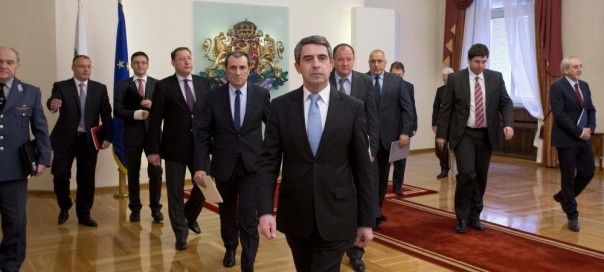
Plamen Oresharski formally resigned as prime minister on July 23, after weeks of speculation and – in certain quarters – anxiety about whether he would play his part in carrying out the agreement reached by political parties to hold early parliamentary elections.
The Wall Street Journal: Bulgaria’s Prime Minister Plamen Oresharski late Wednesday submitted his resignation to parliament, a move that will lead to his entire cabinet stepping down after a tumultuous year marked by public protests, a banking crisis and confrontations with the European Union. [more]
Bulgarian Outgoing Ministers React to Cabinet Resignation: Most of Bulgaria’s outgoing ministers have assessed their work in office as “positive” and have voiced warnings the next government would face a number of issues. [more]
Deutsche Welle: Socialist-backed Oresharski Cabinet resigns in Bulgaria. Bulgaria’s prime minister has resigned ahead of snap elections to end months of political turmoil in the European Union’s poorest country. The legislature as expected approve the resignation on Thursday. [more]
New York Times: The fate of one of the biggest banks in the European Union’s poorest country, Bulgaria, remains hostage to a political crisis, which caused the prime minister’s government to resign on Wednesday. [more]
BBC: Bulgaria prime minister quits to allow snap election. The embattled Socialist prime minister of Bulgaria has resigned after only a year in office to allow for an early election on 5 October. [more]
MORE to COME:
- August 5, 2014 – President Plevneliev announces the line-up of the caretaker Cabinet, which will have reduced powers and whose main task will be to prepare and hold the snap elections. This will be the second caretaker government appointed by Plevneliev, who was elected on the GERB ticket in 2011 – in March 2013, he appointed ambassador Marin Raykov as caretaker prime minister.
- August 6, 2014 – the 42nd National Assembly is officially prorogued by presidential decree.
- October 5, 2014 – Bulgaria holds early parliamentary elections.
HISTORY of EVENTS:
- Bulgarian Elections 2013
- Election Results in Bulgaria 2011
- Election’s Perspectives for Bulgaria
- Bulgarian Elections 2009
Bulgaria’s Cabinet to Resign
The Oresharski cabinet will resign on July 23, Wednesday, Bulgaria’s Minister of Economy Dragomir Stoynev told Darik yesterday.
The minister emphasized that the faster the early elections, the better, because “the political crisis could affect the economy.” He also said, however, that before its resignation, the current government has to choose Bulgaria’s next EU Comissioner, who will not be withdrawn by the caretaker government.
Stoynev expressed that current Bulgarian Commissioner Kristalina Georgieva unfortunately has no chance of being nominated as High Commissioner for Foreign Affairs despite the strong support from Prime Minister Oresharski. “I’m pretty sure that her candidacy will not succeed” he noted by refusing details. As a report on the work done last year in office, Stoynev stated that Bulgaria had growth of above 1% – which has not happened since the crisis from 2009. “The Cabinet created 40,000 jobs, which has been unprecedented in the last five years,” he commented.
Minister Stoynev is against the current state budget update attempts, as he deems that unneccessary. In his opinion, the budget of NHIF also does not need to be updated. “Pouring money into an unreformed system of mismanagement will not solve the problem,” he said and recommended to look for internal reserves by restructuring the health budget.
Prophetic and Persecuted Movement
![51DUWeyraBL._SY344_PJlook-inside-v2,TopRight,1,0_SH20_BO1,204,203,200_[1]](https://cupandcross.com/wp-content/uploads/2014/04/51DUWeyraBL._SY344_PJlook-inside-v2TopRight10_SH20_BO1204203200_1.jpg) Since a social movement that purposes liberation of the individual is always rejected by the present political and economic powers, Pentecostalism arises and develops in the midst of constant persecution and resistance. The constantly present struggle against evil, wrong and unrighteousness is the power that moves Pentecostalism to its final purposes. Once persecution disappears, Pentecostalism loses its original power and turns to a nominal religious organization, which continues to function and exist, however, outside the boundaries of its original purpose.
Since a social movement that purposes liberation of the individual is always rejected by the present political and economic powers, Pentecostalism arises and develops in the midst of constant persecution and resistance. The constantly present struggle against evil, wrong and unrighteousness is the power that moves Pentecostalism to its final purposes. Once persecution disappears, Pentecostalism loses its original power and turns to a nominal religious organization, which continues to function and exist, however, outside the boundaries of its original purpose.
The theology of the Persecuted Church is a theology of martyrdom. The context of persecution is a constantly present formational factor in Pentecostalism worldwide, and as such it is a universal characteristic of the movement. Only as such can Pentecostalism act in its God-given prophetic authority. In the same prophetic power in which John prophesies of the coming Baptiser with the Holy Spirit, the Early Pentecostals preached about the Fire from Heaven prior to the actual experience of the Holy Spirit baptism. The message of the movement then becomes a prophetic utterance under which the movement grows and develops to the point of fulfillment of the promise given by God.


