

2004 Annual Ministry Report
Click on the picture do view full report (PDF)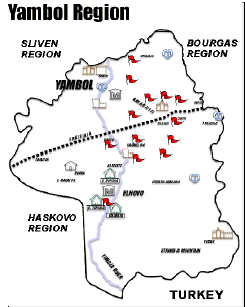
Тhe following is the 2004 annual report of the work of our ministry in Bulgaria. We thank you for your prayers as our work in Bulgaria keeps growing.
Statistics 2004:
Churches: 13 (plus 6 project churches)
Team: 10 (plus 6 in training)
Monthly Average Traveling: 781 miles
Monthly Average Services: 76 (over 95 services per month during the warm periods. The number of services about are 50 during the winter season due to traveling difficulties).
Ethnic Minorities in Bulgaria
 The country of Bulgaria was established in 681 A.D. on the Balkan Peninsula. Through the centuries of its existence, ethnic and religious groups have crossed its territory, reforming its borders and creating a multicultural context where more than 100 languages and dialects are spoken. Today the Bulgarian people live along with several ethnic minorities in the clash between Christianity, Muslim and Judaism.
Bulgaria could be referred to as a country of emigration, since there were several major migration waves mostly toward Turkey during the 20th century. Nevertheless, the population’s ethnic composition remains relatively homogeneous, 85.7% being Bulgarians, yet characterized by ethnic and religious diversity among the rest of its population. The two major ethnic groups are Turks and Gypsies, which represent 9.4% and 3.7% of the Bulgarian nation. The number of Jews has decreased tangibly both in absolute and relative figures due to a massive emigration of about 45,000 people to Israel in 1848. It is worth mentioning that Bulgaria is one of the few European countries which preserved its Jewish community during the World War II. Not a single Jew from Bulgaria was deported to Nazi concentration camps.
As regards religion and language, Orthodox Christianity and Bulgarian are the most widespread ones. The huge majority of Bulgarians (and around 60% of Gypsies plus 1% of ethnic Turks), declares adherence to the Christian cultural tradition. The second significant religion is Islam, professed by most Turks, all Bulgarian Muslims, and 39% of the Gipsy/Roma population. All Bulgarians speak their mother tongue. Almost the same is true for the Turks who speak Bulgarian as a second language beside Turkish (one third of their families even speak Bulgarian at home).
The Turks are the largest minority group and at the same time the one with the highest degree of ethnic consciousness. They are basically concentrated in two regions – in northeastern Bulgaria and in the Rhodopes region at the Turkish frontier. The Turkish population is mostly rural: 68 out of 100 people live in villages and 32 in cities.
The Turkish Minority
The Turkish community in Bulgaria is conditioned by two opposite factors: a birth-rate higher than the national average and numerous, massive emigration waves. The first emigration of Turkish people occurred after Liberation from the Turkish yoke. In the 1878-1912 period, Bulgaria saw the exodus of 350,000 Muslims (Turks, Bulgarian Muslims, Circassians, and Tartars). Roughly 100,000 of them had emigrated by 1884, 250,000 after unification of Eastern Romenlia and the Bulgarian Principality from 1885 till World War I. Until 1934, the average annual number of emigrants was 10,000, and after the nationalistic coup d’etat in 1934 it became 20,000. The next massive wave of emigration occurred at the beginning of the 1950’s: 155,000 persons. Another 115,000 left the country after the signing of the Bulgarian-Turkish Agreement on reuniting separated families in 1968. The emigration peak was in 1989-1992 when more than 300,000 left the country.
The Roma Community
The third largest ethnic and cultural group in the country is the Gypsies (or Roma). According to the last census, their number is 313,396. Analysts insist that these figures should be handled carefully because, as they say, 30% of the Gypsies prefer to declare external ethnic self-identification. Their larger part is from the Muslim Gypsy circles that present themselves as Turks; a part of the Christian Gypsies identify themselves as Bulgarians, and a third small part – as Wallachs (Romanian origin). The variety of empirical references of self-identification is manifested in regard to both the ethnic adherence and denomination, and to the language. Most Gypsies speak more than one language at home, the most used being the Gypsy language (67%), followed by Bulgarian (51%), and Turkish (34%). The situation of the Roma population in the country is extremely complicated. Their living conditions are more than poor. Despite the fact the at the end of 1970’s about 15,000 Roma families obtained long-term, low-interest loans to construct homes, a lot of them are still living in poor quarters resembling ghettos. The Roma child mortality rate is much higher than that of the Bulgarians: 240 per 1,000 versus 40 per 1,000, and some diseases like tuberculosis is three times more frequent. The degree of unemployment is three times higher than the national average. The Roma community is characterized by a lower level of education, which makes its representatives less competitive. There are strong prejudices against the Gypsies shared by the Bulgarian majority and other major minority groups. Unfortunately, the media and especially some nationalistic-oriented newspapers play a considerable role in reproducing and expanding these negative attitudes by emphasizing that Gypsies have a higher crime rate than other groups.
Some Special Cases (Pomacs and Macedonians)
Both groups represent special cases in terms of history, magnitude, and impact on political life. More significant are the Bulgarian Muslims (‘Pomaks’) because of their number and ‘borderline’ position between the Bulgarian majority, with which they share a common mother tongue, and the Turkish minority whose religion they profess. Bulgarian Muslims are ethnic Bulgarians who were converted to Islam during the Ottoman yoke. Their number was approximately 20,000 immediately after restoration of the Bulgarian state in 1878, and by the 1920’s reached 88,000. The sharp increase in figures between 1910 and 1920 was due to re-integration of Bulgaria with newly liberated territories in the Rhodopes and Rila regions. Present day their number is estimated between 200,000 and 280,000. In spite of their ethnic origin, Bulgarian Muslims’ historical fate is identical in many respects to that of other Muslim groups. Bulgarian Muslims have been subject to influences for assimilation in both possible regards. On one hand, study of Turkish language has been stimulated in order to integrate all Muslims into Bulgarian society as a whole. The result is that the Turkish language is perceived as a mother tongue by some 6% of community members.
The issues of ‘Macedonians’ are not any less complicated or controversial. One thesis defines them as a regional community based on the argument that they are an Orthodox population speaking a Bulgarian dialect in common with Bulgarian history, traditions, and values. Based on the right to self-determination, a contrary thesis defines them as a separate ethno-cultural community. Both views have political expression in the activities of the Internal Macedonian Revolutionary Organization -VMRO (a party seated in Parliament), and the United Macedonian Organization – OMO Ilinden (an unrecognized and unregistered separatist movement). Bulgarian policy towards ‘Macedonians’ has swayed between two extremes. In the 1940’s, much support was given to the idea of a socialist-oriented Balkan Federation (to includes all Balkan states and thus to resolve every and each ethnic and religious problem in the area). The population of the Pirin district bordering FRY Macedonia and Greece was stimulated, even forcibly, to identify itself as ‘Macedonians’. According to the 1956 census, 187,789 Bulgarians declared themselves as ‘Macedonians’. Later on, the policy altered sharply, and ‘Macedonians’ disappeared from official statistics. They have not turned up there till today.
The Bulgarian Language
The Bulgarian language belongs to the South Slavic branch of the Slavic languages and uses the Cyrillic alphabet: The history of the language covers three periods: old (9th century – 11th century), middle (12th century-14th century), and modern (15th century through present day). The modern literary language was formed during the Bulgarian National Revival (18th-19th centuries).
The Bulgarian language is unique among the Slavic languages for several reasons. The definite article is added as a suffix, coming after the noun. It has lost the case system from Common Slavic and prepositions have replaced cases to show the relationships between parts of a sentence. The language has 9 tenses, but the infinitive verb form no longer exists.
The Cyrillic alphabet was developed in 9 century by the two Byzantium missionaries Cyril and Methodius. It is the alphabet on which the modern languages of Russia, Bulgaria, Yugoslavia and of the former Soviet republics are based.
Before the 9th century Bulgaria and other parts of the area around the Mediterranean and Black Sea, were parts of the Roman Empire. While the Romans were losing power (3rd to 4th Century), tribes from Asia started an invasion of Europe. One of these tribes, called the Bulgars, reached this area and gradually mixed with the local population. The Bulgar king united all the different tribes into the first Bulgarian empire in 681.
The Bulgarians were the first people to use the Cyrillic alphabet immediately after its inception in the 9th century. The invention of the Cyrillic alphabet is attributed traditionally to Sts. Cyril and Methodius, Byzantine missionaries, whose purpose was to translate the New Testament into the then-common language of the Slavic peoples. However, the two brothers created the Glagolithic alphabet, not the Cyrillic. It was their disciple Saint Climent, the Bulgarian archbishop of the town of Ohrid, who invented the simpler Cyrillic alphabet and named it in honor of his teacher. The Cyrillic alphabet, like the Roman, stems from the Greek; additional characters, however, were devised to represent Slavic sounds that had no Greek equivalents. From Bulgaria, the cultural center of the medieval Slavs, the Cyrillic alphabet spread to the neighboring countries, such as Serbia, and to the far-lying Eastern Slavs, the Russians, the Ukrainians, and the Belarussians. The Cyrillic alphabet, in various forms, is used currently in Russian, Ukrainian, Belarussian, Serbian, and Bulgarian, but not in Polish, Czech, Slovak, or Slovenian, which are written in modified Roman alphabets.
Since Cyril and Methodius were from the city of Thessaloniki, they chose the dialect of the Bulgarian Slavic tribes residing in the area as the foundation for the creation of the new alphabet. Hence the language written in this alphabet is known as Old Bulgarian, Old Slavonic or Old Church Slavonic and is still used as a liturgical language in Eastern Orthodox Slavic churches. For most of the middle ages Old Bulgarian was the language of the ecclesiastical literature and of official and diplomatic documents of the Eastern Orthodox Slavs.
The Modern Bulgarian Period started in the 15th century, but the modern literary language, which is quite different from Old Bulgarian, formed only during the 19th century. Until that time St. Climent’s original Cyrillic alphabet, containing 44 letters for 44 sounds, had been used; however, by the 19th century the Bulgarian sound system had changed dramatically and contained fewer sounds. That necessitated an alphabet reform which reduced the number of letters used from 44 to 32; this modified alphabet was used until the Orthographic reform of 1945.
Revival Sermon Center
Since 1996, through the internet we have been able to provide sermons for private and public use. We are delighted to announce that in 2005 the Sermon Center will be able to broadcast Gospel messages in audio format as well. Several pilot messages have been already published as we are working on enhancing the media experience. We pray that the published messages become a blessings to you and your congregation.
Happy Thanksgiving
 The Scripture advises us to give thanks to God at all times and on all occasions. It also gives thanks itself: Genesis gives thanks for the creation. Exodus gives thanks for the deliverance. Leviticus gives thanks from generation to generation. Numbers gives thanks for each generation. Deuteronomy gives thanks for the law. Joshua gives thanks for the Promised Land. The historical books give thanks because His mercy endures forever. Psalms give thanks with a song. Proverbs give thanks with a word of wisdom. The Prophets give thanks for the coming Messiah.
The Gospel give thanks for the Messiah who has come to the world. Acts give thanks for the Holy Ghost. The Epistles give thanks for we were delivered from sin, saved, sanctified, baptized, adopted to the family of God, healed, restored, blessed and wonderfully placed on the firm rock who is the Christ. Revelation gives thanks for He is coming again to deliver us from the trials and tribulations of the present world and to bring us to the abundant life in the Heavenly City.
I am thankful to the God who is my hope for both today and for eternity.
Happy Thanksgiving, from all of us at Cup & Cross Ministries.
Reverend Evelyn E. Scroggs
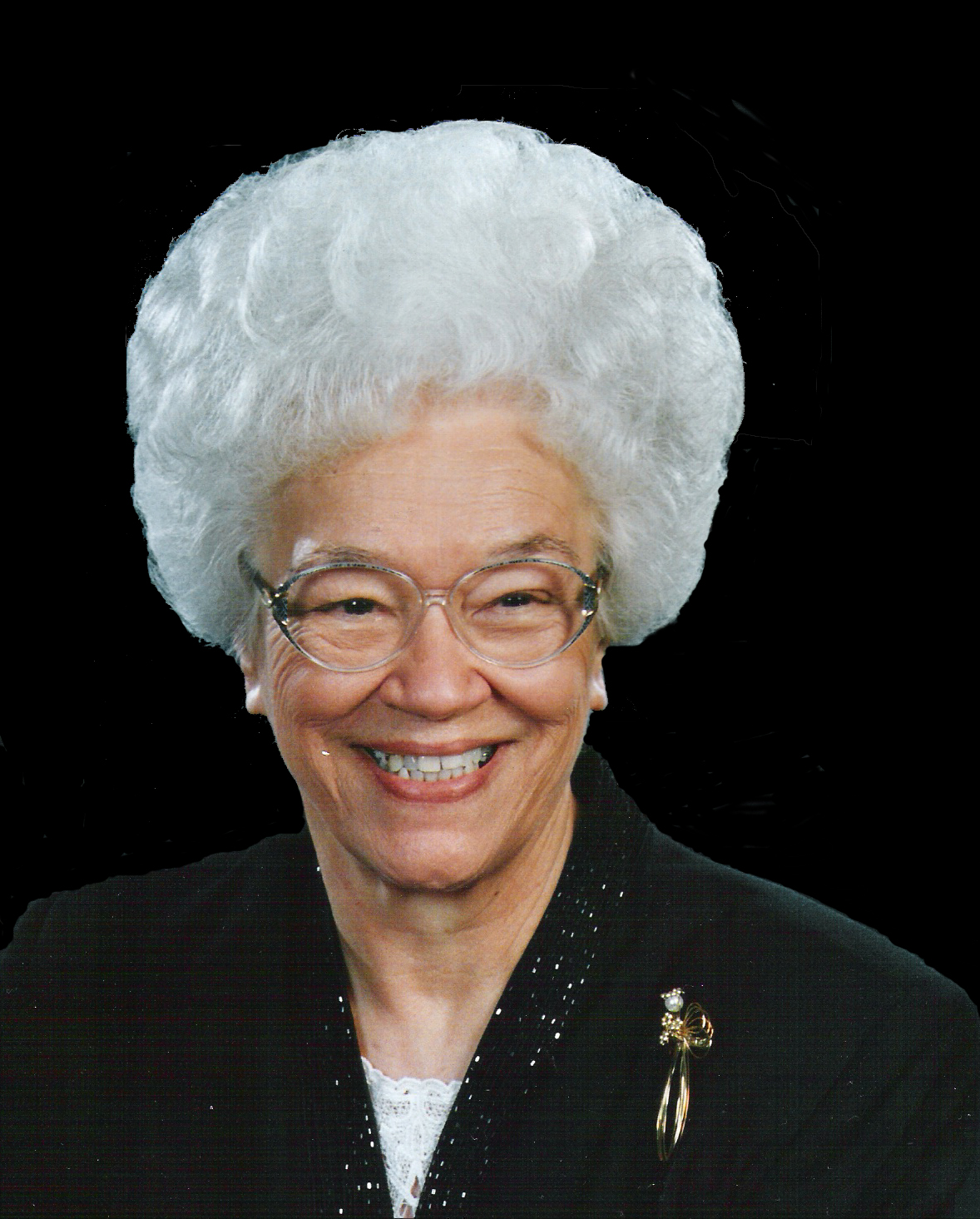 On November 19, 2004 the Church of God Theological Seminary inducted Reverend Evelyn E. Scroggs as the first South Carolinian lady minister into the Hall of Prophets. Her legacy of a Holy Ghost filled prayer warrior and revivalist with a supernatural ministry will be carried on by the many who God calls to His Harvest under the same Pentecostal anointing.
Evelyn E. Scroggs was born on May 2, 1928, daughter of James and Effie Edgar and the youngest of 11 children. Converted at an early age, she felt a call from God to preach when only 19. Early one morning, in a small house in Utica Mill Village, while seeking God’s direction and will for her life, Evelyn made a commitment to accept whatever God’s calling would be upon her life and to go wherever He might lead. Little did she know those words of commitment would propel her on a lifelong journey in God’s footsteps, nor did she realize the sacrifice and rewards that journey would bring to her life and the lives of her family. While asking God to speak to her through His Word, she opened her Bible to the book of Jeremiah, chapter one, verses 4 through 10. As she read God’s words of direc tion and assurance to this prophet, she felt the Hand of God touch her brow, and instantly knew she would preach the gospel as long as she had a voice to speak.
Evelyn Scroggs received her Exhorters License in the Church of God on August 7, 1953, and her Ordained License August 11, 1954. She was married for 56 years to Samuel Thomas Scroggs and God blessed their home with two daughters, Phyllis and Marcia, and one son, Gregory. They have one daughter-in-law, Marilyn, and two son-in-laws, Duane Harrell and Bill Durham. There are five grandsons: Matthew Kyle, Brandon Duane, Andrew Paul, Weston Thomas, and Daniel Kyle.
Although actively involved in her local church with ladies ministries and as a Sunday School teacher, fundraiser, personal counselor, musician, and community servant, Evelyn Scroggs’ heartbeat was evangelism and reaching the lost for Christ. In an evangelistic ministry of 55 years, she held revivals in over 150 churches in South Carolina, as well as congregations in Florida, North Carolina, Georgia, and Tennessee. She preached 3,634 sermons, had 2,656 converted, 1,298 sanctified, and 897 receive the Holy Ghost baptism. A woman who preached the Word with fervor and power, her sermons often centered on the themes of holiness, the Holy Spirit and fire, the cross, and God’s mercy, love and grace. Evelyn’s favorite scripture passage was John 3: 16 – “For God so loved the world, that He gave His only begotten Son, that whosoever believeth in Him should not perish, but have everlasting life.”
After 55 years of ministry, the voice that reached countless souls was silenced by ALS. Although her voice was gone, her lips never ceased to praise the Lord, and the joy of the Lord burned even more brightly in her radiant eyes. Evelyn Scroggs went to be with her Lord and Savior on March 10,2003.
Faithful servant, loving wife, devoted mother, proud mama, loyal friend, dedicated minister.
Postcommunist Believers in a Postmodern World (PDF)
 “Postcommunist Believers in a Postmodern World” deals with the current condition of church-state relations in the country of Bulgaria. This study explores the postcommunist changes in Europe which led to the creation and adoption of the Confessions Act of 2002, a set of new legal definitions for the practice of religion in Bulgaria. Focusing on Bulgaria’s postcommunist period, this paper describes the role of the state in the evangelical revival and the Eastern Orthodox crises during the stages of adoption. This research analyzes the failure of the new legal provisions to resolve the problems faced by Christian communities throughout Bulgaria as well as the tensions created for the practice of freedom of religion and human rights. The conclusion of the paper is a call toward a new democratic paradigm for the practice of religion in Bulgaria.
 Read the presentation of the paper
View the power point presentation (PPT)
Read the complete paper “Postcommunist Believers in a Postmodern World” (PDF)
Consult the text of the Bulgarian Confessions Act of 20
Postcommunist Believers in a Postmodern World (Presentation)
The research I am presenting today explores the processes and dynamics which have led to the proposal, acceptance and implementation of Bulgaria’s Confessions Act of 2002. Following the chronological order of events, the paper will show the inability of the new legal definitions to resolve the problems and limitations which Christian communities in Bulgaria have been experiencing. The tensions which the new law have caused to the practice of freedom of religion and human rights in democratic Bulgaria will be identified and analyzed as the research calls for a timely resolution and a new paradigm for religious tolerance among postcommunist believers.
Slide 2: Bulgaria is located in Southeastern Europe, bordering the Black Sea, between Romania, and Turkey. A population of eight million lives in an area of approximately 43,000 square miles which is slightly smaller than the state of Tennessee.
Slide 3: Bulgaria accepted Christianity as its official religion in 864 AD under the rule of King Boris. Christian faith spread rapidly through the land revitalizing spiritual, economical and political life and setting the stage for the Golden century of Bulgarian culture. By the ninth century Bulgaria had spread over the larger part of the Balkan Peninsula, but in 1396 fell under Ottoman occupation. The Turkish Yoke over Bulgaria lasted nearly half a millennium until 1878. During these dark centuries, the Eastern Orthodox Church played a significant role in the preservation of Bulgarian culture. Having fought on the losing side in both World Wars in the 20th century, Bulgaria fell within the Soviet sphere of influence and became a People’s Republic in 1944. The established Communist Regime proclaimed liberty and solidarity while limiting human rights and religious freedom. The new laws demanded conformation with government policy from all religious denominations. Churches which failed to comply were severely persecuted, properties were confiscated, pastors were imprisoned and religious activities were banned. On his first official visit to West Germany in May of 1989, Mikhail Gorbachev informed Chancellor Kohl that Moscow was no longer willing to use force to prevent democratic transformation of its satellite states. On November 9 that same year the border between Eastern and Western Germany was opened. A day later the Bulgarian communist leader of over 30 years resigned and the change toward democracy began. This meant the fall of the Berlin Wall and the end of the Cold War.
Slide 4: The first steps toward freedom were sporadic and unplanned as were the first waves of revival among the evangelical believers. Although long prophesied and fervently expected, the freedom caught the Bulgarian church unprepared. Nevertheless, evangelistic meetings in towns and villages began immediately with church no longer being underground. Dr. Penov, a professor at the Sofia University and a Parliament expert on human rights and faith confessions in a recent interview confirmed that the members of Protestant churches in Bulgarian exceed 100, 000. At the same time the Catholics are 70,000 strong and Eastern Orthodox are 6,000,000. Because of Bulgaria’s strategic location, today the country is becoming an important frontier in the war on terrorism. Since this war involves religion, Bulgaria is becoming a religious frontier as well. Such is not a precedent on the Balkans, which through history have served as religious frontiers in the Far East mission campaigns, medieval crusades, and Byzantine Christianization. Based on these historical presuppositions, today both Bulgarian culture and democracy demand a clear stand on religions.
Slide 5: Pressured by the deadlines for acceptance in NATO and the European Union, the Bulgarian Government made attempts to provide legal solutions for the rising religious tensions. In the period from 2001 to 2002, three drafts were proposed to replace the Communist Law of Religion which had been the single guideline for the practice of state and church relationships since 1949. The draft which received most attention was submitted by the New Time political formation within the leading party of the former Bulgarian king. Several Religious Freedom and Human Rights concerns became obvious even before the Bill was ever passed. Regardless of the protest and warnings of over 40 religious, secular and non-government organizations in and outside of Bulgaria, on December 20, 2002, the bill was passed by the Bulgarian National Assembly, published by the State Newspaper on December 29 and became effective on January 2, 2003 as the Bulgarian Confessions Act. The Religious Freedom and Human Rights concerns, however, remained within its text. They are:
1. Status of Religious Confessions
2. Registration with the government
3. Relationship between Church and State
4. Religious Activities
5. Religious Freedom
The paper overviews in detail these 5 areas as follows:
Slide 6: Status of Religious Confessions
1. The Confessions Act presumes, but does not provide a definitive statement of traditional and non-traditional religious confessions.
2. It designates the Bulgarian Orthodox Church as a traditional religious confession. The special privileges granted to the Bulgarian Orthodox Church provide for a lack of equality between the religious confessions, which is in contradiction with the Constitution of Bulgaria and Article 9 of the European Convention.
3. The act allows the Bulgarian Orthodox Church to act independently from the state. This contradicts the historical tradition of the Orthodox Church. It also allows it to reform itself to the point where it has little to do with the structure, function and identity of the religious formation described in the law.
4. The Act does not address the religious needs of minority ethnic groups
Slide 7: Registration with the government
1. All denominations, with the exception of the Bulgarian Orthodox Church, must register with the Sofia Municipal Court.
2. The Act makes no provision of the requirements which the court uses to grant such registration.
3. It is not clear what type of limitations or bans of religious activities are to be applied for reasons constituted by the Act.
4. The Act provides no definite procedures in cases when the court fails or refuses to register a religious group. This gives the court undefined control over the existence of a given confession.
5. There is no procedure for cases in which the court’s decision may be influenced by public opinion.
6. The role of the Directorate of Religious Affairs in the registration process is mentioned, but not clearly defined.
7. The lack of experts on all confessions within the Directorate’s structures also remains unaddressed.
8. Registration is granted only to organizations with an enforced centralized structure.This is against the traditions and bylaws of many of the confessions in Bulgaria and creates new problems on the local level.
Slide 8: Relationship between Church and State
1. The opinion of the Directorate of Religious Affairs is presumed as expertise on religious groups and denominations.
2. The Bulgarian Government provides financial support for the traditional confessions, mainly the Eastern Orthodox Church.
3. There is no concern with the tendency by certain regional authorities to enact regulations in order to limit religious freedom.
4. The coexistence between the state and the Eastern Orthodox Church, called “symphony” in the Byzantine tradition, is enforced as a rule on Protestant confessions. This is a contradiction with the traditions of virtually all Protestant denominations, which historically have declared separation of church and state.
5. The very fact that the law purposes to solve the problems within the Bulgarian Orthodox Church is based on the presumption that the church is not a sufficient agent in solving its own problems. Therefore assistance from the state is necessary as it possesses the power to create the needed legal supplements.
6. The Act allows government interference in the affairs of all religious denominations.
7. The Act enforces the registration of religious communities and organizations. However, once registered, they are guided through predefined channels where the state has liberty to execute maximum control. This raises the question of the actual existence of religious liberty under the new Confessions Act.
Slide 9: Religious Activities
1. Public worship is prohibited without denominational registration.
2. There is no category concerning foreign missionaries and their activity on the territory of Bulgaria.
3. There is no provision for chaplaincy or pastoral care in the army, prisons, hospitals and care institutions.
4. Formation of political parties along religious lines is prohibited. This may exclude religious communities from important policy debates on issues such as abortion, euthanasia and cloning, which have a direct relation to the values they defend
5. Denominational hospitals, social centers and educational institutions are encouraged, but done so without creating actual opportunities for their realization.
Slide 10: Religious Freedom
1. The Confessions Act does not provide an atmosphere for preventing discrimination and harassments against “non-traditional” religious minorities.
2. Neither definite procedures (delays, appeals, nature and role of the Directorate of Religions), nor substantive criteria for registration are clearly defined.
3. The Act fails to recognize explicitly the freedom of conscience, as well as the right not to believe, and does not clarify the rights of the believers within unregistered religious communities.
4. The Act regulates the right and practice of belief, while the right and practice of personal convictions of Communist or atheist types are not regulated by such legal document.
5. The Act implies a limitation clause as it demands that, “Freedom of religions shall not be directed against national security, public order, people’s health and the morals or the rights and freedoms of persons under the jurisdiction of the republic of Bulgaria or other states.” Such reading is problematic, as it enforces standards not found under Article 17 of the Vienna Convention.
Slide 11: Church in the Hands of an Angry State
Religious freedom and human rights advocates warned that the attempts of the state to establish a totalitarian order in the church after fifteen years of democratic transition are unacceptable and may lead to further religious and political conflicts. Unfortunately, their warnings remained unheard.
Slide 12: It was during the development of this research, that such warnings became reality. On July 21, 2004, in a preplanned action upon the Chief Prosecutor’s order, the police stormed through 250 churches in a controversial raid to restore ownership to the official Bulgarian Orthodox Church. Father Pissarov, priest at the Dormition Orthodox Church in the capital Sofia locked the sanctuary doors to prevent police from entering. The special force’s team first scattered the citizens who were protesting around the church and then using a police vehicle pulled the temple doors open. Although the priest was unarmed and did not resist the arrest, five policemen held him on the ground while others were kicking him in the face with their army boots. Father Pissarov was hospitalized with a serious concussion, broken teeth and torso injuries.
The controversial police actions revealed that the new Confessions Act is already failing to respond to the social and spiritual needs of Bulgaria’s postcommunist context. It is unfortunate that its malfunctions prevent an atmosphere of religious freedom, pluralism and tolerance where everyone can freely experience the right to believe. Thus, the Bulgarian Confessions Act of 2002 cannot and should not be the legal text operating in Bulgaria when the country is accepted into the European Union. Forced to be unconcerned with political and social issues under Communism, the Church remains distanced from culture and society to the point of a minority complex. In the totalitarian context, the role and functions of the Church were imposed and strictly regulated by the government. As a result, today the church is failing to recover and reclaim its Biblical identity and is becoming simply a state institution with dictated interests in predetermined areas of social life.
The Confessions Act of 2002 attempts a return to an autocratic style of government, turning the postcommunist Bulgarian context into a postcommunist regime for the religious communities. In the journey of democracy such approach is without excuse. The state cannot and must not attempt regulatory interference with the rights of the church through predetermined legality and pressure of public opinion. The government cannot and should not allow tradition to dictate special privileges for any denomination. When the state fails to be the initiator of actions against discrimination and oppression, the Church must and should assume this role. And these should be the foundations of practicing religious freedom in 21st century Bulgaria.
In conclusion, please allow me to say just a few words about the rather shocking photos in this presentation. The three pictures seen here are from the mentioned police raid. The background picture is of the skull of a monk by the name of Gregory who died for his faith in 1979.
I am not a political figure and I do not have the power to change the laws in Bulgaria.
I am not a legal expert and I do not have the knowledge to draft a more suitable legal paradigm for the practice of religion in my home country.
I am not a publicist and I cannot influence public opinion.
I am not even an Orthodox priest and I can very easily satisfy my internal urge for justice by saying, “This is none of my business.”
I am just a simple preacher from Bulgaria belonging to a church which has suffered half-a-century of Communist persecution and I am simply asking the question “is it true that if I don’t speak now, when they come for me, there will be no one left to speak.”
I saw this conference as an opportunity to speak against the factors which threaten religious freedom in my home country and manipulate the Bulgarian people to return to another totalitarian regime. Therefore, today in the city of Birmingham, which has become a monument of human freedom, I present the case of all Bulgarians who desire religious tolerance, democratic pluralism and equality for all and I ask for your prayers, support and active participation in the process which will guarantee religious freedom for postcommunist believers in postmodern Bulgaria.
Read the presentation of the paper
View the power point presentation (PPT)
Read the complete paper “Postcommunist Believers in a Postmodern World” (PDF)
Consult the text of the Bulgarian Confessions Act of 20
Christianity and Human Rights
On November 11-13, 2004, Cup & Cross Ministries participated in the fourth annual Lilly Fellows Program National Research Conference on the theme, “Christianity and Human Rights.” The conference, which was held at Samford University, explored the deep embedding of the language of human rights in international discourse. Cup & Cross Ministries presented a paper entitled “Postcommunist Believers in a Postmodern World.”
Read the presentation of the paper
View the power point presentation (PPT)
Read the complete paper “Postcommunist Believers in a Postmodern World” (PDF)
Consult the text of the Bulgarian Confessions Act of 2002
One Year Without TV
 On 11 November, 2003 the Council for Electronic Media in Bulgaria withdrew the legally issued license for a Christian TV station in Bulgaria. The program of TV Den [Day], where the Christian TV program “Christianity” was broadcasted, was stopped from distribution by the cable networks in Bulgaria. The decision was made by the Council for Electronic Media (CEM, the official Bulgarian media regulator) who took away the license of Union Television, author and broadcaster of the Den program. The motive for CEM’s decision was “systematic breaches of the principles for conducting broadcasting activity set forth in the Radio and TV Act, which disallows programs instigating national, political, ethnic, religious and racial intolerance”. CEM’s decision was provoked by Den’s “From Telephone to Microphone” show which had previously been fined for other instances of broadcasts instigating ethnic intolerance.” I object to the Bulgarian National Television broadcasting news in Turkish,” anchor of the show Nick Stein, a German national who has been living in Bulgaria for several years now, told his viewers in July. Director of Studio 865 Stoyko Petkov, producer of the program “Christianity”, expressed his concern about the easy way of applying the most drastic penalty to media without debate. “This is too radical decision by CEM. The law is providing other options for sanction. Actually, the same show (“From Telephone to Microphone”) was soon reproduced by another station. The penalty then affects the Christian programs more than to the mentioned show.”


