

Revival Harvest Campaign 2014 in Plovdiv
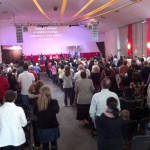
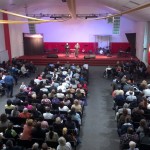
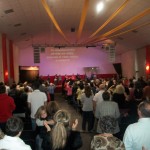
Revival Harvest Campaign 2014 in Samokov
25 Years after Communism…
 25 years in 60 seconds at the red-light…
I’m driving slowly in the dark and raining streets of my home town passing through clouds of car smoke. The gypsy ghetto in the outskirts of town is covered with the fog of fires made out of old tires burning in the yards. And the loud music adds that grotesque and gothic nuance to the whole picture with poorly clothed children dancing around the burnings.
The first red light stops me at the entrance to the “more civilized” part of the city. The bright counter right next to it slowly moves through the long 60 seconds while tiredly walking people pass through the intersection to go home and escape the cold rain. The street ahead of me is already covered with dirt and thickening layer of sleet.
This is how I remember Bulgaria of my youth and it seems like nothing has changed in the past 25 years.
The newly elected government just announced its coalition cabinet – next to a dozen like it that had failed in the past two decades. The gas price is holding firmly at $6/gal. and the price of electricity just increased by 10%, while the harsh winter is already knocking at the doors of poor Bulgarian households. A major bank is in collapse threatening to take down the national banking system and create a new crisis much like in Greece. These are the same factors that caused Bulgaria’s major inflation in 1993 and then hyperinflation in 1996-97.
What’s next? Another winter and again a hard one!
Ex-secret police agents are in all three of the coalition parties forming the current government. The ultra nationalistic party called “ATTACK” and the Muslim ethnic minorities party DPS are out for now, but awaiting their move as opposition in the future parliament. At the same time, the new-old prime minister (now in his second term) is already calling for yet another early parliamentarian election in the summer. This is only months after the previous elections in October, 2014 and two years after the ones before them on May 2013.
Every Bulgarian government in the past 25 years has focused on two rather mechanical goals: cardinal socio-economical reforms and battle against communism. The latter is simply unachievable without deep reformative change within the Bulgarian post-communist mentality. The purpose of any reform should be to do exactly that. Instead, what is always changing is the outwardness of the country. The change is only mechanical, but never organic within the country’s heart.
Bulgaria’s mechanical reforms in the past quarter of a century have proven to be only conditional, but never improving the conditions of living. The wellbeing of the individual and the pursuit of happiness, thou much spoken about, are never reached for they never start with the desire to change within the person. For this reason, millions of Bulgarians and their children today work abroad, pursuing another life for another generation.
The stop light in front of me turns green bidding the question where to go next. Every Bulgarian today must make a choice! Or we’ll be still here at the red light in another 25 years from now…
Bulgaria election winner forms new government
![_68914373_68914321[1]](https://cupandcross.com/wp-content/uploads/2014/11/68914373_689143211.jpg) SOFIA, Bulgaria – Bulgarian President Rosen Plevneliev has formally given the winner of recent parliamentary elections a mandate to form a new government, seeking to restore stability in the poorest EU member country.
SOFIA, Bulgaria – Bulgarian President Rosen Plevneliev has formally given the winner of recent parliamentary elections a mandate to form a new government, seeking to restore stability in the poorest EU member country.
Conservative Boyko Borisov won the largest share in Oct. 5 early parliamentary elections, ousting a Socialist-led coalition. The 55-year-old former bodyguard and mayor of Bulgaria’s capital, Sofia, founded his center-right GERB party in 2006, and was prime minister between 2009 and 2013. Borisov’s party won only 84 of the 240 parliamentary seats, and he faces the hard task of forming a right-wing coalition with sufficient support in the fragmented legislature.
The winner of Bulgaria’s parliamentary election signed an accord on Thursday to form a minority coalition government after a month of talks, a welcome breakthrough for a country reeling from a bank crisis and struggling to revive economic growth.
- Minority centre-right govt to rely on allies for support
- PM-designate Borisov was toppled by protests in Feb 2013
- New cabinet must tackle bank crisis, fiscal deficit
- Parliament expected to approve govt on Friday (Adds quote, details, background)
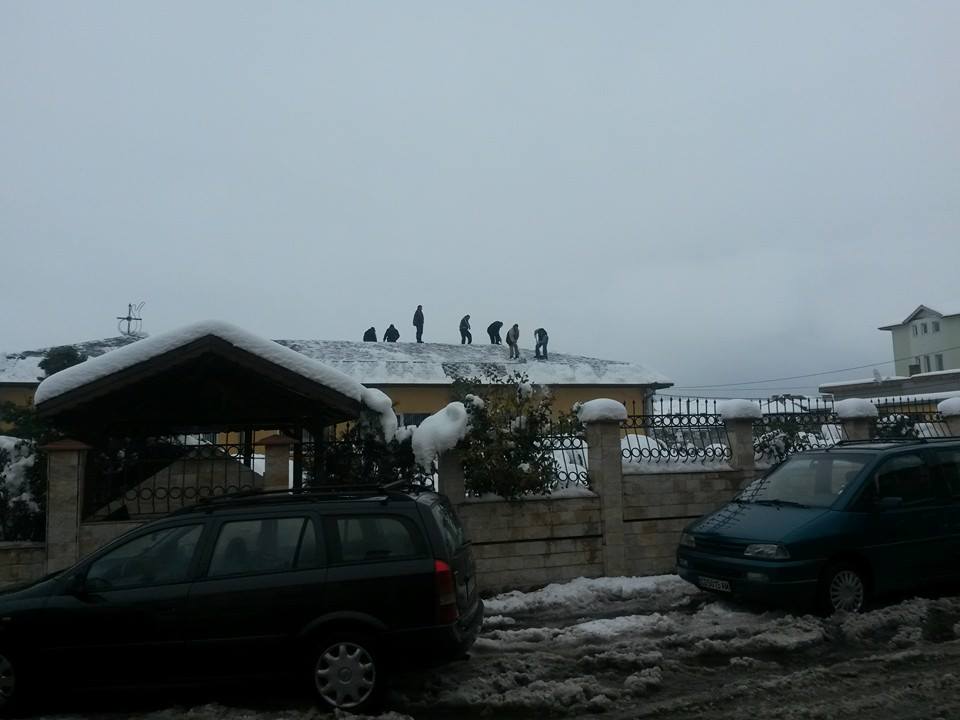
First Snow in Bulgaria


95 Thesis of Dr. Martin Luther
Comments Off on 95 Thesis of Dr. Martin Luther
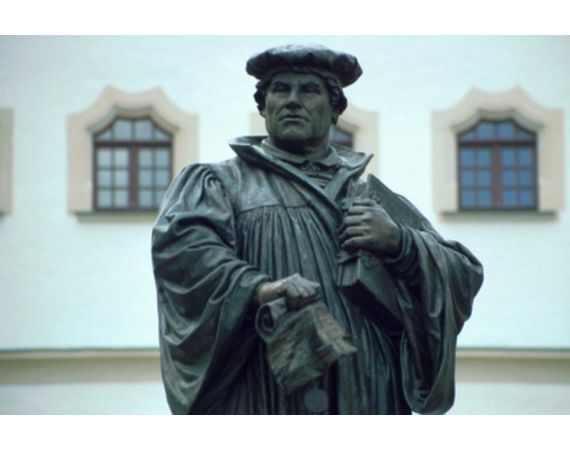
Out of love and zeal for truth and the desire to bring it to light, the following theses will be publicly discussed at Wittenberg under the chairmanship of the reverend father Martin Lutther, Master of Arts and Sacred Theology and regularly appointed Lecturer on these subjects at that place. He requests that those who cannot be present to debate orally with us will do so by letter.
In the Name of Our Lord Jesus Christ. Amen.[5]
01. When our Lord and Master Jesus Christ said, “Repent,” he willed the entire life of believers to be one of penitence.[10]
02. This word cannot be understood as referring to penance as a sacrament (that is, confession and satisfaction, as administered by the ministry of priests).
03. This word also does not refer solely to inner penitence; indeed there is no penitence unless it produces various outward mortifications of the flesh.
04. Therefore punishment of sin remains as long as the hatred of self, that is, true inner repentance, namely until entering the kingdom of heaven.
05. The pope neither wishes nor can remit any penalties except that which he imposes by his or by canonical authority.
06. The Pope cannot remit any guilt, except by stating and confirming that it has been remitted by God; or, by remitting [guilt] in cases reserved to his judgment. If his power were disregarded, the guilt would certainly remain [unforgiven].
07. God remits guilt to no one without at once submitting him humbly in all things to the priest as his vicar.
08. The penitential canons are imposed only on the living, and, according to the canons themselves, nothing should be imposed on the dying.
09. Therefore the Holy Spirit through the pope is kind to us insofar as the pope in his decrees always makes exception of the article of death and of necessity.
10. Those priests act ignorantly and wickedly who, in the case of the dying, reserve canonical penalties for purgatory. [The truth on purgatory].
11. Those tares of changing the canonical penalty to the penalty of purgatory were evidently sown while the bishops slept.
12. In former times canonical penalties were imposed, not after, but before absolution, as tests of true contrition.
13. The dying are freed by death from all penalties, are already dead as far as the canon laws are concerned, and have a right to be released from them.
14. Imperfect piety or love on the part of the dying person necessarily brings with it great fear; and the smaller the love, the greater the fear.
15. His fear or horror is sufficient in itself, to say nothing of other things, to constitute the penalty of purgatory, since it is very near the horror of despair.
16. Hell, purgatory, and heaven seem to differ the same as despair, fear, and assurance of salvation.
17. It seems as though for the souls in purgatory fear should necessarily decrease and love increase.
18. Furthermore, it does not seem proved, either by reason or Scripture, that souls in purgatory are outside the state of merit, that is unable to grow in love.
19. Nor does it seem proved that souls in purgatory, at least not all of them, are certain and assured of their own salvation, even if we ourselves may be entirely certain of it.
20. By full remission of all puishment, the Pope therefore does not actually mean `all [punishment]’ but only that which he imposed [himself].
21. Thus those indulgence preachers are in error who say that a man is absolved from every penalty and saved by papal indulgences.[30]
22. As a matter of fact, the pope remits to souls in purgatory no penalty which, according to canon law, they should have paid in this life.
23. If remission of all penalties whatsoever could be granted to anyone at all, certainly it would be granted only to the most perfect, that is, to very few. But see here and here!
24. For this reason most people are necessarily deceived by that indiscriminate and high-sounding promise of release from penalty.
25. That power which the pope has in general over purgatory corresponds to the power which any bishop or curate has in a particular way in his own diocese or parish.[40]
26. The pope does very well when he grants remission to souls in purgatory, not by the power of the keys, which he does not have, but by way of intercession for them.[50]
27. They preach only human doctrines who say that as soon as the money clinks into the money chest, the soul flies out of purgatory.
28. It is certain that when money clinks in the money chest, greed and avarice can be increased; but when the church intercedes, the result is in the hands of God alone.
29. Who knows whether all souls in purgatory wish to be redeemed, since we have exceptions in St. Severinus and St. Paschal, as related in a legend.
30. No one is sure of the integrity of his own contrition, much less of having received plenary remission.
31. The man who actually buys indulgences is as rare as he who is really penitent; indeed, he is exceedingly rare.
32. Those who believe that they can be certain of their salvation because they have indulgence letters will be eternally damned, together with their teachers.
33. Men must especially be on their guard against those who say that the pope’s pardons are that inestimable gift of God by which man is reconciled to him.
34. For the graces of indulgences are concerned only with the penalties of sacramental satisfaction established by man. [100]
35. They who teach that contrition is not necessary on the part of those who intend to buy souls out of purgatory or to buy confessional [200] privileges preach unchristian doctrine.
36. Any truly repentant Christian has a right to full remission of penalty and guilt, even without indulgence letters.
37. Any true Christian, whether living or dead, participates in all the blessings of Christ and the church; and this is granted him by God, even without indulgence letters.
38. Nevertheless, papal remission and blessing are by no means to be disregarded, for they are, as I have said, the proclamation of the divine remission.
39. It is very difficult, even for the most learned theologians, at one and the same time to commend to the people the bounty of indulgences and the need of true contrition.
40. A Christian who is truly contrite seeks and loves to pay penalties for his sins; the bounty of indulgences, however, relaxes penalties and causes men to hate them – at least it furnishes occasion for hating them.
41. Papal indulgences must be preached with caution, lest people erroneously think that they are preferable to other good works of love.
42. Christians are to be taught that the pope does not intend that the buying of indulgences should in any way be compared with works of mercy.
43. Christians are to be taught that he who gives to the poor or lends to the needy does a better deed than he who buys indulgences.
44. Because love grows by works of love, man thereby becomes better. Man does not, however, become better by means of indulgences but is merely freed from penalties.
45. Christians are to be taught that he who sees a needy man and passes him by, yet gives his money for indulgences, does not buy papal indulgences but God’s wrath.
46. Christians are to be taught that, unless they have more than they need, they must reserve enough for their family needs and by no means squander it on indulgences.
47. Christians are to be taught that the buying of indulgences is a matter of free choice, not commanded.
48. Christians are to be taught that the pope, in granting indulgences, needs and thus desires their devout prayer more than their money.
49. Christians are to be taught that the papal indulgences are useful only if they do not put their trust in them, but very harmful if they lose their fear of God because of them.
50. Christians are to be taught that if the pope knew the exactions of the indulgence preachers, he would rather that the basilica of St. Peter were burned to ashes than built up with the skin, flesh, and bones of his sheep.
51. Christians are to be taught that the pope would and should wish to give of his own money, even though he had to sell the basilica of St. Peter, to many of those from whom certain hawkers of indulgences cajole money.
52. It is vain to trust in salvation by indulgence letters, even though the indulgence commissary, or even the pope, were to offer his soul as security.
53. They are enemies of Christ and the pope who forbid altogether the preaching of the word of God in some churches in order that indulgences may be preached in others.
54. Injury is done the Word of God when, in the same sermon, an equal or larger amount of time is devoted to indulgences than to the Word.
55. It is certainly the pope’s sentiment that if indulgences which are a very insignificant thing, are celebrated with one bell, one procession, and one ceremony, then the gospel, which is the very greatest thing, should be preached with a hundred bells, a hundred processions, a hundred ceremonies.
56. The treasures of the church, out of which the pope distributes indulgences, are not sufficiently discussed or known among the people of Christ.
57. That indulgences are not temporal treasures is certainly clear, for many indulgence sellers do not distribute them freely but only gather them.
58. Nor are they the merits of Christ and the saints, for, even without the pope, the latter always work grace for the inner man and the cross, death, and hell for the outer man.[300]
59. St. Laurence said that the poor of the church were the treasures of the church, but he spoke according to the usage of the word in his own time.
60. Without want of consideration we say that the keys of the church, given by the merits of Christ, are that treasure;[400]
61. For it is clear that the pope’s power is of itself sufficient for the remission of penalties and cases reserved by himself.
62. The true treasure of the church is the most holy gospel of the glory and grace of God.
63. But this treasure is naturally most odious, for it makes the first to be last.
64. On the other hand, the treasure of indulgences is naturally most acceptable, for it makes the last to be first.
65. Therefore the treasures of the gospel are nets with which one formerly fished for men of wealth.
66. The treasures of indulgences are nets with which one now fishes for the wealth of men.
67. The indulgences which the demagogues acclaim as the greatest graces are actually understood to be such only insofar as they promote gain.
68. They are nevertheless in truth the most insignificant graces when compared with the grace of God and the piety of the cross.
69. Bishops and curates are bound to admit the commissaries of papal indulgences with all reverence.
70. But they are much more bound to strain their eyes and ears lest these men preach their own dreams instead of what the pope has commissioned.
71. Let him who speaks against the truth concerning papal indulgences be anathema and accursed;
72. But let him who guards against the lust and license of the indulgence preachers be blessed;
73. Just as the pope justly thunders against those who by any means whatsoever contrive harm to the sale of indulgences.
74. But much more does he intend to thunder against those who use indulgences as a pretext to contrive harm to holy love and truth.
75. To consider papal indulgences so great that they could absolve a man even if he had done the impossible and had violated the mother of God, is madness.
76. We say on the contrary that papal indulgences cannot remove the very least of venial sins, as far as guilt is concerned.
77. To say that even St. Peter, if he were now pope, could not grant greater graces, is blasphemy against St. Peter and the pope.
78. We say on the contrary that even the present pope, or any pope whatsoever, has greater graces at his disposal, that is, the gospel, spiritual powers, gifts of healing, etc., as it is written in 1. Corinthians 12.
79. To say that the cross emblazoned with, the papal coat of arms, and set up by the indulgence preachers, is equal in worth to the cross of Christ is blasphemy.
80. The bishops, curates, and theologians who permit such talk to be spread among the people will have to answer for this.
81. This unbridled preaching of indulgences makes it difficult even for learned men to rescue the reverence which is due the pope from slander or from the shrewd questions of the laity,
82. Such as “Why does not the pope empty purgatory for the sake of holy love and the dire need of the souls that are there if he redeems an infinite number of souls for the sake of miserable money with which to build a church? The former reasons would be most just; the latter most trivial.”
83. Again, Why are funeral and anniversary masses for the dead continued and why does he not return or permit the withdrawal of the endowments founded for them, since it is wrong to pray for the redeemed?”
84. Again, “What is this new piety of God and the pope that for a consideration of money they permit a man who is impious and their enemy to buy out of purgatory the pious soul of a friend of God and do not rather, because of the need of that pious and beloved soul, free it for pure love’s sake?”
85. Again, “Why are the penitential canons, long since abrogated and dead in actual fact and through disuse, now satisfied by the granting of indulgences as though they were still alive and in force?”
86. Again, “why does not the pope, whose wealth is today greater than the wealth of the richest Crassus, build this one basilica of St. Peter with his own money rather than with the money of poor believers?”
87. Again, “What does the pope remit or grant to those who by perfect contrition already have a right to full remission and blessings?”
88. Again, What greater blessing could come to the church than if the pope were to bestow these remissions and blessings on every believer a hundred times a day, as he now does but once?”
89. “Since the pope seeks the salvation of souls rather than money by his indulgences, why does he suspend the indulgences and pardons previously granted when they have equal efficacy?”
90. To repress these very sharp arguments of the laity by force alone, and not to resolve them by giving reasons, is to expose the church and the pope to the ridicule of their enemies and to make Christians unhappy.
91. If, therefore, indulgences were preached according to the spirit and intention of the pope, all these doubts would be readily resolved. Indeed, they would not exist.
92. Away then with all those prophets who say to the people of Christ, “Peace, peace,” and there is not peace!
93. Blessed be all those prophets who say to the people of Christ, “Cross, cross,” and there is not cross!
94. Christians should be exhorted to be diligent in following Christ, their head, through penalties, death, and hell;
95. And thus be confident of entering into heaven through many tribulations rather than through the false security of peace.
At Citipointe Church

We just returned from the second annual Citipointe Conference where we were invited to speak. Our sermon topic was: God of Abraham, Isaac and Jacob – God of the living and God of the generations. We ministered to several hundred gathered at the conference on how to transfer our Christian faith and Pentecostal experience to a new spiritual generation. Abraham, the Father of faith, created a family, but faith must continue to grow and be transferred. Isaac established a tribe and grew out of his personal boundaries to be a blessing to many. In the third generation, however, Jacob founded a nation. Our faith must grow beyond our personal family of faith or religious tribal clan into a nation of believers. Only then the covenant promises of God can be fully fulfilled.
Current Status of Chaplaincy in Bulgaria
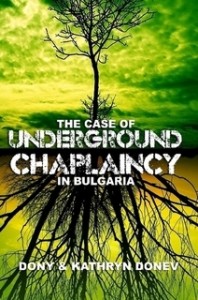
This update on the current status of Chaplaincy in Bulgaria became necessary in light of the recent parliament vote (October 5, 2014) and consecutive talks on Bulgaria’s national security and upcoming defense reforms. While the government enters a post-election mode to appoint all cabinet members, the legal question about chaplaincy in Bulgaria still remains open. A decade after entering NATO and the European Union as a fully ratified member, Bulgaria is the only country within both organizations without military (or any otherwise legalized) chaplaincy.
About the same amount of time has passed since we established the Bulgarian Chaplaincy Association with the publication of its strategic program “Underground Chaplaincy in Bulgaria” and the establishment of our Masters Program in Chaplaincy Ministry in Sofia. Since that time, many international organizations have contributed to the chaplaincy restoration process with research and historic publications or occasional chaplaincy seminars and conferences across the country. Among them are Military Chaplain Fellowship (MCF), Military Ministries International (MMI), Ministry to the Military, various (IAEC), Chaplaincy Commissions and many others.
However, with these investments of time and resources in the cause, changes within Bulgaria’s law are still to be made and our military personnel remain without active duty chaplains. This result simply proves once again that restoring chaplaincy in Bulgaria cannot and should not be an external process dictated by organizational agendas which are separated from the people. On the contrary, the necessary changes must emerge from grassroots, from among the people, in order to be fully politically realized as both necessity and empowerment.
In this process, the role of the local church is also detrimental. It is certainly a great effort that individual ministers and their teams visit prisoners on weekly or monthly basis. It is also admirable that emergency outfits formed by church members quickly respond to what now seems a constant chain of disastrous events (flooding, earthquakes, freezing weather, etc.). But if the bottom line of results does not affect the changes within the system that can make chaplaincy legally available within both military and civil organization all otherwise attractive efforts are simply futile. They not only miss the mark, but exhaust time and resources of the church and are overall obstructive to the goal at hand.
Therefore, changes within the current status of chaplaincy in Bulgaria must be sought once again with a unifying strategy that uses small but crucial milestones to promote change within the current legal and army systems. Otherwise, the restoration of chaplaincy will be forced again in the periphery of political and social issues and will never become a real priority.
More Publications on the Topic and History of Events:
- Chaplaincy Conference and Master’s of Chaplaincy
- Chaplaincy Course in Yambol, BULGARIA
- Bulgarian Chaplaincy Association Annual Meeting
- Family Seminar for Military Men and Women
- Cup & Cross Ministries in Church of God Publications
- The Case of a NATO Chaplaincy Model within the Bulgarian Army
- 10 Years of Military Ministry in Bulgaria
- Bulgarian Chaplaincy Associations Recognized by U.S. Department of State
- National Chaplaincy Conference
- Bulgarian Chaplaincy Association Gains Legal Status
- Chaplain Dees Visits Bulgaria
- Chaplaincy Course at the Bulgarian Evangelical Theological Institute
- Bulgarian Chaplaincy Association
- Meeting the NATO Chaplain
- National Chaplaincy Meeting
- Chaplaincy Developments in Bulgaria
- U.S. Bases in Bulgaria
- National Chaplaincy Meeting
- Chaplaincy in Bulgaria
- HEALTHCARE CHAPLAINCY IN BULGARIA
- Chaplaincy in Bulgaria
- Mission Bulgaria
Bulgaria 2014 Signing of the Scrolls
Bulgaria election winner to form minority government
(Reuters) – The winner of Bulgaria’s general election said on Monday it was ready to form a minority government with the support of other parties, after a fractured result that threatens more instability in the Balkan country.
Led by a former bodyguard and karate expert, the centre-right GERB party won around a third of the vote but is likely to find itself dozens of seats short of a majority. That may leave Bulgaria, one of Europe’s poorest countries, with another shaky coalition struggling to solve a bank crisis and revive growth.
A record eight parties were expected to enter parliament, as disappointment with the main parties strengthened the attractions of fringe players.
If a coalition cannot be formed, Bulgarians who have seen their country lurch from one crisis to the next may have to head to the voting booths yet again. The new government will be the fifth in less than two years, during which mass street protests toppled a previous GERB administration and nearly felled its successor.
More instability would also dismay investors. Foreign direct investment has fallen by more than a fifth this year.
In a sign of possible trouble ahead, GERB leader Boiko Borisov warned it would be difficult to form a coalition. Party officials said GERB would look to form a minority government, either alone or with the help of smaller parties.
“We are ready to form a minority government and we expect support from other parties,” Rumiana Bachvarova, a senior GERB official, told a news conference. Another senior GERB official warned Bulgaria could have another election by Christmas if cross-party talks broke down.
Underscoring the high level of disillusionment with the political class, the exit polls suggested voter turnout was the lowest in the 25 years since Bulgaria emerged from communism.
“With such a fragmented parliament, it’s difficult to form a government and it also raises the question of how stable it will be,” said Dimitar Bechev, a political analyst. Bulgarian stocks fell on Monday, bucking a rising regional trend.
“Investors are not excited, for sure, because with a surprisingly big number of parties in the next parliament, the possibility for a reformist majority that can push ahead with reforms is very small,” said Dimitar Georgiev, a trader at the Sofia-based brokerage Elana.


