

Bulgaria: International Religious Freedom Report 2004
 Released by the Bureau of Democracy, Human Rights, and Labor
The Constitution provides for freedom of religion; however, the Government restricts this right in practice for some nontraditional religious groups. These restrictions are manifested primarily in a registration process that is selective, slow, and nontransparent. The Government prohibits the public practice of religion by unregistered groups.
There was no change in the status of respect for religious freedom during the period covered by this report.
The generally amicable relationship among religions in society contributed to religious freedom; however, discrimination, harassment, and general public intolerance of some nontraditional religious groups remained an intermittent problem. Concerns about Islamic fundamentalism continued to receive media coverage.
The U.S. Government discusses religious freedom issues with the Government as part of its overall policy to promote human rights.
Section I. Religious Demography
The country has a total area of 42,855 square miles, and its population is approximately 7.9 million according to the 2001 census. The National Statistical Institute reported that 82.6 percent of citizens are Orthodox Christians and 12.2 percent are Muslims, while the remainder includes Roman Catholics, Protestants, Jews, Gregorian-Armenian Christians, Uniate Catholics, and others. Official registration of religious organizations with the Government increased 25 percent, from 36 in 2003 to a total of 45 denominations in addition to the Bulgarian Orthodox Church (BOC) at the end of the reporting period. According to the Sofia Municipal Court, which is responsible for registering all legal entities, including religious denominations, an additional eight denominations were in the process of being registered. Since the court assumed the role of registering religious denominations at the beginning of 2003, all denominations previously registered before the enactment of the 2002 Confessions Act have been reregistered.
Some religious minorities are concentrated geographically. The Rhodope Mountains (along the country’s southern border with Greece) are home to many Muslims, including ethnic Turks, Roma, and “Pomaks” (descendents of Slavic Bulgarians who converted to Islam centuries ago under Ottoman rule). At the western extreme of the Rhodopes, there are greater numbers of Pomaks, and on the eastern end, more ethnic Turks. Muslim ethnic Turks and Roma also live in large numbers in the northeast of the country, primarily in and around the cities of Shumen and Razgrad, as well as along the Black Sea coast. There are comparatively large numbers of Roman Catholics in Plovdiv, Assenovgrad, and in cities along the Danube River. Eastern Rite Catholic communities are located in Sofia and Smolyan. Many members of the country’s small Jewish community live in Sofia, Ruse, and along the Black Sea coast. However, Protestants are dispersed more widely throughout the country. While clear statistics are not available, evangelical Protestant church groups have had particular success in attracting numerous converts from among the ethnic Roma minority, and these churches tend to be the most active denominations in predominantly Roma-inhabited areas.
Although no exact data are available on active participation in formal religious services or rituals, most observers agree that evangelical Protestants tend to participate in religious services more frequently than other religious groups. Members of the country’s Catholic community also are regarded as more likely than members of other faiths to attend religious services regularly.
Missionaries are present in the country, including, for example, representatives of evangelical Protestant churches and more than 100 missionaries from the Church of Jesus Christ of Latter-day Saints (Mormons).
Section II. Status of Religious Freedom
Legal/Policy Framework
The Constitution provides for freedom of religion; however, some local authorities restricted this right in practice for some nontraditional religious groups. The Constitution designates Orthodox Christianity, represented by the BOC, as the “traditional” religion, and the Government provided financial support to it as well as to several other religious communities perceived as holding historic places in society, such as the Muslim, Roman Catholic, and Jewish faiths.
The 2002 Confessions Act replaced the universally unpopular Communist-created law of 1949. Religious and human rights groups strongly criticized the 2002 law for the preferential treatment given to the BOC and for provisions that appear to take sides in what many saw as an internal Church conflict. Under the 2002 law, all religious groups, with the exception of the BOC, must register with the Sofia Municipal Court before they can practice their beliefs in public. The Bulgarian Helsinki Committee (BHC) also expressed concern at the requirement for groups to submit a statement of beliefs when applying for registration or reregistration, stating that this constituted an infringement on their freedom of religion. There were initial fears regarding the exclusive right of Religious Denominations Directorate of the Council of Ministers to give “expert opinions” to the court regarding registration matters; however, in practice the Directorate only provides an opinion upon request by the court. Such opinions have resulted in the rejection of registration for only one denomination, the Achmadi Muslim Organization of the Muslim Achmadi Community. However, all applicants have the right to appeal the denial of registration through the Court of Appeals, where “expert opinions” from other sources can be submitted and taken into account. An appeal by the Achmadi Muslim Organization of the Muslim Achmadi Community currently is pending. Some local branches of nationally registered denominations experienced problems with local authorities who insisted that the branches be registered locally; however, the 2002 Confessions Act does not have any requirement for local registration of denominations.
A Council of Europe review of the 2002 Confessions Act, prepared in early 2003, highlighted that the provisions dealing with the process of registration specify neither the criteria establishing the basis on which the Court should grant registration nor the grounds on which such registration can be withheld. The act also fails to specify the consequences of failure to register as a religious community or outline any recourse if a competent court refuses to grant registration.
In December 2003, a national conference of Muslim leaders convened in Sofia and elected Fikri Sali as the new chief mufti to replace Selim Mehmed; Sali formerly held the position from 1992-94. However, a rival conference was convened by another former chief mufti, Nedim Gendzhev, and selected Ali Hajji Saduk to replace Mehmed. While Sali’s election was confirmed by the Bulgarian Higher Islamic Council, Gendzhev’s conference submitted documentation listing Saduk as the new chief mufti with the Sofia Municipal Court first. A registration controversy has ensued, leaving no legally recognized successor to Mehmed.
According to both a judge from the Sofia Municipal Court and the Religious Denominations Directorate of the Council of Ministers, due to the 2002 Confessions Act’s lack of specific provisions regulating the change in leadership of registered denominations, the Sofia Municipal Court has no authority to decide which of the two elected muftis is Mehmed’s rightful successor. The only option for resolving the controversy is for the two parties to file civil claims in court.
For most registered religious groups there were no restrictions on attendance at religious services or on private religious instruction. A Jewish school, three Islamic schools, the university-level Islamic Higher Institute, a Muslim cultural center, a multidenominational Protestant seminary, and university theological faculties operated freely. Bibles, Korans, and other religious materials in the Bulgarian language were imported or printed freely, and religious publications were produced regularly.
Optional religious education courses are offered in state-run schools. Following the successful introduction of a program to provide optional Islamic education classes in public schools in 2002 using a textbook proposed by the Chief Mufti and approved by the Ministry of Education, the Ministry agreed to assist with funding for such courses during the year. The Ministry announced that approximately 18,000 primary and secondary school students attend religion classes. The Chief Mufti’s office also supports summer Koranic education courses.
Restrictions on Religious Freedom
The Government restricted religious freedom through a registration process that is selective, slow, and nontransparent. The Government prohibits the public practice of religion by groups that are not registered.
The 2002 Confessions Act designates the Bishop of Sofia, currently Patriarch Maksim, as the Patriarch of the BOC. Furthermore, it prohibits any group or person who has broken off from a registered religious group from using the same name or claiming any properties belonging to that group. Effectively, this prohibits members of the so-called “alternative synod,” which has been in conflict with Patriarch Maksim since 1992, from formally registering as the Bulgarian Orthodox Church or from claiming any of the Church property currently under its control.
In July 2002, Stefan Kamberov, a 66-year-old priest associated with the alternative synod, was murdered near the St. Panteleimon Monastery near Dobrinshte. Two suspects were arrested and released on bail of $1,250 (2,000 leva) each. The case was awaiting prosecution following the conclusion of the investigative stage almost 2 years after Kamberov’s murder.
While the observance of religious freedom has improved for some nontraditional groups, some religious groups continued to face limited discrimination and antipathy from some local authorities, despite successfully registering through the Sofia Municipal Court. Article 21 of the 2002 Confessions Act states that nationally registered religions may have local branches according to their statute; however, the act does not require local registration of denominations, although some municipalities have claimed that it does. Local branches have experienced problems with such municipalities; for example, mayors in the towns of Lovech, Troyan and Varakel exceeded their powers by demanding that local branches of religious organizations provide documentation not required by law.
Certain localities like Burgas have been consistently hostile to nontraditional groups such as Jehovah’s Witnesses. In the past under the 1949 Religion Law, the Burgas municipal council rejected the registration application of the local branch of Jehovah’s Witnesses. Since the passage of the 2002 Confessions Act, the Burgas municipality maintains that no follow-up registration application has been received from Jehovah’s Witnesses. The locally elected municipal authorities in Burgas, responding to public demonstrations in 2002 against a Jehovah’s Witnesses prayer house being built too close to a public school, used their “public order” powers to stop construction of the prayer house. The Religious Denominations Directorate of the Council of Ministers supported an appeal to the regional authorities. Construction of the building is still pending, partly because the municipality invoked the local ordinance limiting places of worship to religious organizations’ officially registered addresses.
In May 2003, police reportedly prevented the registered International Baptist Church in Sofia from using a privately rented apartment for Bible studies and language classes. The church was forced to abandon its lease and conducted its meetings in various private homes.
Although several municipalities such as Burgas, Plovdiv, Pleven, Gorna Oryahovista, and Stara Zagora previously had passed local ordinances that curtailed religious practices, often in contravention of the Constitution and international law, it does not appear that these ordinances have been strictly enforced.
A number of religious groups recognized that foreign-national missionaries and religious leaders experienced difficulties in obtaining and renewing residence visas in the country due to a 2001 amendment to the Law on Foreign Persons. The revised law has no visa category that explicitly applies to missionaries or religious workers, and rules for other categories of temporary residence visa (such as self-employed or business-owner) have been tightened in ways that seem to make it more difficult for religious workers to qualify. This problem has been exacerbated by the fact that key government institutions have not yet developed implementing regulations or procedures to handle their new responsibilities under the law, despite the new law being in force. Missionaries, therefore, may have to limit the length and purpose of their visits to the 30 days accorded to tourists.
The high school curriculum included a course on religion initiated by the Ministry of Education. The original plan called for a world religion course that avoided endorsing any particular faith; however, members of non-Orthodox religious groups, especially ethnic-Turkish Muslims, maintained that the BOC received privileged coverage in the textbooks. The religion course is optional, and it is not available at all schools.
Following the successful introduction of optional Islamic education courses in 2002 and the expected development of additional courses during the year, there has been some discussion of requiring all students to enroll in a course on religion. Students would have the option of which course they wish to take.
There were no indications that the Government discriminated against members of any religious group in making restitution to previous owners of properties that were nationalized during the communist period. However, NGOs and certain denominations claimed that a number of their properties confiscated under the Communist years have not been returned. For example, the Muslim community claims that at least 17 properties have not been returned. The BOC, Catholic Church, Methodists, Congregationalists, Adventists, and other groups also claim land or buildings in Sofia and other towns. Former Jewish properties have been recovered over the last 10 years, with one exception in downtown Sofia that is pending before the court. A central problem facing claimants is the need to demonstrate that the organization seeking restitution is the organization–or the legitimate successor of the organization–that owned the property prior to September 9, 1944. This is difficult because communist hostility to religion led some groups to hide assets or ownership, and because documents have been destroyed or lost over the years.
The Constitution prohibits the formation of political parties along religious lines.
There were no reports of religious prisoners or detainees.
Forced Religious Conversion
The Constitution prohibits forced religious conversion. There were no reports of forced religious conversion, including of minor U.S. citizens who had been abducted or illegally removed from the United States, or of the refusal to allow such citizens to be returned to the United States.
Abuses by Terrorist Organizations
There were no reported abuses targeted at specific religions by terrorist organizations during the period covered by this report.
Improvements and Positive Developments in Respect for Religious Freedom
Despite initial fears that the 2002 Confessions Act would hamper religious organizations’ ability to operate freely, there have been no reports of previously registered entities being refused registration. In fact 15 new religious organizations have registered with the Sofia Municipal Court since 2003.
The legal requirement that groups whose activities have a religious element must register with the Sofia Municipal Court was an obstacle to the activity of some religious groups, such as the Sofia Church of Christ and the Unification Church during the previous reporting period; however, since 2003, 15 new denominations, including the Sofia Church of Christ, have registered with the Sofia Municipal Court, and 8 other denominations had registration applications pending. There were no subsequent reports that the requirement to register with the Sofia Municipal Court was an obstacle to the activity of religious groups during the period covered by this report.
Section III. Societal Attitudes
The generally amicable relationship among religions in society contributed to religious freedom; however, discrimination, harassment, and general public intolerance of some nontraditional religious groups remained an intermittent problem. Strongly held suspicion of evangelical denominations among the populace is widespread and pervasive across the political spectrum and has resulted in discrimination. Often cloaked in a veneer of “patriotism,” mistrust of the religious beliefs of others is common. Such mainstream public pressure for the containment of “foreign religious sects” inevitably influences policymakers. Nevertheless, human rights observers agreed that such discrimination has gradually lessened over the last 5 years as society has appeared to become more accepting of nontraditional religious groups.
Section IV. U.S. Government Policy
The U.S. Government discusses religious freedom issues with the Government as part of its overall policy to promote human rights. The U.S. Embassy regularly monitors religious freedom in ongoing contacts with government officials, clergy, lay leaders of minority communities, and NGOs. Embassy officers met with Orthodox clergy members, the Chief Mufti and senior Muslim leaders, religious and lay leaders of the Jewish community, and leaders of numerous Protestant denominations. During the period covered by this report, the Embassy remained closely engaged with government, religious officials, and NGOs concerning the 2002 Confessions Act and registration of religious organizations; with various religious groups regarding the restitution of properties; and with Muslim leaders regarding Islamic extremism
The Christianity and Human Rights
 Samford University, Birmingham, Alabama, will host the Fourth Annual Lilly Fellows Program National Research Conference, November 11-14, 2004. Numerous scholarly panels are scheduled to explore the topic, “Christianity and Human Rights.”
Dr. Fred Shepherd, Samford chair of political science, and Dr. Chris Metress, Samford professor of English, serve as co-directors of the conference. “The conference will bring scores of academics and activists to focus on an important set of religious and political issues,” said Shepherd. “Samford is delighted to have been selected as host in a highly competitive process.”
Plenary Speakers
* Robert E. Drinan , a law professor at Georgetown University has written widely on human rights. He is the former dean of Boston College Law School, and served as a U.S. Representative from Massachusetts for 10 years. He serves on the board of directors of the International League for Human Rights and the Lawyer’s Committee for International Human Rights. Drinan is author of The Mobilization of Shame: A World View of Human Rights; Stories from the American Soul; Cry of the Oppressed: The History of Hope of the Human Rights Revolution; God and Caesar on Potomac; Beyond the Nuclear Freeze; Democracy, Dissent and Disorder and Religion, the Courts and Public Policy.
* Jean Bethke Elshtain, Rockefeller professor of social and political ethics at the Divinity School, University of Chicago is a political science professor at the University of Chicago and is a member of the Committee on International Relations. She is co-chair of the Pew Forum on Religion and Public Life. Her books include Faith Matters: Religion and Public Life in America; Democracy on Trial; Augustine and the Limits of Politics; Real Politics: At the Center of Everyday Life; Who Are We? Critical Reflections; Hopeful Possibilities; and But Was It Just? Reflections on the Morality of the Persian Gulf War.
* John Witte, Jr. , is the Jonas Robitscher Professor of Law and Ethics, Director of the Law and Religion Program, and Director of the Center for the Interdisciplinary Study of Religion at Emory University. He is the author of 12 books, including Religious Human Rights in Global Perspective (two volumes), Proselytism and Orthodoxy in Russia, and Religion and the American Constitutional Experiment.
* James Waller, is a professor of psychology and Edward Lindaman Chair at Whitworth College. He is the author of Prejudice Across America and Face to Face: The Changing State of Racism Across America. His most recent book is Becoming Evil: How Ordinary People Commit Genocide and Mass Killing (Oxford University Press).
Plenary addresses will be accompanied by 21 concurrent sessions in which academics, activists, policymakers, and religious representatives will present papers on a variety of human rights issues including:
War, Forgiveness, and Human Rights
Slavery and Human Rights
Human Rights and Economics
Christianity and Discrimination
Human Rights and Education
Catholic Social Thought and the Defense of Human Rights
Catholicism and Human Rights
Interreligious Dialogue and Human Rights
Christian and Secular Approaches to Human Rights
Human Rights, Religious Freedom, and Proselytization
Reverence, Christian Values, and Justice
Scripture, Ritual, and Human Rights
Contending Perspectives on Christianity and Human Rights
Influential Women Leaders and Thinkers
Human Rights and Christianity in Southeast Asia
Christian Human Rights in East Asia
Human Rights in Africa
Human Rights in Latin America
Christianity and Totalitarianism
The United States and the World
Christian Advocacy for the Rights of Women and Children
Presentations relating directly to the former Soviet Union and Central and Eastern Europe will include:
Christian Responses to International Trafficking in Women from Eastern Europe
Mark R. Elliott, Director, Global Center, Beeson Divinity School, Samford University
Children at Risk in Eastern Europe and Christian Efforts on Their Behalf
Phyllis Kilbourn, International Director, Rainbows of Hope
Post Communist Ideology, Eastern Orthodoxy and Human Rights. Reflections on the Possibility of Implementing the European Human Rights Regime in South-eastern Europe, with special reference to Romania and Bulgaria
Silviu Rogobete, West University of Timisoara
Postcommunist Believers in a Postmodern World
Dony K. Donev
Protestantism and Human Rights in Russia: Creation of the Alternative to the Authorities
Roman Lunkin, Institute of Philosophy, Russian Academy of Sciences, Moscow
Bozena Komarkova: Toward an Existential Christian Philosophy of Human Rights
Joyce J. Michael, Ph.D., Prague
Advocacy Avenues for International Religious Freedom
H. Knox Thames, Esq., Counsel, U.S. Commission on Security and Cooperation in Europe
Over 100,000 Protestants in Bulgaria
 Fifteen years after the Fall of the Berlin Wall, the Bulgarian Protestant movement claims over 100,000 members. Although the Bulgarian National Statistical Institute counted only 42,000 Protestant believers in Bulgaria for the 2002-2003 National Census, Pentecostal denominations report a much larger number. As early as 2001, the Church of God presented documentation for 32,000 members with 250 ministers in close to 400 congregations nationwide. In 2003 the Bulgarian Assemblies of God reported the following statistics: 550 churches and outstations, over 50,000 members and adherents, 150 national pastors, one Bible school with 23 enrolled students and an extension program training 150 students. Combined with the membership of the remaining Protestant denominations in Bulgaria these statistics give a figure of over 100,000 Bulgarian Protestant believers in a nation of eight million.
A conformation to these statistics was published in connection with the resent crisis in the Bulgarian Orthodox Church by Dr. Stephen Penov, a professor at the Sofia University and a member of the Bulgarian Academy of Science. Dr. Penov, who has served as a Parliament expert of human rights and faith confessions, claimed that the members of classical Protestant churches in Bulgarian exceeded 60,000 while new Protestant denominations have a membership of approximately 50,000. The Catholics in Bulgaria are approximately 70,000, the Muslims 750,000 and Eastern Orthodox 6,000,000. The growth of Bulgarian Protestant movement to over 100,000 members is colossal compared to the 1975 statistics found in Klaus-Detlev Grothusen, Bulgarien, (Guttingen: 1990, p. 564):
| Denominations | Membership | Clergy | Parishes |
| Pentecostal | 5,000-6,000 | 36 | 43 |
| Adventist | 3,500 | 40 | 20 |
| Congregationalist | 2,600 | 24 | 26 |
| Methodist | 1,000 | 15 | 13 |
| Baptist | 700 | 7 | 10 |
| Total | 12,800-13,800 | 122 | 7112 |
Moral Development
 By Kathryn N. Donev
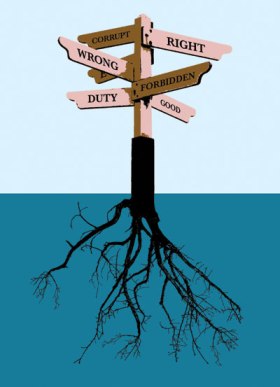
Moral development is defined as the development regarding rules and conventions about what people should do in their interactions with other people. Such development involves the development of thoughts, feelings and actions concerning standards or what is right and wrong, which includes an interpersonal and intrapersonal dimension. The intrapersonal dimension accounts for ones actions when they are not engaged social and the opposite is true for explaining the interpersonal dimension.
The social learning theory suggests that we learn via social experiences. Meaning our behaviors and actions result from what we model from others. Therefore, the social learning theory might explain moral development in children as a result of modeling observed moral behaviors and actions. When a child is provided with models that behave morally, that child is prone to adopt the observed actions.
Social learning theorists believe that moral behavior is influenced by a particular situation and that ones ability to resist temptation is closely correlated with self-control. Therefore, a child must be taught to control impulses, learn to be patient and to delay being gratified. This is best done through role modeling and providing appropriate examples. It is also suggested that when a child is rewarded for acting out a modeled behavior the likelihood of that behavior re-occurring increases. The opposite is also true; when the behavior is punished or not rewarded then the behavior will likely decrease. Therefore, it is crucial to not only provide a child with the appropriate models, but a child must be encourage for acting out moral behaviors in order to understand that such behavior is a good thing. However, when there is no reward present is when this intrapersonal dimension comes into play. This is when one does moral acts for the sake of doing what is right. It is important to instruct a child at an early age and instill within them this concept of right and wrong in order for one to act morally when it is thought that no one is watching. When no one is watching is when the true sense of morals arises.
The Rescue of the Bulgarian Jews
The Persecution of Christians Today
 By Johan Candelin
Let me start by saying that many people find it very surprising, even unbelievable, that in today’s world the largest group of people being persecuted for their faith are Christians. This seems all the more unusual because Christianity is the world’s largest religion. I am fully aware that other religions, whether Buddhist, Hindu, Muslim or others also suffer in various contexts, and we shall address these situations in subsequent articles. However, for the present we will focus on Christians, due to the urgency of the situation. Incredibly, more than 200 million people in over 60 nations are being denied their basic human rights for one reason only: they are Christians. The main reason Christians are being persecuted today is the simple fact that Christianity is growing fastest in countries where human rights are being violated or do not exist. One of my tasks as director of the Religious Liberty Commission is to represent these Christians – both Catholic and Protestant – at the United Nations Commission for Human Rights in Geneva, as well as in other contexts. I would therefore like to give a brief analysis of the global situation regarding persecution of Christians. This analysis is based on reports from 114 countries and personal visits to many countries where Christian people suffer.
THE GREAT PARADIGM SHIFT
The persecution of Christians goes hand-in-hand with some important trends taking place around the world. I’d like to name five:
1. Conflicts tend increasingly to occur within states, rather than between them. In such situations, religious tensions are likely to increase. We are all familiar with the heart-rending struggles in Kosovo, Bosnia, Sri Lanka, Sudan, Chechnya, Northern Ireland and East Timor, to name but a few.
The whole structure of the UN was created after the Second World War, and is designed to solve conflicts between states, not within them. Human rights are increasingly at the core of civil conflict, and added to that is the way countries like China, Russia and Indonesia interpret the whole issue of human rights – in other words, that human rights are each country’s own internal affair. This places two fundamental principles on a collision course with one another: the sovereignty of the state, and the universal nature of human rights.
2. Many countries with a colonial past are seeking their own identity. Very often, this has strong ties to a religion. We see this clearly, for example, in Asia: Pakistan adheres to Islam, India to Hinduism, Indonesia also to Islam, and Sri Lanka to Buddhism.
It is worth noting that the search for a national identity is strongest in five of the eight countries that together make up more than half of the world population. These are China, India, Indonesia, Bangladesh and Pakistan. In each of these countries, Christians are finding themselves in increasingly tense situations, because they are painted as bearers of the religion brought by former colonial powers, and thus are considered a threat to national harmony.
3. Developments in the Muslim world are likely to have an increasing impact on the lives of Christians within the next decade. The population growth in the Arab world is 4.3 per cent, compared with economic growth of only 0.5 per cent. The population is very young, and this creates the conditions for the growth of radical elements.
4. There is a great difference between the West’s view of reality and that of the developing countries. The West often interprets global thinking as its own world view written large. But ways of thinking, interpretation and culture differ far more than Westerners think. The West must be ready to listen, and to listen as never before.
5. I would like to say something here about the growth of the Christian Church. There is a clear misunderstanding in Europe today that religion is no longer relevant to the modern world. Nothing could be further from the truth. The amazing fact is that of the world’s six billion people, only a tiny proportion – 151 million – call themselves atheists. There are two billion Christians, 1.2 billion Muslims, 786 million Hindus and 362 million Buddhists. Religion is, and will continue to be, at the very centre of our world, at the centre of the conflicts within it, and also at the centre of how these conflicts are resolved in the next Millennium.
These five paradigm shifts are the principle reasons Christians are being persecuted today, and most likely why it will continue in the future. However, there is a sixth paradigm shift that is very important. This is partnership. The European Union is an example of political partnership, and in the financial world, we hear almost daily of some significant merger. The trend toward partnership is clear, and all of us can work very effectively together to help guarantee the human rights of Christians. At the same time, I want to stress again that religious liberty should apply to every person on this planet, regardless of their religion. The broadest international basis we have for cooperation in helping suffering Christians is the United Nations Declaration on Human Rights of 1949, especially Articles 18 and 19.
Simply put, they say that every person should have the freedom to adhere to and practice the religion he or she chooses, and to change religion without coming under pressure as a result. This obviously includes the right to keep one’s religion without being forced into another. In fact, religious rights could be said to be a principle building block, even the cornerstone, of human rights.
WHAT DO WE MEAN BY PERSECUTION?
It is clear that not all persecution has to do with religion. Many people are persecuted for ethnic, social and political reasons, but they also happen to be Christians. How do we know the difference between that kind of persecution and persecution based on their faith alone? I think we can answer it by asking a simple question: “If a person changes their religion to the majority religion of the country, will things get better for them?” If the answer is “yes,” then it seems that the persecution is solely on religious grounds. And by persecution I mean the lack of full human rights, together with some kind of suffering.
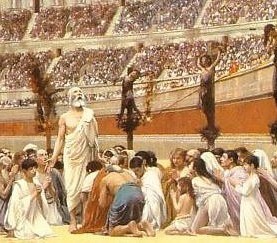
Literally hundreds of thousands of people today are being killed, brutalized, sold as slaves, imprisoned, tortured, threatened, discriminated against and arrested solely because they are Christians. They are being subjected to persecution and suffering, the extent of which we can hardly begin to comprehend, because of their faith. They ask us to shatter the silence and use our voices to express their cries. This plea is directed at us, wherever we are, today.
Persecution seems to pass through three phases. The first is disinformation. Disinformation begins more often than not in the media. Through printed articles, radio, television and other means, Christians are robbed of their good reputation and their right to answer the accusations made against them. The public opinion that easily results from being constantly fed such disinformation will not protect Christians from the second step, which is discrimination. Discrimination relegates Christians to a ‘second-class’ citizenship with inferior legal, social, political and economic standing than the majority in the country. The third stage is persecution. Once the first two steps have been taken, persecution can be practiced without normal protective measures taking place. Persecution can arise from the state, the police or military, extreme organizations, mobs, paramilitary groups, or representatives of other religions.
Religious Freedom in Postcommunist Bulgaria
Tie the priest and you will have peace in the village
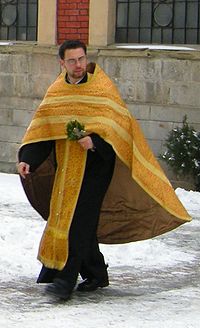 “Tie the priest and you will have peace in the village,” an ancient Bulgarian proverb says. This is exactly what the Bulgarian Chief Prosecutor did last July when he ordered police forces to raid over 250 Orthodox Churches and expel their priests who belong to the so-called Alternative Synod. The synod split from the “traditional” Orthodox Church in 1992 rejecting the authority of Patriarch Maxim, whom they claimed was installed in the 60s by the Communist Regime with the purpose of state control over the church.
The Chief Prosecutor justified his order with the recently accepted Bulgarian Confessional Act (Law of Religions). The government of Simeon hopes to finally stop the schism in the Orthodox Church, while a number of human right supporters both in and outside Bulgaria see this act and the new Law of Religions as an attempt of the state to control the religious life in Bulgaria.
Why focus on fixing the church, when Bulgaria has so much to deal with right now? The government was unable to show real improvement un Bulgaria after the promised 800 days were over. While the Internality Currency Board refused to raise minimum income to over $150 per month, the prices of goods and service continue to grow rapidly. Over one million Bulgarians have already left Bulgaria to find a better life somewhere else on the globe. The declining Bulgarian economy combined with the growing rates of crime, corruption and unemployment are not helping much either.
The events accompanying the police actions against the priest of the alternative synod were shocking. The Bulgarian medics prosecuted for allegedly infecting children with HIV in Libya remained in prison with pending death sentences, while Bulgarian government representatives are unable to find a solution of the situation. Two Bulgarian drivers were captured and eligibly murdered by terrorist in Iraq. While the Bulgarian government was still attempting to positively identify the decapitated bodies, terrorists threatened to turn Bulgaria into a blood bath due to its alliance with the United States. The following week, six Bulgarian men allegedly connected with organized crime and drug traffic, were gunned down in a Sofia restaurant by masked men driving police marked vehicles. To rightfully finish this trend, on the eve of the Olympic Games in Athens, the president of the Bulgarian Olympic Committee was broadcasted by BBC’s “Panorama” while promising to secure votes for the next Olympics in favor of London.
And in all, the most successful Bulgarian government operation was the “tying of the priests” and dealing with the schism within the Orthodox Church. This may seem to some as tying the priest in order to have peace in the village, but even more it looks like an attempt to remove the attention from other much larger problems which the Bulgarian government is simply unable to solve.
Bulgarian Law on Religions: Problematic Law Out of Step with OSCE Commitments
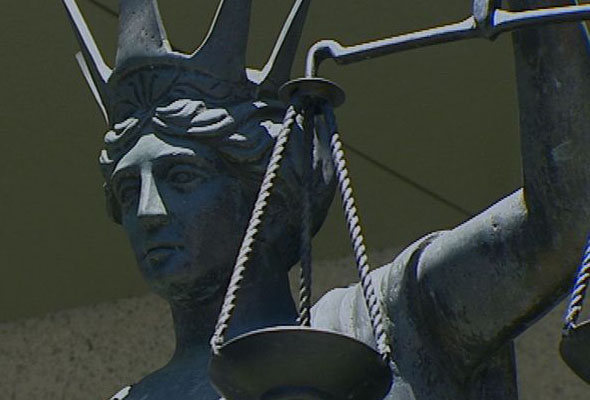 As Bulgaria prepares to assume the Chairmanship of the 55-nation Organization for Security and Cooperation in Europe (OSCE), its Law on Religions is a concern, as several provisions are out of step with Bulgaria’s religious freedom commitments as an OSCE participating State. Reports of problems with the new law are already arising. The Sofia City Court, which is mandated to handle all registration applications, has reportedly stalled on the re-registration of some groups, as the new registration scheme includes additional elements not previously required. For instance, since visas are contingent on re-registration, the Missionary Sisters of Charity and the Salesians have reportedly been denied visas. Unfortunately, in the rush to approve the legislation in December 2002, some religious communities were reportedly not consulted during the drafting process, and the government’s promise to have the draft critiqued again by the Council of Europe went unfulfilled. Also, on July 15, 2003, the law was reviewed by the Bulgarian Constitutional Court, in response to a complaint brought by 50 Parliamentary deputies. The Court upheld the legislation, despite six judges ruling against and five in favor. Under Bulgarian law, seven of the court’s twelve judges must rule together for a law to be found unconstitutional. Notwithstanding this decision on the constitutionality of the law, the following report highlights areas in need of further evaluation and legislative refinement in light of Bulgaria’s OSCE commitments on religious freedom. Concerns exist with how the Bulgarian Orthodox Church is favored over the alternative Orthodox synod and other religious groups. In addition, the new registration scheme appears open to manipulation and arbitrary decisions, thereby jeopardizing property holdings and the ability to manifest religious beliefs, as both depend on official registration. The sanctions available under the Law on Religions are also ambiguous yet far-reaching, potentially restricting a variety of religious freedom rights. It is therefore hoped the Government of Bulgaria will demonstrate a good faith effort to ensure the religion law is in conformity with its OSCE commitments. This report outlines a number of suggested changes. The government could also submit the Law on Religions for technical review to the OSCE Panel of Experts on Freedom of Religion or the Council of Europe. Either of these bodies could highlight deficiencies addressable through amendments.
GOVERNMENT RECOGNITION OF A “TRADITIONAL” CHURCH
Article 11 was crafted to force a resolution to the longstanding church dispute between the Bulgarian Orthodox Church and an alternative Orthodox synod, which split after the fall of communism. Article 11 enumerated detailed characteristics of the Bulgarian Orthodox Church, thereby establishing the synod of Patriarch Maxim above the other Orthodox synod and all other religious communities. In short, Article 11(1) attempted to settle the church dispute through legislative fiat by establishing the Bulgarian Orthodox Church as the “traditional religion,” a politically expedient decision which is inconsistent with Bulgaria’s OSCE commitments.
While Article 11(2) automatically registers the Bulgarian Orthodox Church, the other Orthodox synod is faced with going through the complete registration process. Registration is critical, as the law ties property ownership rights to legal personality. However, the process is open to manipulation where the government could deny registration to select religious groups. Considering the animosity between the Orthodox synods over property, this appears to place the unrecognized Orthodox synod at a great disadvantage. Article 11(3) does state: “Paragraph 1 and 2 cannot be the basis to grant privileges or any advantages [to the Bulgarian Orthodox Church] over other denominations by a law or sub-law.” However, while this claims no special benefits accrue, Article 11(2) is contradictory as it automatically gives the Bulgarian Orthodox Church legal personality, an “advantage” no other church or religious group receives through the law. Favoritism of this kind also creates internal conflicts within the religion law, as Article 3(1) prohibits limitations or privileges based on “affiliation or rejection of affiliation to a religion,” and Article 4(4) states “no religiously based discrimination shall be allowed.”
Considering the problematic nature of these provisions, removing Article 11(1) through amendment would allow these two religious Orthodox communities to reconcile their differences independently without government involvement. The appropriate venue for the handling of these types of disputes is the court system, not the Parliament . In addition, amending Article 11(2) either to allow automatic registration of all previously registered churches or omit entirely this provision would lessen the discriminatory effect of the law.
REGISTRATION
It is positive that the law does not require registration, nor does it establish temporal or numerical thresholds for religious communities to meet. Yet, the proper administration of the registration process has increased in importance, since many rights and powers of organizations and their communities appear tied to registration status and other avenues for legal personality have been closed. For example, Article 29(2) provides that nonprofit organizations do not have “the right to accomplish activities which represent practice of religion in public.” As a result, if a group does not obtain official registration as a “religious community,” no other options exist to provide some type of legal personality. The Law on Religions does provide guidelines for the registration process. Article 16 requires that all religious groups wishing to register must do so before the Sofia City Court. This is problematic, as it adds an unnecessary burden for groups existing outside the capital. Improvements to the law should allow the submission of national registration requests in every provincial capital court or other designated government office.
For local branches to form officially, Article 21 requires the organization to first register at the national level and then re-register at the local level through a mayor’s office. While the drafters intended this to be a perfunctory requirement, it is problematic, as it creates yet another unneeded bureaucratic hurdle to overcome. Additionally, the involvement of mayors in the registration of religious groups should be avoided, as in the past registration through mayoral offices were plagued by arbitrary and non-transparent decisions. Revisions should remove registration requirements obligating groups already registered to re-register at the local level. If local re-registration must occur, amendments should permit re-registration at a local court or other designated government office. The Article 19(2) requirement that a “short statement of religious beliefs” be included in an application, which can be reviewed by the Directorate of Religions for an “expert opinion” (Article 18), is highly problematic. This places the government in the subjective position of evaluating the beliefs of a religious community to determine if they “qualify” as a religion. Therefore, the removal of the Article 19(2) requirement is recommended, so that the Directorate of Religion cannot base recommendation for registration eligibility on the religious beliefs of an applicant group.
There are at least two instances in the Law on Religions that demonstrate the critical nature of registration. Article 5(3) appears to allow only registered religious organizations to engage in the public manifestation of religion. “The religious belief is expressed in private when it is accomplished from a specified member of the religious community or in the presence of persons belonging to the community, and in public, when its expression can as well become accessible for people not belonging to the respective religious community.” How the government will apply this article is unclear, as it attempts to distinguish the public versus the private practice of religion. If only registered religious organizations can publicly manifest their beliefs, this is inconsistent with OSCE commitments that protect the right to practice religion with or without legal entity status. It should consequently be made explicit through refining amendments that unregistered religious groups and their members have the right to engage in the public manifestation of their religious beliefs.
Furthermore, it is unclear if individual members of a religious community can own property in their personal capacity for use by the corporate body, as only registered communities can hold property under Article 24(1). The article states: “Religions and their branches, which have acquired status of a legal person, according to the procedures of this law shall have right to their own property.” This reenforces the importance of ensuring the registration process is timely and transparent. Amendments should make explicit that individual members of a religious community may own private property for use by the corporate body.
LIMITATION CLAUSE
Article 7(1) of the religion law provides: “Freedom of religions shall not be directed against national security, public order, people’s health and the morals or the rights and freedoms of persons under the jurisdiction of the republic of Bulgaria or other states.” This language is similar to other limitation clauses, but its structure is problematic, as it enunciates standards not found under Article 17 of the Vienna Concluding Document of the OSCE or Article 18 of the International Covenant on Civil and Political Rights. For example, the Vienna Concluding Document in Article 17 declared, “The participating States recognize that the exercise of the above-mentioned rights relating to the freedom of religion or belief may be subject only to such limitations as are provided by law and consistent with their obligations under international law and with their international commitments.” The next sentence is also an important qualifier, declaring States “will ensure in their laws and regulations and in their application the full and effective exercise of the freedom of thought, conscience, religion or belief.” Article 18(3) of the ICCPR stated: “Freedom to manifest one’s religion or beliefs may be subject only to such limitations as are prescribed by law and are necessary to protect public safety, order, health, or morals or the fundamental rights and freedoms of others.”
It is well settled that restrictions on manifestations of belief must be consistent with the rule of law and must be necessary in a democratic society— directly related and proportionate to the specific need on which the limitation is predicated. For example, it is not enough to justify burdensome limitations by merely arguing they are key to maintaining public order. Only when limitations further a legitimate government objective and are genuinely “necessary” can negating a religious freedom be justified. To be sure, this test is not easily met. In addition, international custom has not established “national security” as a legitimate reason for limiting religious rights, so amendments to the law should correct Article 7 to reflect the abovementioned international standards.
SANCTIONS
Article 9 of the Law on Religions allows courts to impose sanctions against groups if they determine
that an Article 7 violation has occurred. The six available sanctions available under Article 9 include:
(1) Prohibiting dissemination of certain printed publications;
(2) Prohibiting publishing activity;
(3) Restricting public manifestations;
(4) Depriving registration of educational, health or social enterprises;
(5) Cancelling activities for a period of up to six months;
(6) Nullifying registration of the legal entity of the religion.
The Article 9 restrictions are vague yet extensive in their scope, potentially curtailing a variety of fundamental freedoms. Accordingly, the use of the Article 9 sanctions list must be predicated on a finding of abuse under the Article 7 limitations clause. However, the situations enumerated in Article 7 are for exceptional situations. As these sanctions touch upon fundamental rights, use of Article 9 and the denial of these rights should not occur for mere infractions of administrative regulations. As previously discussed, international commitments make clear that limitations on the manifestation of religion are permissible only in narrowly defined situations.
A distinction must also be made between the actions of individuals and punitive sanctions on the entire religious community. It is individuals, not whole religious groups, who may be involved in criminal activities, so penalties should not punish the entire community for the actions of individuals. However, provision (3) empowers courts to restrict the public manifestation of religious views for an entire religious community, in effect restricting an individual member’s right to practice his or her faith. Provision (6) is also a concern; if a court can remove a religious group’s registration status, it is unclear who would hold their property, potentially exposing their holdings to seizure.
Concerns exist that the Article 9 sanctions list will be employed in situations not meeting international standards, thereby allowing the restriction of the freedom of speech, the freedom to the religious education of children in conformity with the parent’s convictions, and the freedom to profess and practice, alone or in community with others, religion or belief. Therefore, removal through amendment of the Article 9 sanctions list would be positive, as it potentially allows overly burdensome restrictions on basic human rights. Further concerns over potential sanctions exist in other areas of the religion law. Later in Article 37(8), the law also gives the Directorate of Religion the unchecked and potentially arbitrary powers to take complaints from citizens concerning violations of Article 7, and when deemed appropriate, forward the complaints to the public prosecutor. Allowing the Directorate to function in this manner opens the opportunity for the politicization of religious freedom issues, potentially exposing the Directorate to pressures to act arbitrarily against certain minority religious communities. Consequently, legislators are encouraged to eliminate the ability of the Directorate of Religion to forward complaints to the public prosecutor, as this role is better left with law enforcement agencies.
Article 38 has established monetary penalties for “any person carrying out religious activity in the name of a religion without representational authority.” The provision appears crafted to penalize the unrecognized Orthodox synod for using what it considers to be its name, and could easily be misused against religious communities deemed by authorities as unpopular or out of favor.
property.” This reenforces the importance of ensuring the registration process is timely and transparent. Amendments should make explicit that individual members of a religious community may own private property for use by the corporate body.
LIMITATION CLAUSE
Article 7(1) of the religion law provides: “Freedom of religions shall not be directed against national security, public order, people’s health and the morals or the rights and freedoms of persons under the jurisdiction of the republic of Bulgaria or other states.” This language is similar to other limitation clauses, but its structure is problematic, as it enunciates standards not found under Article 17 of the Vienna Concluding Document of the OSCE or Article 18 of the International Covenant on Civil and Political Rights. For example, the Vienna Concluding Document in Article 17 declared, “The participating States recognize that the exercise of the above-mentioned rights relating to the freedom of religion or belief may be subject only to such limitations as are provided by law and consistent with their obligations under international law and with their international commitments.” The next sentence is also an important qualifier, declaring States “will ensure in their laws and regulations and in their application the full and effective exercise of the freedom of thought, conscience, religion or belief.” Article 18(3) of the ICCPR stated: “Freedom to manifest one’s religion or beliefs may be subject only to such limitations as are prescribed by law and are necessary to protect public safety, order, health, or morals or the fundamental rights and freedoms of others.”
It is well settled that restrictions on manifestations of belief must be consistent with the rule of law and must be necessary in a democratic society— directly related and proportionate to the specific need on which the limitation is predicated. For example, it is not enough to justify burdensome limitations by merely arguing they are key to maintaining public order. Only when limitations further a legitimate government objective and are genuinely “necessary” can negating a religious freedom be justified. To be sure, this test is not easily met. In addition, international custom has not established “national security” as a legitimate reason for limiting religious rights, so amendments to the law should correct Article 7 to reflect the abovementioned international standards.
SANCTIONS
Article 9 of the Law on Religions allows courts to impose sanctions against groups if they determine
that an Article 7 violation has occurred. The six available sanctions available under Article 9 include:
(1) Prohibiting dissemination of certain printed publications;
(2) Prohibiting publishing activity;
(3) Restricting public manifestations;
(4) Depriving registration of educational, health or social enterprises;
(5) Cancelling activities for a period of up to six months;
(6) Nullifying registration of the legal entity of the religion.
The Article 9 restrictions are vague yet extensive in their scope, potentially curtailing a variety of fundamental freedoms. Accordingly, the use of the Article 9 sanctions list must be predicated on a finding of abuse under the Article 7 limitations clause. However, the situations enumerated in Article 7 are for exceptional situations. As these sanctions touch upon fundamental rights, use of Article 9 and the denial of these rights should not occur for mere infractions of administrative regulations. As previously discussed, international commitments make clear that limitations on the manifestation of religion are permissible only in narrowly defined situations.
A distinction must also be made between the actions of individuals and punitive sanctions on the entire religious community. It is individuals, not whole religious groups, who may be involved in criminal activities, so penalties should not punish the entire community for the actions of individuals. However, provision (3) empowers courts to restrict the public manifestation of religious views for an entire religious community, in effect restricting an individual member’s right to practice his or her faith. Provision (6) is also a concern; if a court can remove a religious group’s registration status, it is unclear who would hold their property, potentially exposing their holdings to seizure.
Concerns exist that the Article 9 sanctions list will be employed in situations not meeting international standards, thereby allowing the restriction of the freedom of speech, the freedom to the religious education of children in conformity with the parent’s convictions, and the freedom to profess and practice, alone or in community with others, religion or belief. Therefore, removal through amendment of the Article 9 sanctions list would be positive, as it potentially allows overly burdensome restrictions on basic human rights. Further concerns over potential sanctions exist in other areas of the religion law. Later in Article 37(8), the law also gives the Directorate of Religion the unchecked and potentially arbitrary powers to take complaints from citizens concerning violations of Article 7, and when deemed appropriate, forward the complaints to the public prosecutor. Allowing the Directorate to function in this manner opens the opportunity for the politicization of religious freedom issues, potentially exposing the Directorate to pressures to act arbitrarily against certain minority religious communities. Consequently, legislators are encouraged to eliminate the ability of the Directorate of Religion to forward complaints to the public prosecutor, as this role is better left with law enforcement agencies.
Article 38 has established monetary penalties for “any person carrying out religious activity in the name of a religion without representational authority.” The provision appears crafted to penalize the unrecognized Orthodox synod for using what it considers to be its name, and could easily be misused against religious communities deemed by authorities as unpopular or out of favor.
“Unity” Established by Force: The Bulgarian Government Raided Freedom of Religion And Democracy
By Viktor Kostov
About a month ago I asked for titles related to freedom of religion and church and state relations in one of the bookstores for legal literature in the Sofia University. The saleswoman, with red-dyed hair and heavy make-up, looked at me as if I were a lower species and literally turned her back to me with the words “I sell only legal literature! All kinds come to this store!” I tried to explain to the lady that the subject I am interested in is actually law of the highest, constitutional order. She answered that she is not even interested in knowing what I have to say and pointed me toward the exit. It may sound unbelievable, but this is a true story.
Also true is the sad realization that ignorance, especially of the arrogant kind and which takes pride in its own self, bears the bitter fruit of a job poorly done. Such are things with church and state relations and freedom of religion and the Law on Religious Confessions in Bulgaria today. The bitter fruit of the hastily put together Religious Law and the disregard for freedom of religion came to a head on July 21, 2004, when the prosecutor’s office raided the so-called “alternative Synod” of the Bulgarian Orthodox Church.
“Return of communism,” “unseen aggression,” and “brutal actions” described the situation, by the supporters of the alternative Synod and its leader, in which Orthodox priests where driven away from their temples where they minister. Unfortunately, this aggression was only a matter of time, given the fact that the state, represented by the executive branch and in part by the legislature, took one side in the argument between the two fractions among Orthodox Christians.
Why couldn’t it happen any other way? Because political interests were again radically involved in an internal religious affair. In the new democracy, it turns out, prosecutors are still bound by the law to the extent to which it is interpreted by the ruling political party. The prosecutor’s office is part of the broken-down Bulgarian justice system, in which your chance to predict the development of a legal case, on the basis of the facts and the law, is minimal. The combination of factors, among which is the mood of the young female judge, just out of law school, or of the clerk at the registrar’s desk who patronizes attorneys and calls them “colleagues,” makes the system unpredictable for the regular applicant. Is it possible in this heavy-to-move, hardly working system to conduct a coordinated campaign, in one single night, and in the whole country, unless the prosecutors’ offices have acted by a clear and insistent political order. Inokentii (the alternative Synod patriarch) insists, that the Chief Prosecutor Filchev, has personally gathered and instructed the prosecutors from around the nation how and when to act. The prosecutors’ statements that they just followed the law, engaging the police in the takeover of 250 properties, can sound credible only because of the position of these people. However, if we put two and two together, and look at the picture beyond the dust that the prosecutor’s office is throwing in the public’s eye, it becomes clear that not the law, but a political assignment is what has put the rusty machinery into action.
There are several arguments for this statement:
1. The Bulgarian Law on the Religious Confessions does not enlist special rights for the prosecutor’s office to intervene. In other words—the prosecutor has not read his or her law books or purposefully tries to sway the public—bad in both cases. With this in mind, the statements that the prosecutors, who locked out priests and laypeople from their places of worship, are “just doing what the law says” sounds ridiculous. A reason, for the prosecutor’s office, to intervene in the worship services, interrupt them, drag people out and seal the properties, without giving the slightest concern to the way such actions would effect believers, is in not found in the Religious Law. At the same time, the law upholds guarantees for the protection and the sanctity of the right to freedom of religion. Why didn’t the prosecutor decide to uphold the law in that part, which protects the believer and his beliefs? Why did the prosecutor not think about the damage to be done to the souls of the people, if he/she would seek only for the formal grounds for the execution of the political order? The answer is obvious: the purpose of the prosecutor was to protect himself, and his job, not the law or the citizens. The fulfillment of political assignments by the prosecutor’s office is a bad sign for the return of Soviet-type methodology of state rule.
2. The grounds for action of the prosecutor’s office and the police in Sofia was not the Law on Religious Confessions but a complaint by patriarch Maxim of “intrusion”—the legalese for “someone has settled into another’s property and does not want to leave.” The prosecutors should have had a different approach in this case of “intrusion” alleged by Maxim. This case was not about a domestic dispute, a drunken brawl or the eviction of old renters in favor of the new owner. The case affects the rights and legal interests of people as they relate to the freedom of religion and are protected by the law of highest rank. Ministers and believers in the whole country are affected. The reading of the Law on Religious Confessions, of the constitution of Bulgaria and the European Convention for the Protection of Human Rights and Fundamental Freedoms (ratified by Bulgaria and in effect in Bulgarian law) in this case was mandatory. A careful reading would have made the prosecutor’s office realize the delicate situation it finds itself in –
That it is in danger of violating the constitution, the Convention and even the Law on Religious Confessions, regardless of how bad it is. We all had to listen, instead, to the stubborn assertions that the law was upheld. Unfortunately, it could not have been any other way, because the letter of the law was obviously a good reason not to apply the spirit of the law, which is to do justice based on truth and impartiality.
3. Highly organized effort. The attorney for the alternative Synod, Ivan Gruikin, rightly noted that in its effort against crime, the prosecutors enthusiasm for upholding the law is much less vehement and uncoordinated as opposed to the struggle against the “dangerous” believers and priests (after all, they could say a prayer or conduct a liturgy). A serious effort of the whole state prosecution institution is necessary in order to force priests and worshipers from 250 Orthodox churches and properties from all over the country, only within a few hours, to interrupt their services, expression of faith and fellowship with God. The freedom of conscience and freedom of religion, and the feelings of people in this regard, which are protected not only in the LRC but in the Bulgarian Constitution as well and in the European Convention, were trampled on in a reckless manner.
4. The Directorate “Religious Confessions,” which is with the executive branch of the government, in the face of professor Zhelev, did not intervene to prevent the hasty actions of prosecutors and police. The Directorate has the duty to do that according to LRC (art. 35, para. 7 “observes the upholding of religious rights and freedoms by the responsible state officials” or “observes that officials do not violate the order of religious rights and freedom.” Just to the contrary, Zhelev expressed opinions in favor of the recognized-by-the-state, i.e. the ruling party, synod of patriarch Maxim. His words, quoted in several online news publications were: “Lets hope that the priests (of Inokentii’s synod) will come to their senses and will return into the canon of the Bulgarian Orthodox Church.” Such an attitude is an impermissible taking of sides by the state in an argument which the state cannot solve. It only confirms the impression that Zhelev, the prosecutor’s office and the police are working together for one of the parties in this church dispute. The director did not see a problem that worship services are being interrupted, that priests are being dragged to the streets by force, that there are confused, upset and hurt people, who do not really understand what, in the world, is going on. The Directorate “Religious Confessions” called for the return to the true faith, instead. Just like a director should do.
What is the reason for this blatant failure of the post-communist democracy in Bulgaria? The government leaders’ flirtations with the Orthodox Church and that of the Orthodox Church with the government played a bad joke on everyone. Bulgaria has a years old tradition imported first from the Byzantine Empire, then cultivated in a Russian and Soviet fashion, and re-imported from the north. This is the doctrine of “symphony between church and state.” If you ask well-informed Orthodox believers they would object that this is a doctrine that is typical for Eastern Orthodoxy. They would say that the Eastern Orthodox church does not seek recognition from the state. Simultaneously from history and from contemporary events, we see that the Orthodox institution has liked the support of state authority and the reverse, the state authorities have liked the support of the masses secured by the respect shown to the Orthodox church, and this has been a priority in government policy. In this respect, the state needs a united church and the church needs a strong state authority to back it up. At the same time, neither of these is needed in the contemporary free civil society.
The symphony doctrine, however, does not work well in the environment of post-communist democracy aiming at the western European, and to some extent to the American, model of free market and personal freedom. It is impossible for the government to secure the freedom of religious choice if at the same time it is striving to establish a single religious institution as its own political choice. There are two possible models of church-state relations, which are at odds at this very moment in the Bulgarian society. The first model is the one of the Russian-Byzantine practice where state-czar (president)-fatherland-people are one, and anyone, who is not of the Eastern Orthodox confession and does not support the king is a national traitor. This is the model of the historical heritage. The second model allows people to freely believe in God, to associate because of their faith and preach it, while the government guarantees them liberty, as far as they do not commit crimes and do not hurt or kidnap others. This is the model of the contemporary, postmodern civil order of individual freedoms. On the other hand, the Bulgarian model has always strived to the “golden middle”—do unto others so as to always get the benefit yourself. (Something rather different from the Golden Rule of Christ—do unto others as you want them to do unto you.) Therefore, the raid of the state against the Eastern Orthodox church led by Inokentii is an expression of this desire to “have the cake and eat it, too”, of a mechanical blending of Eastern tradition with Western image. This saying does not work in free societies, because in a place where there is freedom of speech and information, narrow-mindedness in a person’s character or in an organization’s philosophy of management cannot pass by unnoticed and unpunished by the public’s opinion. After all, in this case fundamental human rights and freedoms where brutally violated, and the democratic reforms in Bulgaria are being threatened.
From the very beginning, along with many other critics, I maintained that this new Law on Religious Confessions (2003) is a time-bomb, that it was written double-mindedly, with a great dose of opportunism and with a complete lack of understanding of the actual value of this most precious civil liberty of man—to believe in God and to worship Him. Now this time-bomb has started to inflict injuries. The church and state symphony is turning into a chaotic crescendo. If this forceful way, with such disregard for the consequences, was used to treat some of the Eastern Orthodox believers and their leaders, which are a significant part of the religious communist in Bulgaria, what treatment can we expect for the lesser number of Christians from other denominations?
The dispute, as it is put between the two Synods and their supporters, cannot be decided favorably unless one of the rivals loses all. Both groups are fighting for the recognition forcefully put in place by article 10 of the LRC. The text sets the standard that there is only one true Orthodox church in Bulgaria.
A disgruntled and overwhelmed young priest, from Maxim’s group, shown on a news report on TV, gave the solution to the problem—the schismatics had to repent and return into the realm of the true church. And who, actually, is to decide who is a schismatic and who is in the right faith? This dilemma has primarily spiritual dimensions. But because of political appetites and state-inflicted disregard of freedom of conscience and religious liberty, the issue has become a political one: the status of “schismatics” has been granted to the alternative synod by the government and the prime-minister favoring Maxim and his synod.
The solution of the dispute is not in the “repentance”, as a political category, but in repentance as the turning of the heart from selfishness to the what is righteous and true. The question remains: how should people repent if they are not convinced that repentance for them should include submitting themselves to the leadership of a patriarch in whom many see a servant from the former communist regime? At the same time, they have no legal opportunity to register an Eastern Orthodox church of their own—the law states that the Eastern Orthodox church in Bulgaria is only one. Aside from its real estate value, the sealed church properties are also communities of believers, whose souls cannot be emptied by a decree from the prosecutor’s office.
It is sad that this is happening at a time when Bulgaria needs a true resolve as a nation in its trials against war on terror. On the other hand, the conflict between the church and the state is positive since it brings the division and rivalry into the open. It is easy to heal an open wound, even at the price of shame for those who easily resort to force when its not needed. This way of bringing about “unity” is a trademark of terrorists and communists alone. It cannot be applied by the authorities of a democratic nation, as Bulgaria strives to be such. Bulgarian rulers must shake-off their wolf’s appetite to control the faith and the conscience of people and let their disputes hang over their own consciences.


