

Bezmer Residents Launch Petition Against U.S. Aircraft Deployment
Residents of the Bulgarian village of Bezmer have launched a petition opposing the deployment of American KC-135 tanker aircraft at the nearby military airbase, saying they fear the move could make the region a potential target because of tensions surrounding Iran.
The initiative was announced by Bezmer Mayor Rosen Rusev, who said support is already spreading to neighboring villages in Tundzha Municipality and across the Yambol region. The campaign follows the approval by Bulgaria‘s Parliament and government of a U.S. request to station up to eight American tanker aircraft and up to 250 military personnel at the Bezmer Air Base.
Local residents say their main concern is that the aircraft could be used for logistical missions connected to the conflict involving Iran, increasing security risks for nearby communities. “People in the village are worried because there are no clear guarantees for the security of the settlement itself,” Rusev said. “We hear that Iranian missiles can reach a target within minutes, and we do not know what system could intercept them because Bulgaria does not have modernized equipment capable of stopping such missiles.”
The petition has already been joined by the mayors and residents of Kozarevo, Malomir, Bolyarsko and other nearby villages. Signature sheets have been placed in municipal offices, shops and other public locations, with organizers planning to collect signatures until Friday. The document is expected to be submitted to the National Assembly, the regional governor of Yambol, the mayor of Tundzha Municipality and Defense Minister Dimitar Stoyanov during his scheduled visit to the region. The mayors of municipalities across Yambol Province have also prepared a joint position on regional security.
According to Rusev, support has grown rapidly. “In just one commercial establishment we counted around 100 signatures in a single day. There are several more collection points, so I believe there are already between 300 and 400 signatures, and the number is continuing to rise.” He acknowledged that residents understand the petition alone is unlikely to reverse the decision, but said some have also organized a protest outside the airbase scheduled for Friday evening.
The mayors of neighboring villages said they are hearing similar concerns from local residents. Bolyarsko Mayor Vanya Peeva said, “People follow the news and understand what is happening. The concerns are serious.” Roza Mayor Roza Encho Yorgov added that nearby villages fear they could become collateral victims if the airbase were ever targeted. “Residents believe that if anything happens at the airbase, neighboring settlements could also suffer from a conflict that we ourselves are entering,” she said.
Residents interviewed in Bezmer expressed fears that their village could become a military target. Some said they have no objection to the presence of aircraft or international military exercises, which have long been held at the base, but view the current deployment differently because they believe the tankers could directly support operations related to the Middle East.
“We are worried because Bezmer is becoming a target,” one resident said, while another added, “We don’t want them here. The whole village doesn’t want them.” Others argued that Bulgaria should avoid involvement in conflicts that do not directly concern the country. Several people said they were prepared to escalate their actions through protests, road blockades and civil disobedience if necessary.
Reports indicate that thousands of people have now joined the petition, while the first American tanker aircraft are expected to arrive at the airbase on Friday.
Defending the government’s decision, Progressive Bulgaria MP Yavor Gechev said the deployment serves Bulgaria‘s national interests and fulfills the country’s NATO commitments. Speaking on Bulgarian National Television, he noted that the presence of American military aircraft in Bulgaria is not unprecedented.
“Previously, American aircraft were stationed at Sofia Airport. Now they will be where they belong – at a military airbase,” Gechev said.
He stressed that Bulgaria is not at war with Iran and wants the conflict to end, but argued that refusing the request could damage relations with the United States, which he described as one of Bulgaria‘s key strategic partners. “These are strategic decisions. If we reject this cooperation, we risk worsening our relations with the United States, and that would also have economic consequences,” he said.
Gechev acknowledged that some supporters of the governing majority disagree with the deployment but maintained that decisions involving national security require a broader statesmanlike approach. He declined to comment on speculation linking the deployment to other diplomatic or economic issues, saying not every aspect of diplomacy can be made public.
Thousands protest in Bulgaria against the Euro
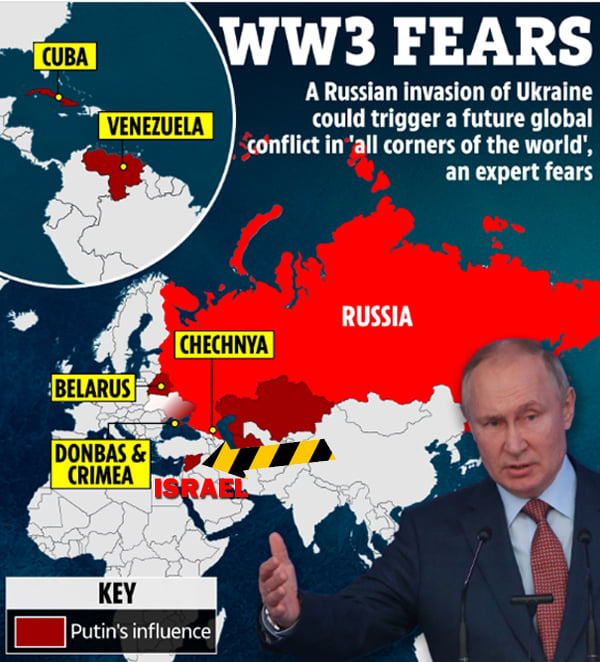
Using Crimea and Splitting Turkey in Russia’s Strategy Against Israel

Russia’s Strategic Interest in Crimea: A Geopolitical and Prophetic Analysis
The annexation of Crimea by Russia in 2014 has been widely interpreted as a strategic move to secure naval dominance in the Black Sea and strengthen its geopolitical leverage against NATO and Ukraine. However, an alternative perspective emerges when analyzed through the lens of biblical prophecy and long-term military strategy. The drying up of the Euphrates and Tigris rivers, a phenomenon recorded in contemporary hydrological studies, aligns with prophetic interpretations that suggest a future military incursion from the north into the Middle East (Revelation 16:12). Russia’s occupation of Crimea provides it with the essential infrastructure to deploy land-based forces through Ukraine, positioning itself advantageously for a southward advance into the Levant.
Recent satellite imagery and military reports indicate that Russian forces have been expanding their logistic networks southward, ostensibly preparing for extended operational capacity beyond Ukraine. This movement aligns with Ezekiel 38, which speaks of a great northern power mobilizing toward Israel. The control of Crimea facilitates the use of land corridors, including the riverbeds of the drying Euphrates and Tigris, as viable routes for ground troop movements toward the Middle East. The historical precedent of dried riverbeds being used for military campaigns, such as those in ancient Mesopotamian conflicts, reinforces the plausibility of such a strategy.
The Implications of Splitting Turkey
Turkey’s geostrategic location has long made it a contested territory between global powers. Russia’s engagement with Turkey, often vacillating between diplomacy and military tension, suggests a broader plan to divide the nation. Russia has historically sought access to warm-water ports, and controlling parts of Turkey would provide a direct route into the Mediterranean, essential for projecting power into the Middle East. Biblical prophecies, such as Daniel 11:40-45, describe a northern king sweeping through the Middle East, which scholars interpret as a reference to an eschatological conflict involving major world powers.
Military analysts have noted that Turkey’s internal divisions—ranging from Kurdish separatist movements to ideological rifts between secularists and Islamists—could be exacerbated by external intervention. If Russia were to support separatist elements or engage in a direct military confrontation with Ankara, it could effectively partition Turkey, utilizing the eastern and southeastern regions as forward operating bases for an eventual military campaign against Israel. This aligns with longstanding Russian ambitions to expand its influence over the Bosporus and Dardanelles straits, a critical chokepoint for naval power projection.
Russia’s Long-Term Strategy Against Israel
Prophetic interpretations of Ezekiel 38-39, often referred to as the War of Gog and Magog, suggest an eventual coalition of northern powers targeting Israel. Russia’s military alliances with Iran and Syria, its arms sales to Hezbollah, and its growing presence in the Mediterranean point toward a strategic encirclement of Israel. Should Russia establish a stronghold in a divided Turkey, it would gain a crucial launching pad for an invasion into the Levant, a scenario eerily resembling biblical eschatological predictions.
Furthermore, Russia’s growing economic and military ties with Middle Eastern nations indicate an effort to consolidate power in the region. If Turkey were split, Russia could fortify a southern front, allowing for coordinated military action with its allies. The prophetic significance of these developments cannot be understated, as they align with scriptural warnings of a great northern coalition advancing against Israel in the end times.
Conclusion
While conventional geopolitical analysis frames Russia’s actions as strategic posturing within a multipolar world order, a prophetic interpretation suggests a deeper significance. The annexation of Crimea, the potential partitioning of Turkey, and the alignment with Middle Eastern allies all point toward a larger eschatological confrontation. As the Euphrates and Tigris rivers continue to dry, the pathways for military movement envisioned in ancient prophecy seem increasingly plausible. Whether viewed through the lens of strategic military doctrine or biblical foresight, Russia’s actions indicate a long-term vision that extends far beyond Ukraine and deep into the heart of the Middle East.
A Call to Stand Against Demonic Works

Read more here: A CALL


