

David Wilkerson in Bulgaria
On April 7, 2005, David Wilkerson arrived in Bulgaria for a nation-wide crusade. The services were held on April 8-10 in the National Palace of Culture to enhance the work of local pastors and ministers. Believers from virtually all evangelical denominations in the country were present. Representatives from various denominations and whole congregations joined together on Sunday morning in auditorium 1 of the National Palace of Culture in Sofia for the largest evangelical service held in Bulgaria in recent years.
Bulgarian Pentecostals
 Fifteen years after the fall of the Berlin Wall, the Bulgarian Protestant movement claims over 100,000 members. This number is almost ten times higher than a 1975 German study which presented proof of approximately 13,000 “known” Protestants in Bulgaria. In the 1980s, this number had grown to 55,000, as this was the time when many Western missionaries were able to visit Bulgaria and gather information about the underground churches outlawed by the Communist Regime.
Although international reports confirmed the existence of over 100,000 Protestants in Bulgaria as early as 1994, the Bulgarian National Statistical Institute counted only 42,000 Protestant believers in Bulgaria for the 2002-2003 National Census. This number was detested recently by Dr. Stephen Penov, a professor at the Sofia University and a member of the Bulgarian Academy of Science, who has served as a Parliament expert on human rights and faith confessions. Dr. Penov stated that the members of classical Protestant denominations in Bulgarian exceeded 100,000 with over 60,000 identified as classical Protestants and a membership in the new Protestant denominations of approximately 50,000. During the past fifteen years, Bulgaria has experienced an ongoing Pentecostal revival. Therefore, it is not a surprise that over eighty percent of Bulgarian Protestants are Pentecostal or claim Pentecostal experience.
Protestant work on the Balkan Peninsula began in the 1800s when British and American missionaries were allowed to enter the Ottoman Empire. In the 1820s, the British Bible Society developed a Protestant translation of the Bulgarian Bible, which was completed and published in Constantinople in 1871. During this same period, various Protestant denominations began mission work in Bulgaria, among which were Congregationalists (1856), Methodist (1857), Baptists (1865) and Seven Day Adventists (1891). In 1871, the first Bulgarian Protestant Church was founded in the town of Bansko. By the time Bulgaria was liberated in 1878 and became an independent Balkan state, Protestantism was well established in the Bulgarian culture.
Pentecostalism was introduced in Bulgaria in 1920 as Ukrainian immigrants Zaplishny and Voronaev preached in the Congregational church at the Black Sea port city of Bourgas, where several were baptized with the Holy Spirit. This event marked the beginning of Bulgarian Pentecostalism.
In the next decade, the movement had spread throughout the country. The establishment of a consistent national structure occurred under the leadership of Nikolai Nikolov. The new denomination was formally recognized as the Union of the Evangelical Pentecostal Churches in Bulgaria, at a national assembly on 28-31 March, 1928. The organization, also known as the Pentecostal Union, was affiliated with the Assemblies of God denomination.
Legally, the newly formed organization was required to register with the Bulgarian government. This caused a great deal of controversy and division. A conservative Pentecostal group, with congregations located mainly in Northern Bulgaria, emerged from the split and adopted the name, Tinchevists, after the name of the leader Stoyan Tintchev. The Tinchevists, who are often called Northern Brothers due to the fact that most of their congregations were located in Northern Bulgaria, later became commonly known as the Bulgarian Church of God (lit. Bulgarian God’s Church).
The split between the Pentecostal Union and the Church of God was mainly due to leadership instability and internal organization disagreement. Unfortunately, due to the historical developments which followed, true attempts to reunite both Pentecostal wings did not take place even after the original leaders were replaced.
In 1944, the Communist Revolution took place in Bulgaria. In 1949, Communist authorities tried and convicted fifteen protestant leaders on false charges of treason and espionage. The division among Bulgarian Pentecostals continued during the Communist Regime. The Pentecostal Union pursued legal existence by registering with the Communist state. This action led to the government’s interference with church business and the implanting of secret agents within the denomination’s structure.
The Bulgarian Church of God, on the other hand, chose to remain underground and was severely persecuted by the authorities. Archives report that in 1974, the Bulgarian Church of God had only 600 members nationwide. This number grew to 2,000 members with congregations in 25 cities by 1981 and doubled by 1986 when the denomination was affiliated with the Church of God (Cleveland, TN).
At the same time, the Bulgarian Pentecostal Union had approximately 10,000 members and when the Berlin Wall fell, the denomination entered the Pentecostal revival that swept the country. In the decade that followed, the Pentecostal Union multiplied its congregation to 500 with over 50,000 members and adherents. A recent interview with Ivan Ivanov, the student pastor of the Pentecostal College in Sofia, indicated that the membership of the Pentecostal Union might have experienced a decline since 2002.
Meanwhile, the Bulgarian Church of God continued to grow reporting over 32,000 members with close to 400 congregations in 2001. Its work among the ethnic minorities in the country has resulted in the emergence of large Roma congregations like the ones in Samokov with 1,700 and in Razlog with 450 members.
It is reasonable to ask the question why is Pentecostalism so attractive to Bulgarian culture in the beginning of the 21st century? How is Pentecostalism responding so well to the need for faith within the postcommunist Bulgarian society? What is the reason Pentecostalism has spread so rapidly in the postcommunist age? Is Pentecostalism simply filling a spiritual gap or is it successfully responding to postmodern thinking?
The answers to the above questions are found in Pentecostal theology, which claims the “five-fold Gospel.” The results of a recent survey of one hundred randomly selected Bulgarian Protestants asking about the fundamentals of their faith is shown in the following table:
| Question | Yes | No |
| Does a person have free will? | 78% | 22% |
| Can a person choose to be saved or not? | 75% | 25% |
| Must a person accept Jesus Christ as a personal Savior in order to be saved? | 97% | 3% |
| Can a person lose his/her salvation? | 75% | 25% |
| Is the use of alcohol sin? | 60% | 40% |
| Can a person be saved without being baptized in the Holy Spirit? | 72% | 28% |
| Are you baptized with the Holy Spirit? | 63% | 37% |
| Have the spiritual gifts described in the Bible ceased? | 10% | 90% |
| Are there apostles today? | 64% | 36% |
| Do you go to church each week? | 73% | 27% |
| Do you pray daily? | 88% | 12% |
| Do you read the Bible daily? | 77% | 23% |
| Do you fast more than once a week? | 35% | 65% |
The last characteristic is prompted by the obvious fact, that where two or three Bulgarian Protestants agree, one disagrees with them. It is for future researchers to determine if this is a reflection of Bulgarian cultural mentality, suspicion remaining from the Communist Regime or simply Pentecostal experiential curiosity with existential need for opposition of social norms even within itself.
Fortunately, Bulgarians remain in almost complete agreement on issues such as the person and work of Jesus Christ in the salvific mission of God and the importance of the Holy Spirit in the mission of the church. Perhaps, these are the points of agreement which future Bulgarian Protestants should use to build unity and construct strategies for the future development of the movement. Because these also serve as the cornerstone of Pentecostal doctrine and practice, a movement toward unity within the Bulgarian Protestant movement should be initiated by Bulgarian Pentecostals. However, before such initiation can be realized, Pentecostals must reach a balance between their numerical advantage and their social action.
When East Met West
 Fear not: for I am with thee: I will bring thy seed from the east, and gather thee from the west. (Isaiah 43:5, KJV)
And I say unto you, that many shall come from the east and west, and shall sit down with Abraham, and Isaac, and Jacob, in the kingdom of heaven. (Matthew 8:11, KJV)
God promised to gather His people from the East and the West in the last days. With the world’s present fragmentation, this prophecy can be fulfilled only through divine intervention. The miraculous initiation of God’s plan began with the fall of the Berlin Wall in 1989.
With the collapse of the Berlin Wall, the Old Continent was introduced to a new set of opportunities and obstacles as the vision of a unified Europe quickly materialized. The clashing of two sociopolitical extremes, kept apart for half a century created a host of pressing dilemmas. In the midst of economical, political, social, cultural and simply human diversities, religion played a central role throughout the process that culminated in the emergence of the European Union. The religious reformative processes within Europe were not foreign to Bulgaria, a small post-Communist country located in the corner of Europe, the place where the East and the West, Europe and the Orient, Christianity and Islam have met for centuries.
After the exodus from Communism, the Bulgarian church quickly found itself unprepared for the role of religious frontier. The Orthodox majority, historically striving for symphony between church and state, remained insecure and drained from its symbiotic half-century existence with the Communist Regime. This condition quickly resulted in ongoing series of internal struggles and splits.
At the same time, the Protestant movement retained strength in some of its most powerful communities through the existence of underground churches. As freedom presented opportunity, Protestantism quickly spread. Pentecostal wings, represented by main stream denominations like the Church of God, the Assemblies of God and some newly found independent charismatic formations were primarily responsible for the rapid growth. While Orthodoxy remained a significant majority fide nomine tenus and the Catholic Church retained membership of 70,000, the Pentecostal revival which swept Bulgaria from 1989 to 1995 claimed over 100,000 new believers.
Unfortunately, the first steps toward freedom were sporadic and unplanned. The rapid growth could not compensate the lack of training and leadership, which the Protestant communities experienced under Communism. Global fast-paced change swept Eastern Europe, catching the Bulgarian church unprepared. The Protestant movement was unable to become a direct beneficiary of the freedom which it had long prophesied and fervently expected. The incapacity of the Protestant movement contributed to a preposterous preponderance of apathy in every area of church life:
1. Leadership: During the Communist Regime, the Protestant churches were constantly bombarded with direct denial of their independent existence as free religious communities. Insufficient leadership training created numerous deficiencies including inadequate knowledge of church governing procedures, low levels of personal and corporate accountability and ignorance of the church’s political and social roles. After the fall of the Wall, these crises in leadership quickly produced congregational splits and added to the confusion generated by the socio-economical struggles in the young Bulgarian democracy.
2. Religious freedom: State control and direct interference in church business continued even after 1989 through a government agency called Directorate of Religious Affairs. The agency could not provide the intended balance between church and state due to its default state ties. Its bureaucratic management style and lack of experts on all of the represented religious groups facilitated the legislation of regulations and actions which have led to continuous tensions between the various religious groups. Many Bulgarian and international observers have noted that the present situation may have been orchestrated by the state to control the religious life in Bulgaria by creating a complete dependence on the Directorate of Religious Affairs.
3. Communication: During the regime, the underground church discouraged official administration and communication due to fear of persecution. In the era of freedom, this practice continued, limiting contact between church leadership and local congregation. Lack of communication resulted in the failure to relate reverence of protestant tradition to the younger generation.
4. Postmodernism: Due to a focus on political and economical issues, the church in Bulgaria and the Bulgarian culture never realized the speed with which the emerging postmodernism entered 21st Century Bulgaria. The introduced secularism maintained the atheistic trend used as social foundation by the Communist Regime. Within the church, postmodern supporters quickly produced complete denial of historical and theological progress, demoralization and discontinuity with Biblical holiness.
5. Theology: The unification of Europe opened doors for travel and immigration, which initiated a theological exchange for which the Bulgarian church was unprepared. Subconsciously and inescapably, foreign theology flooded the Bulgarian church without the test of time and experience.
Perhaps the above list may not seem that much different than the multitude of issues currently faced by Protestantism around the globe. However, the situation associated with the meeting of the East and West in Bulgaria is defined by a distinguishing feature – the mentality of the people. It is there that the political, economical and, not lastly, theological transformations must take place. Without such transformations, even liberated, the Bulgarian church remains underground in reality.
The meeting of East and West facilitated the unification campaign occurring in Europe. The push towards a unified Europe shaped the formation of religious freedom in Bulgaria as Bulgarian politicians quickly implemented a new law of religions to replace the 1945 Confessions Act composed and used by the Communist Regime. The new legal definition was an unsuccessful attempt to impose a governmental solution to the crises experienced by the Orthodox Church and other religious communities in Bulgaria. The results were disastrous. On July 21, 2004, in a preplanned action upon the Chief Prosecutor’s order, the police stormed through 250 churches, detaining clergies in controversial raid to restore proprietorship of the official Bulgarian Orthodox Church.
What has become obvious thus far is the fact that state, law or government are unable and should not attempt to dictate the existence or actions of the church which as a divinely established institution holds a predominate place above them. Neither constitution, nor human law, but the Bible alone must be the source for transformation and reconstruction of the Bulgarian Church. The Bulgarian Christians must reclaim their past as a persecuted church which knows from experience how to go through persecutions and survive. At the same time, the persecuted church must continue to ask the question, how is it possible for a church to preserve its Biblical identity without going through persecutions? It is from this quest for Biblical identity in postcommunist and postmodern context, that a theology of freedom will emerge to respond to the needs and demands of the Christian community in Eastern Europe.
Christ is Risen
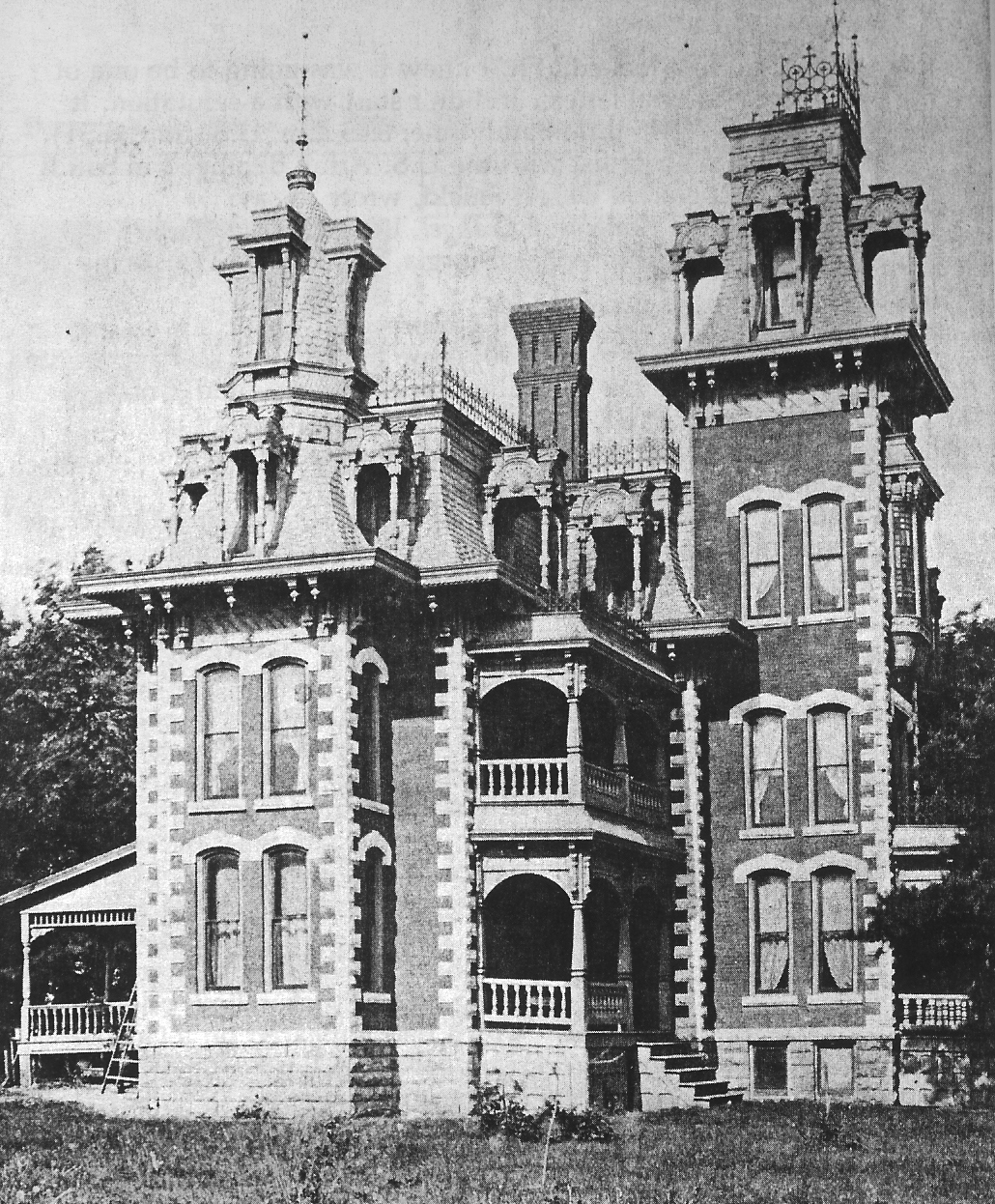 About 11 pm on December 31, 1900 at the Bethel Healing Home in Topeka, Agnes Ozman was baptized in the Holy Spirit with the evidence of speaking in tongues after Charles Parham had prayed for her. The beginning of the year 1900 marked the genesis of the Pentecostal era.
Over one hundred years latter we are living in a time of great need for a fresh move of the Holy Spirit. In the beginning of this New Millennium we are again the Church of the first century. Once again, we are to rediscover, reclaim and repossess the power of Pentecost, which the Early Church operated in.
We are approaching this Easter season with great expectations for a mighty move of Christ’s resurrection power. We are reminded by the Word of God that this Easter, two thousand years later, He can still move stones, He can still walk through locked doors, He can still speak peace to His disciples and He can still baptize with the Holy Ghost. We are reminded that He cannot be found among the dead any longer, because Christ has risen – He has risen indeed.
How Do We Do Ministry in Bulgaria? (Part 2: Pastoral Teams)
 The foundation of the Pastoral Teams ministry paradigm is the use of ministry teams in the parallel provision of pastoral care for a group of churches located in close proximity. The method has proven useful in situations with shortage of ministers, newly found churches or satellite church model. It is designed to dynamically accommodate the needs of all congregations included in the program and provide for the training of local ministers who can continue the work.
Cup & Cross Ministries first implemented the ministry model using pastoral teams in 1995 during the establishment of the Bulgarian Church of God in Chicago. A similar strategy was designed for our outreach team in Bulgaria, Mission Maranatha. The strategy has been in use with the churches in the Yambol region for over eight years.
In the beginning of the process, two separate teams provided pastoral care through 12 services per week to 5-6 local congregations. In less than six months, the work of the pastoral teams brought to existence two brand-new congregations.
Once the number of churches participating in the outreach passed ten, it was time for the implementation of the second phase of the strategy. The number of ministers in the pastoral teams was increased gradually. The newly included members were trained and then assigned to a group of churches. At the same time people within the local congregation were trained to participate in the ministry process.
Today, Cup & Cross Ministries’ teams provide pastoral care to 19 congregations through over 100 services per month. Since in the Bulgarian Church of God tradition, pastors do not receive salary, the model of pastoral teams has given an opportunity to enlarge the outreach of the church beyond the traditional scope into a larger vision for the future.
Society for Pentecostal Studies Annual Meeting
 Cup & Cross Ministries will participate in the 34th annual conference of the Society for Pentecostal Studies. The meeting will take place on March 10-13, 2005 in Virginia Beach at the campus where Regent University, CBN and the 700 Club are located. The Society’s meeting involved world renowned scholars who study Pentecostalism, as well as doctoral students from Regent University’s renewal theology program. Cup & Cross participated in the mission’s presentation of the meeting. The full schedule can be viewed here.
Country Reports on Human Rights Practices – 2004
 Released by the Bureau of Democracy, Human Rights, and Labor
February 28, 2005
Bulgaria is a parliamentary democracy ruled by a coalition government headed by Prime Minister Simeon Saxe-Coburg Gotha. The Government took office in 2001 following the victory of his National Movement Simeon II (NMSS) party in parliamentary elections that were deemed generally free and fair despite some media irregularities. Following presidential elections in 2001, Georgi Purvanov, former leader of the Bulgarian Socialist Party (BSP), began his 5-year term in 2002. The Constitution provides for an independent judiciary; however, the judiciary suffered from corruption and wide-ranging systemic problems.
The Ministry of the Interior (MOI) is responsible for internal law enforcement. The National Investigative Service (NIS), which provides investigative support to prosecutors on serious criminal cases, is a judicial branch agency and therefore not under direct executive branch control. While civilian authorities generally maintained effective control of law enforcement officers, there were some instances in which law enforcement officers acted independently of government authority. Some law enforcement officers committed serious human rights abuses.
The country has a market-based economy that was primarily service based and a population of approximately 7.8 million. At year’s end, gross domestic product growth was estimated at 5.3 percent, and cumulative inflation was 6.1 percent. While official unemployment in November was 11.9 percent, down 1.6 percentage points from the beginning of the year, the National Statistical Institute (NSI) reported that long-term unemployed persons accounted for over 60 percent of total unemployment.
The Government generally respected the human rights of its citizens; however, there were problems in several areas. Law enforcement officers beat and mistreated suspects, prison inmates, and members of minorities. Arbitrary arrest and detention were problems. Problems of accountability persisted and inhibited government attempts to address police abuses. Conditions in some prisons and detention facilities were harsh. The executive and judicial branches continued to struggle with wide-ranging systematic problems and suffered from serious corruption.
There were restrictions on freedom of the press. The Government restricted freedom of religion for some religious groups and societal discrimination and harassment of nontraditional religious minorities persisted but were much less frequent than in previous years. Societal violence and discrimination against women were problems. Conditions for children in state institutions were poor, and because of a lack of funds, the social service system did not assist homeless and other vulnerable children adequately, notably Roma and children with mental disabilities. Trafficking in persons was a serious problem, which the Government took some steps to address. There was some discrimination against persons with disabilities and a serious problem of discrimination against Roma. Child labor was a problem.
RESPECT FOR HUMAN RIGHTS
Section 1
Respect for the Integrity of the Person, Including Freedom From:
a. Arbitrary or Unlawful Deprivation of Life
There were no politically motivated killings by the Government or its agents; however, on March 27, a police officer shot and killed a 25-year-old Rom in Plovdiv after he reportedly refused to cooperate with police and ran away during a routine traffic check. The MOI initiated an investigation and temporarily suspended two officers from duty. The investigation was ongoing at year’s end.
There were no developments in the case against the forest guard charged with murdering Stoyan Lazarov in August 2003, near Kyustendil.
On November 4, the Sofia Appellate Court heard the appeal of the five defendants (three Bulgarians and two Ukrainians) sentenced to life imprisonment in November 2003 for the 1996 murder of former Prime Minister Andrey Lukanov.
b. Disappearance
There were no reports of politically motivated disappearances.
c. Torture and Other Cruel, Inhuman, or Degrading
Treatment or Punishment
The Constitution prohibits such practices; however, police commonly beat criminal suspects, particularly during initial interrogations.
Criminal suspects in police custody run a significant risk of being mistreated, most often during initial interrogation. According to the Bulgarian Helsinki Committee (BHC), the number of complaints of police abuse during detention decreased from 50 percent of detainees in 1999 to 30 percent during the year. In July 2003, the MOI issued instructions for medical personnel in all detention centers to investigate and document all injuries and traumas suffered by detainees. Medical examinations were conducted in areas where nonmedical personnel were not permitted access; prosecutors were informed if medical personnel believed injuries or traumas were a result of torture or maltreatment. However, human rights groups claimed that allegations of police abuse were very seldom properly investigated, nor were offending officers consistently punished.
On January 16, two police officers unleashed their dog on Assen Zarev, a Rom, in Sofia, after questioning him about the whereabouts of some other men. The officers reportedly beat Zarev and threatened to shoot him. The police released Zarev after firing warning shots to disperse the gathered crowd and later, the police officers stated that some of the Roma had assaulted them. Zarev reportedly obtained a forensic medical certificate, describing injuries consistent with the allegations of ill treatment.
On March 22, police from the Second Police Station in Plovdiv handcuffed and beat 22-year-old Boris Daskalov after he was summoned for questioning. The BHC reported that Daskalov was beaten on the soles of his feet with rubber truncheons and a piece of cloth placed in his mouth to silence him. He was released the following day. After obtaining a forensic medical certificate for the injuries, he filed a complaint with the military prosecutor. In April, the MOI Inspectorate confirmed that the police officers exceeded their powers; as a result, two police officers were dismissed, and their direct supervisor was demoted.
Under the criminal code, any complaints about police beatings are required to be heard by judges. Human rights monitors reported that they received many complaints from persons who were too intimidated to lodge an official complaint with the authorities. Human rights observers charged that police sometimes handled minor offenses by arresting suspects, beating them, and releasing them within a 24-hour period, so that no judicial involvement was required (see Section 1.d.).
Conditions in some prisons remained harsh and included overcrowding, inadequate lavatory facilities, and insufficient heating and ventilation. All prisons were more than 70 years old. The Government expected that the introduction of a probation system in 2005 would partially alleviate the problem of overcrowding in prisons. At the end of June, the average prison density was 122.2 percent, with overcrowding at the prison in Bourgas being the worst (208.4 percent density); only the youth labor correction hostel in Boichinovtsi, the women’s prison in Sliven, and the prison in Pazardjik were not overcrowded. The amount and type of food served was based on a table approved by the Ministry of Justice (MOJ) in coordination with the Ministry of Health and the Ministry of Finance. To meet the minimum caloric consumption, the average cost of food per day per prisoner was approximately $0.79 (1.18 leva); however, only two-thirds of that amount was allocated for food in the prisons budget. Nongovernmental organization (NGO) prison monitors reported that brutality by prison guards against inmates continued to be a problem, despite MOI instructions in August 2003 on detention procedures that were intended to reduce abuses. There were also reports of brutality among inmates. The process for prisoners to complain about substandard conditions or mistreatment did not function effectively. A new detention center opened during the year in Turgovishte and 13 other detention centers were closed due to poor and inadequate conditions, bringing the total number of detention centers to 52. Two more new detention centers (in Elhovo and Bourgas) were under construction. The MOJ reported that, at year’s end, there were 858 charged persons in the country’s detention centers and 10,871 persons (of whom 348 were arraigned, 1,640 were in trial phase, and 8,883 were convicted) in the country’s 12 prisons.
Men and women were held in separate prisons; the prison in Sliven was reserved for women. In all prisons, pretrial detainees were held separately from convicted prisoners. The MOJ also reported that there were 90 minors in the labor correction hostel in Boichinovtsi, which was used to hold persons under age 18 and was less restrictive than prisons.
The Government generally permitted requests by independent observers to monitor conditions in most prisons and detention facilities.
d. Arbitrary Arrest or Detention
The Constitution prohibits arbitrary arrest and detention; however, there were some restrictions on these rights.
The MOI is responsible for oversight of internal law enforcement including activities of the National Police, the National Service for Combating Organized Crime (NSBOP), the National Security Service (civilian domestic intelligence), the National Gendarmerie Service (paramilitary police), and the Border Police. Public order services, such as the National Intelligence Service and National Bodyguard Service, were not subject to adequate judicial, executive, or legislative oversight of their activities or budgets. Impunity remained a problem; problems of accountability inhibited government attempts to address police abuses.
The MOI reported that 37 complaints of corruption by police officers were filed with the Military Prosecution Service between January and October. During the same period, 69 police officers were fired for corruption.
In March, all police officers received a copy of the 2003 Police Code of Ethics, which was also included in the training curricula at the Police Academy and in continuing education programs for police officers. The curricula at the Police Academy and the Officers’ Schools also included human rights-related training in their mandatory courses. Training in combating trafficking and assisting trafficking victims was also offered to active-duty officers (see Section 5, Trafficking).
Although warrants are not always required for arrest, police normally obtained them from a prosecutor prior to apprehending an individual. If the person was released within 24 hours without being charged, there was no judicial involvement in the case (see Section 1.c.). Persons could be detained for no more than 24 hours at the request of an investigator or police officer; however, detention could last for up to 72 hours if ordered by a prosecutor.
The law provides for bail, and it was widely used.
The Constitution provides for access to legal counsel from the time of detention. In 2002, the MOI instituted a standard declaration process for detainees to indicate their need for access to legal counsel, medical attention, and family members.
While there were some continuing violations, the Government generally observed the statutory limit of 1-year for pretrial detention or 2 years in the case of the most serious crimes. In the event of a conviction, the time spent in pretrial detention was credited toward the sentence.
e. Denial of Fair Public Trial
The Constitution provides for an independent judiciary; however, problems in the judiciary remained, including a lack of transparent and neutral standards for assigning cases, poor coordination between magistrates (prosecutors, investigators, and judges), corruption, and cumbersome procedures. Human rights groups complained that magistrates sometimes failed to pursue crimes committed against minorities. There were complaints that the Supreme Cassation Prosecution led by the Chief Prosecutor failed to vigorously prosecute serious criminal cases. In addition, the Supreme Cassation Prosecution refused to cooperate with international observers that advocated for judicial reform and spoke out against judicial corruption.
Crime and corruption remained primary concerns of the Government. The inter-ministerial anticorruption commission, established in 2002, coordinated the efforts of each government agency’s internal inspectorate in fighting public corruption and engaged in public awareness campaigns. During the year, the commission received 196 complaints of corruption, of which 11 were referred to the prosecution service for further action. In addition, the commission referred 40 complaints against magistrates to the Supreme Judicial Council’s anticorruption commission.
While the Government implemented several measures in the fight against corruption, the European Union (EU) reported that it remained a problem and said that renewed efforts were needed to combat it, including tackling high-level corruption. The European Commission’s regular report on Bulgarian accession to the EU, released in October, cited the need for significant further efforts to fight against organized crime and corruption, including further reforms of law enforcement and the judiciary. Few major organized crime figures have been prosecuted to date and only two have been convicted. According to the NSBOP, approximately 110 organized crime groups operated in the country.
Many observers believed that reforms were essential to establish a fair, impartial, and efficient judicial system. In March, regulations were enacted to implement the 2003 constitutional amendments limiting magistrates’ immunity and increasing their accountability. Additional amendments to the constitution and the Judicial Systems Act, particularly addressing the role of investigators, were prerequisites to EU accession. During the year, the SJC replaced a large number of court chairs, head prosecutors, and head investigators at all levels of the judiciary in response to calls for judicial reform.
Observers noted modest improvement in the efficiency of moving cases through the criminal system, although many serious systemic flaws remained. Long delays in trials were common, and investigators and police continued to struggle with a large backlog of outstanding investigations.
The court system consists of regional courts, district courts, appellate courts, military courts (on the district and appellate levels), the Supreme Court of Cassation, and the Supreme Administrative Court. The Constitutional Court, which is separate from the rest of the judiciary, is empowered to rescind legislation that it considers unconstitutional, settle disputes over the conduct of general elections, and resolve conflicts over the division of powers between the various branches of government. Military courts handle cases involving military personnel (including MOI personnel) and some cases involving national security matters. As a part of the judiciary, military courts are independent from the military.
Judges are appointed by the 25-member SJC and, after serving for 5 years, cannot be removed except under limited, specified circumstances. The 12 justices on the Constitutional Court were chosen for 9-year terms; one-third were selected by the National Assembly, one-third appointed by the President, and one-third selected by judicial authorities. The internal mechanisms that inhibit corruption in the judiciary were inadequate.
The Constitution stipulates that all courts shall conduct hearings in public unless the proceedings involve state security or national secrets, and authorities generally respected this provision. Defendants have the right to know the charges against them and are given ample time to prepare a defense. Defendants have the right to family visits and to examine evidence. To enable a speedy trial, investigations must last no more than 2 months under normal circumstances, although the head district prosecutor may extend this to 6 months, and the Chief Prosecutor may extend this to 9 months. Defendants in criminal proceedings have the right to confront witnesses; they also have a right to legal representation in all cases. Romani Baht, a Roma advocacy NGO, provided legal counsel, particularly in cases of discrimination and police abuse. When punishment of 10 years’ imprisonment or more could be imposed or when the defendant was a juvenile, a foreigner, had mental or physical disabilities, or was not present, the participation of a defense attorney is mandatory. The right of appeal is provided for and was used widely.
During the year, an NGO appealed the 2003 increase in fees levied on claimants in civil courts, and the Supreme Administrative Court overturned the increase. The practice of plea-bargaining had not yet effectively lightened the caseload for prosecutors. In addition, plea-bargaining was perceived by many citizens as a way for the wealthy to buy their way out of charges.
During the year, the Act to Combat Juvenile Antisocial Behavior was amended to improve due process procedures. The amendments introduced the right to an attorney during hearings and also transferred local commissions’ competence for imposing stricter measures (i.e. detention in social or pedagogical boarding schools and educational reform boarding schools) to regional courts. The amendments also ensure the right to appeal all decisions of the local commission to the regional court; regional court rulings for internment in social or pedagogical and educational reform boarding schools can be appealed to the district court.
There were no reports of political prisoners.
f. Arbitrary Interference With Privacy, Family, Home, or Correspondence
The Constitution prohibits such actions, and the Government generally respected these provisions in practice.
Section 2
Respect for Civil Liberties, Including:
a. Freedom of Speech and Press
The Constitution provides for freedom of speech and of the press, and the Government generally respected these rights and did not restrict academic freedom. Some NGOs reported that significant numbers of journalists continued to feel constrained in their reporting because of media outlet management, political influence, and outside pressure.
In an open letter to the Prime Minister in June, 266 judges criticized the manipulation of the media by MOI officials. Domestic organizations cited politically motivated intimidation and dismissal of journalists as a major problem.
A variety of newspapers were published freely by political parties and other organizations representing the full spectrum of public opinion.
There were no formal restrictions on programming and both television and radio provided a variety of news and public interest programming. State-owned media presented opposition views; however, media observers believed that the inadequacy of existing legislation left it vulnerable to government pressure. Despite this vulnerability, Bulgarian Telegraph Agency (BTA), the state-owned news agency, was highly regarded as being unbiased, and the state-owned Bulgarian National Radio (BNR) was often one of the most outspoken critics of the Government and its policies.
The state-owned Bulgarian National Television (BNT) broadcast Turkish-language newscasts, and local affiliates of BNR broadcast limited Turkish-language programming in regions with ethnic-Turkish populations. The state-owned Radio Bulgaria increased its Turkish-language broadcasting from 30 minutes to 3 hours per day and introduced an hour of Roma-language programming per week. The state-owned Radio Hristo Botev dedicated over 2,000 hours of its annual 7,800 broadcast hours to minorities, ethnic issues, and a wide range of religious affairs. Foreign government radio programs had good access to commercial radio frequencies.
There were three reported cases of violence or threats of violence against journalists. On January 16, the editor-in-chief of the Lovech-based newspaper Naroden Glas, Tsvetan Todorov, reportedly received death threats for reporting that former Socialist prime minister Zhan Videnov worked for a local meat processing plant. In mid-February, the Romani news agency De Facto closed its Sofia office for a week following a number of anonymous threats. On September 1, following a small explosion the previous night in front of its offices, the second largest circulation national daily newspaper 24 Hours received telephone threats that it could expect even greater explosions if its journalists continued their investigative reporting about organized crime groups.
Amendments passed in 2002 to the Radio and Television Act (RTA) require the Council for Electronic Media (CEM) to issue radio and television programming licenses only in accordance with the Strategy for Developing Radio and Television Activities, which was developed by the CEM and Communications Regulation Commission jointly and submitted to the National Assembly; however, the National Assembly still had not approved the Strategy by year’s end. As a result, the CEM could not promulgate new licensing procedures, and it was not clear when the Government would resume licensing electronic media. While the CEM could not initiate new tenders for television and radio programming licenses, it was still able to transfer, amend, revoke, and terminate such licenses and regulate programming.
In March, the CEM voted five to four to fire BNT Chairman Kiril Gotsev for his decision over 2 years earlier not to allow the airing of a rebuttal to comments made in a political talk show. The four dissenting CEM members said that the motives for dismissal would not hold up in court and walked out of the meeting after the vote. On October 14, the Supreme Administrative Court overturned the CEM decision.
During 2003, the CEM imposed 77 fines against television operators and 13 fines against radio operators for violations of the RTA. In November 2003, the CEM revoked the license of Union Television, owner of the satellite channel Den, citing grave violations of the RTA for allegedly broadcasting a television show that impaired morals. Union Television appealed the decision, and in July, the Supreme Administrative Court overturned the CEM’s revocation of Union Television’s license.
Defamation is punishable under the criminal code. In most cases the courts defined libel and interpreted the law in a manner that favored journalistic expression. Fines for libel ranged from approximately $2,000 (3,000 leva) to approximately $6,670 (10,000 leva); fines for slander ranged from approximately $3,335 (5,000 leva) to $10,000 (15,000 leva). While these fines remained a heavy penalty in the context of the country’s economy, a report issued by the BHC claimed that most damages and fines assessed in defamation cases were of a reasonable nature. Amendments to the criminal code in 2002 eliminated imprisonment as a penalty for defamation. The amended provisions also removed the need for a prosecutor to file an indictment for slander or libel by changing the nature of the offense to a private one where complaints are filed directly by the party subject to slander or libel. According to the BHC, the number of defamation suits brought against journalists increased slightly over the past 3 years; however, the BHC found that only a small number of cases concluded with the journalist being fined. The majority of defamation cases were brought against reports about corruption or mismanagement, and the most frequent plaintiffs were government officials or other persons in public positions.
b. Freedom of Peaceful Assembly and Association
The Constitution provides for freedom of assembly and association, and the Government generally respected these rights in practice.
The law prohibits groups that endanger national unity or promote and incite racial, national, ethnic or religious hatred, violate the rights of citizens, or seek to achieve their objectives through violent means. The Government undertook to respect the rights of individuals and groups to establish freely their own political parties or other political organizations. Although the Constitution prohibits the formation of political parties along religious, ethnic, or racial lines and prohibits citizens’ associations from engaging in political activity, in practice ethnic minority political parties operated during the year and were active on the local and national level (see Section 3).
c. Freedom of Religion
The Constitution provides for freedom of religion; however, the Government restricted this right in practice for some religious groups. The Constitution designates Bulgarian Orthodox Christianity (BOC) as the “traditional” religion and the Government provided financial support to it, as well as to several other religious communities perceived as holding historic places in society, such as the Muslim, Roman Catholic, and Jewish faiths.
All religious groups, with the exception of the BOC, must register with the Sofia City Court before they can practice their beliefs in public. Since the Court took over responsibility for registering religious groups in 2003, the number of registered denominations has increased, reaching 46 by year’s end. The BHC has expressed concern at the requirement for groups to submit a statement of beliefs when applying for registration or re-registration, stating that this constituted an infringement on their freedom of religion. There were initial fears regarding the exclusive right of Religious Denominations Directorate of the Council of Ministers to give “expert opinions” to the court regarding registration matters; however, in practice the Directorate only provides an opinion upon request by the court. Such opinions have resulted in the rejection of registration for only one denomination, the Achmadi Muslim Organization of the Muslim Achmadi Community. However, all applicants have the right to appeal the denial of registration through the Court of Appeals, where “expert opinions” from other sources can be submitted and taken into account. An appeal by the Achmadi Muslim Organization of the Muslim Achmadi Community was pending at year’s end. Some local branches of nationally registered denominations experienced problems with local authorities who insisted that the branches be registered locally; for example, mayors in the towns of Lovech, Troyan, and Vakarel exceeded their powers by demanding that local branches of religious organizations provide documentation not required by law. The law does not require local registration of denominations, although some municipalities have claimed that it does.
For most registered religious groups there were no restrictions on attendance at religious services or on private religious instruction. A Jewish school, three Islamic schools, the university-level Islamic Higher Institute, a Muslim cultural center, a multidenominational Protestant seminary, and university theological faculties operated freely. Bibles, Korans, and other religious materials in the Bulgarian language were imported or printed freely, and religious publications were produced regularly. The law prohibits the public practice of religion by groups that are not registered.
On July 19, the Sofia City Court appointed Fikri Sali, Ridvan Kadiov, and Osman Osmailov as interim representatives of the Muslim community pending a civil court settlement of a leadership dispute. On November 5, the Sofia Appellate Court overruled the appointment of the triumvirate, stating that the Muslim community’s leadership could only be appointed on its own initiative and not by the Sofia City Court. At year’s end, the Muslim community was still without a legally registered leadership awaiting the outcome of other court cases filed by opposing factions in the ongoing leadership dispute. The dispute was a result of the December 2003 election of two different chief muftis by bodies each claiming to represent the Muslim community.
On July 20, prosecutors and police intervened in the BOC’s 12-year schism, taking the side of Patriarch Maxim and his “Holy Synod.” In a nationwide operation, priests from the “Alternative Synod” were forcibly evicted from around 250 churches and other properties, which the “Holy Synod” claimed they were illegally occupying. The operation resulted in several clerics being temporarily detained and police closing and securing the properties. Following the operation, clerics from the “Alternative Synod” continued to hold religious services outside of the churches from which they had been evicted, and a number of the synod’s supporters staged protests against what they viewed as illegal State intervention in an internal church dispute.
A number of religious groups complained that foreign missionaries and religious leaders experienced difficulties in obtaining and renewing residence visas in the country. The Law on Foreign Persons has no visa category explicitly applied to missionaries or religious workers, and rules for other categories of temporary residence visa (such as self-employed or business-owner) have been tightened in ways that reportedly make it more difficult for religious workers to qualify.
The Jewish Community, the Muslim community, the Catholic Church, and some Protestant denominations claimed that a number of their properties confiscated under the Communist government were not returned. A central problem facing all claimants was the need to demonstrate that the organization seeking restitution was the same organization–or the legitimate successor of the organization–that owned the property prior to 1944. This was difficult because Communist hostility to religion led some groups to hide assets or ownership and because documents had been destroyed or lost over the years.
Relations between the major religious communities generally were amicable; however, discrimination, harassment, and general public intolerance of nontraditional religious groups remained an intermittent problem. Human rights groups reported that societal discrimination against nontraditional religious groups gradually lessened over the last few years.
For a more detailed discussion, see the 2004 International Religious Freedom Report.
d. Freedom of Movement Within the Country, Foreign
Travel, Emigration, and Repatriation
The Constitution provides for these rights, and the Government generally respected them in practice. The Constitution prohibits forced exile, and the Government did not employ it.
The law provides for the granting of refugee or asylum or refugee status to persons in accordance with the 1951 U.N. Convention Relating to the Status of Refugees or its 1967 Protocol and the Government has established a system for providing protection to refugees. The Government provided some protection against refoulement, the return of persons to a country where they fear persecution; however, the U.N. High Commission for Refugees (UNHCR) and NGOs, including the BHC, expressed concern over the Government’s handling of claims for refugee and humanitarian status and reported that there may have been cases in which possible bona fide refugees were turned away at the border. The Government generally cooperated with the UNHCR and other humanitarian organizations in assisting refugees and asylum seekers.
The Government also provided temporary protection (“humanitarian status”) to persons who may not qualify as refugees under the 1951 Convention/1967 Protocol.
Persons entering the country legally are required to request and file applications for refugee status within 72 hours of entering the country, except in extraordinary situations. The law allows applicants for refugee status to be interviewed immediately and, within 3 days of the interview, applications are reviewed by a competent authority, who determines whether they merit further processing. The law also provides for the detention of foreigners who are deemed by the MOI to pose a threat to national security, or who have committed serious crimes.
The UNHCR, in cooperation with the International Organization for Migration (IOM), operated three transit centers near the Greek, Turkish, and Romanian borders used to interview refugee applicants and assisted the Government with a small reception center in Banya.
From January through November, the State Agency for Refugees received requests for refugee status from 1,025 persons. During the same period, refugee status was granted to 17 persons and humanitarian status given to 234. The leading countries from which applicants originated were Afghanistan, Iraq, Armenia, Algeria, Iran, and Nigeria. There is an appeal process.
Section 3
Respect for Political Rights: The Right of Citizens to Change Their Government
The Constitution provides citizens the right to change their government peacefully, and citizens exercised this right in practice through periodic, free, and fair elections held on the basis of universal suffrage.
In October 2003, local elections were held nationwide and the opposition Bulgarian Socialist Party and Union of Democratic Forces gained more electoral positions than the ruling NMSS. Ethnic minority candidates, as well as the primarily ethnic-Turkish Movement for Rights and Freedom (MRF), also fared better than in previous local elections. The elections were deemed generally free and fair.
There was widespread public perception of corruption in all branches and levels of government.
While freedom of information laws provide for public access to government information, there were restrictions to such access in practice. The NGO Access to Information Program reported approximately 140 cases where government institutions denied access to information throughout the year.
There were no legal restrictions on the participation of women in government and politics. There were 63 women in the 240-seat National Assembly. A number of women held elective and appointive office at high levels in the Government, including one Deputy Prime Minister (who also was Minister of Economy) and four other ministers. Women also held key positions in the National Assembly, including one Deputy Speaker and the chairs of three standing committees and two ad-hoc committees. The leaders of three of the seven parliamentary groups were women.
There were no legal restrictions on the participation of minorities in politics; however, the Constitution prohibits ethnically, racially, or religiously based parties (see Section 2.b.). Despite the constitutional prohibition, the primarily ethnic-Turkish MRF was represented in the National Assembly and was the NMSS’s junior coalition partner. Despite the MRF’s influential position in local and national politics, there was increased criticism of the party from both within the ethnic-Turkish population and from political commentators for portraying itself as the only guarantor of ethnic peace and stability while using corruption and intimidation to maintain its powerful position.
There were 24 minority members of parliament (M.P.s) in the 240-seat National Assembly and 2 ethnic-Turkish ministers in the Cabinet. The ethnic-Turkish community’s popularly elected representation of 20 ethnic-Turks in the National Assembly roughly corresponded to its size. There were also two Romani M.P.s and two ethnic-Armenian M.P.s in the National Assembly; however, while the ethnic-Turkish minority was well-represented, Roma were underrepresented in appointed government positions, particularly leadership positions.
In the October 2003 local elections, 3 percent of municipal councilors elected were Roma, and, according to Romani groups, a considerable number of Romani mayors also were elected. The National Association of Municipalities reported that Muslim candidates accounted for 12.5 percent of municipal mayors and 15.2 percent of municipal councilors elected in 2003. Over 300 political parties were registered, including a number of predominantly ethnic-Romani and ethnic-Macedonian parties.
Section 4
Governmental Attitude Regarding International and Nongovernmental Investigations of Alleged Violations of Human Rights
A number of domestic and international human rights groups generally operated without government restriction, investigating and publishing their findings on human rights cases. Human rights observers reported uneven levels of cooperation from various national and local government officials during the year.
In general, human rights observers reported continued receptivity and dialogue on the part of the Government and law enforcement officers toward human rights concerns; however, law enforcement practices at the working level had not changed noticeably.
Despite the passage of the Ombudsman Act in 2003 establishing an autonomous ombudsman, the National Assembly failed to fill the position by the year’s end.
The Parliamentary Committee on Human Rights was active in highlighting areas of concern throughout the year and introducing legislation to combat abuses of human and civil rights.
Section 5
Discrimination, Societal Abuses, and Trafficking in
Persons
The Constitution provides for individual rights, equality, and protection against discrimination; however, societal discrimination existed against women and ethnic minorities, particularly Roma.
The law prohibits discrimination on the grounds of race, sex, religion, disability, age, and sexual orientation and provides for the establishment of a nine-member antidiscrimination commission with powers to receive and investigate complaints, issue rulings, and impose sanctions. However, the National Assembly had not appointed the commission members by year’s end. A number of cases were lodged for breaches of the Protection Against Discrimination Act, and in July, a Romani woman was awarded damages on the grounds of racial discrimination for being refused service in a shop.
Women
Domestic violence against women was a serious problem; however, there were no concrete statistics on its occurrence. In assault cases resulting in minor bodily injury, the law requires the victim to initiate criminal proceedings; however, victims often felt constrained from doing so. Victims also often felt constrained from reporting other cases of assault, limiting the number of assault cases prosecuted by the judiciary. Courts and prosecutors tended to view domestic abuse as a family matter rather than a criminal problem; as a result, police often were reluctant to intervene in cases of domestic abuse, even if a woman called them seeking protection or assistance.
The Government did not provide shelter or counseling for women. In Sofia, the NGO Nadya Center provided shelter to battered women, and the NGO Animus Association Foundation (AAF) operated a crisis center that provided short-term emergency shelter for female victims of violence. There were also 15 crisis centers around the country operated by local NGOs that provided assistance to female victims of violence. The AAF reported that it periodically received client referrals from the police. During the year, the IOM reported sheltering 74 women and 9 girls, and the AAF sheltered approximately 50 women.
While the law does not specifically address domestic abuse, the Parliamentary Committee on Human Rights approved legislation to address and combat the problem. The legislation was awaiting final parliamentary approval at year’s end.
The AAF operated a 24-hour hotline for women in crisis, including victims of trafficking, with trained volunteers as well as professional therapists to counsel victims. The hotline also provided volunteers who would assist victims in obtaining other necessary services including medical exams and treatment, reissued identity documents, and information on housing and employment opportunities.
Rape is a crime and was prosecuted, although it remained an underreported crime because of the stigma that society attached to the victim. Spousal rape, though not specifically addressed in the penal code, can be prosecuted under the general rape statute; however, in practice it was rarely prosecuted. Sentences for rape range between 2 and 8 years’ imprisonment; sentences increase to between 3 and 10 years if the victim is a descendent relative. In cases where rape results in serious bodily injury or suicide of the victim, sentences range between 10 and 20 years.
Prostitution is not prohibited by law; however, a variety of activities often associated with prostitution, such as pimping, are illegal. Forced prostitution is illegal and remained a serious problem. Poor socio-economic conditions contributed to a disproportionate number of Romani women drawn into organized prostitution.
Trafficking in women was a serious problem (see Section 5, Trafficking).
The law prohibits sexual harassment; however, it was a widespread problem. A survey conducted by the Agency for Social Research (ASR) in 2002 found that approximately 40 percent of women had suffered sexual harassment in the workplace.
The Constitution prohibits privileges or restrictions of rights on the basis of gender, and women were not impeded from owning or managing businesses, land, or other real property and do not suffer from discrimination under inheritance laws; however, women faced some discrimination in terms of job recruitment. The Protection Against Discrimination Act prohibits and provides sanctions against gender-based discrimination.
The Ministry of Labor and Social Policy (MLSP) had a number of programs to address economic discrimination and integrate women into the mainstream of society and the economy; much NGO activity also was focused on these areas. Of the women’s organizations that existed mainly to defend women’s interests, the two largest were the Women’s Democratic Union in Bulgaria and the Bulgarian Women’s Association.
Children
The Government generally was committed to protecting children’s welfare; however, government efforts in education and health were constrained by serious budgetary limitations and by outmoded social care structures. The Constitution mandates school attendance until the age of 16. Public education was free, but children were required to pay for books, which was a problem for poor families. Although female and male primary enrollment rates have evened, overall enrollment has decreased.
Romani children and ethnic-Bulgarian children generally attended separate schools, partly due to self-imposed segregated neighborhoods, although several localities instituted integration programs. Romani children received an inferior quality of education. Additionally, the Government was largely unsuccessful in attracting and keeping many Romani children in school; the NSI and education experts estimated that between 8 and 9 percent of Romani children have completed secondary education. Many Romani children arrived relatively unprepared for schooling; many were not proficient in the Bulgarian language.
The Government and NGOs undertook initiatives to address these problems. They included free lunches, subsidized textbooks and tuition costs, teacher’s assistants in schools with Roma and ethnic-Turkish students, and busing programs.
Conditions for children in state institutions were poor. Social attitudes towards children with disabilities led families to institutionalize their children if they had disabilities. In 2002, there were 11,834 children in specialized institutions; however, in September 2003, the Council of Ministers adopted a National Action Plan for Reducing the Number of Children in Institutions, and by the end of 2003, the number of children in institutions had decreased by 9 percent to 10,769. Human rights monitors were sharply critical of the serious deficiencies in government-run institutions for children, including orphanages, educational reform boarding schools, facilities for children with mental disabilities, and shelters for homeless children. Inadequate budgets, poorly trained and unqualified staff, and inadequate oversight plagued these facilities. Access to medical care and proper hygiene was poor.
Violence against children was a problem.
During the year, the Act to Combat Juvenile Antisocial Behavior was amended to improve due process procedures for juveniles when they were detained in educational reform boarding schools run by the Ministry of Education and Science (see Section 1.e.). According to NGOs, living conditions at these reform schools remained poor, offering few medical, educational, or social services. At most of these institutions, residents’ needs for food, clothing and teaching materials remained largely unsatisfied. Mixed-age classes and low levels of staff motivation considerably impaired the teaching process.
Because prostitution is not illegal, children involved in prostitution were not officially registered with the MOI’s unit for juvenile crime. However, they were viewed by the MOI as children at risk. In 2003, there were 543 child prostitutes on file with the MOI. Child prostitution reportedly was particularly common among Romani youth.
Trafficking in children was a problem (see Section 5, Trafficking).
Unlike in previous years, there were no reports that Romani children were targets of arbitrary police detention. Widespread poverty led many Romani children to turn to begging, prostitution, and petty crime on the streets.
As part of the National Strategy for the Children of the Street, the State Agency for Child Protection (SACP) introduced a number of programs to address the situation of street children. One of these programs included putting street children in protective custody. In December, the SACP reported that 625 children were known to be either living or working on the streets and were primarily involved in begging, prostitution, or car window washing; approximately 400 of these children were believed to be exploited by adults.
Trafficking in Persons
The law prohibits trafficking in persons; however, trafficking was a serious problem, and the country remained primarily a transit country, and to a lesser extent a country of origin. There was no evidence of a pattern of official complicity in trafficking, although a number of individual law enforcement officers and other government authorities were involved in trafficking.
In March, the National Assembly passed regulations implementing the 2003 Antitrafficking Act, which supplemented the 2002 amendment to the penal code that made trafficking in persons a criminal offense. The package of antitrafficking legislation provides protection and assistance to trafficking victims and promotes cooperation between the central government, municipal authorities, and NGOs for the development of programs to combat trafficking. The National Antitrafficking Commission, the primary coordination and policy-making body for trafficking issues, was convened and held its first meeting in December.
The punishment for trafficking in persons may include 1 to 8 years in prison and fines up to approximately $5,300 (8,000 leva). If aggravated circumstances exist—for example, a minor or kidnapping was involved–penalties increase to 2 to 10 years in prison and fines of up to approximately $6,670 (10,000 leva). Penalties for trafficking persons across borders increase to 3 to 10 years’ imprisonment and fines of up to approximately $10,000 (15,000 leva). If the act of trafficking in persons was carried out in connection with organized crime or constituted a serious repeat offense, penalties increase to 5 to 15 years’ imprisonment and fines of up to approximately $13,340 (20,000 leva), and the court could confiscate the traffickers’ assets. A variety of additional laws could be used to prosecute persons for activities often associated with trafficking. Inducement to prostitution is punishable by up to 3 years’ imprisonment, and the penalty rises to 10 to 20 years if the crime was performed by or through an organized crime group, if the victim was a minor under age 18 or legally incompetent, if two or more persons were induced into prostitution, or if the offense was repeated. Law enforcement officers complained that because the minimum penalty was less than 5 five years’ imprisonment, they were not permitted to use special investigative techniques, such as wiretapping, to deal with traffickers.
There were two police units, one within the National Border Police and the other within the NSBOP, that specifically addressed the problem of trafficking in persons. The Government investigated cases of trafficking, and prosecutors filed 24 indictments against a number of suspected traffickers during the year. The Supreme Court of Cassation upheld the November 2003 conviction of rapper Vanko 1 and two of his accomplices.
Victims overwhelmingly were women and girls trafficked for the purposes of prostitution. Government authorities and NGO observers reported that there were approximately 275 confirmed victims of trafficking in 2002 that involved either internal trafficking or domestic victims trafficked internationally; however, the actual number of cases may be much higher. Women working in the sex industry formed a high-risk group for trafficking, and it was not possible to determine the number of prostitutes who were trafficking victims. According to the IOM and AAF, there were also cases of trafficking in male children.
Girls and young women were often approached by persons who gained their trust, frequently other young women and acquaintances or persons introduced by mutual friends, who described glamorous work opportunities abroad. Some were sold into bondage to traffickers by relatives. Victims of trafficking ranged from those who were deceived into believing that they would have good and respectable employment to those who expected to work as prostitutes but were unprepared for the degree of violence and exploitation to which they would be subjected. Unaccompanied young women trying to cross the border into Macedonia, Romania, or Turkey reportedly could be at some risk of being abducted into trafficking. Organized crime groups were responsible for trafficking, although they used various front companies to pose as employment agencies or tour operators.
According to AAF, the process of transforming girls into prostitutes generally took place before they left the country. The women typically were taken to a large town, where they were isolated, beaten, and subjected to severe physical and psychological torture. Some victims from other countries were kept in the country for several weeks where they were subjected to psychological and physical abuse to make them more submissive before they were transported to their destination points. Once the women left the country, their identity documents were taken away, and they found themselves forced to work as prostitutes in cities across Europe. Victims routinely reported that traffickers took away their passports and visas and forced them to stay illegally in countries. The women could be required to pay back heavy financial debts to the agency that helped them depart the country, leaving them in virtual indentured servitude. Traffickers punished women severely for acts of disobedience and threatened the women’s families and family reputations to ensure obedience.
It was widely believed that some law enforcement officers or other government authorities were complicit in human trafficking, including local authorities and customs officials. The bulk of involvement appeared to consist of accepting bribes to look the other way, although some officers could have been more involved. Those involved in facilitating trafficking overwhelmingly were low-level, low-paid officials in the provinces and border regions.
On November 9, the National Assembly adopted witness protection legislation. That0 includes special protection measures available to witnesses, victims, defendants, suspects, convicts, and experts providing essential testimony, explanations, or information in trafficking cases, as well as their close relatives. Victims of crimes associated with trafficking, including participation in an organized crime scheme, are also covered by the legislation. Protective measures for witnesses range from being provided a personal guard and temporary placement in safe houses to changing residence or workplace to changing identity in extreme cases. The legislation also provides for witnesses to be transferred abroad if there are not sufficient security guarantees in country. Victims generally were not jailed, although they could be detained for brief periods for questioning until referred to an NGO for assistance and, if necessary, repatriation. The law provides victims, not in legal immigration status, with the possibility of special residency status if they are willing to cooperate with law enforcement personnel.
The AAF operated a 24-hour hotline for women in crisis that received 116 calls regarding trafficking of women and children during the year.
In association with NGOs, the Government conducted trafficking awareness programs for consular officers posted to Bulgarian embassies and law enforcement personnel on the legal provisions relating to trafficking in persons as well as the operational and psychological treatment for trafficking victims. The IOM continued its trafficking awareness campaign that began in 2000. The IOM has developed several regional network groupings of police, prosecutors, and concerned NGOs to raise awareness of trafficking and offer a referral mechanism that provides protection and assistance to returning victims. The Government has made available to the IOM several local shelters and safe houses (some free of charge, others for a nominal fee) where IOM provides housing, protection, and reintegration assistance to victims, including those willing to testify in the prosecution of traffickers.
Persons with Disabilities
The law provides for a range of financial assistance for persons with disabilities, including free public transportation, reduced prices on modified automobiles, and free equipment such as wheelchairs; however, budgetary constraints limited the availability of assistance in practice. A survey in 2002 by the Center for Independent Living (CIL) found that approximately 82 percent of public buildings were inaccessible to persons with disabilities. Societal discrimination against persons with disabilities persisted. Persons with disabilities had access to university training (students with disabilities were required to pay the university’s initial application fee but were exempt from tuition fees if accepted), to housing, and to employment; however, architectural barriers were a great hindrance in many older buildings, including schools and universities.
Conditions in institutions for persons with disabilities were poor. NGOs reported that staffing problems, particularly on night shifts in institutions for adults, posed significant risk to residents. On February 24, Yoncho Filipov Lazarov, a resident in the Govezhda facility, died after he was reportedly pushed by an agitated resident. The facility reportedly did not conduct an internal inquiry to establish the factors involved in the incident.
There were no developments during the year in the March 2003 case of a patient beaten to death at the Bastoshevo social institution for adults with mental disabilities, near the city of Sevlievo. There were also no further developments in the April 2003 case of a patient strangled to death by another patient at the Podgumer social institution for adults with disabilities, near Sofia.
Labor laws intended to protect the interests of persons with disabilities and create employment opportunities had mixed results. While the law provides incentives for small firms to hire persons with disabilities and requires larger businesses to hire a set quota of persons with disabilities, enforcement of the law was low and other laws–for example, requiring shorter working hours for workers with disabilities–often led to discrimination against persons with disabilities in the hiring process. High unemployment and a poor economy also undermined initiatives aimed at advancing equal opportunity for persons with disabilities; the great majority of persons with disabilities were unemployed.
Persons with mental and physical disabilities, including very young children, were often separated from the rest of society; the effective segregation of children with disabilities into special schools lowered the quality of their education. According to the MLSP, over 2,500 children with disabilities did not attend school; however, according to the CIL, the number may have been twice as high, despite new by-laws adopted by the Ministry of Education and Science to provide for the integrated education of children with disabilities in schools. Many children with disabilities were institutionalized. The MLSP operated 30 institutions for children and youths with disabilities throughout the country; 9 of the institutions were for children aged 3 to 10 with mental disabilities; 20 of the institutions were for children and youths aged 3 to 18 with mental disabilities; the remaining institution was for children and youths aged 3 to 25 with physical disabilities.
The law requires improved structural access for persons with disabilities, and public works have taken this into account; however, enforcement of this law lagged in existing, unrenovated buildings.
National/Racial/Ethnic Minorities
According to a 2001 census, ethnic Bulgarians made up 86 percent and ethnic Turks 9 percent of the population. Ethnic-Roma were estimated officially to comprise 4.6 percent of the population; however, their actual share was likely between 6 and 7 percent. A Council of Europe report issued in 2002 estimated that there were 600,000 to 800,000 Roma in the country; official statistics estimated the number of Roma at 371,000. Ethnic-Bulgarian Muslims, often termed Pomaks, are a distinct group of Slavic descent whose ancestors converted from Orthodox Christianity to Islam; they constituted 2 to 3 percent of the population.
There were no reports of lethal police assaults on Roma; however, police harassed, physically abused, and arbitrarily arrested some Roma, and reports of police harassment and torture were documented (see Section 1.d.). Little progress was made in resolving cases of police violence against Roma.
Romani activists and NGOs continued to criticize the Government’s lack of progress in implementing its 1999 Program for Social Integration of Roma; however, there were projects that sought to improve economic and educational opportunities for Roma, as well as to address the problem of ineffectual political leadership among the Roma. One program was the Ethnic Integration and Conflict Resolution project in Vidin, Kyustendil, and Lom, which provided limited funds to small enterprises that employed Roma, undertook activities to reduce Romani drop-out rates, provided tutoring for university enrollment exams, and created an Institute for Roma Leaders where young Roma could develop leadership and conciliation skills. The Government and the European Bank for Reconstruction and Development continued to fund the construction of new apartments in Sofia for Roma who were displaced in 2001, and additional construction was carried out in Plovdiv.
Severe unemployment and poverty among the Roma, combined with generally unfavorable attitudes toward Roma among ethnic Bulgarians and Turks, contributed to strained relations between the Roma and the rest of society.
As individuals and as an ethnic group, Roma continued to face high levels of discrimination. During the summer, in the first of a series of discrimination cases under the 2003 Protection Against Discrimination Act, the Sofia City Court found in favor of a Romani woman who had been refused service in a clothing shop due to racial discrimination. Romani Baht reported that five of the six cases it filed during the year under the Act were successful.
During the year, NGOs reported an increased number of racially motivated assaults on Roma in Sofia. Youths belonging to skinhead groups, aged between 16 and 23, usually perpetrated the assaults. On April 30, two men reportedly brutally beat Georgi Angelov, a Rom, and cut off his ear with a razor blade. Human rights groups reported that the police failed to effectively investigate this and similar incidents.
NGOs reported that Roma encountered difficulties applying for social benefits, and local officials discouraged rural Roma from claiming land to which they were entitled under the law disbanding agricultural collectives. Many Roma and other observers made credible allegations that the quality of education offered to Romani children was inferior to that afforded most other students. Workplace discrimination against minorities continued to be a problem, especially for Roma. Employers justified such discrimination on the basis that most Roma only had elementary training and little education. Roma continued to suffer from inadequate access to health care.
There were no places reserved for minority candidates at the Police Academy; however, there was a special Office for Romani Training Programs, and bilingual training manuals were published. Ethnic Turks and Roma held no senior law enforcement positions.
Pomaks remained in an ambiguous position. In the town of Yakoruda, local officials refused to recognize Pomak identity, and those calling themselves Pomaks or Bulgarian Muslims alleged discrimination by government officials.
Section 6
Worker Rights
a. The Right of Association
The Constitution provides for the right of all workers to form or join trade unions of their choice, and workers exercised this right in practice.
Approximately 18.2 percent of the workforce was unionized; according to individual trade unions and the Democratic Trade Unions Association, the percentage of the workforce that was unionized continued to decrease.
The Labor Code prohibits antiunion discrimination and includes a 6-month period for redress against dismissal as a form of retribution; however, there was no mechanism other than the courts for resolving complaints, and the burden of proof in such cases rested entirely on the employee.
A report by the International Confederation of Free Trade Unions (ICFTU) found that unions reported frequent cases of discrimination and harassment against trade union activists and members, who were relocated, downgraded, or fired. In the private sector, some employers had a policy of illegally prohibiting trade union membership within their enterprise. There were credible reports that some private employers also forced newly employed workers to sign declarations that they would not establish or join trade unions. Although such declarations were not legally binding, such employers reportedly responded to failure to sign or to honor them by not hiring, dismissing, or otherwise punishing the employee, and legal recourse available to employees was neither swift nor sufficient to deter this practice effectively.
There were reports of cases of employers deducting dues from workers’ salaries but not passing them on to the unions.
b. The Right to Organize and Bargain Collectively
The Labor Code provides an adequate legal structure for collective bargaining, which was practiced nationally, regionally, and on the local level; however, labor unions alleged that many employers failed to bargain in good faith or to adhere to agreements that were concluded.
The ICFTU reported that collective bargaining was not always effective in practice. Private employers reportedly often refused to negotiate collective agreements, delayed negotiations unnecessarily or refused to sign agreements; in other cases, private employers signed agreements but did not apply them.
The Labor Code provides for the right to strike, and workers exercised this right in practice; however, key public sector employees (primarily military and law enforcement personnel) were subject to a blanket prohibition against striking.
There are no special laws or exemptions from regular labor laws in the country’s six export processing zones.
c. Prohibition of Forced or Compulsory Labor
The Constitution prohibits forced or compulsory labor, including by children; however, there were reports that such practices occurred (see Section 5, Trafficking). Children were sometimes forced to work due to economic conditions, family members, or criminal organizations (see Section 6.d.).
d. Prohibition of Child Labor and Minimum Age for Employment
The Labor Code sets the minimum age for employment at 16 years and the minimum age for dangerous work at 18 years; employers and the MLSP were responsible for enforcing these provisions. Child labor laws generally were enforced well in the formal sector, but NGOs reported that children were exploited in certain industries (especially small family-owned shops, textile factories, restaurants, family farms, construction, and periodical sales) and by organized crime (notably for prostitution and distribution of narcotics).
On March 16, the National Assembly passed amendments to the Criminal Code criminalizing and providing sanctions for illegal employment of children. The sanctions for employers who hire a child less than age 18 without proper work permits include imprisonment for 6 months and a fine of approximately $335 (500 leva). If the violation concerns children less than 16 years of age, sanctions are increased to 1-year imprisonment and a fine of approximately $670 (1000 leva). During the first 9 months of the year, the MLSP’s General Labor Inspectorate (GLI) found 130 violations of child labor regulations.
The Government also approved regulations implementing the 2003 Child Protection Act, the 2003-05 Action Plan against Commercial Sexual Exploitation of Children, and the National Strategy for Children on the Street.
There were no official statistics on child labor. The ILO estimated in 2000 that 14 percent of children ages 5 to 17 years were working. Children were engaged in paid work outside of the home in the commercial and service sectors, agriculture, forestry, transportation, communications, industry, and construction. According to the GLI, there was an almost 50 percent increase in the number of applications to employ children, which the GLI attributed to the criminalization of child labor violations. According to the ILO, children’s workdays often exceeded the 8-hour maximum set by the Labor Code, and sometimes children did not receive overtime pay for hours worked. Local NGOs reported that children worked on non-family-owned farms for meager monetary or in-kind wages such as food, and that institutionalized children often hired themselves out for agricultural labor for a modest income during periods when they were allowed out of residential facilities.
“Worst forms” of child labor were infrequent, but continued to include hired heavy physical labor and health hazards on family tobacco farms, particularly among the ethnic-Turkish minority. During the year, the Government started participation in a regional ILO program to eliminate worst forms of child labor, including educational campaigns about the effects of child labor and implementing interventions aimed to protect, withdraw, rehabilitate, and reintegrate children engaged in the worst forms of child labor.
e. Acceptable Conditions of Work
The national monthly minimum wage of approximately $80 (120 leva) did not provide a decent standard of living for workers and their family.
The Labor Code provides for a standard workweek of 40 hours with at least one 24-hour rest period per week. The MLSP was responsible for enforcing both the minimum wage and the standard workweek. Premium pay for hours worked over 40 per week was supposed to be negotiated between employers and employees. The Labor Code stipulates that premium pay for overtime could not be less than 150 percent during workdays, 175 percent during weekends, and 200 percent during official holidays. The Labor Code prohibits overtime for children less than age 18, pregnant women, and women with children up to age 6. During the year, amendments adopted to the Labor Code required a minimum 24-hour rest period, in addition to premium compensation, for overtime hours worked during the weekend. Enforcement generally was effective in the state sector but was weaker in the private sector.
There was a national labor safety program, with standards established by the Labor Code. The Constitution states that employees are entitled to healthy and nonhazardous working conditions, and the MLSP was responsible for enforcing these provisions. However, conditions in many cases continued to worsen due to budget constraints and the growth of a private sector that labor inspectors did not supervise effectively. Protective clothing often was absent from hazardous areas. The law requires joint employer and labor health and safety committees to monitor workplace conditions; however, implementation was slow and these committees remained in developmental stages at year’s end.
Under the Labor Code, employees have the right to remove themselves from work situations that present a serious or immediate danger to life or health without jeopardy to their continued employment; however, in practice, refusal to work in such situations could result in the loss of employment.
Chestita Baba Marta
 March 1st is a significant day in the Bulgarian calendar. Each year Bulgarians present to relatives and friends martenitsa – a double red and white tassel signifying health and happiness.
On the first day of March, people in Bulgaria put the martenitsa on their clothes or wrists and wish each other health and happiness with “Chestita baba Marta” – (“Happy Grandma Marta”). “Marta” comes from the word for March (Mart) in Bulgarian.
Martenitsa are supposed to be worn until the person sees the first stork returning from the South. Then martenitsa are then tied onto a tree branch. The red and white colors symbolize the snow and the blood from an old story where, a stork brings the blessing for health to a small child from its parents, who are far away. The act of giving the martenitsa is an expectation of the near spring season. The “arrival” of the stork indicates that this has happened.
How Do We Do Ministry in Bulgaria?
 The prime characteristic of our ministry is revival and church planting. Incorporated in a long-term vision, these characteristics demand special attention to preaching, teaching and publishing of the Word as well as ongoing training of ministers.
In the current Bulgarian reality, however, long-term planning is virtually impossible as the Bulgarian people are immobilized by the economical and socio-political crises and among all their mentality which still resembles the way of thinking enforced by the half-century Communist Regime.
But even in such context, God remains faithful confirming the preached Word with undisputable signs and miracles. It is through this confirmations of the Spirit that we can continue our work in Bulgaria. The end of 2004 was such a miracle. In the month of December extraordinary signs occurred virtually every day in almost every area of our ministry.
Prayer and Fasting
As part of our evangelistic ministry we setup a schedule where each week one of the nineteen churches under our care holds an all-day prayer and fasting meeting. On December 4th our team held an eight-hour prayer meeting in the Liulin church. Many relationships within the churches were reconciled through forgiveness, as the team had fasted for a long time in preparation for the meeting. The following day, the team with 15 members from the Liulin church traveled to the churches in five other village churches where similar meetings took place. The last one, which was in the Kamenetz church, lasted until 10:30 pm. On the next day, the group ministered in the churches of Polyana (morning) and Leyarovo (afternoon).
Church Building
As the church congregations are growing, the need for buildings becomes more demanding. Only a few of our congregations can afford their own building. The majority rent one, and the congregation which are in a beginners phase meet at the home of one of the members. In December our team was able to provide a meeting place for the Leyarovo church. With the help of many of the members, the building was refurbished and is now used by the congregation.
Ministry to Children
Protestant churches in Bulgaria are very closely monitored when working with minors. Often, church building permits are denied when in close proximity to schools and evangelistic work within the schools themselves is always difficult.
For over four years now, our team has been blessed with the opportunity to hold Sunday School lessons for hundreds of children in the Yambol region villages. In December, we established a new connection within the Child Services Agency which will allow us to work with underprivileged children in their custody or under their care.
Revival Among Traditional Pentecostals
Pentecostalism was introduced in Bulgaria in the 1920s establishing a congregation in virtually every Bulgarian town in its almost centennial history. The Pentecostal Revival which has swept Bulgaria in the past 15 years has had a transforming effect on both unbelievers and believers. Our ministry’s work focuses on areas where the Gospel has not been preached before and reaches people who have never been saved. At the end of 2003 and during 2004, however, our team noticed an opportunity to minister among the members of the older Pentecostal congregations. Since then, we have had representatives of these congregations in every regional meeting, training seminar or conference we have organized. We have also been able to incorporate pastors, church choirs and other ministry teams in our work.
Bulgarian Churches in America
In May, 2004 our team participated in the Annual Conference of Bulgarian Churches in North America in Minneapolis. Since then, three pastors and their families have made mission trips to the Yambol region in Bulgaria. The last one was the pastor of the newly established Bulgarian Church in Ontario and his wife who worked with our team in Bulgaria. in December 2004. This has given us opportunity to invite all of them to minister with us in the field where they can familiarize themselves with the work and prayerfully consider future involvement.
It has been our prayer for over ten years now, that the Bulgarian Churches in North America recognize their call for mission to the motherland. We believe that the events which have been taking place recently will become the first steps toward this direction and will encourage and enhance the work of the Church of God in Bulgaria.
OPEN LETTER AGAINST THE EXTRADITION OF MICHAIL VASHKEVIC
 TO:
TO:
The President of the Republic of Bulgaria
The Prime-Minister of the Republic of Bulgaria
The Minister of Foreign Affairs of the Republic of Bulgaria
The Minister of Justice of the Republic of Bulgaria
The Minister of European Affairs of the Republic of Bulgaria
The Parliamentary Groups in the National Assembly of the Republic of Bulgaria
The Chief Prosecutor of the Republic of Bulgaria
The National Union of the Bulgarian Prosecutors
The Bulgarian Helsinki Committee
The Foundation of Bulgarian Lawyers for Human Rights
Ladies and Gentlemen,
On 28 January 2005 the Sofia District Court heard law suite No 748/2004 about the resident status in the Republic of Bulgaria of the Belarus citizen Michail Vashkevic.
Mr Vashkevic is a prominent public figure and dissident opposing the repressive regime of the Belarus dictator Alexander Lukashenko. Since 1996 the authoritarian regime of Lukashenko has been persecuting and subjecting to repressions and physical abuse leaders of the democratic opposition. Mr Vashkevic was forced to leave Belarus following repeated death threats to his family and himself. He sought political asylum in a free and democratic Bulgaria, as he views our country.
It came to the knowledge of the Bulgarian public and to us, the citizens, signatories to this open letter, that for years on end Mr. Vashkevic had been having difficulties in maintaining his status as a political immigrant. Between December 2003 and January 2004 following visa and administrative problems with the Bulgarian authorities, he was detained in the Sofia prison for foreigners. The conditions of detention were damaging to the prestige of our country.
He remained in the prison for 37 days, the reason being “unlawful residence in Bulgaria”. He was arrested because the Bulgarian Government refused to grant him political asylum on the grounds that “Belarus now is a democratic country”. At the same time the Belarus Chief Prosecutor Sheiman, (recently he was appointed a personal advisor to the dictator Lukashenko), was received with honours in the spring of 2004 by the Bulgarian Government and the Bulgarian Chief Prosecutor Filchev.
If, at that time, this act of the authorities could be deemed as a bureaucratic blackmail against a foreigner seeking with good reason political asylum, after the visit of Sheiman, the representative of the Belarus regime, the treatment of Mr. Vashkevic is to be described as suspicious and politically motivated. We find it hard to detect political logic in the visit of Mr. Sheiman having in mind the forthcoming admission of Bulgaria in the European Union. We are deeply worried about the visit of an emissary of an oppresive regime in this country and by the treatment of distinguished dissident and public figure like Mr. Vashkevic by the Bulgarian Government, the court and the prosecutor’s office. We find it difficult to understand how Belarus could be considered “a democratic country already”, which is the reason to deny political asylum for Mr. Vashkevic, if the US Secretary of State Condoleeza Rice specifically referred in her inaugural speech to this very country as “an outpost of tyranny”!
Ladies and Gentlemen,
Belarus is not a democratic state! Probably you have missed the following facts about Belarus:
In November of 1996 Lukashenko organized illegal and unconstitutional referendum, which allowed him to introduce a new Constitution and to disband the democratically elected Parliament – XIII Belarus Supreme Council. The parliament was replaced with a helpless National Assembly, personally answering to the dictator. This body extended his presidential mandate to 2001 and thus enabled him to impose the dictatorial rule.
In May of 1999, The Belarus Democratic Forces (BDF) organized alternative presidential election. The response was merciless repression , mass and lengthy detentions. The opposition leaders Victor Gonchar, Anatoly Krasovsky, Yury Zaharenko and the journalist Dmitry Zavadsky vanished and were not to be seen again. There is no freedom of speech – the media criticizing the regime were shut down, the journalists persecuted and arrested. The Orthodox, The Protestant and the Catholic churches and denominations are also harassed and victimized.
The US Government, European Union, NATO Parliamentary Assembly and OSCE Parliamentary Assembly do not recognize the unelected Belarus Parliament and the referendums of 1996 and 2004, which “legitimized” the dictator Lukashenko.
The presidential election of 9th September 2001 was described as undemocratic and not conforming to the OSCE standards for democratic vote as stipulated in the 1990 Copenhagen criteria. The EU defines the Lukashenko regime as undemocratic due to the following reasons: persecution and detention of opposition leaders, denying media access to the opposition, persecution of independent NGOs (confiscation of their property), foul play in counting the vote and smear campaign in the state media against the international observers.
The referendum of 17th of October 2004 for constitutional amendments enabled the dictator to run for a third time for president! There is no such analogue in the modern democratic societies! Less than a year ago, Lukashenko declared before the media his admiration for Hitler, Lenin and Stalin! He pronounced himself to be a true disciple of them. Lukashenko established friendly relations with pariah states, supporting terrorism, as well as with the Castro, Milosevic and Saddam regimes. Following the 2004 referendum, the repression soared to new heights – peaceful protesters were severely beaten, opposition politicians were imprisoned and kidnapped.
On 22 October 2004 was murdered Veronika Cherkazova, a prominent investigative journalist and organizer of demonstrations against the illegal referendum. Unknown assassins slashed her throat. Ms Cherkazova was an editor of the Solidarity newspaper, published by the independent trade union of the same name. The symbolic link, relating to Poland of the 80s is clear. Since the illegal referendum, many news people were persecuted and arrested. According to the Western media, between 50 and 100 journalists have been missing for more than three months now. The opposition leaders Anatoly Lebedko and Nikolay Statkevich have been beaten and denied medical help. They are now unlawfully detained. The Minsk Humanities University (financed by the EU in 1992) is now closed, professors and students have been brutally assaulted, detained and tortured in the wake of the peaceful protest vigil on 22 October 2004.
US President George Bush signed in October 2004 The Law for Assistance of the Democratic Process in Belarus. The President, US Senate and American public figures condemned the manipulative and rigged referendum of 17 October 2004, the beatings , the illegal detentions and persecution of opposition activists. The EU described the referendum as a farce and supported the US sanctions against Belarus. On 25 October 2004 The Council of Europe published List of Missing Politicians during the Lukashenko rule. The Council formed a special committee to investigate the events in Belarus.
Ladies and Gentlemen,
This is the country declared as “already democratic” by the Bulgarian Government! With this open letter we would like to protest against the scandalous and unjustified treatment of Mr. Mikhail Vashkevic by the Bulgarian authorities. We lived through the tragic Communist past of our country, 1944 – 1989. That is why we think it is an honour for Bulgaria to be chosen as safe haven by a political dissident and civil rights leader like Mr. Mikhail Vashkevic. To grant political asylum to him, would be a symbolic gesture to the countries that protected and gave sanctuary to thousands of Bulgarian dissidents during the Communist era.
This is a case, where the Bulgarian authorities contradict the official position of the OSCE, chaired until recently by Bulgaria. In this issue, the Bulgarian Government directly confronts the EU, which our country will soon join! To neglect the opinion of the civilized world about the Belarus dictatorship is a proof of political short sightedness. It is also disrespectful and inhuman treatment of an old and ailing man. We appeal to you to help Mr. Vashkevic and to stop the physical and psychological abuse, he is subjected to. He has done enough in his life not to face insecurity and deportation. We appeal to you to assist in granting of political refugee status to Mikhail Yosifovich Vashkevic, as his residence status in Bulgaria is considered in view of his social and civic integration in the Bulgarian society.
We respectfully send this open letter to the following institutions:
Commissioner for Human Rights, Strasbourg
Council of the European Union, Strasbourg
European Commission against Racism and Intolerance, Strasbourg
European Commission for Enlargement, Brussels
European Commission for Human Rights, Strasbourg
European Court of Human Rights, Strasbourg
European Union, Brussels
European Union Office Amnesty International, Brussels
Human Rights Watch, London
International Helsinki Federation for Human Rights, Helsinki
U.S. Department of State, Washington D.C.


