

Bibliata.com National Tour
 Bibliata.com is one of our ministry websites dedicated to the study of the Bible in the Bulgarian vernacular. In the past years, it has become a web place where approximately 1,000 people come daily to discuss the text of the Bible as well as the critical, historical and social issues connected to it.
In the summer of 2005, our team envisioned, organized and executed a national tour of the website. This included traveling to over 25 churches, presenting study modules, holding round table discussions, revival and youth services, and of course numerous meetings with people who have worked with us in this great ministry project. The tour was featured by several Christian TV and radio programs and was met with great anticipation by both Christian and secular audiences. The tour accomplished several strategic purposes:
1. Meeting in person with the website’s visitors
2. Reuniting with team members to chart next year’s strategy
3. Receiving authentic feedback to help make the website a better Christian community
4. Putting real faces with the virtual reality of the website
5. Popularizing the idea of Christian ministry via the internet
Five Services in a Day
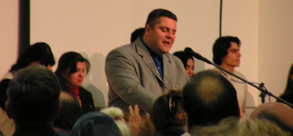 From the largest evangelical church in Bulgaria, we traveled to five small regional village congregations. The change was the least to say drastic. We left behind the large, two million people metropolis of Sofia and quickly moved East crossing almost the entire country of Bulgaria on its long side. Moving at a fast pace, we arrived to our destination three hours later and began preparing for a day of ministry.
The day started about 7 a.m. with prayer. The team assembled around 9:30 a.m. and began the daylong trip. The five churches on our schedule were located in a circle rout with 15-30 minutes of traveling between them. They were much smaller than the Central Church of God congregation, which has close to 1,000 members. Nevertheless, the people received us with the same joy and the services began.
Some of the congregations rent small auditoriums from the villages and others meet at a designated home with varying number of attendees. Many of the regular members have been pressed to leave Bulgaria and work in another country. One lady had just returned from such trip to Italy and attended one of the services. Read more
Services at the Central Church of God in Sofia
We returned from yet another exciting trip to Sofia where we ministered at the Central Church of God with pastor Pavel Ignatov. After a six year building program, the church is now equipped with a new multifunctional center. Although this is not our first service there, we were amazed again how the new building enhances the ministry of the church through its multiple ministry applications.
To begin with, the location of the new worship center is close to downtown Sofia. This is important because as the capital of Bulgaria, the city has experienced an escalated growth in the past ten years reaching a population of over two million. The Central Church of God is conveniently located at the very heart of the metropolis as at the same time it is close to the main roads, which can easily lead to the city loop and out of the city.
The convenient setting provides for a multitude of ministries. For example, the social center in the new building daily provides lunch for a large number of elderly people whose pensions of a limited amount are not sufficient for all expenses of a life in the big city. The food is delivered to them fresh at the same time every day and is free of charge.
The church’s center is also used for a number of conferences and church leadership meetings. Just in the past several weeks along with the regular services, they have completed a revival, Christian Advocates conference, youth rally, ministerial training course, national advisory meetings and a great number of weddings (normal for this time of the year in Bulgaria). The congregation is currently planning a nationwide evangelization meeting for the beginning of November.
The service we held at the Central Church of God was encouraging for us. At first, the large auditorium with over 1,000 seats looked a bit empty due to Sofia’s main streets being blocked for a city marathon. Yet, soon after the worship team began, the auditorium filled up as people continued to arrive until the end of the sermon. At the end of the service, we asked the congregation to join us at the altar and pray with us a special prayer for the unity of Bulgarian Pentecostals. The final benediction urged the church that revival must go on, but this would only happened if the people of God stand as one.
National Chaplaincy Meeting
Our team just returned from Northern Bulgaria where we participated in the national chaplaincy meeting of which we wrote you a few weeks ago. Ten Bulgarian regions with active ministry to the military were represented. Among the participants were people who work with families serving in the air force, army and navy. The major issues discussed were (1) media presentation of the chaplaincy work before the major evangelical denominations in Bulgaria and the secular society, (2) dealing with stress-related issues at the work place, (3) system restructuring to meet the needs of the growing ministry and (4) the mandatory legal affairs currently restricting chaplaincy in Bulgaria. The participants discussed and approved a national agenda for the next six months, which will work on the above problems and provide timely practical solutions. A priority on the list was the presentation of chaplaincy ministry before Bulgarian evangelical denominations, which will take place through a series of media events in the next few weeks.
Services at Samokov Church of God
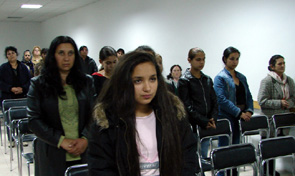 We just returned from Samokov, which is one of the oldest industrial towns in Sofia. Almost 200 years ago the first protestant missionaries to Bulgaria discovered its strategic location and used it as a halfway point between Europe and Asia in their mission trips. Soon a modern American school opened its’ doors and some of the brightest minds of the Bulgarian Renaissance were educated there. We visited with one of the Roma (Gipsy) churches in town and held a Sunday service plus two youth rallies. These services were part of our national ministry and support to the Roma people of Bulgaria.
Return to Yablanitza Church of God
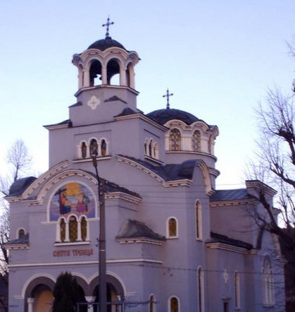 Because of its strategic importance in our ministry, the return to Yablanitza has been a long planned event. During a successful pastoral term in 1992-1993, we were able to encourage the church to continue and complete its prolonged building program. Several of our closest friends were also instrumental in preparing the blueprints and sponsoring the building project. As a result a modern ministry complex is now active in the town of Yablanitza as a part of the Bulgarian Church of God ministry there.
We returned to Yablanitza for a series of revival services and were able to minister to a good number of people while there. The revisiting with old friends and precious memories were both refreshing and motivating. We are praying to be able to conduct another revival series in the area and to minister in the Yablanitza church in the near future.
Bibliata.com Tour in Botevgrad
The next trip of the tour took us to Botevgrad, a small mountain town in the heart of the Bulgarian mountains. Botevgrad was a strong industrial center during the years of communism, but these times are long passed. Like other Bulgarian towns, many of the people have left their homes to work abroad.
A friend of ours organized the tour in Botevgrad. He was saved after his sister, who was part of the Pravetz youth group in the 1990s, invited him to a prayer meeting and witnessed to him. The tour was conducted as a town wide youth meeting and a number of churches were present. Our team taught several of the Bible modules encouraging and educating the youth to use electronic means to keep the Bible in their daily walk.
NATO Picks Three Military Bases
The firing field of Novo Selo, the airport at Bezmer and the Burgas port are subject of the negotiations between NATO and Bulgaria, former first diplomat Solomon Passy announced. While on a visit to Black Sea’s Burgas, Passy, who is now head of the parliamentary foreign police committee, said some two-three thousand US militaries are expected to be deployed in these three locations.
A NATO military delegation is to arrive in Bulgaria October 1, Solomon Passy added, to further talks on the military deployment with the new government of the Balkan country. Solomon Passy specified that the military port of Burgas is not at the moment on the list of negotiated locations, but he stressed that “Bulgaria should be ready to respond with provision of bases and facilities to any possible need of the EU or NATO.”
The USA and NATO have been eyeing Bulgarian military bases for troops deployment possibilities. As an expected outer door of the EU, should it becomes member of the Union in 2007, and an effective Alliance member, Bulgaria has been seen as a strategic partner in the western policy to the Near and Far East, and Russia.
Pravetz 15 Years Later
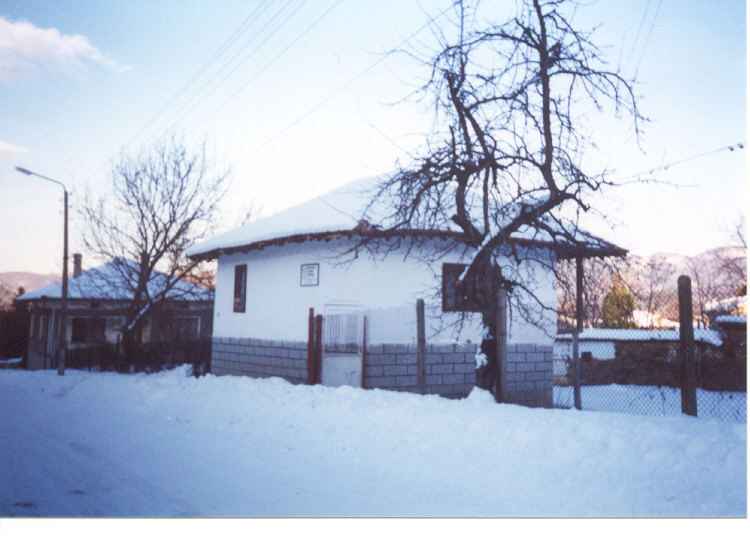 We returned to the town of Pravetz for a weekend of ministry, restoration and celebration. Pravetz was the place where the Bulgarian communist prime minister of thirty years was born and raised. Ironically, it was also the place where the Lord raised one of the largest youth groups in the history of the Bulgarian Church of God in the early 1990s. Pravetz was the place where I began ministering and the visit there marked fifteen years since these humble beginnings. Regardless of the fact that both the town and the church have changed, the anointing for ministry which God placed there is still strong. We were able to visit both Pravetz and Yablanitza where we met with old friends and coworkers. Thus, the visit to Pravetz was more than just another weekend of ministry, but rather a place of reclaiming lost heritage and re-envisioning of a new future. Because even if a man reaches the highest peaks of life, crosses the larges oceans of success or completes the most unimaginable acts of heroism, he must never forget where he has come from …
Bibliata.com National Tour in Silistra
The town of Silistra is located in northeastern Bulgaria at the Danube River. This was the location the www.bibliata.com National Tour 2005 team held services over the weekend. We arrived Saturday morning and conducted two training modules and then had two more in the afternoon session. On Sunday morning we concluded with a service where over one hundred people where in attendance. The building where the church congregation meets is an old communist hall, which for 45 years during the communist regime was used to speak against God. The building was given over to the congregation in 1990, which became the first church in the town of Silistra after the fall of the Berlin wall. Such church planting was not without with much trials and tribulations both physically and spiritually. The testimony of God’s miraculous power is that the exact location used to speak against God became the place, which God used for many other churches to come forth. It was a true blessing to be able to minister to the people of the church in Silistra and we are grateful of the opportunity that after nearly a half a century of persecution, God’s word was preached again freely.


