

Bibliata.com National Tour: 44 Baptized with the Holy Ghost
We launched the tour on August 13 at the Karandila Pentecostal Youth Camp near Sliven (in Southern Bulgaria). The camp is a historical meeting place for Pentecostal youth that was established before World War II. We participated in the Friday night service where 44 were baptized with the Holy Spirit. Additionally, 20 were baptized with the Holy Spirit at the Black Sea camp the previous week. Unfortunately, we were unable to attend that camp due to our late arrival in Bulgaria at the end of July.
Cultural Diversities
August 10, 2005 by Cup&Cross
Filed under 365, Publication
by Kathryn Donev
Upon arriving in a foreign country there are many things to which one will have to adjust. The first and most obvious is the language barrier. Yet, there are many other nonverbal forms of communication as well as common customs associated with everyday living that may seem peculiar when first encountered. The shock for some may be great, but take comfort in the existence of many universal elements that transcend cultures. In many ways, people are very much the same in the midst of their differences. It is possible for such divergences to be overcome one at a time, one day at a time. The following are some of the observations that I, from an American perspective, have experienced during my first ten days of being back in Bulgaria.
1. Even though automobile speedometers appear in kilometers, you should get worried when it surpasses 200.
2. When heading to a specific location you may end up stopping at up to five others before arriving at your final destination. So be prepared to enjoy the journey.
3. It is customary to let a woman with a child cut you in line.
4. Be advised that just because there is a pedestrian crosswalk you should not expect cars to stop for you when entering or much less to slow down if you are already in the crosswalk.
5. The person that is speaking that “funny” language and who is labeled “the foreigner” is now you.
6. You will no longer get ice in your beverage without asking and asking for ice is a sure give-away of your nationality.
7. If you do not manually open the door to the elevator once reaching your designated floor, it will start going back down. The doors are not automatic.
8. When visiting a restaurant, if ketchup is not already present on your table this is a good hint that you will likely have to pay for it.
9. When a cab driver says he will take a “short cut” you probably will end up paying a bit more than if you were to go the “long way.â€
10. Energy usage charges vary according to the time of day. Therefore night energy is cheaper than energy used during peak daytime hours.
11. When the expiration date on your food appears as 02/08/05 and it is already July, don’t worry; dates are written with the day first and the month second.
12. Don’t get too excited when the price for diesel reads: 1.67. The price is per liter and if you multiple this number by about 4 you will get the price per gallon. Ouch!
13. When asking for an item at the market and the salesperson nods left to right, don’t leave. They do have what you are asking for. Bulgarians nod opposite than Americans.
14. If the price on a pack of batteries is marked one lev, you should not get carried away and stock up, the price is per battery.
15. When speaking in the native language, people will laugh, but not to worry they are simply surprised and delighted that you have done so.
To Be Continued …
Torrential Rains Hit Bulgaria
Three Bulgarian towns have declared emergency situations over the torrential rains that hit the country over the last 24 hours. The municipalities of Ihtiman, Kostenets and Gorna Malina are still fighting with the nature disaster. More than 1,500 people in Ihtiman have been evacuated because of the rain. The people have been gathered at the local schools and they are being supplied with food and beverages, mayor Margarita Petkova announced. The water in the streets reached 1,80 meters. Two of the nearby dams have been destroyed. Six people with minor injuries have been taken to the Ihtiman hospital. The damages caused by the floods that hit Bulgaria over the last two months are worth EUR 150 M, EU experts announced. About 3,200 people live in the regions, which were hit by heavy rainfalls from May 25th till July 20th this year. The number of the people directly affected by the natural disasters totals 2 million. According to data of the Finance Ministry as of July 25, registered damages amount to BGN 250 M.
Is There Revival in Bulgaria?
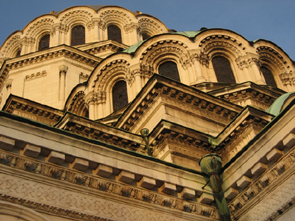 This question has been asked time and time again in the past 15 years since the fall of the Berlin wall. However, revival in Bulgaria is not a post-communist element alone. Regardless of the severe persecution of the Communist Regime, the underground church was in a state of nationwide revival and unstoppable growth. Through the testimony and the endurance of the saints, thousands were saved and sanctified. In the larger Pentecostal wing of the underground church, almost 100% were baptized in the Holy Spirit. Although the ruling atheism had proclaimed the death of the church and the communist regime had denied its existence, the Protestant church in Bulgaria was very much alive. Read more
Bulgaria’s Socialists Fail Again
Bulgaria’s Socialist Party and its coalition partner Movement for Rights and Freedoms (MRF) officially admitted failure to form a minority government. With the return of the exploratory mandate to the President, they practically cleared the way for the King’s party and the right-wing to receive the mandate next.
Socialist leader Sergey Stanishev, 39, announced the decision around noon on Thursday, after last night’s bid to earn support for the draft Cabinet triggered a Parliamentary crisis. “We do not want to rule at all costs,” said Stanishev, 39, who will remain at the helm of the Socialist party after his government’s vote debacle. He lashed his political opponents for being irresponsible about Bulgaria’s national interests, adding that it would be impossible to form any government without the Socialists and the MRF represented in it.
Former Premier Ivan Kostov (Democrats for Strong Bulgaria), Nadezhda Mihaylova (Union of Democratic Forces), Krassimir Karakachanov (Bulgarian National Union) and Anelia Mingova (head of parliamentary group of King’s party) met President Parvanov later on Thursday. The opposition parties have not nominated anyone for Prime Minister yet. The President confirmed his readiness to hand “as soon as tomorrow” the mandate to the June 25 elections runner up Simeon II National Movement.
Stanishev, 39, had an unprecedented Premiership that lasted for little more than five hours. In a controversy-marked extraordinary session that continued until the small hours of Thursday, lawmakers turned down the Socialist draft after approving Sergey Stanishev for Prime Minister (120/119. “Yesterday in Parliament we witnessed unprecedented pressure on lawmakers,” Stanishev said in his statement Thursday.
On Tuesday the Cabinet vote was blocked after all opposition MPs staged a walkout of parliament in an unprecedented voting debacle. The Socialist Party led election results last month, followed by the former King’s Simeon II National Movement and the Movement for Rights and Freedoms.
Protestant Revival in Bulgaria
 On November 10, 1989, a day after the border between East and West Berlin opened, the Bulgarian Communist leader of over 30 years resigned and change toward democracy began (Lalkov, 62-63). For those of us, who lived in the final days of Communist Bulgaria, the Fall of the Wall was a modern-day miracle. Emerging from severe Communist persecution and surrounded by the Balkan religious wars, the country of Bulgaria suddenly experienced a time of liberation. Before our very eyes, began a national spiritual revival despite a collapsing economy and political insecurity. Read more
Election Results and Regrets or What Just Happened in Bulgaria?
While the eyes of the world were turned to the tragedy in the subway, Bulgarian democracy lost yet a new parliamentary election. Coalition for Bulgaria, the newly renamed Bulgarian socialist party with communistic heritage swept the votes with 34%. The majority party of the past four years, Simeon II National Movement led by the former Bulgarian king remained second with 22% and the Turkish ethnic group Movement for Rights and Freedoms followed with 14%. The in-split democratic forces entered the election in three separate wings to win a total of 21% as neither one of the three passed the 10% barrier. Similarly, and surprisingly for all, was the win of the newly formed movement Ataka (Attack) which grabbed over 8% of the nation’s voters. The last remains under suspicion because of its controversial campaign incorporating nationalistic and chauvinistic propaganda with anti-ethnic messages.
It is only a guess if the elections were fair, with approximately 50% national participation and over one million Bulgarians living and working abroad. Regardless, a government with socialist majority should be expected. Such will enforce extreme left direction in politics similar to the time before the Berlin Wall.
Bulgaria’s entrance into the European Union will be delayed and the cooperation with NATO will be only minimal. Salaries may increase slightly, while prices will change drastically. The price of gas and bread have already gone up with hardly any time to forget the pre-election promises of political peace, economical prosperity, wellbeing of the people and security for the future. Promises will not be kept; in fact, they are already being broken. It is clear, that the Bulgarian people will suffer.
A socialist cabinet in can mean only one thing for the protestant movement in the country. The government will have authority and use it to strictly reinforce the new religious law. Orthodox monopoly over religious life will remain strong and the government will interfere in the business of the church through endless legalities or police force, much similar to the raids of July, 2004.
This is not new for the church in Bulgaria which went through a similar depression in 1996-97. It was during that time that the Bulgarian Christian Coalition was established to represent the evangelical believers in Bulgaria. Due to organizational, leadership and strategy flaws the Coalition received only 21,000 votes – hardly enough to enter Parliament. This failure should be a wake-up call for the Bulgarian Protestants, and especially for the Pentecostal majority among them. If the church indeed lives a political theology, as Moltmann claims, it is time for the church in Bulgaria to regain its rightful social place.
Bulgaria and Romania Urged to Speed Reforms
By Judy Dempsey, International Herald Tribune
The European Union’s top official responsible for enlargement issued a blunt warning Tuesday to Bulgaria and Romania, telling them their membership in the EU in 2007 would be postponed if they did not implement necessary reforms. ”I am proposing to recommend postponing membership if one or both countries cannot implement reform,” Olli Rehn, the EU’s enlargement commissioner, said during a meeting in Berlin hosted by the Institute for European Politics and the European Commission. But in contrast to his remarks on Bulgaria and Romania, Rehn, a Finn and former politician, said EU member states should not close the door on Turkey despite increasing skepticism among Europeans toward enlargement. ”Europe needs a stable, democratic and prosperous Turkey that will adopt our values and rule of law,” Rehn said. ”It is in our strategic interests.”
Rehn’s warnings were made after his meetings with Foreign Minister Joschka Fischer of Germany and Angela Merkel, leader of the opposition conservative Christian Democrats, who is campaigning to oust Chancellor Gerhard Schroder, a Social Democrat, in elections expected in September. Merkel supports the entry of Bulgaria and Romania into the EU despite the slow pace of reforms in both countries, but she opposes granting full EU membership to Turkey, even if Turkey meets all the EU’s conditions. Instead, as she stated in her party’s election manifesto published Monday, the Christian Democrats and their sister party in Bavaria, the Christian Social Union, want a ”special partnership of Turkey.” The Christian Democrats said full EU membership of Turkey would undermine the integration of Europe. Many members inside the Christian Democrats and the Christian Social Union, however, often say the reason why they do not want Turkey admitted as a full EU member is because the EU would be undermined as a ”Christian club.”
Rehn, a staunch defender of enlargement as a tool for exporting security and stability, openly challenged the view that Turkey’s membership in the EU would slow integration. He even questioned what was meant by a ”privileged partnership.” ”Widening and deepening of the EU can continue at the same time or at different paces,” said Rehn, whose country has always supported enlargement and political integration. ”The point is that EU accession is the perspective for Turkey to continue the reforms. Europe needs a stable, democratic and prosperous Turkey that will adopt our values and the rule of law. It is in our own strategic interests.”
As for granting Turkey a privileged or special partnership, Rehn said it already existed. ”There is a customs union for trade and economy,” he said. ”The political dialogue is deepening. Turkey is part of the EU’s crisis management operations in the Balkans. In other words, some would say this already represents a privileged partnership.”
Rehn’s public warnings to Bulgaria and Romania represented a grim reflection of the two strands of skepticism running through many of the 25 EU member states, particularly after the rejection of the EU constitution by France and the Netherlands last month. One strand is directed against more integration, coupled with increasing criticism over the way the commission, as the EU’s executive arm, interferes too much in policy making. The other strand is the growing skepticism toward any future expansion, particularly into Turkey, Bulgaria, Romania and the western Balkans, which includes the countries of the former Yugoslavia. Rehn said the recent enlargement in which the EU expanded from 15 to 25 countries and any future ones demanded higher standards. ”European enlargement has been stretched to its limits,” Rehn said. ”There is a need to be very cautious about our new commitments but at the same time stick to our current commitments. Bulgaria and Romania can join the EU in 2007 if they fulfill the conditions.” This is why the issues of corruption and the weak rule of law in Bulgaria and Romania had to be ”addressed to reassure the public,” Rehn said. ”This is where conditionality is important,” he added. ”Corruption is a most problematic issue, whether it be in the Western Balkans or Eastern Balkans. We still have problems with corruption and reform of the judiciary in Bulgaria and Romania. So let’s focus less on commitment and more on delivery.”
Bulgaria and Romania are still hoping to join the EU in 2007, a date agreed on by the 25 member states during their summit last December in Brussels. Five months later, both countries signed the accession treaties even though the commission still had reservations about the pace of reforms in both countries as well as their ability to implement their reforms by 2007. In the past, the commission but particularly the member states that actually make the final decision over whether a country is ready to join or not, often turned a blind eye to issues related to implementation of laws, combating corruption and even the way the structural or regional funds allocated to poor regions were spent. Rehn insisted the commission would issue a monitoring report on both countries next October. Then, either in March or April, it will issue a final decision over whether either was ready to join by 2007, he said.
Pentecostalism in Bulgaria
Fifteen years after the fall of the Berlin Wall, the Bulgarian Protestant movement claims over 100,000 members. This number is almost ten times higher than a 1975 German study which presented proof of approximately 13,000 Protestants in Bulgaria (Klaus-Detlev Grothusen, Bulgarien, (Guttingen: 1990, p. 564). In the 1980s, this number had grown to 55,000, as this was the time when many Western missionaries were able to visit Bulgaria and gather information about the underground churches outlawed by the Communist Regime (http://www.gospelcom.net/lcwe/LOP/lop19.htm).
Although international reports confirmed the existence of over 100,000 Protestants in Bulgaria as early as 1994 (GCN – EP: Sofia, Bulgaria, June 8, 1994), the Bulgarian National Statistical Institute counted only 42,000 Protestant believers in Bulgaria for the 2002-2003 National Census. This number was detested recently by Dr. Stephen Penov, a professor at the Sofia University and a member of the Bulgarian Academy of Science, who has served as a Parliament expert on human rights and faith confessions. Dr. Penov stated that the members of classical Protestant denominations in Bulgarian exceeded 100,000 with over 60,000 identified as classical Protestants and a membership in the new Protestant denominations of approximately 50,000 (Religia BG, 31 July, 2004 http://www.religiabg.com/?p=oldnews&id=1514). During the past fifteen years, Bulgaria has experienced an ongoing Pentecostal revival. Therefore, it is not a surprise that over eighty percent of Bulgarian Protestants are Pentecostal or claim Pentecostal experience.
Protestant work on the Balkan Peninsula began in the 1800s when British and American missionaries were allowed to enter the Ottoman Empire. In the 1820s, the British Bible Society developed a Protestant translation of the Bulgarian Bible, which was completed and published in Constantinople in 1871. During this same period, various Protestant denominations began mission work in Bulgaria, among which were Congregationalists (1856), Methodist (1857), Baptists (1865) and Seven Day Adventists (1891). In 1871, the first Bulgarian Protestant Church was founded in the town of Bansko. By the time Bulgaria was liberated in 1878 and became an independent Balkan state, Protestantism was well established in the Bulgarian culture.
Pentecostalism was introduced in Bulgaria in 1920 as Ukrainian immigrants Zaplishny and Voronaev preached in the Congregational church at the Black Sea port city of Bourgas, where several were baptized with the Holy Spirit. This event marked the beginning of Bulgarian Pentecostalism.
In the next decade, the movement had spread throughout the country. The establishment of a consistent national structure occurred under the leadership of Nikolai Nikolov. The new denomination was formally recognized as the Union of the Evangelical Pentecostal Churches in Bulgaria, at a national assembly on 28-31 March, 1928. The organization, also known as the Pentecostal Union, was affiliated with the Assemblies of God denomination.
Legally, the newly formed organization was required to register with the Bulgarian government. This caused a great deal of controversy and division. A conservative Pentecostal group, with congregations located mainly in Northern Bulgaria, emerged from the split and adopted the name, Tinchevists, after the name of the leader Stoyan Tintchev. The Tinchevists, who are often called Northern Brothers due to the fact that most of their congregations were located in Northern Bulgaria, later became commonly known as the Bulgarian Church of God (lit. Bulgarian God’s Church).
The split between the Pentecostal Union and the Church of God was mainly due to leadership instability and internal organization disagreement. Unfortunately, due to the historical developments which followed, true attempts to reunite both Pentecostal wings did not take place even after the original leaders were replaced.
In 1944, the Communist Revolution took place in Bulgaria. In 1949, Communist authorities tried and convicted fifteen protestant leaders on false charges of treason and espionage. The division among Bulgarian Pentecostals continued during the Communist Regime. The Pentecostal Union pursued legal existence by registering with the Communist state. This action led to the government’s interference with church business and the implanting of secret agents within the denomination’s structure.
The Bulgarian Church of God, on the other hand, chose to remain underground and was severely persecuted by the authorities. Archives report that in 1974, the Bulgarian Church of God had only 600 members nationwide. This number grew to 2,000 members with congregations in 25 cities by 1981 and doubled by 1986 when the denomination was affiliated with the Church of God (Cleveland, TN).
At the same time, the Bulgarian Pentecostal Union had approximately 10,000 members and when the Berlin Wall fell, the denomination entered the Pentecostal revival that swept the country. In the decade that followed, the Pentecostal Union multiplied its congregation to 500 with over 50,000 members and adherents. A recent interview with Ivan Ivanov, the student pastor of the Pentecostal College in Sofia, indicated that the membership of the Pentecostal Union might have experienced a decline since 2002.
Meanwhile, the Bulgarian Church of God continued to grow reporting over 32,000 members with close to 400 congregations in 2001. Its work among the ethnic minorities in the country has resulted in the emergence of large Roma congregations like the ones in Samokov with 1,700 and in Razlog with 450 members.
It is reasonable to ask the question why is Pentecostalism so attractive to Bulgarian culture in the beginning of the 21st century? How is Pentecostalism responding so well to the need for faith within the postcommunist Bulgarian society? What is the reason Pentecostalism has spread so rapidly in the postcommunist age? Is Pentecostalism simply filling a spiritual gap or is it successfully responding to postmodern thinking?
The answers to the above questions are found in Pentecostal theology, which claims the five-fold Gospel. The results of a recent survey of one hundred randomly selected Bulgarian Protestants asking about the fundamentals of their faith is shown in the following table:
Yes | No | Question
78% | 22% | Does a person have free will?
75% | 25% | Can a person choose to be saved or not?
97% | 3% | Must a person accept Jesus Christ as a personal Savior in order to be saved?
75% | 25% | Can a person lose his/her salvation?
60% | 40% | Is the use of alcohol sin?
72% | 28% | Can a person be saved without being baptized in the Holy Spirit?
63% | 37% | Are you baptized with the Holy Spirit?
10% | 90% | Have the spiritual gifts described in the Bible ceased?
64% | 36% | Are there apostles today?
73% | 27% | Do you go to church each week?
88% | 12% | Do you pray daily?
77% | 23% | Do you read the Bible daily?
35% | 65% | Do you fast more than once a week?
According to the preliminary survey results, the profile of the average Bulgarian Protestant is: (1) fundamentally evangelical in doctrine, (2) more Armenian than Calvinistic, (3) more Pentecostal/Charismatic in experience, (4) more traditional than contemporary in conviction, (5) more theoretical than practical in teaching, (5) more conservative than liberal in practice and (7) more agreeing than disagreeing in fellowship.
The last characteristic is prompted by the obvious fact, that where two or three Bulgarian Protestants agree, one disagrees with them. It is for future researchers to determine if this is a reflection of Bulgarian cultural mentality, suspicion remaining from the Communist Regime or simply Pentecostal experiential curiosity with existential need for opposition of social norms even within itself.
Fortunately, Bulgarians remain in almost complete agreement on issues such as the person and work of Jesus Christ in the salvific mission of God and the importance of the Holy Spirit in the mission of the church. Perhaps, these are the points of agreement which future Bulgarian Protestants should use to build unity and construct strategies for the future development of the movement. Because these also serve as the cornerstone of Pentecostal doctrine and practice, a movement toward unity within the Bulgarian Protestant movement should be initiated by Bulgarian Pentecostals. However, before such initiation can be realized, Pentecostals must reach a balance between their numerical advantage and their social action.
20% Favor Socialist Leader
Socialist leader Sergey Stanishev enjoys the support of 20% of the Bulgarians for becoming the country’s next prime minister.Stanishev has been backed by 20% of the people, who participated in the Barometer Info survey. The data announced by Lyubomir Stoev also showed that the outgoing Prime Minister Simeon Saxe- Coburg has the support of 10% of the people.
The leader of the election surprise nationalist coalition Attack (Ataka) Volen Siderov has been favored for prime minister by 6%, whereas former prime minister and leader of Democrats for Strong Bulgaria Ivan Kostov garnered 5%.The majority of the participants, 45%, pointed other political leaders as most appropriate for the prime minister’s post. The survey was executed June 29 to July 1 and was participated by 510 Sofa citizens.


