Government by Socialists

July 1, 2005 by  
Filed under News

“The formula on the next Bulgarian government is already clear, a local news source said Saturday. The Cross website said that the Socialists Party and Turks-dominated Movement for Rights and Freedoms would claim state power. Cross, a source believed to be close to the socialists, said that Sergey Stanishev would certainly be prime minister. The agency cited “”sources close to the process of coalition talks.””

Members of the Simeon II National Movement will be included in the government. However, the former King’s party will not be part of the ruling coalition, the reports said. The agency did not specify whether its sources are members of the Socialist Party or not. Meanwhile, negotiations between the separate parties continued on Saturday, when the SP met right-wing coalition Bulgarian National Union (BNU). The two sides indicated that they were unlikely to coalesce.”

Early Elections by the Fall

June 30, 2005 by  
Filed under News

The New Time political party is urging for early elections that should take place in the autumn. At a special press conference the party leader Emil Koshlukov pointed out that early elections would be necessary having in mind the situation in the country. Koshlukov also expressed hopes that Simeon Saxe-Coburg will keep up his promise and will not form a coalition with the socialist Coalition for Bulgaria. He said that the early elections will not affect Bulgaria’s EU entry.

The New Time political party will stay out of the 40th Bulgarian National Assembly as the “”hedgehogs”” of the Bulgarian politics couldn’t garner the needed support of at least 4% of the voters. The New Timers received some 3,4% of the votes, thus remaining out the next Parliament.”

Bulgarian Elections 2005: Bulgarian Socialists Claim Victory

June 25, 2005 by  
Filed under News

SOFIA, Bulgaria (Reuters)
Bulgaria’s opposition Socialists claimed victory over the ruling centrists in Saturday’s elections, but exit polls suggested they may struggle to form a government. Any protracted coalition wrangling between parties could unsettle investors seeking quick economic and social reforms to secure EU entry in 2007 and increase impatience in a general population over poor living standards.

A Gallup exit poll for BTV television gave the ex-communists 32.2 percent of the vote versus 20.5 percent for ex-King Simeon Saxe-Coburg’s ruling National Movement for Simeon II (NMS). Earlier opinion polls had given the Socialists 40 percent, a vote that would have allowed them to form a government quickly. “We have won the elections,” said Socialist deputy leader Rumen Petkov. “But the results are not satisfactory.”

Three other local polling agencies put the Socialists, led by progressive Sergei Stanishev at 30.7-32.1 percent and the NMS at 19.5-21.1 percent. The next government must complete a mountain of difficult reforms under increased scrutiny from Brussels as skepticism over further EU expansion grows after recent French and Dutch rejections of the bloc’s constitution. Although investors have praised Saxe-Coburg’s government as the best since the fall of communism, public discontent over poverty and crime forced the only ex-monarch to second place.

Nationalists rise
Analysts say the surprise emergence of the nationalist Attack party, seen winning 7-7.9 percent and crossing the threshold to parliament, may have undermined them. “The result for Attack is a surpise and has eroded support for the Socialists,” said Kancho Stoichev, an analyst with Gallup. Analysts said the Socialists are expected to seek a coalition with the mostly ethnic-Turkish Movement for Rights and Freedoms (MRF) — Saxe-Coburg’s current ruling partner — and deputies from other parties.

“A left-center coalition is more likely,” MRF leader Ahmed Dogan said, apparently throwing his support behind the leftists. The Socialists have not ruled out seeking a grand coalition including the ruling centrists. Saxe-Coburg has made clear he will not join a grouping he does not lead but his party may find another role for him, such as the presidency, or some of his deputies may defect. The Socialists have been eager to show they have changed since they were ousted in 1997 after plunging the country into economic disaster. But despite vowing economic prudence and reforms crucial for EU accession — such as revamping a lumbering judiciary — the Socialists’ plans for more social spending are a bigger risk for the economy, analysts say.

Banished in 1947 at the age of nine by the communists, the former boy-king returned to win a landslide election victory in 2001. He led Bulgaria into NATO and to the threshold of the EU, boosted economic growth to 6 percent and cut unemployment. Despite his achievements, failure to deliver on brash 2001 pledges to make all Bulgarians wealthy in 800 days has angered voters. Bulgaria’s 2004 per capita GDP of 2,498 euros makes it second only to Turkey as the poorest EU member or candidate.

There are many Bulgarians still queuing outside the polling stations in the country despite the official end of the election day, Biser Troyanov, spokesman of the Central Elections Committee. He also pointed out that currently CEC is trying to connect all the regional Elections committees to explore the situation.

At 8 pm the preliminary results were announced with socialist Coalition for Bulgaria garnering 33,7% of the votes, followed by Simeon II National Movement (SIINM) with 21.1% and Movement for Rights and Freedoms (MRF) – 11.9%. This year’s surprise came from the nationalistic coalition Attack (Ataka), which gathered nearly 9% of the votes.

UDF Leader: We’ll Seek Right-Centre Coalition
We will seek a right-centre coalition in the cabinet to be formed, Nadezhda Mihaylova, leader of United Democratic Forces, said as early exit poll results were announced on the night of June 25.

The right-wing party is among the favorites for entering the 40th parliament of Bulgaria in a close-up margin with the Democrats for Strong Bulgaria of former Prime Minister Ivan Kostov. Nadezhda Mihaylova told Sofia News Agency that the Bulgarian Socialist Party will obviously be unable to form a government of its own and her party will focus on coalescing with other parties of the right and the centre political spectrum. In response to a question whether this desired coalition might involve the party of Ivan Kostov, she said that talks are just to come ahead. Mihaylova stressed also on the “positive fact” that the right-wing election racers have earned totally more votes that the party of Simeon II National Movement.

King’s Party Doesn’t Rule Out New Coalition
The king’s party Simeon II National Movement (SIINM) has not been defeated, Deputy Prime and Transport Minister Nikolay Vassilev said not ruling out the possibility of the forming of a new ruling coalition. The current government was formed by a coalition and if we sum up the percents of the three partners in the coalition the result will equal that of Coalition for Bulgaria, Vassilev pointed out. Vassilev, however, declined to comment on the future coalition members.

Nationalists Turn Fourth Biggest Parliamentary Power
The nationalist coalition Attack, the fist to gain seats in Bulgaria’s Parliament, ranks fourth among election racers, show results after fifty percent of the votes were processed. The Attack (Ataka) coalition, which has been described as a phenomenon and sprang the biggest surprise in the elections, collects 8.9% of the votes.”

Bulgaria Worries about EU Entry

June 20, 2005 by  
Filed under News

By Nicholas Wood, International Herald Tribune

Bulgaria is to hold parliamentary elections Saturday, with its voters keenly aware that whatever government they elect, their chances of joining the European Union in the near future have become more remote. All of the mainstream political parties competing in the election are unified in their aim of achieving European Union membership by Jan. 1, 2007, as scheduled in negotiations. But comments made by leading European politicians suggesting that enlargement of the 25-member bloc should be slowed in the wake of French and Dutch votes rejecting the European constitution have sent shudders through the political elite.

Many now fear Bulgaria’s membership may be delayed by a year or more. Opinion polls predict that the country’s former communists, the Bulgarian Socialist Party, will win the largest number of seats and oust the former King of Bulgaria, Simeon Saxecoburggotski, who has led the government for the last four years.

The suggestion that enlargement could be delayed has intensified claims among parties that they are most capable of implementing the reforms needed to obtain membership on time. The EU enlargement commissioner, Olli Rehn, recently warned Bulgaria and Romania that unless they accelerated the pace of reforms they risked seeing their applications set back by a year.

Politicians here said there was a genuine commitment to completing reforms – in such areas as the judicial system and the prosecution of organized crime – but they also say that the EU has moved the goal posts. Senior politicians here appear bitter that, having asked Bulgaria and other East European states to implement difficult political and economic reforms, West European countries are not willing to do the same themselves – most notably in the area of farm subsidies – and are instead blaming enlargement for their problems.

“Every country should be judged according to its accomplishments,” said Sergei Stanishev, leader of the Bulgarian Socialist Party, who is tipped to be the country’s next prime minister. “It wouldn’t be fair for the Bulgaria to pay the price of the internal problems of the European Union,” he said in an interview at the party’s last election rally held Thursday night in Sofia.

Were membership to be delayed, the majority of politicians and analysts here say it would have a destabilizing effect in the country. Throughout the past 15 years, many Bulgarians have endured economic hardship as state run businesses have been closed down, people laid off, and price controls abolished in favor of an open market. While Bulgaria has seen strong economic growth (5.4 percent last year), and unemployment levels have dropped from to 13 percent from 18 percent during the last four years, many people appear frustrated about the pace of change, and concerned also that the country is not getting the best deal possible from the EU.

“It’s hard to make ends meet with the money we earn, but I’m not hoping for anything good when we join,” said Maria Nikolova, a 50-year-old stall holder in Sofia’s Zenski Pazar, or Ladies’ Market. Bulgarians earn, on average, 230 lev, or about $142, a month. Another stall holder, Constantin Nikolov, 51, said he believed the EU would at least curb corruption among Bulgarian politicians.

Hostility toward Europe, has emerged on the fringes of an otherwise overtly pro-European election campaign. Senior members of Stanishev’s party have called for the renegotiation of an agreement to shut down two nuclear reactors in a Soviet-built power station. Polls show that many Bulgarian believe the closure will lead to higher electricity prices, or to power cuts. “If Bulgaria’s membership is delayed this question will be put again,” said Rumen Ovcharov, a former energy minister and Socialist member of Parliament.

The rise of Ataka, an ultranationalist party formed just two months ago, is seen by diplomats and mainstream parties as one of greatest causes for concern in Bulgaria’s EU relations. Ataka, which has campaigned with the slogan “Bulgaria for the Bulgarians” and is predicted to win as much as 7 percent of the vote, is suggesting that Bulgaria should withdraw from NATO, and opposes EU membership. Its leader, Volen Siderov, blames the country’s Roma and Turkish minorities for crime and corruption in the country. By delaying membership, mainstream Bulgarian politicians and analysts argue that animosity toward the EU will grow and the momentum for reform would be undermined.

According to Ovcharov: “If the EU tells us you will now have to wait, people will ask why and what do we have to wait for.” “The reality,” said Antoaneta Primatarova, a former deputy foreign minister and the ex-Bulgarian ambassador to the EU, “is that the EU will have to reform.” And, she added, “it will be as painful as was for former communist states.”

Elections in Bulgaria

June 15, 2005 by  
Filed under News

Bulgaria’s parliamentary elections are due in June 25, 2005. The basic power in the Parliamentary Republic is the legislative one, exercised by the Parliament (The National Assembly). It is unicameral and consists of 240 members, elected directly by the voters for a four-year term, on the basis of the proportional representation. For the parties and the pre-election coalitions to enter the National Assembly, they must collect at least 4% of the total number of votes at the elections.

Currently the ruling party Simeon II National Movement has the largest grouping in the assembly, followed by the Coalition for Bulgaria, led by the Bulgarian Socialist Party. The United Democratic Forces, comprising MPs who left the Union of Democratic Forces (UDF) early in 2004 to found Democrats for a Strong Bulgaria, comes third; the predominantly ethnic Turkish Movement for Rights and Freedoms follows next. These outnumber the UDF and the New Time group, the parliamentary group of the agrarian People’s Union and the Democratic Party, and the independent MPs.

When Two Cultures Collide

June 10, 2005 by  
Filed under 365, Publication

By Kathryn Donev

In general it is believed that when any two individuals come together, in the midst there will be some sort of tension. The coming together or collision consequences in tension that is the result of differing opinions and viewpoints. One major origin of such strain or confusion is due to misinterpretation. What is said is viewed erroneously and internalized or personalized in error. Furthermore, when this phenomenon occurs with two individuals from differing cultures, there is greater opportunity for misapprehension. It has been said that whatever is perceived by an individual is the true reality for that particular person. Meaning, how ever one views an event, even if falsely done, is what actually took place in that individual’s personalized world. It is such concept that must be taken to heart in order to genuinely be culturally sensitive. When two cultures collide there must be open-mindedness and understanding of another’s world view. Yet, the straightforward part is to understand this concept and the difficult part is to place such concept into actuality.

Our Ministry in the Yambol Region

June 5, 2005 by  
Filed under News

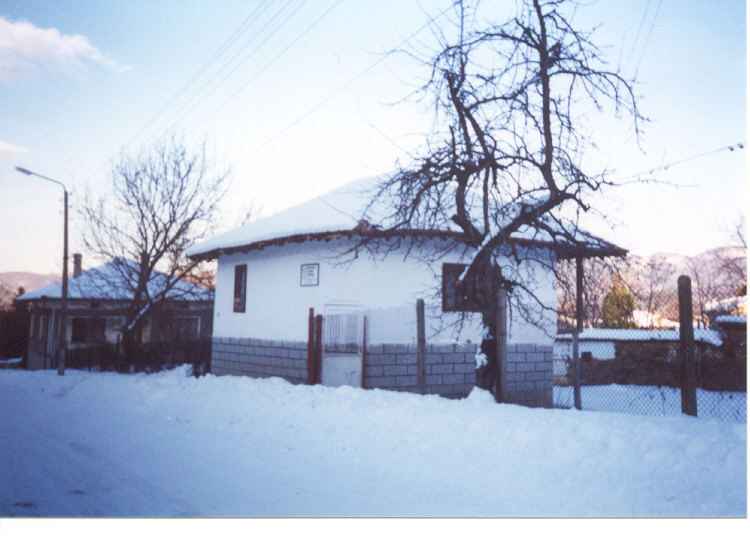
yambolministry

Chaplaincy in Bulgaria

June 5, 2005 by  
Filed under News

Since 1995, Cup and Cross Ministries International has worked toward a vision of the establishment of a Bulgarian Chaplaincy Association – an organization that incorporates pastoral care to prisons, military, police and hospitals. Our outreaches have been able to provide pastoral care and social services to the needy in a time of severe economic crises and political tensions. Our presence has been an answer for people in need for both physical and spiritual support. In the beginning of the 21st century, we are witnesses of a miracle as this vision comes into reality. Today, police and military officers participate in services led by the same ministers and pastors who once, during communism, they were ordered to arrest for the preaching of the Gospel.

History of Events

In September of 1944 the Communist revolution took over Bulgaria. All prior Protestant activates were outlawed. Pastors and ministers were imprisoned. Some were brutally executed. Any attempt for ministry in public was equal to a death sentence. The church went underground for 45 years until the Fall of the Berlin Wall in 1989 and a Holy Ghost revival swept through the country. In the summer of 2000 the Bulgarian Church of God organized a chaplaincy seminar in the Military School in Veliko Turnovo. This was done with the partnership of NATO’s head chaplain along with the representative of the Orthodox Church in Bulgaria, the director of the school under the patronage of the vice-president of Bulgaria Mr. Kavaldjiev. More than 250 officers, spiritual leaders and civil representatives participated. The goal of the seminar was to awaken the interest of the community and appeal for changes in the Bulgarian constitution, which would guarantee the freedom of military personnel to access the chaplain’s services and care.

The Bulgarian Chaplaincy Association

In February of 2002 a chaplaincy seminar, organized along with the Church of God Chaplains Commission, was held in the National Palace of Culture in Sofia. More than 60 pastors, chaplains, students and church workers from different denominations attended. These were people actively involved in military, hospital and prison ministries. The seminar was a stepping-stone for the development of the chaplaincy ministry in Bulgaria. It served as a beginning point of the structural development of the department of chaplaincy and caregivers in the Bulgarian Church of God and facilitated to the establishment of the Bulgarian Chaplaincy Association of which Cup & Cross Ministries became a charter member.

HEALTHCARE CHAPLAINCY IN BULGARIA

June 1, 2005 by  
Filed under News

red-cross-flag1

Haunted by Totalitarianism

May 30, 2005 by  
Filed under Publication

christian_communismBy Viktor Kostov

Eleven years ago, it seemed that the beast of communism, which had set its face against the church of Jesus Christ, was dead in Eastern Europe. I remember the 200,000 Bulgarians with raised hands and open souls standing in Sofia’s downtown square in 1991. They gathered not to march in honor of the ruling party but to hear an overseas evangelist preach Christ and heal the sick. I was in the crowd, a graduating law student, a former anticommunist revolutionary, and a new Christian. I drank from the invigorating hope and joy that had descended from heaven on that warm summer night. A nation haunted by darkness for years was about to receive a new heart. But things did not go quite the way I hoped.

The beast of communism may have been mortally wounded, but it was not dead. In 1992 came significant reversals regarding religious liberty—the first sign that freedom had not fully arrived. Two years after the collapse of the regime, former communists emerged as socialist capitalists. Their former connections afforded them control of the economy and, with it, the most influential newspapers.

Reading the newspapers became torturous. I fumed at the sensationalistic articles, written like communist propaganda, and aimed at the new wave of American missionaries: Baptists were eating children; American missionaries were feeding drugs to youth in church meetings; Protestant pastors were signing up members of their congregations for ritual suicide ceremonies.

Such outrageous claims fed society’s skepticism toward evangelical churches. American evangelicals have worked among Bulgarians since the mid-19th century, but the memory of these missionary contributions was lost during the reign of the Communist Party. Exploiting a historical perception that Eastern Orthodoxy was key to the Bulgarian national identity, the new socialist capitalists used anti-evangelical rhetoric to stir up passions. Unfortunately, many Orthodox voices joined hard-core atheists in decrying “Western sects.” Bulgarians seemed to want a mix of Soviet spirituality and American prosperity.

Religious Police
I took this attitude personally. I had become a Christian thanks to the witness of American evangelical missionaries. The long history of the Bulgarian Orthodox Church, or its contribution to the national spirit, meant little to me—she never cared enough for my soul to let me know about salvation in Christ. I found liberty because of people who left their country, came to Bulgaria, and answered the questions that had tormented me for years. I heard the clearly articulated gospel for the first time in English. My first Bible was also in English: an NIV New Testament.

While defending the legal rights of U.S. missionaries and Bulgarian Christians, I gladly vented my frustration at the injustice done to my fellow evangelicals. I took some high-profile cases that other lawyers had dropped. I filed lawsuits on behalf of slandered and harassed evangelicals—against police departments, newspapers, individuals, and organizations. I delighted in the astonishment of police officials, used to bossing citizens around, at the subpoenas I served them. But most of the time, that was all the reward I got for seeking justice for evangelicals in the courts. I lost 90 percent of the cases.

It soon became obvious that even the Parliament would defy the constitutional freedom of conscience and faith. A law passed in 1994 indirectly required government approval for the registration of Protestant churches.

In 1995 someone broke into my office and stole my computer with the records of my court cases. I was growing tired of meeting with “religious police” operatives who, using only code names, tried to persuade me to rat on my pastor-clients. I realized I needed a break. I wondered if I should again do “purely spiritual” work (I had been in church-planting teams since my conversion) or remain engaged in the battle for religious freedom. But going to court or pointing officials to the constitution made no difference. I felt like Moses, working in the flesh to liberate God’s people. After hearing that I was being “surveyed” by the police in Sofia, my American wife and I decided it was time to get out for a while. At the end of 1995, we left for the United States, where I ended up graduating from Fuller Theological Seminary.

Now I’m back in Bulgaria, where the freedom for evangelicals to conduct services and outreach is still limited. Last year the Parliament almost adopted a law that was “most probably. … the worst in all Eastern Europe,” according to an October 2000 press release of Tolerance Foundation, a Bulgarian human-rights group. Critics called the measure more restrictive than the law of 1949, which was used by the communist regime to end religious freedom in the nation. For example, the proposed law stipulated that people could not use their homes for religious meetings, and it imposed enormous fines for preaching without registering with the state. In other words, no expression of faith was allowed under this project unless the state had approved it. The restrictive draft was tabled only after the pro-Western government heard protests from human-rights groups, church leaders, and even U.S. politicians.

But hearts and minds, not laws, need to change. “The constitution provides freedom of religion; however, the government restricts this right in practice for some non-Orthodox religious groups,” says the 2000 Annual Report on Religious Freedom in Bulgaria prepared by the U.S. State Department. “This restriction is manifested primarily in a registration process that is selective, slow, and nontransparent.” The mentality is this: If a congregation is not registered, then the state hasn’t recognized it, which makes it an illegal sect. A process that should be just a formality ends up giving the government power to approve or disapprove of religious beliefs.

The Wind of Change
The dominant sentiment is that evangelicals had the most freedom under the government of the Union of Democratic Forces. (In 1997 the same union vetoed the embarrassing anti-religion bill and convinced Parliament to approve the status of the first evangelical seminary in the country since 1948.) This first post-communist coalition of democratic anti-Communist parties lost in this summer’s election to the party of the Bulgarian King Simeon II (a.k.a. Simeon Saxcoburggotski), who is now the prime minister.

But political trends are decided by political forces. Moral trends and worldviews, which fuel political forces, are decided by the spiritual climate. In the last several years, I have become convinced that the problem of liberty in Eastern Europe originates in the church. It’s not that evangelicals should be held responsible for a culture that has bred oppression for years—but not standing up to such a culture, and letting it shape the behavior of the church herself, allows oppression to thrive in Bulgaria and other Eastern European nations.

When the Iron Curtain fell and the gospel flooded the nations of the Eastern bloc, alongside the good news came its counterfeits. One of them was the prosperity gospel. Its message found a fertile soil among young, charismatic congregations. I was embarrassed for Bulgarian pastors as they imitated their favorite U.S. prosperity preachers, sometimes even speaking with a slight American accent. Many Bulgarian Christians, tired of the years of marginalization and poverty, allowed the health-and-wealth doctrine to seduce them.

Neediness, Control, and Fear
It was not just the Western prosperity preachers’ fault. Evangelicals in Bulgaria were accustomed to seeking foreign help—an understandable reflex after years of being second-class citizens in their own country. The church did not err in accepting help from American Christians; but the neediness of many Bulgarian evangelicals had distorted their view of American wealth. A leader of a Christian training school in Sofia once told me that his school was reluctant to hire Bulgarian theologians and teachers because they had to be paid. If American teachers were invited to teach, they paid their own way, did not receive any salary, and even brought gifts to the school. This conversation made me realize how difficult it is to break loose from the ruts of poverty.

Bulgarian evangelical Christians are a brutalized people. Stuck in a wounded culture, church leaders tend to multiply hurt and deny liberty, as if they took lessons from communist leaders. Their harsh authoritarianism cripples Christian witness and repels young and educated Christians.

Milena Michailova, a manager of a Christian bookstore in Sofia, had trouble finding a home church. The leaders of various congregations were threatened by this avid reader who asked questions. “The pastors I know don’t allow anyone or anything to challenge their authority,” she told me. “They treat people as if they don’t understand anything, and with an attitude of being irreplaceable.”

When traveling with her mobile bookstore, a bus loaded with Christian titles, she finds a lot of rivalry among local pastors. “They also seem to be threatened by [Christian booksellers], and we just want to sell literature that will help the believers,” she says.

Bulgarian evangelicals’ church leadership style—a mix of control and fear—reveals the need for spiritual mentoring that would liberate leaders from their insecurities. My brother, Yavor Kostov, pastor of four small congregations in the poorest, northwestern area of the country, thinks dictatorial church leadership inhibits church growth. “Pastors don’t lead people to Jesus but to themselves,” he says. “This means that no gifts, talents, or freedom can blossom in the church.” His primary church started after a dispute regarding leadership style.

It is hard for many new-generation believers to join churches that use methodologies reminiscent of the Communist Party. When Milena Eneva was considering attending a U.S. Bible college, her pastor bluntly told her that this was not God’s will and that she would lose the presence of the Holy Spirit in her life—not exactly the blessing she wanted. She is now a graduate of a U.S. Nazarene college.

Totalitarian harshness among evangelicals is not only a Bulgarian phenomenon. Many evangelical churches in other post-communist countries (such as Ukraine, Romania, and Poland) practice a legalism that defeats the Christian message. A missionary to Eastern Europe told me he once took a nonbelieving relative to a Ukrainian Pentecostal church. The church members looked at her makeup and fancy clothes with such obvious disapproval that she vowed never to return to church again.

Why would anyone, beat up by a hard life to begin with, want to come to church to be subject to the will and strife of insecure individuals? Didn’t Jesus say, “Come to me, all you who are weary and burdened, and I will give you rest”?

Zeal, Vision
By now you may be asking, “Is there anything right with the post-communist church?” The zeal with which Eastern European believers kept the message during the communist era is an example of the church’s strength. Persecuted pastors put in hours of work, with minimal or no pay, and traveled miles to care for their brothers and sisters. Evangelicals were harassed, fired, detained, and interrogated for owning Bibles or just talking about their faith.

Haralan Popov spent 13 years in concentration camps, accused of spying for the United States and England. He was not a spy, but a pastor of the largest Pentecostal church in Bulgaria, when the communists took over in the 1940s. He not only did not renounce his faith amid torture, but he also shared the gospel and the love of Christ with his fellow prisoners. In 1972 he founded Door of Hope International, a U.S. mission agency that spread the news of the persecuted church in the West and helped underground churches behind the Iron Curtain. This past is the great spiritual inheritance of Eastern European Christians, one empowered by the freedom found only in Christ and displayed in the Book of Acts.

A new generation with a vision for change is emerging, too. Here are some of its leaders:

[] Michailova leads a missionary campaign with her bus, selling Christian books.
[] A missionary friend told me of a humble Bulgarian couple who minister to Bulgarian
[] Turks in southern Bulgaria, with the vision of raising missionaries to go to Turkey.
[] My brother’s primary church reaches out to institutionalized orphans, and his church’s rock band seeks to win young people’s souls.

All these hope-filled glimpses show that true freedom for a servant and visionary church is not that far away.

My wife and I have returned to Bulgaria as missionaries with Door of Hope to pursue “the Bulgarian dream,” as I often joke. But the dream is not a joke. The vision from that summer night of 1991—for a whole nation, a bride of darkness and hopelessness for decades, to find a better way, a way to truth, forgiveness, and liberty in Jesus Christ—is still very much alive in me. I think the same dream made the apostles follow Christ against all odds. It made the apostle Paul travel restlessly, building up churches. And it made missionaries go to foreign nations, reminding us over and over again that “for freedom Christ has set us free.”

« Previous PageNext Page »

[SimpleYearlyArchive]