

Baby Bishops: Aye or Nay?
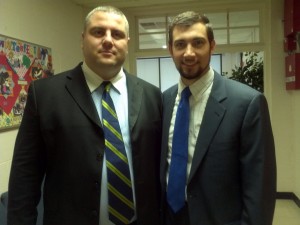 Rev. Dony K. Donev, D.Min.
A lot was said about ordaining younger ministers around the 2012 Assembly. The proposed Item 25, properly numbered recommending lowering the age requirement to 25 years, did not pass. Naturally, discussions stopped perhaps in wait for the next Assembly. But the question still stands open before our church.
My personal opinion was like many others on the floor. If we had to wait, they should have to wait too. But this self-centered conviction changed suddenly as we were invited to preach at the Higher Praise church in Cherry Log, GA pastored by Rev. Stephen D. Henderson (age 28 at the time).
This goes against every organizational rule we have, because when an active pastor is not allowed to vote in business sessions, the congregation he pastors is left voiceless. Alas, all business carried at the assembly affects the said church, which basically has no representation in General Council. So if a church pays for its young pastor to be sent to Assembly and represent the congregation, but without the right to vote this representation does not amount to much in the end. There is something fundamentally wrong with this.
The argument of age is of course connected with one’s experience. But let’s face it, multitudes of pastors leave the ministry for one reason or another having already gained both age and experience. And unfortunately, so many of them leave exactly because of the experience they have had aging within the church. Actually in today’s world, if you have not gained enough life experience and if you don’t know yourself by age 25, you will most probably not gain what’s needed by age 30.
Therefore, if a man is appointed a pastor of a church by consideration and approval of the Administrative Bishop, he should be allowed to vote. If he is trusted enough to take care of the church’s spiritual life and business, surely he must be trusted to represent his congregation and vote toward its betterment as a part of the whole organization. Not doing so is not simply discriminative against the minister on the basis of age, but against the church he leads as well. And yes, this argument goes further to support women who have been entrusted and appointed to serve as church pastors as well.
The Road Ahead for the Master’s of Chaplaincy Ministry Program (2016-2020)
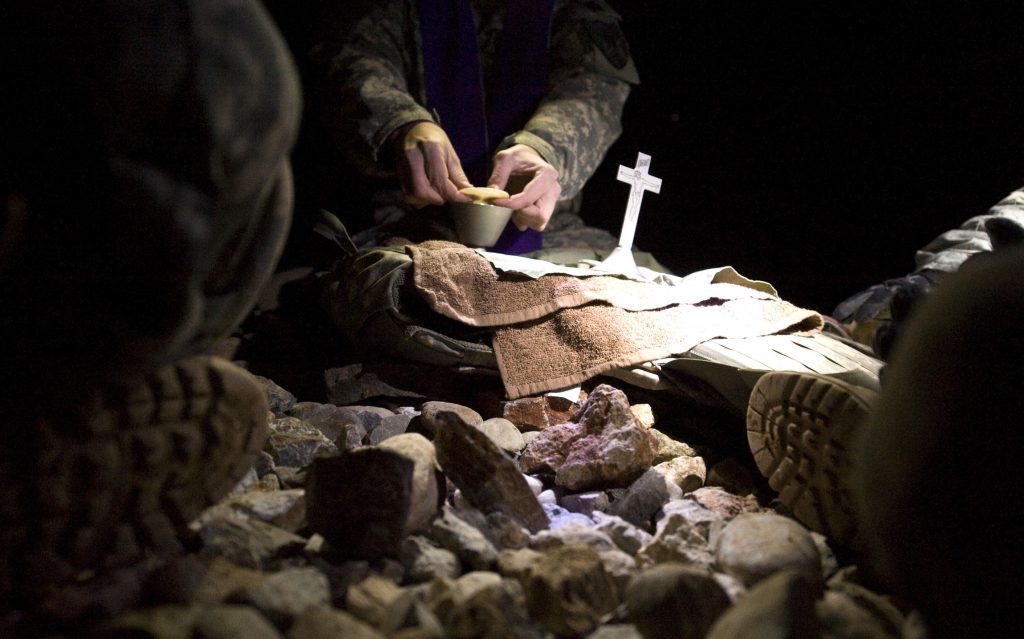
 We are proud to announce that the Master’s of Chaplaincy Ministry Program, we designed and launched in Bulgaria in 2006, has been selected to be part of the Social Service Program of New Bulgarian University. After being for years a valuable part of the regular curriculum of the Bulgarian Evangelical Theological Institute and the St. Trivelius Institute in the capital Sofia, the chaplaincy program has received the highest level of recognition as successful graduates will be finally able to receive government recognized degrees and apply their knowledge and training in chaplaincy on a professional level. The chaplaincy program can also serve within the Integration Proposal of local NATO programs and be instrumental in dealing with the enormous wave of Middle East migrants crossing through Bulgaria today.
In the beginning of the 21st century in Bulgaria, law and chaplaincy meet on the road to democracy. But before chaplaincy could be legalized completely and endorsed by the state to its full functionality, several changes must be undergone. Some of them are:
- Legal provision allowing chaplains to work as staff in the army, which guarantees the equal presence of protestant chaplains as well.
- The approval, acceptance and implementation of a NATO based model for chaplaincy within the structures of the Bulgarian Army.
- Periodical and systematic educational strategy toward chaplaincy workers among Bulgarian evangelicals.
- A paradigm for cooperation of Bulgarian chaplains from various ethnic, religious and cultural backgrounds.
- Further research publications to enhance the efficiency of chaplaincy within the Bulgarian national context.
Also important [click to read]:
- U.S. Department of State recognizes our chaplaincy efforts in Bulgaria
- Bulgarian Chaplaincy Association: Integration Proposal with Local NATO Programs
- Bulgarian Chaplaincy Association: Vision and Resolution
- Chronology of our role and involvement in developing Church of God chaplaincy in Bulgaria since 2001
- Master’s of Chaplaincy Ministry Program in Bulgaria Reflections
- The Past Decade of Chaplaincy in Bulgaria (2006-2016)
- Related Publications and Presentations by Cup & Cross Ministries International
Further Developments on the Master’s Degree of Chaplaincy Ministry in Bulgaria
We are proud to announce that the Master’s of Chaplaincy Ministry Program, we designed and launched in Bulgaria in 2006, has been selected to be part of the Social Service Program of New Bulgarian University. After being for years a valuable part of the regular curriculum of the Bulgarian Evangelical Theological Institute and the St. Trivelius Institute in the capital Sofia, the chaplaincy program has received the highest level of recognition as successful graduates will be finally able to receive government recognized degrees and apply their knowledge and training in chaplaincy on a professional level. The chaplaincy program can also serve within the Integration Proposal of local NATO programs and be instrumental in dealing with the enormous wave of Middle East migrants crossing through Bulgaria today.
The Master’s Degree of Chaplaincy Ministry in Bulgaria was:
- Upgraded to the necessary educational and professional levels, applicable to the specific context of ministry in Bulgaria (December 2010)
- Presented in its upgraded form for approval before the educational board of BETI in 2011 (January 2011)
- Applied in its full capacity with the remaining modules in Theology (Spring 2011), Counseling (Fall 2011) and Master’s Thesis (exp. 2012)
- Transferred to the New Bulgarian University in Sofia under their new social worker studies program.
Also important [click to read]:
- U.S. Department of State recognizes our chaplaincy efforts in Bulgaria
- Bulgarian Chaplaincy Association: Integration Proposal with Local NATO Programs
- Bulgarian Chaplaincy Association: Vision and Resolution
- Chronology of our role and involvement in developing Church of God chaplaincy in Bulgaria since 2001
- Master’s of Chaplaincy Ministry Program in Bulgaria Reflections
- The Past Decade of Chaplaincy in Bulgaria (2006-2016)
- Related Publications and Presentations by Cup & Cross Ministries International
Ministering at Cheraw

Establishment of the Bulgarian Chaplaincy Association (2001-2006)
 We are proud to announce that the Master’s of Chaplaincy Ministry Program, we designed and launched in Bulgaria in 2006, has been selected to be part of the Social Service Program of New Bulgarian University. After being for years a valuable part of the regular curriculum of the Bulgarian Evangelical Theological Institute and the St. Trivelius Institute in the capital Sofia, the chaplaincy program has received the highest level of recognition as successful graduates will be finally able to receive government recognized degrees and apply their knowledge and training in chaplaincy on a professional level. The chaplaincy program can also serve within the Integration Proposal of local NATO programs and be instrumental in dealing with the enormous wave of Middle East migrants crossing through Bulgaria today.
The Bulgarian Chaplaincy Association was envisioned in the summer of 2001 to unite all underground chaplaincy workers within the territory of Bulgaria. This included several ministries already active in Bulgaria serving in various contexts like military, healthcare, benevolence, jail system and commercial marine. The main goal was to establish a context in which all of these ministries could come together and be represented before the Bulgarian churches and government.
Although various other projects in the area of Bulgarian chaplaincy had been undertaken in previous years, the foundation initiative was formed in response to an invitation of the Church of God Chaplaincy Commission to hold a training seminar in the National Palace in the capital, Sofia in the fall of 2001. Due to the September 11th crises, the seminar was postponed and held February 16-23, 2002 under the patronage of the Bulgarian Church of God. More than 60 people, actively involved in military, hospital and prison ministries, students and church members, attended the lectures. The seminar was a stepping stone for the development of the Bulgarian Chaplaincy Association. Similar seminars were held consecutively in 2003-2004 in various locations.
The following strategic actions continued the endeavor. On August 13, 2005 a regional meeting in the Sliven area discussed the implementation of future strategies in the light of NATO’s decision to place airbases on Bulgarian soil. Individual and group meetings with chaplains from various professional fields and geographical regions followed.
Additionally, a national training seminar was held in Veliko Turnovo on October 8, 2005 where ten regional chaplaincy ministries were represented. The major issues discussed were (1) media presentation of the chaplaincy work before the major evangelical denominations in Bulgaria and the secular society, (2) dealing with stress-related issues at the work place, (3) system restructuring to meet the needs of the growing ministry and (4) the mandatory legal affairs currently restricting chaplaincy in Bulgaria. The participants discussed and approved a six-month national agenda toward solving the above problems and developing timely practical solutions. A priority on the list was the presentation of chaplaincy ministry before Bulgarian evangelical denominations.
The presentation was successfully achieved October 18, 2005 before the national leadership of the Bulgarian Evangelical Alliance. Three educational levels were proposed in the area of chaplaincy: candidate chaplains, church and government.
A consecutive regional meeting on October 23, 2005 in Nova Zagora addressed current dilemmas and outlined the necessary steps to complete the above educational strategy. The first goal was to develop a basic chaplaincy course for the Bulgarian Evangelical Theological Institute. The course was designed in the winter of 2005-2006 and after a series of meetings with denominational leaders and educational representatives, was submitted to the board of directors of the Bulgarian Evangelical Theological Institute on June 12, 2006. Prior to its submission, the course was presented in a pilot form to the regional directors of the Ministry to the Military at a training seminar in Veliko Tarnovo on April 8-10, 2006. The basic chaplaincy course designed by the Bulgarian Chaplaincy Association was scheduled to be taught in the fall semester of 2006 and plans were set to include it in the larger scope of the master’s level chaplaincy program with the Bulgarian Evangelical Theological Institute in 2007.
After much anticipation, on August 19, 2006 in the city of Yambol, the Bulgarian Chaplaincy Association called a founders meeting to discuss its legalization by the Bulgarian government. Active chaplains from various fields, ministers, pastors and scholars were present at the meeting to represent over 200 Bulgarians nationally involved in chaplaincy ministry. An official resolution was accepted and signed by the delegates to become the establishing document of the Bulgarian Chaplaincy Association. With this event, the Bulgarian Chaplaincy Association, which began in 2001 and has been instrumental in creating, recognizing and implementing such opportunities for ministry in the military as well as other fields of chaplaincy, has begun its final approach toward becoming a legal non-government organization active within the territory of Bulgaria.
Also important [click to read]:
- U.S. Department of State recognizes our chaplaincy efforts in Bulgaria
- Bulgarian Chaplaincy Association: Integration Proposal with Local NATO Programs
- Bulgarian Chaplaincy Association: Vision and Resolution
- Chronology of our role and involvement in developing Church of God chaplaincy in Bulgaria since 2001
- Master’s of Chaplaincy Ministry Program in Bulgaria Reflections
- The Past Decade of Chaplaincy in Bulgaria (2006-2016)
- Related Publications and Presentations by Cup & Cross Ministries International
Current Context of Chaplaincy in Bulgaria

We are proud to announce that the Master’s of Chaplaincy Ministry Program, we designed and launched in Bulgaria in 2006, has been selected to be part of the Social Service Program of New Bulgarian University. After being for years a valuable part of the regular curriculum of the Bulgarian Evangelical Theological Institute and the St. Trivelius Institute in the capital Sofia, the chaplaincy program has received the highest level of recognition as successful graduates will be finally able to receive government recognized degrees and apply their knowledge and training in chaplaincy on a professional level. The chaplaincy program can also serve within the Integration Proposal of local NATO programs and be instrumental in dealing with the enormous wave of Middle East migrants crossing through Bulgaria today.
The fall of the Berlin Wall introduced a new reality that Bulgaria was not prepared to embrace. The end of Communism was unable to tear down the communist mentality. Today, an entire Bulgarian generation lives with the scars inflicted by their experience under years of the Communist Regime, while another generation lives with an immense historical gap that has formed a new political, social, economical and cultural reality.
Three points are worth noting about Bulgaria’s Postcommunist context. First, in the beginning of the 21st century Bulgaria is left with armed forces, which were organized and influenced by the Soviet model and still act accordingly. The bureaucratic infrastructure disallows and discourages any changes apart from carefully chosen decisions that keep the army’s activities to the minimum possible. The two main factors needed for any change to occur, namely decision-making processes and chain of command, still operate under an Eastern Soviet paradigm.
Second, atheistic morale has gained the status of a positive military qualification in the Bulgarian military. This may sound familiar for any given army; however, in most cases it replaces a religious attitude with an atheistic one. In the Postcommunist context, atheistic beliefs pervade and even when a soldier experiences a genuine need for spirituality, in most cases s/he has no religious root to which to return. This lack of alternative or spiritual choice results in a pessimistic morale, intensified by the required mandatory military services.
Third, a Postcommunist mentality with definite Balkan characteristics rules not only the army but also the country as a whole. The economical, political and cultural crises have remained an undividable part of Bulgaria’s reality in the past 16 years. There, Postcommunist mentality holds captive every progressive thought and idea.
It is natural to conclude that the active solider within the Bulgarian Armed Forces is left without much choice when it comes to his/her personal and spiritual development. A positive career development is possible only when pressed by the economical factors one accepts to be part of a highly inactive bureaucratic machine. On the other hand, any attempt for spiritual growth is constrained and receives little privilege to become fully expressed. Naturally, such dynamics decrease one’s motivation for further development due to the lack of morale emerging from a personal spirituality. And because an army without a spirit is no army at all, the current condition of the Bulgarian Army is in much need of revival.
Also important [click to read]:
- U.S. Department of State recognizes our chaplaincy efforts in Bulgaria
- Bulgarian Chaplaincy Association: Integration Proposal with Local NATO Programs
- Bulgarian Chaplaincy Association: Vision and Resolution
- Chronology of our role and involvement in developing Church of God chaplaincy in Bulgaria since 2001
- Master’s of Chaplaincy Ministry Program in Bulgaria Reflections
- The Past Decade of Chaplaincy in Bulgaria (2006-2016)
- Related Publications and Presentations by Cup & Cross Ministries International
Bulgarian Chaplaincy Association: Integration Proposal with Local NATO Programs
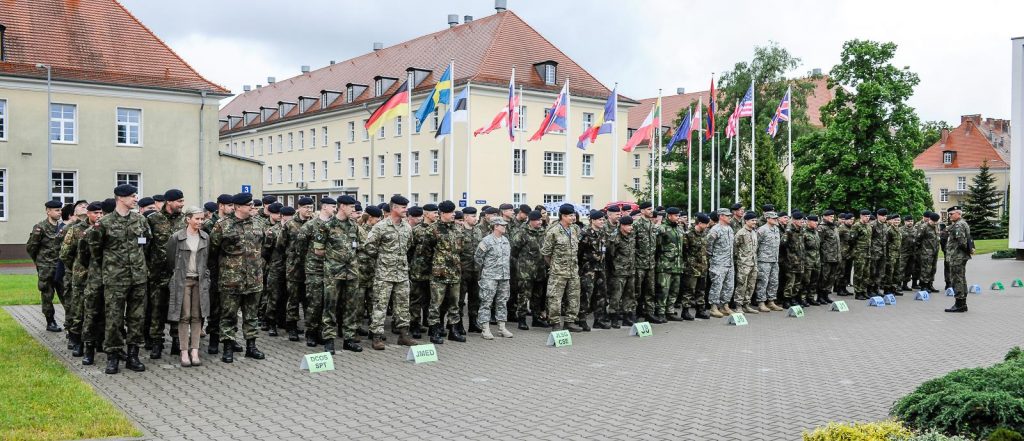
Bulgarian Chaplaincy Association: Celebrating a Decade of Ministry
We are proud to announce that the Master’s of Chaplaincy Ministry Program, we designed and launched in Bulgaria in 2006, has been selected to be part of the Social Service Program of New Bulgarian University. After being for years a valuable part of the regular curriculum of the Bulgarian Evangelical Theological Institute and the St. Trivelius Institute in the capital Sofia, the chaplaincy program has received the highest level of recognition as successful graduates will be finally able to receive government recognized degrees and apply their knowledge and training in chaplaincy on a professional level. The chaplaincy program can also serve within the Integration Proposal of local NATO programs and be instrumental in dealing with the enormous wave of Middle East migrants crossing through Bulgaria today.
Although the Bulgarian Chaplaincy Association emerges from and ministers within the Bulgarian cultural context, it is designed for integral cooperation with organizations of various origins. This advantage comes from the experience of previous working relationships that the organizations represented within the Association have had with other non-Bulgarian organizations. The vision, structure and operation of the Association incorporate and comply with western styles of chaplaincy work on three levels (1) cultural, (2) educational and (3) governmental.
The cultural heritage of the Bulgarian Chaplaincy Association represents a valuable environment for integration of NATO forces within the local cultural setting. On a cultural level, various events and activities such as English speaking church services, fellowship of soldiers with local communities, hospitals, orphanages and other cultural experiences are available. Humanitarian aid projects are among the most efficient manner for integration within the local community.
On an educational level, there are possibilities on both sides. For example, Bulgarian language courses for the soldiers and English language courses for the local community could be implemented. The most important element within the education strategy perhaps may be education of chaplaincy workers, especially in the current context when Bulgaria is in a need of trained crisis counselors for cases of floods and other natural disasters. Finally, local and national government relations will assist in the change of the status of chaplaincy within the Bulgarian Army. Such an approach will have positive political implications, as chaplaincy becomes a mediator between the army, church and government.
The presented proposal integrates religious moral issues along with socio-political principles in the idea for chaplaincy within the Bulgarian Army. The implications of these principles project involvement of local NATO units in partnership with local Bulgarian organizations. In the case of chaplaincy within the Bulgarian Army, the proposed organization is the newly established Bulgarian Chaplaincy Association. Although political, social and economical issues remain in the scope of its work, the Association’s main priority is the renewal of spirituality within the army structure through cutting-edge chaplaincy ministry beyond the ecclesial gates into a world of war and insecurity. The Bulgarian Chaplaincy Association acts as an agent of spiritual restoration targeting morality within the Bulgarian Army with the Bulgarian chaplain as the key element in this process. For an army without spirituality is no army at all.
Also important [click to read]:
- U.S. Department of State recognizes our chaplaincy efforts in Bulgaria
- Bulgarian Chaplaincy Association: Integration Proposal with Local NATO Programs
- Bulgarian Chaplaincy Association: Vision and Resolution
- Chronology of our role and involvement in developing Church of God chaplaincy in Bulgaria since 2001
- Master’s of Chaplaincy Ministry Program in Bulgaria Reflections
- The Past Decade of Chaplaincy in Bulgaria (2006-2016)
- Related Publications and Presentations by Cup & Cross Ministries International
THE CASE OF A NATO CHAPLAINCY MODEL WITHIN THE BULGARIAN ARMY (Submitted to the Manfred Wörner Foundation)
June 20, 2016 by Cup&Cross
Filed under Books, Featured, News, Publication
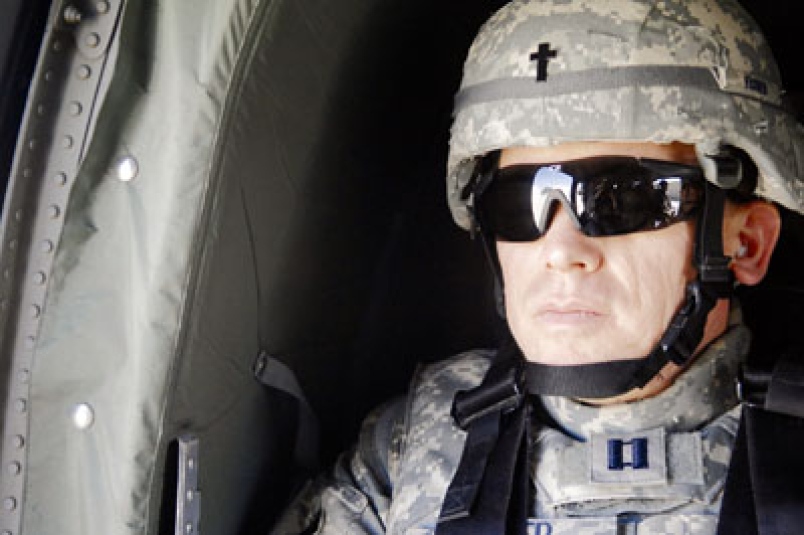
We are proud to announce that the Master’s of Chaplaincy Ministry Program, we designed and launched in Bulgaria in 2006, has been selected to be part of the Social Service Program of New Bulgarian University. After being for years a valuable part of the regular curriculum of the Bulgarian Evangelical Theological Institute and the St. Trivelius Institute in the capital Sofia, the chaplaincy program has received the highest level of recognition as successful graduates will be finally able to receive government recognized degrees and apply their knowledge and training in chaplaincy on a professional level. The chaplaincy program can also serve within the Integration Proposal of local NATO programs and be instrumental in dealing with the enormous wave of Middle East migrants crossing through Bulgaria today.
In April 2004, Bulgaria was officially accepted into the global structure of the North Atlantic Treaty Organization (NATO). The event followed a long series of historic developments that were accomplished despite the existence of highly antagonistic forces that opposed the very idea of Bulgaria’s membership in any Western alliance. Among these were internal and external political, economical and social factors that historically have forced the country to remain under the influence of the forces opposing the West.
As the country of Bulgaria is now a member of NATO and awaits acceptance into the European Union in 2007, international experts are working with various government institutions and consultant agencies to create an atmosphere in which the Bulgarian mindset can experience a new national revival in the 21st century. NATO’s involvement in this process serves as a catalyst both for reinforcing Bulgaria’s infrastructure and attracting international interest in the country’s affairs. Issues concerning national security, military involvement, international relations, economical development and ethnic diversity are continuously and carefully taken into consideration. However, one issue still remains untouched neither by NATO’s official position in Bulgaria, nor by the Bulgarian government. This is the issue of faith.
Three reasons make such topic of relevant importance. First, Bulgaria claims traditional and historical religious belongingness to the Eastern Orthodox Church. Furthermore, the centuries of religious wars on the Balkans have formed a complete dependency on ethnic religiosity, making faith the prime factor for animosity, hatred and genocide. Finally, the issue of morale and morality in the armed forces remains open for any military unit and will need to be addressed sooner or later in the context of NATO’s presence in Bulgaria.
This research will show how the above issues could be resolved by the presence of a NATO paradigm for chaplaincy within the Bulgarian Armed Forces. The paper will explore the current developments of chaplaincy in Bulgaria on three levels: church, society and government. It will then present the case of “underground chaplaincy” in Bulgaria and provide an appropriate solution to be implemented through the newly established Bulgarian Chaplaincy Association. The conclusion will outline the benefits that can be achieved by a partnership between local NATO representatives and the Bulgarian Chaplaincy Association who combine efforts to restore the spirituality within the Bulgarian Army through the legalization of chaplaincy ministry within its structures.
Also important [click to read]:
- U.S. Department of State recognizes our chaplaincy efforts in Bulgaria
- Bulgarian Chaplaincy Association: Integration Proposal with Local NATO Programs
- Bulgarian Chaplaincy Association: Vision and Resolution
- Chronology of our role and involvement in developing Church of God chaplaincy in Bulgaria since 2001
- Master’s of Chaplaincy Ministry Program in Bulgaria Reflections
- The Past Decade of Chaplaincy in Bulgaria (2006-2016)
- Related Publications and Presentations by Cup & Cross Ministries International
Ministering at the Regional Church of God Exactly Nine Months before the Massive Youth Revival in the Schools of Delbarton, West Virginia
Click on the text-link to watch our message while ministering at the Regional Church of God exactly 9 months before the Massive Youth Revival in the Schools of Delbarton, West Virginia | http://www.ustream.tv/recorded/69822047
Historical Overview of Military, Hospital and Occupational Chaplaincy in Bulgaria

We are proud to announce that the Master’s of Chaplaincy Ministry Program, we designed and launched in Bulgaria in 2006, has been selected to be part of the Social Service Program of New Bulgarian University. After being for years a valuable part of the regular curriculum of the Bulgarian Evangelical Theological Institute and the St. Trivelius Institute in the capital Sofia, the chaplaincy program has received the highest level of recognition as successful graduates will be finally able to receive government recognized degrees and apply their knowledge and training in chaplaincy on a professional level. The chaplaincy program can also serve within the Integration Proposal of local NATO programs and be instrumental in dealing with the enormous wave of Middle East migrants crossing through Bulgaria today.
The Country of Bulgaria in World History
The dramatic split of the Roman Empire preceded the establishment of the first Bulgarian Kingdom on the Balkan Peninsula in 681 AD. The consecutive military, cultural and economical influence of Byzantium over the Bulgarian nation claimed the newly established country to the side of the East from its birth. This propensity was sustained through the two Bulgarian Kingdoms (established respectfully in 681 AD and 1188 AD). It was renewed with even greater strength when the Ottoman Empire overtook the weakened country of Bulgaria in 1139 AD and for the next five centuries, the Orient claimed control of European Bulgaria.
In 1878, Bulgaria was liberated from the Ottoman Yoke by Russia, but only to remain under its political and economical umbrella for the next 111 years until the fall of the Berlin Wall in 1989. This event reaffirmed Bulgaria’s belongingness to the East as the country joined the Central Powers throughout World War I and deliberately remained with the Axis Powers in World War II.
Even when, on September 9, 1944, the Bulgarian Communist Revolution overthrew the monarchy and forced the country to move to the opposite camp of the war, Bulgaria’s allegiance remained with the Eastern of the Allies – the Soviet Union. This belongingness continued during the next 45 years to reform Bulgaria’s economical, political and cultural reality while transforming the Bulgarian mindset to a mentality which today remains the primary obstacle to Bulgaria’s integration in the free world.
As the country of Bulgaria is now a member of NATO and awaits acceptance into the European Union in 2007, international experts are working with various government institutions and consultant agencies to create an atmosphere in which the Bulgarian mindset can experience a new national revival in the 21st century. NATO’s involvement in this process serves as a catalyst both for reinforcing Bulgaria’s infrastructure and attracting international interest in the country’s affairs. Issues concerning national security, military involvement, international relations, economical development and ethnic diversity are continuously and carefully taken into consideration. However, one issue still remains untouched neither by NATO’s official position in Bulgaria, nor by the Bulgarian government. This is the issue of faith.
Also important [click to read]:
- U.S. Department of State recognizes our chaplaincy efforts in Bulgaria
- Bulgarian Chaplaincy Association: Integration Proposal with Local NATO Programs
- Bulgarian Chaplaincy Association: Vision and Resolution
- Chronology of our role and involvement in developing Church of God chaplaincy in Bulgaria since 2001
- Master’s of Chaplaincy Ministry Program in Bulgaria Reflections
- The Past Decade of Chaplaincy in Bulgaria (2006-2016)
- Related Publications and Presentations by Cup & Cross Ministries International
Brief Historical Overview of Chaplaincy in Bulgaria
It is true that clear documentation for the presence of chaplaincy in Bulgaria may be difficult to produce, especially according to any modern definition of chaplaincy ministry. However, it would not be unfounded to claim that the practice of military priests acting as chaplains in the Bulgarian Army dates back to at least Bulgaria’s national conversion to Christianity under King Boris I in 863AD. Having adopted virtually all the characteristics of a religious state from Byzantium, Bulgaria utilized priests and liturgy in its military forces.
During the time of the Ottoman Empire, the tradition of military priests ceased, as naturally Bulgaria had no army. However, foreign representatives continuously carried the ministry of chaplaincy through the Bulgarian lands. Around the 14th century, immigrants from Dubrovnik found a diaspora in Sofia. In 1486, they built the Patrum S. Franscisci Cathedral. The assigned priest also ministered as a community chaplain.[1] In the 16th century, German theologian Stephen Gerlah traveled through Bulgaria as a secretary to the protestant ambassador to Constantinople. Gerlah reports of the religious intolerance toward the Bulgarian population.[2]
Every military force dispatched to Bulgaria arrived with a chaplain. For example, British chaplains were active during the Crimean War.[3] In 1860, Principle Chaplain to the forces of the East, H.P. Wright reported an outburst of cholera in the General Hospital at the Black Sea port of Varna.[4]
After the liberation from the Ottoman Yoke in 1878, the Missionary Herald reports: “The Protestant preacher from Adrianople is just in. …. The governor of Southern Bulgaria, who resides there, is a Russian general, and is a strong Protestant.[5] He has Protestant services (conducted by his chaplain) every Sabbath, at the government house.”[6]
In 1879, the German prince Alexander Battenberg was enthroned in Bulgaria. The new monarch arrived with a personal chaplain, a Lutheran minister by the name of Adolf Koch.[7] Koch was instrumental in organizing a commune of German immigrants and holding regular protestant services in a specially designed building. The royal entourage, German families, Austrian and Swiss merchants and bankers and Russian officers, attended these services.[8]
At approximately the same time, Bulgarian Orthodox priest resumed their position with the armed forces in various conflicts. Orthodox priests actively participated in the Russian-Turkish (1877-1878) and the Serbo-Bulgarian (1885) wars. It was during this period that the Bulgarian chaplaincy tradition was reestablished under the title “garrison priest” and Vladimir Solovyov first discussed the theology of war. The role of the Bulgarian Orthodox Church continues to be present during combat throughout the Balkan Wars (1912-1913), often called the “Orthodox Holy War” and “The Last Crusade.” Orthodox chaplaincy is also present in the two World Wars, but the orthodox theology of war viewing Bulgaria as the “New Israel” was completely destroyed when Communism overthrew the monarchy establishing a new regime.[9] Religion was rejected as “opium of the masses” and the military chaplain for the next 45 years was replaced by the regiment’s politcommissar.
[1] Kratak Istoriheski Pregled. http://www.bukvite.com/studio/teoria.php?lid=48 (August 1, 2006).
[2] Stephen Gerlah, Dnevnik na edno patuvane do Osmanskata porta v Carigrad (Sofia: Izdtelstvo OF, 1976).
[3] Frances Duberly. Journal kept during the Russian War. (London: Longman, Brown, Green, and Longmans, 1855). Also, William W. Hall, Purtans on the Balkans (Sofia: n/a, 1938), 49, 61 and 249.
[4] “Realities of Paris Life”. The Dublin University Magazine: A Literary and Political Journal. Vol. LV (January-June, 1860), 166.
[5] Perhaps reference of general Arcadii Stolipin, who served as the governor of Eastern Rumelia after Bulgaria was divided by the San Stefano Treaty of 1878.
[6] “European Turkey Masson.” The Missionary Herald, Containing the Proceedings of the American Board. (July, 1878:74, 7).
[7] Report Girl’s School, 1881. Archive: American Board of Commissioners for Foreign Missions, Vol. I, 146. Annual Report, American Board of Commissioners for Foreign Missions, 1882, 26.
[8] H. Mayer, Die Diaspora der Deutshen Evangeliscen Kirche in Rumanien, Serbien und Bulgarien (Postdam, 1901), 440.
[9] Svetlozar Eldarov, Pravoslavieto na Voina (Sofia: Sv. Georgi Pobedenosec, 2004).


