

30 Years of Miracles: 2005

 Is There Revival in Bulgaria? (August 30, 2005)
During the process of completing this article, “Verfolgte Christen” (“Persecuted Christians”) published a letter by pastor Vesselin Lazarov from Shumen, Bulgaria. He reported that a young man fell to the ground, dead at a Turkish wedding. People tried to resuscitate him, but without success. Then a church member prayed for him and called him back to life. As the man stood up, over 100 astonished eyewitnesses shouted “A miracle! A miracle!” These testimonies are only a few of over 600 cases of literal, physical resurrections, which have been documented in the past 15 years in Bulgaria. Virtually all of them have occurred in some relations to Bulgarian Protestant congregation(s) or minister(s). Is there revival in Bulgaria? I think this question has been already answered literally.
Mission BULGARIA 2005
In 2005, our team was successful in establishing several new congregations in Southern Bulgaria. The work was not without challenges from the particularity of the geographical location and the cultural setting which included: (1) ongoing migration of people between towns and villages, as well as internationally, (2) opposition from Eastern Orthodox priests and restrictions by local authorities (both described as illegal by the constitution) and (3) economical challenges and extreme poverty in the Bulgarian villages (especially through the winter periods). These factors often disable the local people and limit the ministry, as some of them are still ongoing and form the context in which the team ministers. Yet, Mission BULGARIA has been successful in establishing a growing number of new congregations and providing pastoral care for each of them every week. We were able to travel with the team every week and minister to the churches in the Yambol region and were encouraged by their testimonies of salvation, provision, healing and even bodily resurrection.
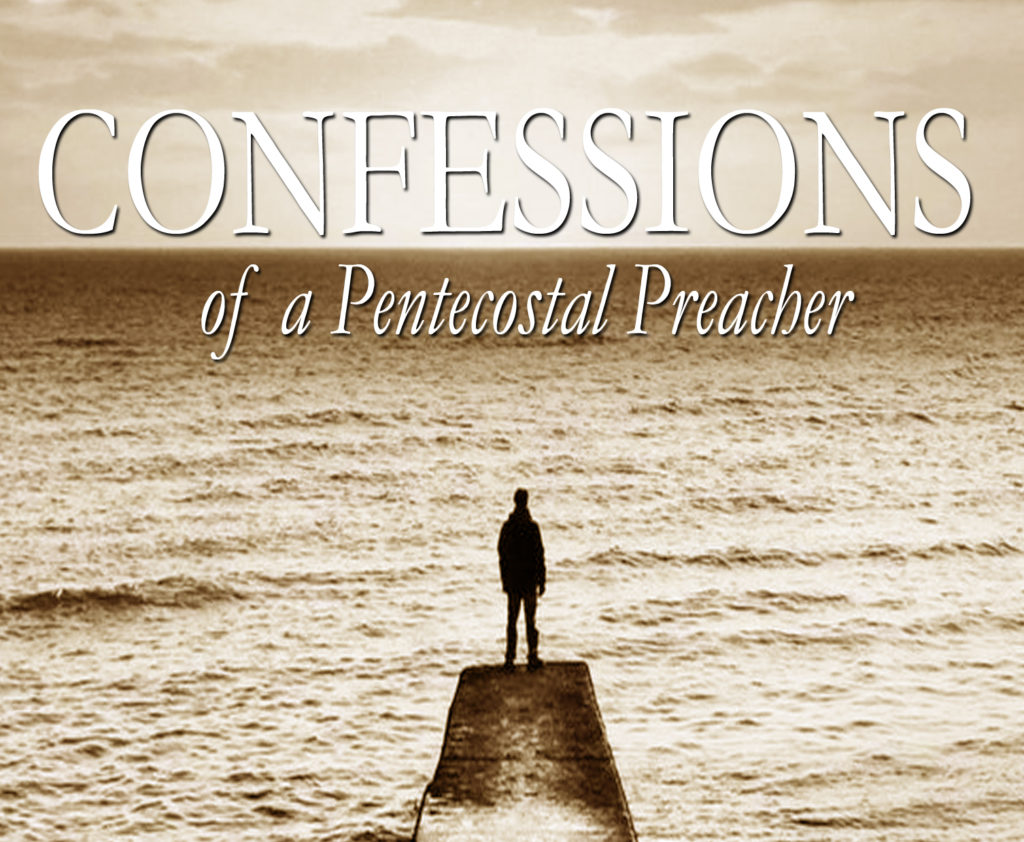
This book should have been published seven years ago in 2013. Its original subtitle was going to read “7 Years in Bulgaria.” Instead, it took seven years to finish it with all documents, research archives and new cases. Now, it is finally here and it finally reads like a story – not just choppy interviews, deposition documented testimonies or court records, but a story of struggle, strength and solitude. A story of life and a story of us.
1995-96 The establishing of the first Bulgarian Church of God in Chicago and its first split
2000-01 The contracted building of the ministry center for the Central Church of God in Sofia
2002-03 The church split in Southaven and what followed next
2005-06 The post-communist split of the Bulgarian Church of God and consecutive sub-denominations
2010-13 The social media network that cost us millions (of souls)
2016 The vote that forced to kill a church
2019-20 The sale of the ministry center for the Central Church of God in Bulgaria
READ: CONFESSIONS of a Pentecostal Preacher
CONFESSIONS of a Pentecostal Preacher
To Mark Alan
We know not why good people have to die,
but we do know we must tell their story…
Chapter I: Beyond the Church and into God
Be without fear in the face of your enemies.
Be brave and upright that God may love thee.
Speak the truth always, even if it leads to your death.
Safeguard the helpless and do no wrong.
That is your oath.
~Kingdom of Heaven (2005)
Separation of church from politics of false religiosity
The phone rang heavy and long. It was 4 AM in Bulgaria, but I was already up. A friend on the other end of the line was calling from South Carolina with a warning of some bad situation. The following morning, I was going to be contacted by the Director questioning why we were ministering in churches outside of our denomination.
The truth was we had ministered in some 300 local churches across the Balkan country of Bulgaria crossing all denominational boundaries and gathering youth from just about every confession. God had used us not only to reach and minister and to lead, but to step into an untouched spiritual realm, to undertake an unfamiliar ministry paradigm and to approach a brand new dimension of reality where He was to be the center of it all. And we had obeyed without questions. Now it was time to pay the price!
* * *
Our denomination, the one to which I remain both critically loyal and loyally critical, spreads over some five generations. Through its century old existence, the struggles and tension between theology and praxis has been in the center. And there, in the very essence of Pentecostalism itself, while some are always celebrating and being celebrated in the office or temple, others are always pushed in the periphery of normal life, hidden from the world behind closed doors and seeking a much deeper experience with God.
These modern day mystics are not only forgotten, but often forbidden. For their riot for righteousness cannot be conceived, contained and controlled by the religious norms of organized officiality. They speak as prophets to a world they so fervently try to escape from, about a reality that does not exist in the normal believer’s mindset. A stage of spirituality that cannot be preached without being lived in the social existence. And a relationship of God that goes far beyond common relationism and into God himself. That God, Who does not abide in offices and temples, but on the cross outside of the city walls…
But I knew nothing of this until that cold winter morning when the phone rang through darkness of the night. Knowing what is coming, rarely changes what we have done to get here.
7 Years in Bulgaria: CONFESSIONS of a Pentecostal Preacher
by Dony K. Donev, D.Min.
Upcoming Releases for United States (October, 2020)
25 Years of Miracles: 2005
 Is There Revival in Bulgaria? (August 30, 2005)
During the process of completing this article, “Verfolgte Christen” (“Persecuted Christians”) published a letter by pastor Vesselin Lazarov from Shumen, Bulgaria. He reported that a young man fell to the ground, dead at a Turkish wedding. People tried to resuscitate him, but without success. Then a church member prayed for him and called him back to life. As the man stood up, over 100 astonished eyewitnesses shouted “A miracle! A miracle!” These testimonies are only a few of over 600 cases of literal, physical resurrections, which have been documented in the past 15 years in Bulgaria. Virtually all of them have occurred in some relations to Bulgarian Protestant congregation(s) or minister(s). Is there revival in Bulgaria? I think this question has been already answered literally.
Mission BULGARIA 2005
In 2005, our team was successful in establishing several new congregations in Southern Bulgaria. The work was not without challenges from the particularity of the geographical location and the cultural setting which included: (1) ongoing migration of people between towns and villages, as well as internationally, (2) opposition from Eastern Orthodox priests and restrictions by local authorities (both described as illegal by the constitution) and (3) economical challenges and extreme poverty in the Bulgarian villages (especially through the winter periods). These factors often disable the local people and limit the ministry, as some of them are still ongoing and form the context in which the team ministers. Yet, Mission BULGARIA has been successful in establishing a growing number of new congregations and providing pastoral care for each of them every week. We were able to travel with the team every week and minister to the churches in the Yambol region and were encouraged by their testimonies of salvation, provision, healing and even bodily resurrection.
Bulgarian Elections 2005: Bulgarian Socialists Claim Victory
SOFIA, Bulgaria (Reuters)
Bulgaria’s opposition Socialists claimed victory over the ruling centrists in Saturday’s elections, but exit polls suggested they may struggle to form a government. Any protracted coalition wrangling between parties could unsettle investors seeking quick economic and social reforms to secure EU entry in 2007 and increase impatience in a general population over poor living standards.
A Gallup exit poll for BTV television gave the ex-communists 32.2 percent of the vote versus 20.5 percent for ex-King Simeon Saxe-Coburg’s ruling National Movement for Simeon II (NMS). Earlier opinion polls had given the Socialists 40 percent, a vote that would have allowed them to form a government quickly. “We have won the elections,” said Socialist deputy leader Rumen Petkov. “But the results are not satisfactory.”
Three other local polling agencies put the Socialists, led by progressive Sergei Stanishev at 30.7-32.1 percent and the NMS at 19.5-21.1 percent. The next government must complete a mountain of difficult reforms under increased scrutiny from Brussels as skepticism over further EU expansion grows after recent French and Dutch rejections of the bloc’s constitution. Although investors have praised Saxe-Coburg’s government as the best since the fall of communism, public discontent over poverty and crime forced the only ex-monarch to second place.
Nationalists rise
Analysts say the surprise emergence of the nationalist Attack party, seen winning 7-7.9 percent and crossing the threshold to parliament, may have undermined them. “The result for Attack is a surpise and has eroded support for the Socialists,” said Kancho Stoichev, an analyst with Gallup. Analysts said the Socialists are expected to seek a coalition with the mostly ethnic-Turkish Movement for Rights and Freedoms (MRF) — Saxe-Coburg’s current ruling partner — and deputies from other parties.
“A left-center coalition is more likely,” MRF leader Ahmed Dogan said, apparently throwing his support behind the leftists. The Socialists have not ruled out seeking a grand coalition including the ruling centrists. Saxe-Coburg has made clear he will not join a grouping he does not lead but his party may find another role for him, such as the presidency, or some of his deputies may defect. The Socialists have been eager to show they have changed since they were ousted in 1997 after plunging the country into economic disaster. But despite vowing economic prudence and reforms crucial for EU accession — such as revamping a lumbering judiciary — the Socialists’ plans for more social spending are a bigger risk for the economy, analysts say.
Banished in 1947 at the age of nine by the communists, the former boy-king returned to win a landslide election victory in 2001. He led Bulgaria into NATO and to the threshold of the EU, boosted economic growth to 6 percent and cut unemployment. Despite his achievements, failure to deliver on brash 2001 pledges to make all Bulgarians wealthy in 800 days has angered voters. Bulgaria’s 2004 per capita GDP of 2,498 euros makes it second only to Turkey as the poorest EU member or candidate.
There are many Bulgarians still queuing outside the polling stations in the country despite the official end of the election day, Biser Troyanov, spokesman of the Central Elections Committee. He also pointed out that currently CEC is trying to connect all the regional Elections committees to explore the situation.
At 8 pm the preliminary results were announced with socialist Coalition for Bulgaria garnering 33,7% of the votes, followed by Simeon II National Movement (SIINM) with 21.1% and Movement for Rights and Freedoms (MRF) – 11.9%. This year’s surprise came from the nationalistic coalition Attack (Ataka), which gathered nearly 9% of the votes.
UDF Leader: We’ll Seek Right-Centre Coalition
We will seek a right-centre coalition in the cabinet to be formed, Nadezhda Mihaylova, leader of United Democratic Forces, said as early exit poll results were announced on the night of June 25.
The right-wing party is among the favorites for entering the 40th parliament of Bulgaria in a close-up margin with the Democrats for Strong Bulgaria of former Prime Minister Ivan Kostov. Nadezhda Mihaylova told Sofia News Agency that the Bulgarian Socialist Party will obviously be unable to form a government of its own and her party will focus on coalescing with other parties of the right and the centre political spectrum. In response to a question whether this desired coalition might involve the party of Ivan Kostov, she said that talks are just to come ahead. Mihaylova stressed also on the “positive fact” that the right-wing election racers have earned totally more votes that the party of Simeon II National Movement.
King’s Party Doesn’t Rule Out New Coalition
The king’s party Simeon II National Movement (SIINM) has not been defeated, Deputy Prime and Transport Minister Nikolay Vassilev said not ruling out the possibility of the forming of a new ruling coalition. The current government was formed by a coalition and if we sum up the percents of the three partners in the coalition the result will equal that of Coalition for Bulgaria, Vassilev pointed out. Vassilev, however, declined to comment on the future coalition members.
Nationalists Turn Fourth Biggest Parliamentary Power
The nationalist coalition Attack, the fist to gain seats in Bulgaria’s Parliament, ranks fourth among election racers, show results after fifty percent of the votes were processed. The Attack (Ataka) coalition, which has been described as a phenomenon and sprang the biggest surprise in the elections, collects 8.9% of the votes.”


