

Hot Weather in Bulgaria
The heat wave that hit Bulgaria in the last week will continue in the next few days, pushing the mercury up to more than a hundred degrees throughout the whole country, the meteorologists warned. The only place in Bulgaria that the temperatures will remain normal for the season is at the northern part of the Black Sea coast. The south-eastern winds will lose their strength later on Wednesday, which will push the mercury even higher.
The heat wave will be felt worst in the north of the country, in the Danube plain, where the temperatures could exceed the record highs for the time of the year, registered in the past century since scientists have started taking daily measurements. The highest temperatures measured on Tuesday were in Eastern Bulgaria, where Burgas broke the temperature record since 1931. Because of the hot weather the number of fires in the crop fields and the forests has significantly risen.
Ministering at Stara Zagora Again
This past Sunday we were privileged to minister in the Awakening Church of God in the city Stara Zagora. Stara Zagora is about an hour travel from Yambol and is one of the oldest settlements in Southeastern Europe being at least eight thousand years old. Although we have a long standing relationship with the pastor and many of the members, this is our first time visiting this church and we were welcomed very graciously.
We came to know Pastor Dimitar Luchev (Jimmy) almost 20 years ago while pastoring in Pravetz. Our youth groups often held prayer meetings and youth services with the church in Etropole where he ministered at the time. We continued our relationship with Jimmy and his family during his studies at the Church of God Theological Seminary in Cleveland and we were happy to see them again and to be of assistance to their ministry in Stara Zagora.
With nearly a hundred in attendance, and a large majority of this number being young people, the message was focused on passing on the faith to the next generation. During the alter call the church gather and prayed of the youth of the church. After the service, Jimmy testified of how the sermon was timely and a confirmation for the direction the church was taking. We will continue to support Jimmy and his congregation in prayer and fasting, as they are faithfully taken the journey toward a new level of ministry in the Stara Zagora region.
Services at the Black Sea Again
British evangelist David Hathaway was in Bulgaria for an evangelistic crusade in Sofia and Samokov. David is well known to the Bulgarian church, as he and his ministry had smuggled Bibles through the Iron Curtain. For this activity, David was imprisoned for a year in Czechoslovakia in the 80s. He continued his ministry after his release and in 1990 organized the first national Pentecostal conference in Bulgaria after the fall of the Berlin Wall. The conference gathered thousands of Bulgarian Pentecostal believers in a celebration of freedom and grace.
After the crusade, our team traveled to the Black Sea to hold three Sunday services. We ministered at the Dolno Ezerovo church on Sunday morning, where we have been invited to preach for the past two years, but never had a chance to do so until now.
After the service we quickly departed for the Sinemoretz church where we were scheduled to hold a service at 2:00 pm. Sinemoretz is located at the Black Sea coast only a couple of miles away from the boarder of Bulgaria and Turkey. The summer season in Bulgaria has already started and traveling along the coast proved to be a difficulty. As a result, we arrived late, but the believers had gathered and waited our arrival. The congregation gathers in a small garage and as usually the place was packed. We had an anointed communion service and were blessed by their sincerity and faithfulness.
We left Sinemoretz around 4:30 pm and returned to Bourgas for an evening service at the oldest Pentecostal church in Bulgaria. We were able to share with the believers some of our research on Bulgarian Pentecostal history and we were all encouraged by telling the story of our humble beginnings as a Pentecostal movement. We had a very encouraging alter service and remained praying with congregation until dark. After the services, we were able to discuss with the pastoral team the upcoming X event at the Black Sea, which will be broadcast live on television and internet.
Regardless of the torrential rain which has lasted for days now in Bulgaria, our team was also able to travel and minister at the church in Samokov. Our visit there has been long-awaited as the pastor has been asking us to preach for him for sometime now. This is a Roma (Gipsy) church which regardless of the cultural and financial difficulties holds meetings for over 1,000 members on virtually a daily basis. We were happy to be able to minister to the people and to rejoice with them about the grace of God in our lives.
Finally, our team has been invited to participate in the “Year of the Bible” through our website dedicated to the Bulgarian Bible www.bibliata.com, which ministers daily to over 4,000 Bulgarians both in Bulgaria and around the world.
Bush Winds up European Tour in Bulgaria
By Matthew Brunwasser
SOFIA: President George W. Bush arrived Sunday night in Sofia on the last stop of his eight-day European trip, visiting one of the United States\’ newest and most loyal European allies – where American soldiers are expected to arrive at new military bases in September.
The White House plan for Monday included a tour by Bush and his wife, Laura, of the cultural sites of the Bulgarian capital: the National Archaeological Museum, the National History Museum, for lunch, and a visit with students from the American University in Bulgaria. The visit includes no public appearances beyond that.
“I represent a country that really cares deeply about the human condition,” Bush said in an interview with Bulgarian National Television that was broadcast June 1. “And I bring a spirit of friendship to Bulgaria and its people.”
In addition to seeing the history, culture and natural beauty of the country, “the president wants to highlight Bulgaria as a success story in the Balkans,” a senior U.S. Embassy official said.
The topics of meetings with President Georgi Parvanov and Prime Minister Sergei Stanishev will include the country\’s military modernization, bilateral economic relations, Kosovo, lifting U.S. visa requirements for Bulgarians and the Bulgarian nurses jailed in Libya, whom Bush has called on Tripoli to free.
Bulgaria is among the United States\’ most steadfast allies in “New Europe” and has consistently participated in the so-called Coalition of the Willing, maintaining troops in Iraq and Afghanistan, and suffering 13 casualties in Iraq.
Bill Clinton\’s visit to Bulgaria in 1999 was the first and last here by an American president. Clinton\’s speech drew a crowd estimated at 30,000. At the time Bulgaria was an eager candidate for membership in NATO and the EU. It had just proved its loyalty to NATO by supporting the bombing campaign of its neighbor Serbia, as NATO forces sought to drive Yugoslav forces out of Kosovo.
The Balkan state has questioned the proposed U.S. missile shield in Central Europe because Bulgaria would fall outside the geographical scope of its defensive capabilities, along with the rest of the southern flank of NATO: Turkey, Greece and Romania.
“Our wish is not to find ourselves in a zone of unequal security,” Foreign Minister Ivailo Kalfin said at news conference last Tuesday. “Clearly this will be one of the questions we will discuss.”
“This is the most legitimate argument to criticize the missile shield,” said Ivan Krastev, of the Center for Liberal Strategies in Sofia. “The idea of equal guarantees for all the member states of NATO is the principle of the alliance.”
Other EU member states want the shield discussed in a NATO context, Krastev said, and not on a bilateral basis between the United States and Poland and the Czech Republic.
“This argument gains a certain kind of respectability for Bulgarian foreign policy within the EU,” said Krastev.
Fears about Russia are not expected to figure prominently in the talks in Sofia, in contrast to Bush\’s meetings with leaders in Central Europe. Bulgaria is perhaps the most pro-Russian EU member-state, both historically and in terms of current public attitudes. The Bulgarian people were by far the most Russia-friendly among the 12 European countries included in the 2006 U.S. German Marshall Fund Trans-Atlantic Trends survey.
The U.S.-Bulgaria military cooperation agreement of April 2006 laid out plans for 2,500 U.S. soldiers to be based in Bulgaria on six-month rotations. The details of the facilities have not been finalized but are expected to include two air bases, a training ground and a storage facility.
“We see this as part of the process of the modernization of the army and enhancing the capacity of this army to interact on an operative basis with NATO and U.S. military units,” said Dimitar Tsanchev of the Foreign Ministry.
U.S. President George W. Bush Arrives in Bulgaria
U.S. President George W Bush arrived in Bulgaria for the last stop on his European tour on Sunday evening. The presidential plane, Air Force One, arrived at the Sofia International Airport at 7 p.m. local time and Bush stepped on Bulgarian ground 15 minutes later.
The US President and First Lady Laura Bush were met by Bulgarian Foreign Minister Ivailo Kalfin, US Ambassador to Sofia John Beyrle, the head of Bulgarian presidential cabinet Nikola Kolev and Bulgaria’s Ambassador to US Elena Poptodorova. Bulgarian President Georgi Parvanov will officially welcome Bush to the country on Monday morning.
Bush will meet President Georgi Parvanov and Prime Minister Sergey Stanishev on Monday. A round-table discussion with students from the American University in Bulgaria has also been scheduled. The US president is expected to give reassurances on lifting visas for Bulgarians and support the efforts to free the medics sentenced to death in Libya. Other issues include future military and economic cooperation, as well as Bulgaria’s progress in the fight against corruption, with Bush set to declare his support for the establishment of a foundation that would help strengthen the rule of law in the Balkan country. The future of Kosovo is also likely to feature in talks with Parvanov, with Bush throwing his support behind the independence of the province during his seven-hour visit to Albania on Sunday.
Bulgaria is the last stop on Bush’ week-long European tour, which included the G8 summit in Germany, as well as stops in the Czech Republic, Poland, Italy and Albania. A total of 3.500 police officers will take care of the security in Sofia, focusing on two security zones in the downtown of the city and the area around the airport, Boyana, Mladost, Dragalevtsi and Studentski Grad districts. Bush is the second sitting US President to come to Bulgaria, following in the footsteps of his predecessor Bill Clinton, who visited the country in November 1999.
Bulgarian Evangelical Churches in America
The annual conference of Bulgarian Evangelical churches in North America was held May 25-28, 2007 at the Christian Life Church in Chicago’s suburb Des Planes where the largest number of Bulgarian immigrants is locating. This year the event was hosted by the Bulgarian Evangelical Church of God “New Life” pastored by Stan Tanev. The conference gathered Bulgarian immigrants from all parts of America. The churches from Minneapolis, Dallas, Huston and Los Angelis participated. Representatives from New York City, Tennessee and Las Vegas reported growth of newly started Bulgarian congregations in their respective areas. Special guest of the conference was Martha Zaplishny Jackson, daughter of the first Pentecostal missionaries to Bulgaria, Rev. Dionesey and Olga Zaplishny.
U.S. President Bush to Visit Bulgaria
WASHINGTON, DC
President George W. Bush will visit Albania and Bulgaria during an upcoming European trip, the White House announced on Tuesday (April 24th). The focus of the weeklong tour will be the G8 Summit in seaside Heiligendamm, Germany, in early June. Bush will then travel to the Vatican for his first meeting with Pope Benedict XVI and will spend a day in Rome talking with top Italian officials. He will then travel to Tirana on June 10th and to Sofia the next day.
Pravetz Church of God
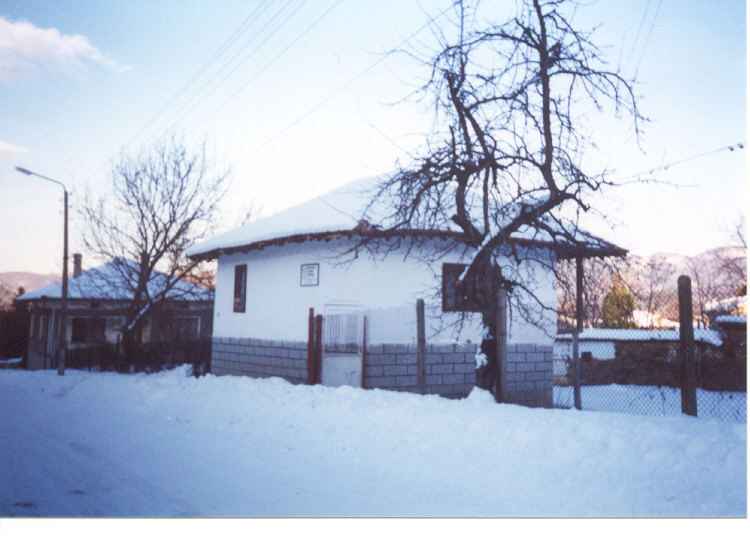
The Lord called me for the ministry in the end of September 1990 in a small house at the outskirts of a mountain town in Bulgaria by the name of Pravetz. In 1990 I was only 16 years old. At the time, Pravetz was known as a stronghold of communism where the communist president who ruled Bulgaria for 36 years was born. Yet, a small group of Pentecostal believers had kept the faith during the long years of persecution during the Communist Regime. It was there that the Lord called me for ministry, as He later called many others that are today spread around the world.
I began working with a small group of students from the local Computer Technical School. Our number was twelve to be exact. The work was not without the help of more experienced Christians and the pastor of the local Church of God. Coming out of the persecutions, the church had no building, and we met at private homes. We studied the Bible and practiced what we learned from its words. All night prayer meetings were a weekly event, and the chain fasting almost never stopped. No one of us knew or had ever experienced a genuine spiritual revival, yet deep inside ourselves we all wanted to be closer to God.
In the spring in 1991 it all came together. The church was able to rent a small building formerly used for a Communist club. A number of young people from the local schools began attending the services. Many of them were my schoolmates, as I myself was a student at the Computer Technical School in Pravetz. Soon enough we had to start a separate service for teenagers, which was held on Tuesday evening. On some of the services we witnessed up to fifteen people getting saved and baptized with the Holy Spirit. Our number grew rapidly and we had to move our meetings to the larger facility of the Pravetz Youth Center. More and more students were interested in what God was doing. The lives of many who were well known drug addicts and alcoholics were dramatically changed forever as they were delivered from sin and saved.
In the fall of 1991 I returned from my summer break with a fresh strategy. I started a verse-by-verse study on the book of Revelation. I was only seventeen and I had only preached for a year. I was using an old Bulgarian translation of Larkin’s 1919 book on Revelation. At this time our youth group was over 100 and growing. The study continued nine months challenging our desire for deeper knowledge and spiritual growth.
We gathered for prayer every morning before school. Since the dorms did not open until 6:30 a.m., we often had to jump through the windows of the first floor to go to the church for prayer. At that time the church had rented another building known as the Officers Cafeteria for its meeting. In the cold winter mornings we went to the church for prayer sometimes having to walk through the fresh snow that had covered the streets of the small mountain town during the night. In the spring we went up on a small hill outside of the town called Monovetz. It was during this time that one of the school officials spread derogatory remarks about our prayer meetings. Many of us were called into the offices and interrogated for our beliefs. Yet, nothing was able to stop the revival. The youth group was growing rapidly. On some meetings we counted up to 175 people. The year was 1991.
More than ten years later, I am again reporting this story not to brag about its success, but to express my desire for revival. The old times are now gone. Many of the members of the Pravetz Church of God youth group now live around the world. Beside Bulgaria, there are many in the United States, Canada, Austria, United Kingdom, Australia, Spain, Israel, South Africa, etc. Yet, in my thoughts I often return to the small mountain Bulgarian town. I climb the quite hill before dawn breaks and I pray a silent prayer. I pray to God to see and bless every one who participated in the Pravetz Revival wherever in the world they may be. I pray that He somehow gathers us once again in this lifetime, and reconciling every one and each of us with Himself to let us find ourselves again in His presence of love and anointing. I pray that He somehow reaches us wherever we may be and revive us again. I pray for a new revival because revival must go on …
Cup & Cross Hosts Global Online Conference
Cup & Cross Ministries International operates through various ministry teams working in over a dozen of countries located in three different continents. Since there is a significant difference in location, time zones and purpose of operation, it is quite rare that we are able to gather the whole team for a time of prayer and strategic planning. The preparation for the upcoming “X Event,” however, drew the participation of a great number of our team members and demanded such a gathering.
Last year, Cup & Cross Ministries began the “X Event” in Bulgaria. “X” is a Christian gathering for youth which includes worship, focus on the Bible, along with time of fun and fellowship. The purpose and structure of the event is much similar to Winterfest held in the United States. The “X Event,” however operates among a number of evangelical denominations and continues with a strong post-event Christian leadership formation among Christian youth.
Having realized the effectiveness of this ministry, we have given “X” a substantial amount of strategic preparation placing it among our top priority ministry endeavors. Being unable to call all team members for a planning meeting at one identifiable location, we had to approach this particular problem through the means of communication which we have built and use for the purposes of our ministry in the past decade. Using advanced conference software, we were able to set up a communication server in our South Eastern office in Florida with live mirror uploads to Germany and Bulgaria.
A live uplink server created the possibility to include various team members in the strategic planning of the upcoming “X Event.” During the global online conference, the central ministry team took the initiative to announce the dates of the happening and to work with local church leadership in Bourgas, Varna, and Ahtopol along with other Black Sea towns for cooperating in the “X Event.” The arrangements in the schedule were then calibrated with the on ground sub-teams in various locations in Bulgaria which will provide sound equipment, point-to-point transportation, band management and multimedia effects.
The Germany connection was also important as it connected us with team members responsible for prayer, public relations and political awareness teams. The prayer team has already initiated their strategy through a prayer request website which was published January 1, 2007 in beta-testing and released in its official version April 1, 2007. The website, which is located in Busingen, Germany, already has a good number of daily visits, growing size of regular members, a prayer needs submission engine and an around the clock payer teams. Naturally, these efforts have resulted in many praise reports for answered prayer needs and we are hoping that the participants will be our faithful prayer and fasting partners during the upcoming term of ministry.
The PR team members located in Steinfurt, Germany and Sofia, Bulgaria are currently working together to pull all available media resources and create an effective media coverage through some of our long-term partners as Bulgarian Evangelical Newspaper, Faith TV Channel and other leading Christian media providers.
Substantial preparation results were further reporting by our partnering Shalom TV production company who will provide both live coverage and postproduction of the events. Two live IP TV (internet television) are already operational in Alsbach-Hähnlein, Germany and Sofia, Bulgaria and will be used during the “X Event.”
Some parallel planning has been done along with our web media team which is working on the developing of Religia.TV – a website which emphasizes all current Christian media production in Bulgarian in a single multimedia type website. Additionally, our Constantinople Team has decided to use the “X Event” to promote the digital edition of the 1871 Constantinople Bile in connection with the “2007: Year of the Bible Series” promoted by the Bible League in Bulgaria and the Bulgarian Bible Society.
We have also brought in a number of independent consultants for the various stages of the event. With ministry partners from the Atlanta area we have been able to further develop a leadership formation strategy for post-event ministry. This has been a long-term dream of ours as we would like to be able to extend the results after the actual event. With all this preparations on the way and scheduled dates closing quickly, we are expecting another great summer of ministry in Bulgaria.
Yablanitza Church of God
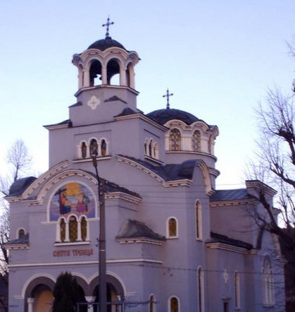 By the summer of 1991 the work in Pravetz grew tremendously. I held an extensive study on the book of Revelation, which drew more people to our meetings. The missionary Keith De Mayo opened a Bible school in Sofia, and many of our teenagers traveled every week to attend the seminars and services. At that time the youth group had exceeded several hundred, but there was much more to be done.In the fall of 1991, the Lord called me to a more extended ministry. Beside the Tuesday evening meetings with the youth group, I traveled and preached every Sunday at the Yablanitza Church of God. At that time the church there had neither a pastor nor a building. For years the few members gathered for service and prayed to God for a pastor.
Being only 17 and living in a post-Communist country, I did not own a car. Every Sunday I hitchhiked on the highway, which at that time went through Pravetz. We would have the service and then I would hitchhike my way back. This went on for about a year. I spent many hours on the frozen highway, but they turned out to be an experience in the presence of God that changed my life.For several weeks we held a Bible study on Song of Solomon from a Pentecostal perspective. The emphasis on the baptism of the Holy Spirit drew many to our meetings. One Sunday seven people received the Holy Spirit and this single event gave means for a great move of God. On the following Sunday, several Gypsies from the local Roma community joined our church. The church soon grew and by the spring of 1993 we were running 60. Many came to attend our meetings traveling from the local towns and villages such as Teteven, Djurvo and Skravena. God saved a number of young people as well. Several of them joined the church along with their families.
It was during this time that we received a vision for a church building. The members provided both the plans for the church and the materials. Yet the process went on with much delays and resistance from the local city government who disliked the idea of a Pentecostal church in their community. The building was finally finished in the spring of 2001. In September 2001 a member of the Pravetz youth group was appointed to serve as pastor of the Yablanitza Church of God.


