

Regional Church Meeting in Pleven
On September 27th, the Bulgarian Church of God held a meeting for the churches in the Pleven region of Northern Bulgaria. This is the second of three meetings. The first one was held close to the city of Troyan (September 20-21, 2008) and the last one will be held in the city of Etropole (October 4-5, 2008). The purpose behind the meetings was to gather the people of God and unify the local churches against the spiritual crises which have taken hostage the whole nation of Bulgaria.
The meeting in Pleven was important, because according to the history of the first Bulgarian Church of God people received the Holy Spirit in a dug out dwelling not far from the town almost a century ago. Later on, when the Bulgarian Pentecostal Union was established, these churches remained unregistered with the government and formed the Free Churches of God movement. The church and its ministers, active predominantly in Northern Bulgaria in the beginning of the 20th century, became known as the Bulgarian Church of God. Read more
HISTORY OF PROTESTANTISM IN BULGARIA
In 1810, the American board of commissioners for foreign missions was created, representing the interests of American members of the Congregationalist and Presbyterian denominations of the era.
Nine years later, in 1819, the board sent two of its missionaries to the Near East, where they found within the limits of the Ottoman Empire a multitudinous nation – the Bulgarians.
First contacts with Protestantism
New Jersey-born missionary and scholar Dr Elias Riggs began to show a great interest in the Bulgarians in the early 1840s, following his years in Greece and time in Smyrna (now Izmir, Turkey). His Grammatical Notes on the Bulgarian Language were published in Smyrna, in 1844. Later, he became one of the influential figures in the translation of the Bible into contemporary Bulgarian. It was in relation to the Bible’s translation that Bulgarians had their first contact with Protestantism.
Through their co-operation with British and other foreign Bible societies, American missionaries learnt that Bulgarians had a great hunger for the Word of God. At a fair in Smyrna, in two weeks, nearly 2000 copies of the recently published New Testament in the Bulgarian language were sold.
The American board of commissioners for foreign missions described Bulgarians as the “most needy” of missionary work, and was encouraged by the good impression it had of the people, who seemed very sharp-witted and cheerful, more interested in learning and more cultured than other subjects of the Ottoman Empire. Together with the Methodist Church, the American Board of Commissioners for Foreign Missions divided Bulgaria into a northern and a southern region, with Stara Planina being the demarcation point. The Methodists took responsibility for the north, and the American board for the south. Read more
Conference with Dr. Albert Wardin in the Oldest Bulgarian Baptist Church
After working on various research projects with Dr. Albert Wardin in the past few months, we were happy to have him visit Bulgaria again. Dr. Wardin is a renowned Baptist historian at the Southern Baptist Historical Library & Archives in Nashville and a professor emeritus of Belmont University. Undoubtedly, his most important work about Eastern Europe is the bibliographical guide “Evangelical Sectarianism in the Russian Empire and the USSR.”
Dr. Wardin first visited Bulgaria in the late 1960s and became acquainted with the leading Baptist ministers of the country while visiting the local congregations. Being a historian at heart, he has since written several research essays on Bulgarian evangelical history, promoting Baptist heritage and clarifying the validity of a number of historical documents refereeing to Bulgarian Protestantism. His latest visit to Bulgaria in September 2008 was part of his European tour.
We were able to meet with Dr. Wardin in the oldest Bulgarian Baptist church in the city of Kazanalak, a quaint Bulgarian town in the Rose Valley of Bulgaria at the foot of the Balkan mountain. In the company of several Baptist ministers, we were able to complete a long-waited discussion on the Bulgarian Baptist history and move toward examining the relationship of one of the first Pentecostal missionaries to Bulgaria, Rev. Ivan Voronaeff, with the Baptist movements in Russia and the United States. After our conference, Dr. Wardin left for Poland where he will be a part of the anniversary celebration of the Baptist movement.
Chaplaincy Degree Offered at the Newly Accredited Bulgarian Evangelical University
As the school year began in Bulgaria on September 15, we have just received word from the newly accredited Bulgarian Theological University, formerly known as the Bulgarian Evangelical Theological Institute, that its United Church of God departments will offer a degree in chaplaincy ministry in the 2008 fall semester. This is a long awaited news since due to the new government regulations, both the accreditation of the university and the future the of the chaplaincy program have been on hold for some time now.
The program is an answer for all of us here in Bulgaria, as one of the goals of the Bulgarian Chaplaincy Association was offering chaplaincy education in an accredited evangelical educational institution. We submitted a proposal for the program in 2006 and now two years later the Bulgarian Theological University is recognizing and responding to the need. This goal has been reached through the sacrifice of many godly and gifted men and women and we would like to recognize and thank everyone who has invested in this great work for His Kingdom. The further development of the chaplaincy ministry in Bulgaria and the educational program which accompanies will be a subject of discussion on the upcoming annual meeting of the Bulgarian Chaplaincy Association.
Miracles Reported
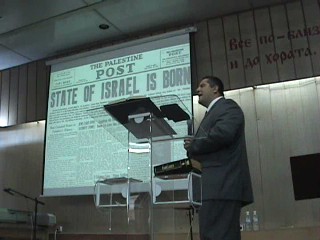 After the service at the gypsy Church in Yambol which burnt down, we traveled to the neighboring town of Sliven for a service at the local Church of God in the Gipsy ghetto. We had just held a church leadership seminar in town on August 31, 2008 and the echo of the event was still very strong.
We were pleasantly surprised upon our return to Yambol with a new healing report. During the Wednesday night service in Yambol the worship team always sings the old gospel song “There’s Power in the Blood” right before we minister the word. After the song a lady that plays the violin testified that some 10 years ago, while ministering in Yambol we had asked for that same song to be sung before the message. She sang the song with the congregation while her left hand was squinched by a sickness not only causing her constant pain and discomfort, but disabling her from playing the violin. She testified that her healing a decade ago in one of our services was still powerful and real today.
Little we knew that while she was testifying another lady in the congregation was suffering with a similar painful condition in the right side of her body disabling her leg and foot. During the time when we sung the songs and the testimony was presented she reported that she felt the presence of God in a very powerful way and continued to feel it through the next 48 hours. She later testified that God had healed her entirely from the pain and she confidently went to the doctor only to confirm that her condition had disappeared completely.
Service at the Church Burnt in Yambol
Upon receiving word that the Shalom Church in the Gipsy ghetto of Yambol had been set on fire, our team immediately traveled on-site to interview the pastor and document the results of the tragedy. This video material from the interview was released on one of our ministry’s website for pastors and received great attention. As a result, several churches committed to support the project of rebuilding the church.
Our team, along with the youth group of the local Pentecostal church, traveled back to the Ghetto several days later to hold a service for the Shalom Church outside next to the burnt building. No services have been held in the church since the fire due to the building being structurally unsound. Even as our team was setting up the sound equipment, the street was blocked by the great number of people who came for the service. Entire families brought stools from their homes and sat on their rooftops to listen to the preaching. The pastor of the Shalom Church opened with prayer and we followed with praise and worship. About 50 gipsy children sat up front singing along with the praise team. At sunset, we delivered a message entitled “Some through the fire, but some through the blood …” The message was followed by a alter service in which people joined hands in prayer as they were standing in the dark street. We left the site of the burnt church late in the night.
The very next morning the pastor of the church called us to report that shortly after our team has departed, a truck loaded with bricks arrived at the church site. They were able to unload the precious cargo and intended to begin reconstruction of the church walls immediately. We will continue to support the efforts of the congregation to recover from the church fire, as they will need to replace the roof in the next few days before the rainy season in Bulgaria begins.
SAY YE TO THE RIGHTEOUS
Several months ago we returned to Bulgaria with a Word from God from Isaiah 3:10. God commands the prophet: “Say ye to the righteous it shall be well with them.” The words are a great surprise for the reader who in the first part of the chapter has been exposed to the tragic picture of God judging His own people. The reasons for this are listed: open sin as the sin of Sodom followed by pride, brotherly oppression and lack of responsibility, no accountability, preoccupation with the self and unfaithfulness. The punishment that follows is severe: famine in the land, complete removal of all financial support, lack of leadership and a spreading national crisis that leads to a certain death. But all these reasons and subsequences are summed by the prophet in one statement: Israel has sinned and God is punishing the loss of righteousness. Yet, in the midst of desolation, depression and destruction, God gives a ray of hope through the words of the prophet “Say ye to the righteous it shall be well with them.”
The similarities between the situation in Israel several hundred years ago and Bulgaria today are many. The country is in a state of depression, as the economical and social factors once hoped to bring the crises to an end are now turning to be the very issues that are creating it. Crime and oppression of the people has continued even during the country’s state of democracy as many political observers, journalists and government watch-dogs are exposing a long-lasting connection between the government and the mafia.
The effect of the social conditions on the church cannot remain secret either. Both Eastern Orthodox and Protestant congregations experience the results of the ongoing national crises, as denominations are being split over leadership and financial disagreements. The Bulgarian Evangelical movement lacks strong, trained and informed leadership attempting to battle 21-century issues with a mentality and methods that have remained from the underground persecution of Communist Regime. While the nation looks to the church for answers and hope, the church is torn apart by issues that has very little to do with the Christian faith thus loosing its grip of reality, and worst of all, its focus on ministry. Read more
August 2008: An Exciting Month in Ministry
 After the success of our annual national X Event for youth in the heart of Bulgaria we undertook a national evangelization campaign with a special focus on the Stara Zagora region of the Bulgarian Church of God. The reason behind this ministry endeavor were the countless meetings, calls and contacts with ministers and believers from the area who agreed to pray, fast and partner with us in the work toward a regional revival campaign. The purpose of this work was to enhance and sharpen the focus of the local congregations and their leaders toward the ultimate goal of ministry, namely the salvation of eternal souls.
We are here to report that the Bulgarian Church of God is preparing for to receive a fresh vision from God and to move into a new level of ministry. The need for this is great and the factors that confirm it are many. Just regard our ministry report from the last several weeks.
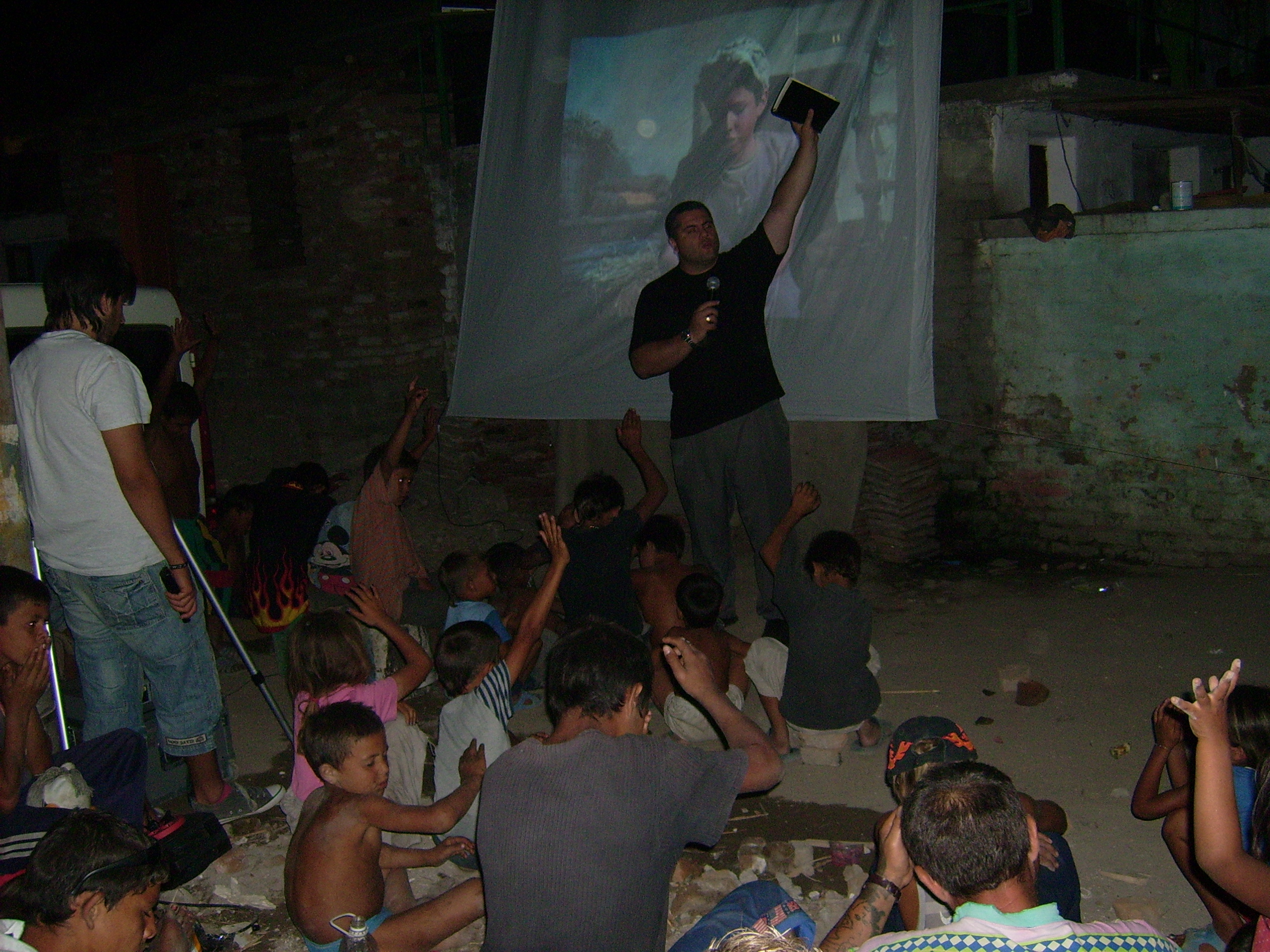
After the X Event in the Heart of Bulgaria and after teaching the leadership course at the Church of God congregations of Samokov and Sofia, we ministered in the Pentecostal church in Yambol from the Gospel of Mark. Then on Monday night, we took a youth team to minister in the gipsy ghetto of Yambol. This was a very unique opportunity as we patterned with the “Jesus Film” representatives in Bulgaria. After singing a few songs and showing the children’s version of the film, a little past 9:00 p.m. we delivered a message to the many adults and children that had gathered around us and offered to pray for them at the end. Many raised their hands and others came forward for prayer. Several young mothers brought their children to us to be anointed and prayed for. We were blessed to participate in this service, as our lives were also touched by what took place in the middle of the ghetto.
Preaching at the National Roma Pastoral Association Meeting
After ministering and teaching in Samokov and Sofia, we were invited by Bulgarian Church of God national overseer, Rev. Alexander Todorov, to speak at the national annual convention of the Roma Pastoral Association near Stara Zagora. Along with the pastor of the local Church of God, our good friend and colleague Dimitar (Jimmy) Lutchev who was also scheduled to speak at the meeting, we joined some 200 Roma ministers from around the country and abroad for an unforgettable weekend of praise, preaching and prayer.
The Friday night service began around 7:00 p.m. and ended around 1:00 a.m. the next morning. We were scheduled to speak between 10:00-11:00 p.m. bringing a message, which appealed to the participants that God is still looking for leaders after His heart in Bulgaria. The message had a detrimental impact on the several hundred pastors gathered there. In such time of spiritual crises, the call on God for leadership after His heart was the least to say transformative for many of them who cried with conviction and prayed with tears during the altar service. It is our sincere prayer that the Spirit of Revival, which came upon all of us gathered at the Stara Zagora meeting, will continue to impact the Church of God across the country of Bulgaria.
Leadership Seminar for the Bulgarian Church of God
 A month ago, Cup & Cross Ministries visited the Samokov congregation pastored by Church of God National Overseer Alexander Todorov. Our team then left for the Salvation Church of God in the capital Sofia, to hold the first level of the Church Leadership Seminar. We have worked on this course for the past two years and designed it to serve as a tactical ministry training element in our national strategy for Church of God congregations. The first module included topics such as:
(1) The leadership principles of Jesus
(2) Recognition, training and personal qualifications of a successful leader
(3) The principles of God’s timing
(4) Sacrifice, responsibility, investment and delegation
(5) The law of sowing and reaping
(6) The law of navigation
(7) Problem solving
(8) Psalm 23 for leaders
Subsequently, we released on the internet a 34-part series called the Successful Leader. Immediately after we held the course in Sofia, we began receiving invitations to hold the course in various locations in Bulgaria. As a result, we scheduled the first level of the leadership course with the churches in Sliven, Bourgas, Rousse and began planning its future presentation with the churches in Gabrovo, Yambol, and Samokov. We will be then returning to Samokov and Sofia in September to teach the second level of the Church Leadership Course in the Church of God congregations there.


