LIFE AND MINISTRY OF IVAN VORONAEV
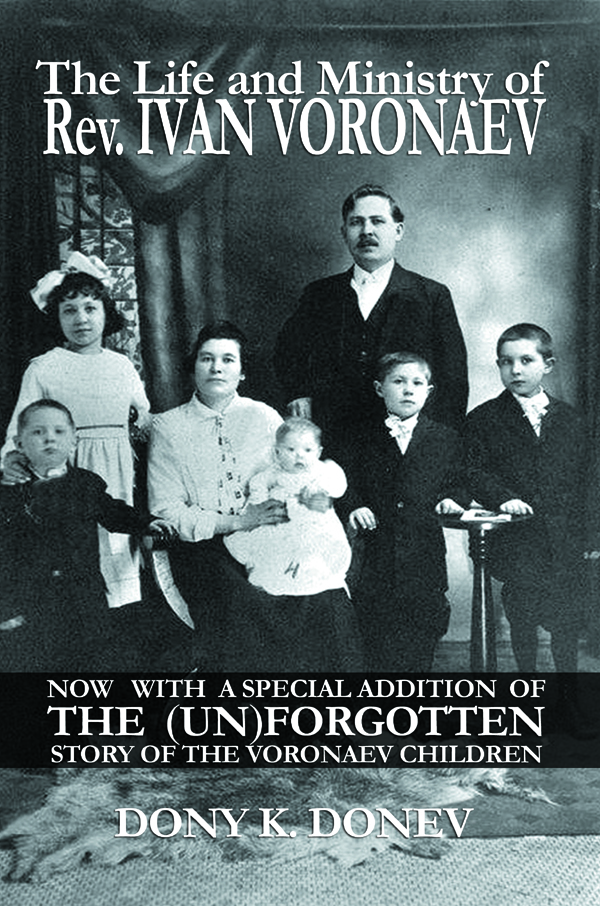
This book tells the story of the life and ministry of the family who brought the message of Azusa Street to Eastern Europe and Russia. The research has taken close to a decade to complete. It started with a brief article on the beginning of the Pentecostal movement in Bulgaria, where unfortunately most church archives were destroyed during Communism. Consecutively, the research led my wife and I on a long journey from the Southern Baptist Historical Library and Archives in Nashville, to the Assemblies of God headquarters in Springfield and the Graduate Theological Union at Berkeley.
We are grateful to the Flower Pentecostal Heritage Center for making available the ministerial file of Rev. Ivan Effimovich Voronaev kept in their denominational archives. We are deeply indebted to Dr. Albert Wardin for opening the doors for research in Nashville and Berkeley, where most documentation referring to Voronaev’s ministry as a Baptist is preserved. We are also thankful to Oleg Bronovolokov of the Ukrainian Evangelical Theological Seminary in Kiev,
who helped with the input of various Russian documents pertaining to the Voronaevs.
Both papers included in this book were presented at two consecutive meetings of the Society for Pentecostal Studies in Minneapolis (2010) and Memphis (2011). The first paper, although heavily edited to fit the format, was published in vol. 30 (2010) of Assemblies of God Heritage magazine under a new title, “Ivan Voronaev: Slavic Pentecostal Pioneer and Martyr.” Some of the historical data we presented in the article was published openly for the first time. Our research was further mentioned in the December, 2010 AG Heritage editorial. The Bulgarian “Evangel” also published our translations of Voronaev’s correspondence.
In 2011, Vladimir Franchuk, translated parts of the Voronaev’s papers in Russian and included it in his book “Revival: from the center of Odessa to the ends of Russia,” thus making our research available to the Slavic people just in time for the 90th Anniversary from the beginning of Ivan Voronaev’s Pentecostal ministry in Russia. Partial information from these papers was also used by several recent studies concerning Pentecostalism in Europe and the life and ministry of Rev. Dionissy Zaplishny. Unfortunately, with all this interest, little attention was given to the second paper concerning the Voronaev children until now.
The Real Voronaev Children
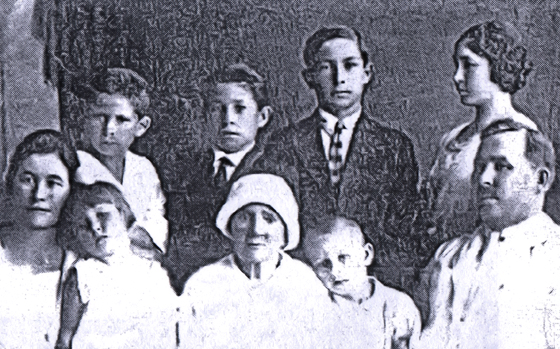
Reflection on The (un)Forgotten: Story of the Voronaev Children
The chronology of the history of events in the lives of the Voronaev children is the least to say vague and uncertain. We see only bits and pieces of their experiences. And from what we do know from theses small glimpses, the facts are so disturbing that it is easier to face reality by ignoring it. It’s much more convenient to allow the lives of the Voronaev’s children to get lost in the midst of the politics, procedure and papers (or lack thereof). But, the truth is that “The (un)Forgotten” story is not about the difficulties of anything else but the children. The children are the focus of Dr. Donev’s paper and most definitely should not be forgotten.
Reading the story of the Voronaevs takes a strong heart. It is indeed a sad one that for many of us may seem unfathomable. And yet the sparse historical accounts surrounding their life stories force the reader to confront discomfort. However, the sadist story of all is that when reading this account from the perspective of the children it was not one that I wanted to accomplish. I didn’t want to think about how the children might have felt or what they might have gone through. I refused because it was too painful. It took too much emotional anguish to even think about the pain and trauma that these children went through. Because of my refusal to contemplate the trials these children endured, I was unable to be empathetic. I was powerless to even begin to comprehend what might have gone through the minds of the children who witnessed and experienced events no child should have to. I can’t imagine what it would have been like to be a child with no “home” or much less no country. I was not able to walk a mile in their shoes. I have no idea what it is or would be like to live under Communism or to be the child of a missionary family who had so many struggles, which is putting it lightly only so I can verbalize this unfortunate reality.
When a child is in any manner separated from their parents there becomes a disconnect like no other in which a child begins to experience self-doubt, insecurity and uncertainty. When this bond is ripped apart it leaves behind feelings of anxiety and guilt. Yet when a child first hand experiences a parent being dragged off by Communist police in front of them, this leaves an entirely different scar, one which never heals. It is a scar so deep, filled with enormous traumatic stress which no one could possibly imagine. Not to mention the other dynamics of immigrations and foster care that the Voronaev children endured. These children no doubt were left with feelings of loneliness and rejection in one uncertain situation after the other.
So when we look back and we read the history of the complications of obtaining visas and the difficult times of providing a place for these children to stay in addition to worrying about the financial means to do so; when we look at the bickering, the perhaps shady details of people’s character and church politics, we must not over look that there where real children suffering in the midst of the chaos. They were not just characters of a story or pawns in a game. They were real even though they were only foreigners and they were only children of poor missionaries. They have stories to tell. They have a voice which must be heard. They most certainly were not listened too while they were alive so let us at least do them the justice of listening to their whispers beyond the grave and hear their pain, hear their trials and hear their plea to leave the politics behind and begin to see the true reality of missions work. Too often in the world of ministry, the children are the ones who suffer the most and it is quite unfortunate that the littlest ones go unheard. We must speak for the least of these among us. We can not remain silent.
Kathryn N. Donev, M.S., LPC/MHSP, NBCC
(un)Forgotten Story of the Voronaev Children
For if history indeed forms our identity, we are left without identity once we forget our history. Yes, we still have feature ahead of us, but it is disconnected from our past and from our experience. It is disconnected from our identity and from our story. We still have a future when we forget our history, but it is not our future – it is someone else’s. It is the future someone else wants us to have…
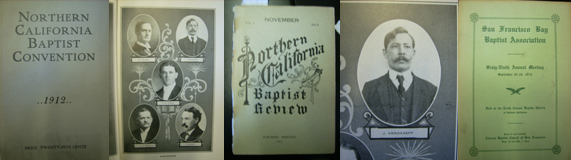
Finding Ivan Voronaev (a.k.a. John Voronaeff) at the Graduate Theological Union of Berkeley, California
Our research on the life and ministry of Ivan Voronaev (a.k.a. John Voronaeff), one of the first Pentecostal missionaries to Bulgaria is about to be published after discovering the final group of evidences in the Bay Area of California. These documents are part of some Baptist periodicals which cover the time when Voronaev and his family completed their journey from Russia, through Manchuria and Japan, and reached San Francisco. The year is 1912.
Voronaev quickly becomes accounted to the Russian Baptist churches in the Bay Area and soon becomes a leading figure in the Russian Baptist Church of San Francisco. This relationship is quickly erupted when Voronaev receives the Baptism of Pentecost and moves north toward Seattle, Washington. All this and much more we were able to discover at the library of the Graduate Theological Union of Berkeley, CA directed by David Stiver and upon the recommendation of our friend and colleague Dr. Albert Wardin of the Southern Baptist Historical Library & Archives in Nashville.