

95 Thesis of Dr. Martin Luther
Comments Off on 95 Thesis of Dr. Martin Luther
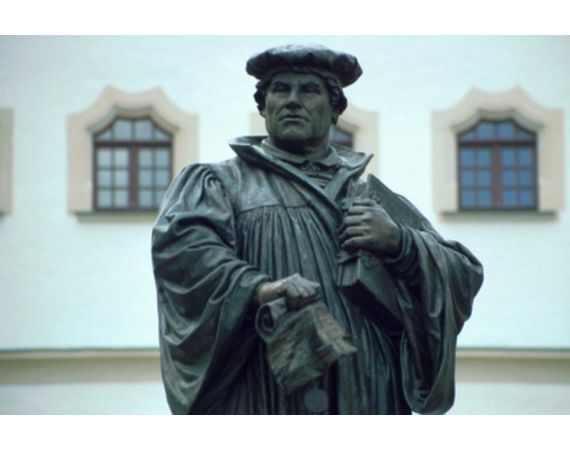
Out of love and zeal for truth and the desire to bring it to light, the following theses will be publicly discussed at Wittenberg under the chairmanship of the reverend father Martin Lutther, Master of Arts and Sacred Theology and regularly appointed Lecturer on these subjects at that place. He requests that those who cannot be present to debate orally with us will do so by letter.
In the Name of Our Lord Jesus Christ. Amen.[5]
01. When our Lord and Master Jesus Christ said, “Repent,” he willed the entire life of believers to be one of penitence.[10]
02. This word cannot be understood as referring to penance as a sacrament (that is, confession and satisfaction, as administered by the ministry of priests).
03. This word also does not refer solely to inner penitence; indeed there is no penitence unless it produces various outward mortifications of the flesh.
04. Therefore punishment of sin remains as long as the hatred of self, that is, true inner repentance, namely until entering the kingdom of heaven.
05. The pope neither wishes nor can remit any penalties except that which he imposes by his or by canonical authority.
06. The Pope cannot remit any guilt, except by stating and confirming that it has been remitted by God; or, by remitting [guilt] in cases reserved to his judgment. If his power were disregarded, the guilt would certainly remain [unforgiven].
07. God remits guilt to no one without at once submitting him humbly in all things to the priest as his vicar.
08. The penitential canons are imposed only on the living, and, according to the canons themselves, nothing should be imposed on the dying.
09. Therefore the Holy Spirit through the pope is kind to us insofar as the pope in his decrees always makes exception of the article of death and of necessity.
10. Those priests act ignorantly and wickedly who, in the case of the dying, reserve canonical penalties for purgatory. [The truth on purgatory].
11. Those tares of changing the canonical penalty to the penalty of purgatory were evidently sown while the bishops slept.
12. In former times canonical penalties were imposed, not after, but before absolution, as tests of true contrition.
13. The dying are freed by death from all penalties, are already dead as far as the canon laws are concerned, and have a right to be released from them.
14. Imperfect piety or love on the part of the dying person necessarily brings with it great fear; and the smaller the love, the greater the fear.
15. His fear or horror is sufficient in itself, to say nothing of other things, to constitute the penalty of purgatory, since it is very near the horror of despair.
16. Hell, purgatory, and heaven seem to differ the same as despair, fear, and assurance of salvation.
17. It seems as though for the souls in purgatory fear should necessarily decrease and love increase.
18. Furthermore, it does not seem proved, either by reason or Scripture, that souls in purgatory are outside the state of merit, that is unable to grow in love.
19. Nor does it seem proved that souls in purgatory, at least not all of them, are certain and assured of their own salvation, even if we ourselves may be entirely certain of it.
20. By full remission of all puishment, the Pope therefore does not actually mean `all [punishment]’ but only that which he imposed [himself].
21. Thus those indulgence preachers are in error who say that a man is absolved from every penalty and saved by papal indulgences.[30]
22. As a matter of fact, the pope remits to souls in purgatory no penalty which, according to canon law, they should have paid in this life.
23. If remission of all penalties whatsoever could be granted to anyone at all, certainly it would be granted only to the most perfect, that is, to very few. But see here and here!
24. For this reason most people are necessarily deceived by that indiscriminate and high-sounding promise of release from penalty.
25. That power which the pope has in general over purgatory corresponds to the power which any bishop or curate has in a particular way in his own diocese or parish.[40]
26. The pope does very well when he grants remission to souls in purgatory, not by the power of the keys, which he does not have, but by way of intercession for them.[50]
27. They preach only human doctrines who say that as soon as the money clinks into the money chest, the soul flies out of purgatory.
28. It is certain that when money clinks in the money chest, greed and avarice can be increased; but when the church intercedes, the result is in the hands of God alone.
29. Who knows whether all souls in purgatory wish to be redeemed, since we have exceptions in St. Severinus and St. Paschal, as related in a legend.
30. No one is sure of the integrity of his own contrition, much less of having received plenary remission.
31. The man who actually buys indulgences is as rare as he who is really penitent; indeed, he is exceedingly rare.
32. Those who believe that they can be certain of their salvation because they have indulgence letters will be eternally damned, together with their teachers.
33. Men must especially be on their guard against those who say that the pope’s pardons are that inestimable gift of God by which man is reconciled to him.
34. For the graces of indulgences are concerned only with the penalties of sacramental satisfaction established by man. [100]
35. They who teach that contrition is not necessary on the part of those who intend to buy souls out of purgatory or to buy confessional [200] privileges preach unchristian doctrine.
36. Any truly repentant Christian has a right to full remission of penalty and guilt, even without indulgence letters.
37. Any true Christian, whether living or dead, participates in all the blessings of Christ and the church; and this is granted him by God, even without indulgence letters.
38. Nevertheless, papal remission and blessing are by no means to be disregarded, for they are, as I have said, the proclamation of the divine remission.
39. It is very difficult, even for the most learned theologians, at one and the same time to commend to the people the bounty of indulgences and the need of true contrition.
40. A Christian who is truly contrite seeks and loves to pay penalties for his sins; the bounty of indulgences, however, relaxes penalties and causes men to hate them – at least it furnishes occasion for hating them.
41. Papal indulgences must be preached with caution, lest people erroneously think that they are preferable to other good works of love.
42. Christians are to be taught that the pope does not intend that the buying of indulgences should in any way be compared with works of mercy.
43. Christians are to be taught that he who gives to the poor or lends to the needy does a better deed than he who buys indulgences.
44. Because love grows by works of love, man thereby becomes better. Man does not, however, become better by means of indulgences but is merely freed from penalties.
45. Christians are to be taught that he who sees a needy man and passes him by, yet gives his money for indulgences, does not buy papal indulgences but God’s wrath.
46. Christians are to be taught that, unless they have more than they need, they must reserve enough for their family needs and by no means squander it on indulgences.
47. Christians are to be taught that the buying of indulgences is a matter of free choice, not commanded.
48. Christians are to be taught that the pope, in granting indulgences, needs and thus desires their devout prayer more than their money.
49. Christians are to be taught that the papal indulgences are useful only if they do not put their trust in them, but very harmful if they lose their fear of God because of them.
50. Christians are to be taught that if the pope knew the exactions of the indulgence preachers, he would rather that the basilica of St. Peter were burned to ashes than built up with the skin, flesh, and bones of his sheep.
51. Christians are to be taught that the pope would and should wish to give of his own money, even though he had to sell the basilica of St. Peter, to many of those from whom certain hawkers of indulgences cajole money.
52. It is vain to trust in salvation by indulgence letters, even though the indulgence commissary, or even the pope, were to offer his soul as security.
53. They are enemies of Christ and the pope who forbid altogether the preaching of the word of God in some churches in order that indulgences may be preached in others.
54. Injury is done the Word of God when, in the same sermon, an equal or larger amount of time is devoted to indulgences than to the Word.
55. It is certainly the pope’s sentiment that if indulgences which are a very insignificant thing, are celebrated with one bell, one procession, and one ceremony, then the gospel, which is the very greatest thing, should be preached with a hundred bells, a hundred processions, a hundred ceremonies.
56. The treasures of the church, out of which the pope distributes indulgences, are not sufficiently discussed or known among the people of Christ.
57. That indulgences are not temporal treasures is certainly clear, for many indulgence sellers do not distribute them freely but only gather them.
58. Nor are they the merits of Christ and the saints, for, even without the pope, the latter always work grace for the inner man and the cross, death, and hell for the outer man.[300]
59. St. Laurence said that the poor of the church were the treasures of the church, but he spoke according to the usage of the word in his own time.
60. Without want of consideration we say that the keys of the church, given by the merits of Christ, are that treasure;[400]
61. For it is clear that the pope’s power is of itself sufficient for the remission of penalties and cases reserved by himself.
62. The true treasure of the church is the most holy gospel of the glory and grace of God.
63. But this treasure is naturally most odious, for it makes the first to be last.
64. On the other hand, the treasure of indulgences is naturally most acceptable, for it makes the last to be first.
65. Therefore the treasures of the gospel are nets with which one formerly fished for men of wealth.
66. The treasures of indulgences are nets with which one now fishes for the wealth of men.
67. The indulgences which the demagogues acclaim as the greatest graces are actually understood to be such only insofar as they promote gain.
68. They are nevertheless in truth the most insignificant graces when compared with the grace of God and the piety of the cross.
69. Bishops and curates are bound to admit the commissaries of papal indulgences with all reverence.
70. But they are much more bound to strain their eyes and ears lest these men preach their own dreams instead of what the pope has commissioned.
71. Let him who speaks against the truth concerning papal indulgences be anathema and accursed;
72. But let him who guards against the lust and license of the indulgence preachers be blessed;
73. Just as the pope justly thunders against those who by any means whatsoever contrive harm to the sale of indulgences.
74. But much more does he intend to thunder against those who use indulgences as a pretext to contrive harm to holy love and truth.
75. To consider papal indulgences so great that they could absolve a man even if he had done the impossible and had violated the mother of God, is madness.
76. We say on the contrary that papal indulgences cannot remove the very least of venial sins, as far as guilt is concerned.
77. To say that even St. Peter, if he were now pope, could not grant greater graces, is blasphemy against St. Peter and the pope.
78. We say on the contrary that even the present pope, or any pope whatsoever, has greater graces at his disposal, that is, the gospel, spiritual powers, gifts of healing, etc., as it is written in 1. Corinthians 12.
79. To say that the cross emblazoned with, the papal coat of arms, and set up by the indulgence preachers, is equal in worth to the cross of Christ is blasphemy.
80. The bishops, curates, and theologians who permit such talk to be spread among the people will have to answer for this.
81. This unbridled preaching of indulgences makes it difficult even for learned men to rescue the reverence which is due the pope from slander or from the shrewd questions of the laity,
82. Such as “Why does not the pope empty purgatory for the sake of holy love and the dire need of the souls that are there if he redeems an infinite number of souls for the sake of miserable money with which to build a church? The former reasons would be most just; the latter most trivial.”
83. Again, Why are funeral and anniversary masses for the dead continued and why does he not return or permit the withdrawal of the endowments founded for them, since it is wrong to pray for the redeemed?”
84. Again, “What is this new piety of God and the pope that for a consideration of money they permit a man who is impious and their enemy to buy out of purgatory the pious soul of a friend of God and do not rather, because of the need of that pious and beloved soul, free it for pure love’s sake?”
85. Again, “Why are the penitential canons, long since abrogated and dead in actual fact and through disuse, now satisfied by the granting of indulgences as though they were still alive and in force?”
86. Again, “why does not the pope, whose wealth is today greater than the wealth of the richest Crassus, build this one basilica of St. Peter with his own money rather than with the money of poor believers?”
87. Again, “What does the pope remit or grant to those who by perfect contrition already have a right to full remission and blessings?”
88. Again, What greater blessing could come to the church than if the pope were to bestow these remissions and blessings on every believer a hundred times a day, as he now does but once?”
89. “Since the pope seeks the salvation of souls rather than money by his indulgences, why does he suspend the indulgences and pardons previously granted when they have equal efficacy?”
90. To repress these very sharp arguments of the laity by force alone, and not to resolve them by giving reasons, is to expose the church and the pope to the ridicule of their enemies and to make Christians unhappy.
91. If, therefore, indulgences were preached according to the spirit and intention of the pope, all these doubts would be readily resolved. Indeed, they would not exist.
92. Away then with all those prophets who say to the people of Christ, “Peace, peace,” and there is not peace!
93. Blessed be all those prophets who say to the people of Christ, “Cross, cross,” and there is not cross!
94. Christians should be exhorted to be diligent in following Christ, their head, through penalties, death, and hell;
95. And thus be confident of entering into heaven through many tribulations rather than through the false security of peace.
DR. HOLLIS GAUSE – PRE-TRIBULATION RAPTURE
Introduction
1. The parameters of the paper
a. I am committed to the doctrine of the pre-millennial return of Christ.
b. By “return of Christ” I mean:
1) His visible body return
2) His return in glory
3) His return in the fulfillment of Zechariah 12:10 and Revelation 1:7 Every eye shall see him, even those who crucified him.
c. The scriptures uses two terms to describe his coming
1) Epiphaneia: His appearance to the eyes of all humanity
2) Parousia: the most frequently used term of the second coming. It is the arrival – the coming
2. I am affirming the message of the angels at the ascension of Christ. (Acts 1:11) “And while the disciples were looking steadfastly into heaven, as he went up, two men stood by the disciples and said to them, you men of Galilee why are you standing gazing into heaven this very same Jesus shall return in the same manner that you have seen him leave.” (Author’s paraphrase)
3. The ascension of Christ is the paradigm of his return
a. He ascended bodily
b. He ascended in his resurrection body
c. He ascends to heaven and the right hand of power and glory
d. The body of ascension is:
1. The resurrected body
2. The crucified body resurrected and glorified body. He returns in the same body.
These matters are not in dispute
4. The rapture is a sudden literal, physical catching away of all believers: that is, those who look for him.
I. The issues here is the relationship of the rapture and the great tribulation
A. That is a question raised primarily by Pre-millennialists. Post-millennialists. and A-millennialists generally do not treat the book of revelation with this degree of literalists.
B. So what do we mean by the word “Rapture?”
1. We have already noted that it is sudden as in “snatching away” or
“taking up”
2. In the words of Scripture in 1 Thessalonians 4: 16-17 comes to mind.
“For the Lord himself …
a) Shall come down from heaven. He will descend from his throne in glory.”
b) His descent will be announced with
– A loud command
– The voice of the archangel
– The trumpet call of God
c) He will by his appearance:
– Bring with him the dead in Christ. They will be raised from the dead by his coming.
– Catch up or (snatch away) those believers who are alive and remain
– The living saints will trade their mortality for immortality
– Their corruption for incorruption
– Their dying body for a body made alive by the Holy Spirit “A spiritual body”
d) So shall we be with the Lord forever
e) To them who are looking for him He will appear without sin unto salvation. (Hebrews 9:28)
f) This is what we mean by rapture
3. Rapture is the event in which
a. Christ will descend
b. The dead will rise
c. Those alive and remaining will be caught up
d. Believers will be changed into the perfect likeness of Christ, because they will see him as he is. (1 John 3: 1-3)
II. When will this occur in relation to the great tribulation?
A. This is not a concern for
1. Post- Millennarians
2. A- Millennarians
3. Those who treat the book of Revelation as though it is only a symbolic history of this world order and God’s judgment on it.
4. However it is of concern for me.
B. So what are our choices?
1. Pre-tribulation rapture
2. Mid- tribulation rapture (or some other point during the great tribulation)
3. Post- tribulation
C. The choice is determined by the distinction between the:
1. First resurrection: that is, the resurrection of the righteous, which is the first resurrection. (Revelation 20:4)
2. The resurrection of the rest of the dead: that is of the unbelievers. (Revelation 20:5)
3. Jesus used the term resurrection unto Life (John 5: 28-29) This is eternal Glory
4. In the same text he uses “resurrection unto damnation” This is eternal corruption and damnation.
III. The answer for me lies primarily in two passages of scripture Revelation 3:10 and Luke 21: 29-36
A. Revelation 3:10
1. The promises immediately addressed are to the church at Philadelphia (Revelation 3: 2-13)
2. This promise is broadened to include all believers because you have kept the word of my patience. (Revelation 3:10) It is a promise to all of the faithful.
3. The promise is specific to what believers are delivered from
a. It is the hour of the tribulation
b. That is about to come
c. On all those who dwell on the earth
d. It is followed by the words, “Behold I come quickly
(Tachu: quickly, without delay, soon, suddenly).
4. Note the following points in these text:
a. This text is specific in its description of the tribulation
1. This does not refer to the general trials that believers will all endure. “All those who live Godly in Christ Jesus will suffer persecution.” (2 Timothy 3:12)
“To know Christ in Glory requires that we know him in the fellowship of his sufferings.” (Philippians 3:10)
2. The Language of this text shows that the trial referred to is still future. It is a future that is tied to the things that John describes in the book of revelation. Believers are now in tribulation, but not the Tribulation that is about to come.
3. This Tribulation is imminent. There are no yet to be fulfilled events standing in the way of the Great Tribulation, except the catching away of the church.
Note: Beware of the countdown eschatology that is popular at this time.
Anecdote: I have in my desk a booklet entitled “88 reasons why Jesus will come back in 88.” This is a museum piece in my Library.
So our attitude is one of expectation not of the tribulation, but of the Parousia.
4. The tribulation is by divine appointment. It is bound to occur. God has made the decree and nothing can stop it.
5. This tribulation is intended for “Those who dwell on the earth.” These words always describe the unbelieving world. In the book of Revelation this clause never refers to the church.
6. The Great Tribulation is not for the refinement of the church. It is God’s certain judgment on this world order and nothing can stop it.
7. The promise of Christ to the church is “I will keep you out of the hour of the tribulation.” (Eis tes horas tou perasmou) “Out of” does not mean protection while you are in the tribulation.
B. Luke 21: 34-36
1. This is partially parallel with Jesus’ eschatalogical discourse in Matthew 24. It is Luke’s version of that discourse.
2. There are two parts to this discourse:
Luke 21: 3-24
Luke 21: 25-37
Luke 21: 3-24 describes the current turmoil in this world order and the oppression, which the world and satan impose on the church.
We have no reason to expect protection from this oppression
Note these events
a. Jerusalem will be destroyed (21:6) How many times have we seen this?
b. Many will come claiming to be “I AM” These imposters will claim to be Jehovah (verses 6-8).
c. Natural disasters will increase in number and intensity.
d. Persecution will increase in number and intensity.
e. Jerusalem will come under increased threat. (21:20)
3. Luke 21:22 changes tone: “Jerusalem will be trodden down of the Gentiles until the times of the Gentiles be fulfilled.”
4. These are the days of vengeance: that is, God’s Judgment on the earth and Jerusalem.
– On the earth because it is the sight of rebellion
– On Jerusalem because it gives itself to worldly power. (The power of the Anti Christ and its position in the world.)
5. This is parallel to Revelation 3:10 “The hour of the temptation that is about to come on the whole earth to try the ones that dwell on the earth.”
6. Jesus describes those things:
a. They are called the day of vengeance: The specific judgment of God.
b. This tribulation is world wide, not localized
c. It is aimed at the world not the church
d. Jerusalem will be trodden down by the Gentiles
e. There will be signs in the midst of the heavens and they will grow more and more in their intensity (21:25)
f. Men’s hearts will fail them for fear (Luke 21:26)
g. These things parallel the tribulations in the book of revelation.
7. Then comes the promise of Luke 21:27
“Then shall they see the Son of man while He is coming in power and great glory.” (Author’s paraphrase) Our personal redemption comes near or nigh and the kingdom of God is near in its fulfillment.
This is a quotation of Daniel 7:13 which is a prophecy of the end times.
“ I saw in the night visions, and behold one like the Son of man came with the clouds of heaven and came to the ancient of days and they brought him near before him and there was given to him dominion, glory and a kingdom that all people, nations, and languages shall see him. It will not pass way.
8. Jesus climaxes this discourse with an exhortation “While you are praying keep on watching in order that you may have the strength (KJV accounted worthy of) to escape all these things and to stand before the Son of man” (Authors paraphrase)
What are these things? They are the tribulation events that Jesus has just described
Conclusion: Is this escapism?
Yes with two provisions
1. You escape the earthly judgments
2. You escape in order that you may stand before the Son of man who is the Judge of all.
3. Does God provide the escape? Yes
4. We escape in order to stand face to face before the Son of man in his glory and kingdom.
5. This is the promise of Zephaniah 2:3 “Seek ye the Lord, all the meek of the earth which has wrought this judgment Seek righteousness; seek meekness, It may be that you shall be hidden in the day of the Lord’s anger.
Is this escapism? No it is God’s provision.
Is it escape? Yes
– Escape from judgment to receive glory
– Escape from hell and death to receive heaven and everlasting life
– I can live – live eternally – with that kind of escape.
R. Hollis Gause
General Council, 7/29/14
The 95 Theses by Dr. Martin Luther
Comments Off on The 95 Theses by Dr. Martin Luther
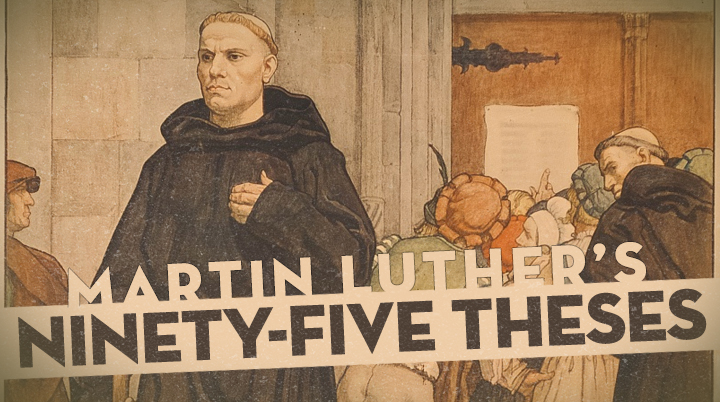
Disputation on the Power and Efficacy of Indulgences Commonly Known as The 95 Theses by Dr. Martin Luther
Out of love and concern for the truth, and with the object of eliciting it, the following heads will be the subject of a public discussion at Wittenberg under the presidency of the reverend father, Martin Luther, Augustinian, Master of Arts and Sacred Theology, and duly appointed Lecturer on these subjects in that place. He requests that whoever cannot be present personally to debate the matter orally will do so in absence in writing.
- When our Lord and Master, Jesus Christ, said “Repent”, He called for the entire life of believers to be one of repentance.
- The word cannot be properly understood as referring to the sacrament of penance, i.e. confession and satisfaction, as administered by the clergy.
- Yet its meaning is not restricted to repentance in one’s heart; for such repentance is null unless it produces outward signs in various mortifications of the flesh.
- As long as hatred of self abides (i.e. true inward repentance) the penalty of sin abides, viz., until we enter the kingdom of heaven.
- The pope has neither the will nor the power to remit any penalties beyond those imposed either at his own discretion or by canon law.
- The pope himself cannot remit guilt, but only declare and confirm that it has been remitted by God; or, at most, he can remit it in cases reserved to his discretion. Except for these cases, the guilt remains untouched.
- God never remits guilt to anyone without, at the same time, making him humbly submissive to the priest, His representative.
- The penitential canons apply only to men who are still alive, and, according to the canons themselves, none applies to the dead.
- Accordingly, the Holy Spirit, acting in the person of the pope, manifests grace to us, by the fact that the papal regulations always cease to apply at death, or in any hard case.
- It is a wrongful act, due to ignorance, when priests retain the canonical penalties on the dead in purgatory.
- When canonical penalties were changed and made to apply to purgatory, surely it would seem that tares were sown while the bishops were asleep.
- In former days, the canonical penalties were imposed, not after, but before absolution was pronounced; and were intended to be tests of true contrition.
- Death puts an end to all the claims of the Church; even the dying are already dead to the canon laws, and are no longer bound by them.
- Defective piety or love in a dying person is necessarily accompanied by great fear, which is greatest where the piety or love is least.
- This fear or horror is sufficient in itself, whatever else might be said, to constitute the pain of purgatory, since it approaches very closely to the horror of despair.
- There seems to be the same difference between hell, purgatory, and heaven as between despair, uncertainty, and assurance.
- Of a truth, the pains of souls in purgatory ought to be abated, and charity ought to be proportionately increased.
- Moreover, it does not seem proved, on any grounds of reason or Scripture, that these souls are outside the state of merit, or unable to grow in grace.
- Nor does it seem proved to be always the case that they are certain and assured of salvation, even if we are very certain ourselves.
- Therefore the pope, in speaking of the plenary remission of all penalties, does not mean “all” in the strict sense, but only those imposed by himself.
- Hence those who preach indulgences are in error when they say that a man is absolved and saved from every penalty by the pope’s indulgences.
- Indeed, he cannot remit to souls in purgatory any penalty which canon law declares should be suffered in the present life.
- If plenary remission could be granted to anyone at all, it would be only in the cases of the most perfect, i.e. to very few.
- It must therefore be the case that the major part of the people are deceived by that indiscriminate and high-sounding promise of relief from penalty.
- The same power as the pope exercises in general over purgatory is exercised in particular by every single bishop in his bishopric and priest in his parish.
- The pope does excellently when he grants remission to the souls in purgatory on account of intercessions made on their behalf, and not by the power of the keys (which he cannot exercise for them).
- There is no divine authority for preaching that the soul flies out of the purgatory immediately the money clinks in the bottom of the chest.
- It is certainly possible that when the money clinks in the bottom of the chest avarice and greed increase; but when the church offers intercession, all depends in the will of God.
- Who knows whether all souls in purgatory wish to be redeemed in view of what is said of St. Severinus and St. Pascal? (Note: Paschal I, pope 817-24. The legend is that he and Severinus were willing to endure the pains of purgatory for the benefit of the faithful).
- No one is sure of the reality of his own contrition, much less of receiving plenary forgiveness.
- One who bona fide buys indulgence is a rare as a bona fide penitent man, i.e. very rare indeed.
- All those who believe themselves certain of their own salvation by means of letters of indulgence, will be eternally damned, together with their teachers.
- We should be most carefully on our guard against those who say that the papal indulgences are an inestimable divine gift, and that a man is reconciled to God by them.
- For the grace conveyed by these indulgences relates simply to the penalties of the sacramental “satisfactions” decreed merely by man.
- It is not in accordance with Christian doctrines to preach and teach that those who buy off souls, or purchase confessional licenses, have no need to repent of their own sins.
- Any Christian whatsoever, who is truly repentant, enjoys plenary remission from penalty and guilt, and this is given him without letters of indulgence.
- Any true Christian whatsoever, living or dead, participates in all the benefits of Christ and the Church; and this participation is granted to him by God without letters of indulgence.
- Yet the pope’s remission and dispensation are in no way to be despised, for, as already said, they proclaim the divine remission.
- It is very difficult, even for the most learned theologians, to extol to the people the great bounty contained in the indulgences, while, at the same time, praising contrition as a virtue.
- A truly contrite sinner seeks out, and loves to pay, the penalties of his sins; whereas the very multitude of indulgences dulls men’s consciences, and tends to make them hate the penalties.
- Papal indulgences should only be preached with caution, lest people gain a wrong understanding, and think that they are preferable to other good works: those of love.
- Christians should be taught that the pope does not at all intend that the purchase of indulgences should be understood as at all comparable with the works of mercy.
- Christians should be taught that one who gives to the poor, or lends to the needy, does a better action than if he purchases indulgences.
- Because, by works of love, love grows and a man becomes a better man; whereas, by indulgences, he does not become a better man, but only escapes certain penalties.
- Christians should be taught that he who sees a needy person, but passes him by although he gives money for indulgences, gains no benefit from the pope’s pardon, but only incurs the wrath of God.
- Christians should be taught that, unless they have more than they need, they are bound to retain what is only necessary for the upkeep of their home, and should in no way squander it on indulgences.
- Christians should be taught that they purchase indulgences voluntarily, and are not under obligation to do so.
- Christians should be taught that, in granting indulgences, the pope has more need, and more desire, for devout prayer on his own behalf than for ready money.
- Christians should be taught that the pope’s indulgences are useful only if one does not rely on them, but most harmful if one loses the fear of God through them.
- Christians should be taught that, if the pope knew the exactions of the indulgence-preachers, he would rather the church of St. Peter were reduced to ashes than be built with the skin, flesh, and bones of the sheep.
- Christians should be taught that the pope would be willing, as he ought if necessity should arise, to sell the church of St. Peter, and give, too, his own money to many of those from whom the pardon-merchants conjure money.
- It is vain to rely on salvation by letters of indulgence, even if the commissary, or indeed the pope himself, were to pledge his own soul for their validity.
- Those are enemies of Christ and the pope who forbid the word of God to be preached at all in some churches, in order that indulgences may be preached in others.
- The word of God suffers injury if, in the same sermon, an equal or longer time is devoted to indulgences than to that word.
- The pope cannot help taking the view that if indulgences (very small matters) are celebrated by one bell, one pageant, or one ceremony, the gospel (a very great matter) should be preached to the accompaniment of a hundred bells, a hundred processions, a hundred ceremonies.
- The treasures of the church, out of which the pope dispenses indulgences, are not sufficiently spoken of or known among the people of Christ.
- That these treasures are not temporal are clear from the fact that many of the merchants do not grant them freely, but only collect them.
- Nor are they the merits of Christ and the saints, because, even apart from the pope, these merits are always working grace in the inner man, and working the cross, death, and hell in the outer man.
- St. Laurence said that the poor were the treasures of the church, but he used the term in accordance with the custom of his own time.
- We do not speak rashly in saying that the treasures of the church are the keys of the church, and are bestowed by the merits of Christ.
- For it is clear that the power of the pope suffices, by itself, for the remission of penalties and reserved cases.
- The true treasure of the church is the Holy gospel of the glory and the grace of God.
- It is right to regard this treasure as most odious, for it makes the first to be the last.
- On the other hand, the treasure of indulgences is most acceptable, for it makes the last to be the first.
- Therefore the treasures of the gospel are nets which, in former times, they used to fish for men of wealth.
- The treasures of the indulgences are the nets which to-day they use to fish for the wealth of men.
- The indulgences, which the merchants extol as the greatest of favours, are seen to be, in fact, a favourite means for money-getting.
- Nevertheless, they are not to be compared with the grace of God and the compassion shown in the Cross.
- Bishops and curates, in duty bound, must receive the commissaries of the papal indulgences with all reverence.
- But they are under a much greater obligation to watch closely and attend carefully lest these men preach their own fancies instead of what the pope commissioned.
- Let him be anathema and accursed who denies the apostolic character of the indulgences.
- On the other hand, let him be blessed who is on his guard against the wantonness and license of the pardon-merchant’s words.
- In the same way, the pope rightly excommunicates those who make any plans to the detriment of the trade in indulgences.
- It is much more in keeping with his views to excommunicate those who use the pretext of indulgences to plot anything to the detriment of holy love and truth.
- It is foolish to think that papal indulgences have so much power that they can absolve a man even if he has done the impossible and violated the mother of God.
- We assert the contrary, and say that the pope’s pardons are not able to remove the least venial of sins as far as their guilt is concerned.
- When it is said that not even St. Peter, if he were now pope, could grant a greater grace, it is blasphemy against St. Peter and the pope.
- We assert the contrary, and say that he, and any pope whatever, possesses greater graces, viz., the gospel, spiritual powers, gifts of healing, etc., as is declared in I Corinthians 12 [:28].
- It is blasphemy to say that the insignia of the cross with the papal arms are of equal value to the cross on which Christ died.
- The bishops, curates, and theologians, who permit assertions of that kind to be made to the people without let or hindrance, will have to answer for it.
- This unbridled preaching of indulgences makes it difficult for learned men to guard the respect due to the pope against false accusations, or at least from the keen criticisms of the laity.
- They ask, e.g.: Why does not the pope liberate everyone from purgatory for the sake of love (a most holy thing) and because of the supreme necessity of their souls? This would be morally the best of all reasons. Meanwhile he redeems innumerable souls for money, a most perishable thing, with which to build St. Peter’s church, a very minor purpose.
- Again: Why should funeral and anniversary masses for the dead continue to be said? And why does not the pope repay, or permit to be repaid, the benefactions instituted for these purposes, since it is wrong to pray for those souls who are now redeemed?
- Again: Surely this is a new sort of compassion, on the part of God and the pope, when an impious man, an enemy of God, is allowed to pay money to redeem a devout soul, a friend of God; while yet that devout and beloved soul is not allowed to be redeemed without payment, for love’s sake, and just because of its need of redemption.
- Again: Why are the penitential canon laws, which in fact, if not in practice, have long been obsolete and dead in themselves,—why are they, to-day, still used in imposing fines in money, through the granting of indulgences, as if all the penitential canons were fully operative?
- Again: since the pope’s income to-day is larger than that of the wealthiest of wealthy men, why does he not build this one church of St. Peter with his own money, rather than with the money of indigent believers?
- Again: What does the pope remit or dispense to people who, by their perfect repentance, have a right to plenary remission or dispensation?
- Again: Surely a greater good could be done to the church if the pope were to bestow these remissions and dispensations, not once, as now, but a hundred times a day, for the benefit of any believer whatever.
- What the pope seeks by indulgences is not money, but rather the salvation of souls; why then does he suspend the letters and indulgences formerly conceded, and still as efficacious as ever?
- These questions are serious matters of conscience to the laity. To suppress them by force alone, and not to refute them by giving reasons, is to expose the church and the pope to the ridicule of their enemies, and to make Christian people unhappy.
- If therefore, indulgences were preached in accordance with the spirit and mind of the pope, all these difficulties would be easily overcome, and indeed, cease to exist.
- Away, then, with those prophets who say to Christ’s people, “Peace, peace,” where in there is no peace.
- Hail, hail to all those prophets who say to Christ’s people, “The cross, the cross,” where there is no cross.
- Christians should be exhorted to be zealous to follow Christ, their Head, through penalties, deaths, and hells.
- And let them thus be more confident of entering heaven through many tribulations rather than through a false assurance of peace.


