

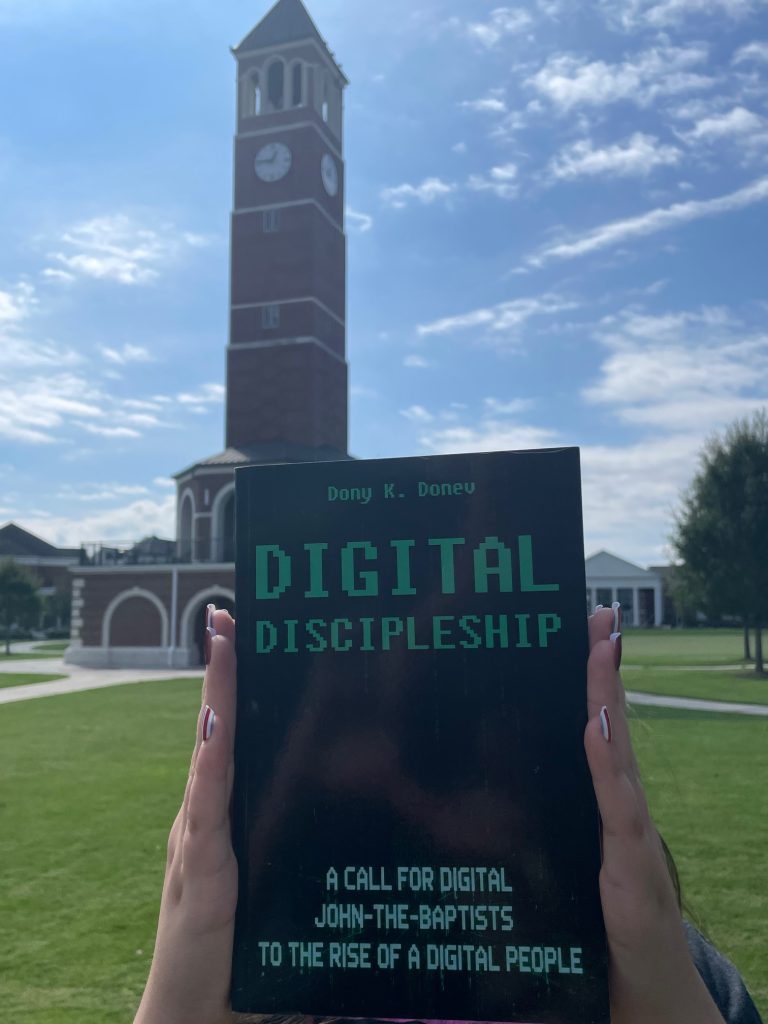
DIGITAL DISCIPLESHIP: Cumulative Glossary of Terms

 AI-Led Worship
A religious service designed or assisted by artificial intelligence, such as the 2023 experimental AI-generated service in Fürth, Germany. Raises theological debates about authenticity, pastoral care, and spiritual presence.
Avatar Communion
Participation in the Eucharist within virtual reality platforms or digital environments where avatars symbolically consume bread and wine, representing an emerging form of digital sacramental practice.
Breath Prayer
A short, repeatable spiritual prayer recommended for use in distracted or digital contexts to refocus attention on God’s presence.
Catechism of the Catholic Church
The official doctrinal text describing the Eucharist as the “source and summit of the Christian life,” central to the Catholic understanding of Communion and discipleship.
Communion (Eucharist)
The Christian sacrament instituted by Christ at the Last Supper, sharing bread and wine as symbols or actual presence of Christ’s body and blood, uniting believers with God and the Church.
Consubstantiation
Lutheran theology teaching that Christ’s body and blood coexist “in, with, and under” the bread and wine without altering their substance.
Digital Communion
Administering and receiving Communion through online or virtual means, with ongoing theological debate about its sacramental authenticity and implications for presence.
Digital Discipleship
Spiritual growth and church engagement facilitated through digital tools, platforms, and communities, reflecting new modes of faith formation.
Eschatological Hope
Anticipation of eternal life with God, often seen as symbolized by Communion as a foretaste of the heavenly banquet.
Googling Prayer
A term coined by Adam Thomas describing the modern habit of searching for prayers and spiritual content online, highlighting the tension between instant digital access and deep relational prayer with God.
Incarnation (Theological Objection to Digital Communion)
The doctrine that God became fully human in Christ, supporting the view that sacraments require physical, embodied presence and cannot be fully mediated digitally.
Memorial View (Zwinglian View)
A Protestant perspective that Communion is a symbolic remembrance of Christ’s sacrifice without real or spiritual presence in the elements.
Mystical Body of Christ
The Church understood as a spiritual unity with Christ and fellow believers through the Eucharist, transcending physical and temporal boundaries.
Real Presence
The belief, central to Catholic and Orthodox traditions, that Christ is truly and substantially present—body, blood, soul, and divinity—in the consecrated bread and wine.
Sacramental Presence (Spiritual Presence)
A Reformed theological view affirming Christ’s real spiritual presence in Communion, differing from a literal physical transformation of elements.
Sanctification
Ongoing process of being made holy and conformed to Christ’s image, empowered and deepened through participation in Communion.
Self-Service Communion
An early digital Communion practice where individuals prepare elements at home and partake independently guided by online or printed instructions.
Spiritual Communion
A devotional Catholic practice of uniting spiritually with Christ’s presence in the Eucharist when physical reception is not possible.
Transubstantiation
Catholic doctrine teaching that the bread and wine are transformed in substance into Christ’s body and blood while retaining their appearances.
U.S.H.E.R. Model
A theological framework identifying five key dynamics of Communion practice foundational to disciple growth: Unity, Sanctification, Hope, Ecclesial communion, and Redemptive mission.
Virtual Reality (VR) Church
Immersive digital environments where congregants gather as avatars for worship and sacraments, presenting new issues of presence and embodiment in the digital age.
This glossary is now a concise yet comprehensive academic reference tool reflecting contemporary theological, digital, and cultural facets of Communion and related practices. Let me know if citation-style expansions or further structuring are required.


Comments