

The Roma who Found Religion
By Nick Thorpe – BBC News, Lom, Bulgaria
The lives of Roma (gypsies) are often portrayed as being full of poverty and discrimination. However, for some in the Bulgarian town of Lom, religion and hard work are helping them build new, prosperous lives.
The good pastor, Iliya (Elijah) Georgiev was not at his church when we arrived in Humata, a suburb of Lom. We found him in a brown shirt, pouring the concrete foundations of a new outhouse for his animals, beside his home. A short, wiry man, he shouted his greetings as he worked, as a cousin slung him bucket after bucket. Handshakes could come later, when the precious grey liquid had set.
Music and mirth rose from Humata, whose name means something like mud, the silt or sediment of a river. A bloodshot sun sank at Iliya’s shoulder as he worked, painting his world a deep orange.
The settlement is built on a ridge, and behind the houses, a cliff falls suddenly onto a green plain below, dotted with brown horses. And finally a river, which flows into another river. The Danube.
But something was different here from so many gypsy neighbourhoods I have visited. Everyone was busy. They have built a church, rebuilt their own homes, and found an energy and purpose in their lives which seems, to a stranger at least, almost miraculous
These people are Pentecostalists – a church movement which has spread like wildfire among the gypsies of Eastern Europe in particular – a form of religion which fits better with their own mythology, than the strict rituals of Orthodox or Catholic. It is also giving a people much derided as work shy, a protestant work ethic.
“I stole, I drank, I was lazy,” Iliya told us later, with a twinkle in his eye, playing the caricature of a gypsy villain, on a stage of his own carpentry. “And then I got a life-threatening illness. And I started to pray.” That was 10 years ago.
With God’s help, he said, his whole neighborhood practices Christianity now. Together they have built a church, rebuilt their own homes, and found an energy and purpose in their lives which seems, to a stranger at least, almost miraculous.
Prayer meeting
Sixteen people, young and old, squeezed into a living room. We sat in a circle. The prayers came thick and fast, between a chant and a mumble, rising and falling like waves. A babe in arms. Wide-eyed children. Toothless ladies, shy girls and middle-aged men.
“Does anyone have a problem?” asked a young man in a denim jacket. One girl said her mother was working in Italy, and had a heart complaint. A man said he was deep in debt. A woman said her cousin was pregnant: “Could we pray for a safe delivery?” We sat in a circle. The prayers came thick and fast, between a chant and a mumble, rising and falling like waves.
“Now I’m going to tell you a story,” said the prayer leader. “A man was driving a bus down a steep hill. There was a cliff on one side, a ravine on the other. “Suddenly, a child ran out into the middle of the road. In the split second that followed, he had to make an appalling choice. “To kill the child, or all his passengers.”
The man paused for a moment. His audience froze. I felt angry. Why was he telling this story in front of children? “He drove straight into the child,” the man continued. “There was blood all over the windscreen. The passengers ran forward, remonstrating with him. “You should have killed us instead,” they shouted. “How could you kill an innocent child?”
“Then there was a deep silence.” On the bus and in the room. “Then the driver spoke. ‘That child was my own son,” he said, “and his name was Jesus.”
Better education
Earlier the same day, we sat with Nikolai Kirilov and other local gypsy leaders, in a restaurant beside the Danube. They all spoke English. The river stretched before us like an ancient, pungent, grey-green lion, the barges on its coat just scratches.
“Ten years ago, when we started our association with Roma Lom, only 5% of the gypsy children finished high school. Now it’s 75%.” The numbers come thick and fast here too, like prayers that have been answered. Until the year 2000, only five gypsies from the town had ever finished university. Now more than 40 have. “Everything depends on education,” says Nikolai, “if kids don’t get good marks at school, they can\’t play in the football team.”
Integration
There are 32,000 people in Lom, about half of them Roma. Four neighborhoods, three gypsy sub-groups, three different dialects of the Romany language. And lots of mixed marriages. “It\’s important that we teach Romany culture and language” he says. “But even more important that we teach Bulgarian. That will be more useful to them.\’
After an hour of conversation, I remark that he has not uttered the words discrimination, segregation or prejudice, the normal narrative of the Roma activist. He shrugs. “Those words have been devalued by overuse,” he says.
So we talk about politics. Is he not afraid of Bulgaria\’s new, ultra-nationalist party Ataka, which blames all Bulgaria\’s ills on gypsies and Turks? “My nightmare is that we create a crazy ethnic party of our own. Then the conflict would really start,” is his answer.
Bulgarian Evangelical Churches in America
The annual conference of Bulgarian Evangelical churches in North America was held May 25-28, 2007 at the Christian Life Church in Chicago’s suburb Des Planes where the largest number of Bulgarian immigrants is locating. This year the event was hosted by the Bulgarian Evangelical Church of God “New Life” pastored by Stan Tanev. The conference gathered Bulgarian immigrants from all parts of America. The churches from Minneapolis, Dallas, Huston and Los Angelis participated. Representatives from New York City, Tennessee and Las Vegas reported growth of newly started Bulgarian congregations in their respective areas. Special guest of the conference was Martha Zaplishny Jackson, daughter of the first Pentecostal missionaries to Bulgaria, Rev. Dionesey and Olga Zaplishny.
U.S. President Bush to Visit Bulgaria
WASHINGTON, DC
President George W. Bush will visit Albania and Bulgaria during an upcoming European trip, the White House announced on Tuesday (April 24th). The focus of the weeklong tour will be the G8 Summit in seaside Heiligendamm, Germany, in early June. Bush will then travel to the Vatican for his first meeting with Pope Benedict XVI and will spend a day in Rome talking with top Italian officials. He will then travel to Tirana on June 10th and to Sofia the next day.
Pravetz Church of God
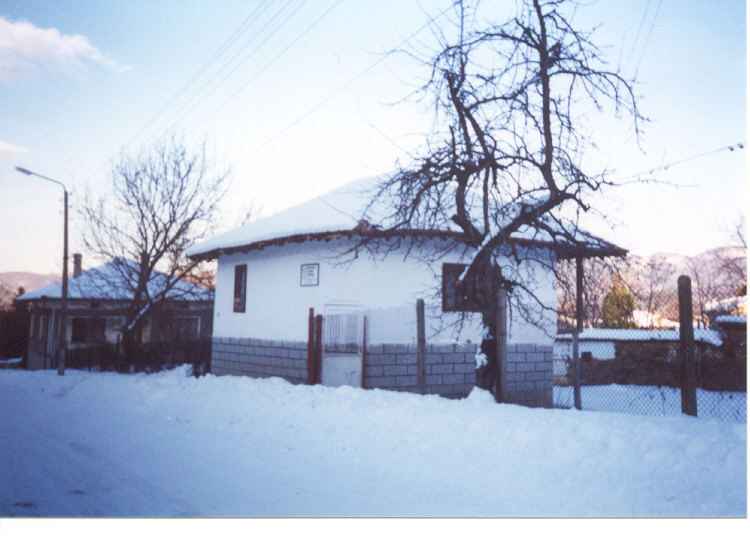
The Lord called me for the ministry in the end of September 1990 in a small house at the outskirts of a mountain town in Bulgaria by the name of Pravetz. In 1990 I was only 16 years old. At the time, Pravetz was known as a stronghold of communism where the communist president who ruled Bulgaria for 36 years was born. Yet, a small group of Pentecostal believers had kept the faith during the long years of persecution during the Communist Regime. It was there that the Lord called me for ministry, as He later called many others that are today spread around the world.
I began working with a small group of students from the local Computer Technical School. Our number was twelve to be exact. The work was not without the help of more experienced Christians and the pastor of the local Church of God. Coming out of the persecutions, the church had no building, and we met at private homes. We studied the Bible and practiced what we learned from its words. All night prayer meetings were a weekly event, and the chain fasting almost never stopped. No one of us knew or had ever experienced a genuine spiritual revival, yet deep inside ourselves we all wanted to be closer to God.
In the spring in 1991 it all came together. The church was able to rent a small building formerly used for a Communist club. A number of young people from the local schools began attending the services. Many of them were my schoolmates, as I myself was a student at the Computer Technical School in Pravetz. Soon enough we had to start a separate service for teenagers, which was held on Tuesday evening. On some of the services we witnessed up to fifteen people getting saved and baptized with the Holy Spirit. Our number grew rapidly and we had to move our meetings to the larger facility of the Pravetz Youth Center. More and more students were interested in what God was doing. The lives of many who were well known drug addicts and alcoholics were dramatically changed forever as they were delivered from sin and saved.
In the fall of 1991 I returned from my summer break with a fresh strategy. I started a verse-by-verse study on the book of Revelation. I was only seventeen and I had only preached for a year. I was using an old Bulgarian translation of Larkin’s 1919 book on Revelation. At this time our youth group was over 100 and growing. The study continued nine months challenging our desire for deeper knowledge and spiritual growth.
We gathered for prayer every morning before school. Since the dorms did not open until 6:30 a.m., we often had to jump through the windows of the first floor to go to the church for prayer. At that time the church had rented another building known as the Officers Cafeteria for its meeting. In the cold winter mornings we went to the church for prayer sometimes having to walk through the fresh snow that had covered the streets of the small mountain town during the night. In the spring we went up on a small hill outside of the town called Monovetz. It was during this time that one of the school officials spread derogatory remarks about our prayer meetings. Many of us were called into the offices and interrogated for our beliefs. Yet, nothing was able to stop the revival. The youth group was growing rapidly. On some meetings we counted up to 175 people. The year was 1991.
More than ten years later, I am again reporting this story not to brag about its success, but to express my desire for revival. The old times are now gone. Many of the members of the Pravetz Church of God youth group now live around the world. Beside Bulgaria, there are many in the United States, Canada, Austria, United Kingdom, Australia, Spain, Israel, South Africa, etc. Yet, in my thoughts I often return to the small mountain Bulgarian town. I climb the quite hill before dawn breaks and I pray a silent prayer. I pray to God to see and bless every one who participated in the Pravetz Revival wherever in the world they may be. I pray that He somehow gathers us once again in this lifetime, and reconciling every one and each of us with Himself to let us find ourselves again in His presence of love and anointing. I pray that He somehow reaches us wherever we may be and revive us again. I pray for a new revival because revival must go on …
Mission Maranatha: The Vision
To proclaim a prophetic vision for Bulgaria and give an apostolic mission to the Bulgarian Church after the New Testament example
To evangelize in the area of Yambol and close by regions
To provide pastoral care in places where such is not present
To provide Pentecostal ministry in places where Protestant churches have never existed
To organize congregations or fragments of congregation and home groups in a Pentecostal network of praying and fasting saints
To reach villages and places forgotten by the Bulgarian government where hundreds of thousands of people starve in the middle of severe economical, political and social crises and to provide food for the body and for the soul
To train, equip and perfect ministers, mission teams and churches to fulfill the Great Commission of the Bible
Cup & Cross Hosts Global Online Conference
Cup & Cross Ministries International operates through various ministry teams working in over a dozen of countries located in three different continents. Since there is a significant difference in location, time zones and purpose of operation, it is quite rare that we are able to gather the whole team for a time of prayer and strategic planning. The preparation for the upcoming “X Event,” however, drew the participation of a great number of our team members and demanded such a gathering.
Last year, Cup & Cross Ministries began the “X Event” in Bulgaria. “X” is a Christian gathering for youth which includes worship, focus on the Bible, along with time of fun and fellowship. The purpose and structure of the event is much similar to Winterfest held in the United States. The “X Event,” however operates among a number of evangelical denominations and continues with a strong post-event Christian leadership formation among Christian youth.
Having realized the effectiveness of this ministry, we have given “X” a substantial amount of strategic preparation placing it among our top priority ministry endeavors. Being unable to call all team members for a planning meeting at one identifiable location, we had to approach this particular problem through the means of communication which we have built and use for the purposes of our ministry in the past decade. Using advanced conference software, we were able to set up a communication server in our South Eastern office in Florida with live mirror uploads to Germany and Bulgaria.
A live uplink server created the possibility to include various team members in the strategic planning of the upcoming “X Event.” During the global online conference, the central ministry team took the initiative to announce the dates of the happening and to work with local church leadership in Bourgas, Varna, and Ahtopol along with other Black Sea towns for cooperating in the “X Event.” The arrangements in the schedule were then calibrated with the on ground sub-teams in various locations in Bulgaria which will provide sound equipment, point-to-point transportation, band management and multimedia effects.
The Germany connection was also important as it connected us with team members responsible for prayer, public relations and political awareness teams. The prayer team has already initiated their strategy through a prayer request website which was published January 1, 2007 in beta-testing and released in its official version April 1, 2007. The website, which is located in Busingen, Germany, already has a good number of daily visits, growing size of regular members, a prayer needs submission engine and an around the clock payer teams. Naturally, these efforts have resulted in many praise reports for answered prayer needs and we are hoping that the participants will be our faithful prayer and fasting partners during the upcoming term of ministry.
The PR team members located in Steinfurt, Germany and Sofia, Bulgaria are currently working together to pull all available media resources and create an effective media coverage through some of our long-term partners as Bulgarian Evangelical Newspaper, Faith TV Channel and other leading Christian media providers.
Substantial preparation results were further reporting by our partnering Shalom TV production company who will provide both live coverage and postproduction of the events. Two live IP TV (internet television) are already operational in Alsbach-Hähnlein, Germany and Sofia, Bulgaria and will be used during the “X Event.”
Some parallel planning has been done along with our web media team which is working on the developing of Religia.TV – a website which emphasizes all current Christian media production in Bulgarian in a single multimedia type website. Additionally, our Constantinople Team has decided to use the “X Event” to promote the digital edition of the 1871 Constantinople Bile in connection with the “2007: Year of the Bible Series” promoted by the Bible League in Bulgaria and the Bulgarian Bible Society.
We have also brought in a number of independent consultants for the various stages of the event. With ministry partners from the Atlanta area we have been able to further develop a leadership formation strategy for post-event ministry. This has been a long-term dream of ours as we would like to be able to extend the results after the actual event. With all this preparations on the way and scheduled dates closing quickly, we are expecting another great summer of ministry in Bulgaria.
Yablanitza Church of God
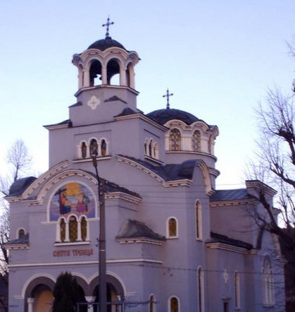 By the summer of 1991 the work in Pravetz grew tremendously. I held an extensive study on the book of Revelation, which drew more people to our meetings. The missionary Keith De Mayo opened a Bible school in Sofia, and many of our teenagers traveled every week to attend the seminars and services. At that time the youth group had exceeded several hundred, but there was much more to be done.In the fall of 1991, the Lord called me to a more extended ministry. Beside the Tuesday evening meetings with the youth group, I traveled and preached every Sunday at the Yablanitza Church of God. At that time the church there had neither a pastor nor a building. For years the few members gathered for service and prayed to God for a pastor.
Being only 17 and living in a post-Communist country, I did not own a car. Every Sunday I hitchhiked on the highway, which at that time went through Pravetz. We would have the service and then I would hitchhike my way back. This went on for about a year. I spent many hours on the frozen highway, but they turned out to be an experience in the presence of God that changed my life.For several weeks we held a Bible study on Song of Solomon from a Pentecostal perspective. The emphasis on the baptism of the Holy Spirit drew many to our meetings. One Sunday seven people received the Holy Spirit and this single event gave means for a great move of God. On the following Sunday, several Gypsies from the local Roma community joined our church. The church soon grew and by the spring of 1993 we were running 60. Many came to attend our meetings traveling from the local towns and villages such as Teteven, Djurvo and Skravena. God saved a number of young people as well. Several of them joined the church along with their families.
It was during this time that we received a vision for a church building. The members provided both the plans for the church and the materials. Yet the process went on with much delays and resistance from the local city government who disliked the idea of a Pentecostal church in their community. The building was finally finished in the spring of 2001. In September 2001 a member of the Pravetz youth group was appointed to serve as pastor of the Yablanitza Church of God.
Cup & Cross Ministries (2001-2007)
We began our ministry in Bulgaria in 1990 immediately after the Fall of the Berlin Wall, when the borders of Easter Europe were opened for the preaching of the Gospel and spiritual revival swept through the former communist countries. as a Church of God ministry we have worked closely with the major Pentecostal churches along with various other denominational and independent organizations.After almost a decade of ministry in Bulgaria, we established Cup & Cross Ministries International in 1999 with the vision for revival and restoration of New Testament principles of Christian praxis. Since then Cup & Cross Ministries has grown to be a global ministry endeavor with a special focus on Eastern Europe and the country of Bulgaria. This success has resulted from the FOCUS-12 strategy used by Cup & Cross Ministries as follows:
1. Revival has been the core of our ministry since its very beginning as our team holds a minimum of 100 services per month.
2. Youth ministries have been the beat of our heart as we have contributed to a number of youth events in Bulgaria, including our own, The “X” Happening for Youth.
3. Church planting has remained a constant focus of ministry, as Cup & Cross Ministries have established over 30 new congregations since 1996.
4. Pastoral care is currently provided by our team to over 50 evangelical churches.
5. The Shalom Media Group, established by Cup & Cross Ministries in 1996, operates through over 20 websites with focus on various areas of ministry and religious life.
6. Shalom TV Production Company was founded in 1997 by Cup & Cross Ministries and partners, and merged with the Faith Channel of Seven Days TV in 2006.
7. The Maranatha radio began broadcasting in 2000 and evolved in the Bibliata Radio.
8. Bulgarian Protestant history and heritage are the focus of our historical and statistical research and analyses made available to both local church and denominational leadership.
9. Christian articles, research and other printed materials are published weekly by Cup & Cross Ministries in religious and secular periodicals.
10. Education endeavors with special focus on Biblical studies, leadership strategies, church government, chaplaincy ministry and Christian counseling are made available by teaching at the Bulgarian Evangelical Theological Institute in the capital Sofia.
11. Cup & Cross Ministries’ efforts in the area of chaplaincy have brought to existence the Bulgarian Chaplaincy Association, now officially recognized by the Bulgarian government.
12. Our active involvement in the ongoing struggle for religious freedom in democratic Bulgaria has impacted the involvement of Bulgarian evangelicals in the political life on the Balkans through the establishment of the Bulgarian Christian Coalition in the spring of 1997.
Through the years of ministry we have remained faithful to the spiritual calling, which we have received that “Revival must go on …”
1998 Missionary Report
In January of 1998 the Bulgarian Government released statistics about the current economic situation for the nation. The following results were published: 93% of the population of Bulgaria earns income well below the poverty level. Approximately 5% of the population is very wealthy, and the remaining 2% of the population are of relatively (lower) middle class. It takes approximately $200 USD per month to survive in Bulgaria. The average income for a middle class worker is $139 USD. The cheapest rental for a one-bedroom apartment in Bulgaria is between $150-200 USD.
Such income is barely enough to take care of rent alone. That also leaves most people without enough money to have electricity, water, or even food. For this reason the soup kitchen, which was opened in 1991, operates five days a week. It is located in the headquarters of the Bulgarian Church of God and is the oldest social center in Bulgaria.
Since the economical inflation is now over 400%, the number of people which the soup kitchen feeds have been steadily increasing monthly. Most of them are intelligent people, and mostly retired people whose Social Security is not enough to even pay their monthly rent. While in September of 1997, the amount of people the soup kitchen fed was approximately 250-275 people per day. As of January 1998 it feeds more than 400 people per day.
Religious Freedom: Despite the fact that the Great Wall of Communism has fallen, and the Cold War is over, Evangelical Christians in Bulgaria continue in their own Cold War and must still worry for their lives and the lives of their families. Last year a number of Church of God congregations suffered extended persecution ranging from demonstrations (including vandalism) to pastors being beaten; from churches being confiscated by the government to attempts to burn down churches with the congregation still in them.
Along with this is the abuse from the media is constant. The most recent attack was an article that was printed about a Church of God in the town of Kiustendeel. It was falsely reported that they receive a donation in the amount of $30,000,000.
This article along with many others caused much tension between the Government and the churches. Because of this tension, the Bulgarian Evangelical Alliance (BEA), of which the Bulgarian Church of God is a very active member, decided to have a nation-wide conference, which dealt with these issues.
The conference took place in Hall #3 of the National Palace of Culture (NDK), on January 31, 1998. On January 30, there was a press conference, in which it was announced that this conference would take place. Literally hundreds of preachers, pastors, and leaders from all Evangelical denominations attended the conference. The main topics dealt with human rights and freedom of religions. There were many testimonies from the preachers about the persecutions they had suffered, in results of which an official Declaration was drawn up, and an official letter was written that would be delivered to both the Parliament and the Bulgarian Government.
Bulgaria: Historical Highlights
The first Bulgarian state was recognized in 681 A.D. and was a mixture of Slavs and Bulgars. Several years later, the First Bulgarian Kingdom or the “Golden Age” emerged under Tsar Simeon I in 893-927. During this time, Bulgarian art and literature flourished. Also during the ninth century, Orthodox Christianity became the primary religion in Bulgaria and the Cyrillic alphabet was established.
In 1018, Bulgaria fell under the authority of the Byzantine Empire. Byzantine rule was short-lived, however. By 1185 Bulgarians had broken free of Byzantine rule and, in 1202, they established the Second Bulgarian Kingdom. Ottoman domination of the Balkan Peninsula eventually affected Bulgaria in the late 14th century, and by 1396, Bulgaria had become part of the Ottoman Empire. Following the Russo-Turkish War (1877-78) and the Treaty of Berlin (1885), Bulgaria gained some autonomy under the Ottoman Empire, but complete independence was not recognized until 1908.
The early-to-mid-1900s in Bulgaria was characterized by social and political unrest. Bulgaria participated in the First and Second Balkan Wars (1912 and 1913) and sided with the Central Powers and later the Axis Powers during the two World Wars. (Although allied with Germany during World War II, Bulgaria never declared war on Russia.)
Following the defeat of the Axis Powers, communism emerged as the dominant political force within Bulgaria. Former King Simeon II, who is currently Prime Minister, was forced into exile in 1946 and remained primarily in Madrid, Spain, until April 2001, when he returned to Bulgaria. (Note: Simeon assumed control of the throne in 1943 at the age of 6 following the death of his father Boris III.) By 1946, Bulgaria had become a satellite of the Soviet Union, remaining so throughout the Cold War period. Todor Zhivkov ruled Bulgaria for much of its time under communism, and during his 27 years as leader of Bulgaria, democratic opposition was crushed, agriculture and industry were nationalized, and the Bulgarian Orthodox Church fell under the control of the state.
In 1989, Zhivkov relinquished control, and democratic change began. The first multi-party elections since World War II were held in 1990. The ruling communist party changed its name to the Bulgarian Socialist Party and won the June 1990 elections. Following a period of social unrest and passage of a new constitution, the first fully democratic parliamentary elections were held in 1991 in which the United Democratic Front won. The first direct presidential elections were held the next year.
As Bulgaria emerged from the throes of communism, it experienced a period of social and economic unrest. With the help of the international community, former Prime Minister Ivan Kostov initiated a series of economic reforms in 1997 that helped stabilize the country. Recent elections in 2001 ushered in a new government and president, but the new leadership in Sofia remains committed to Euro-Atlantic integration, democratic reform, and development of a market-based economy.


